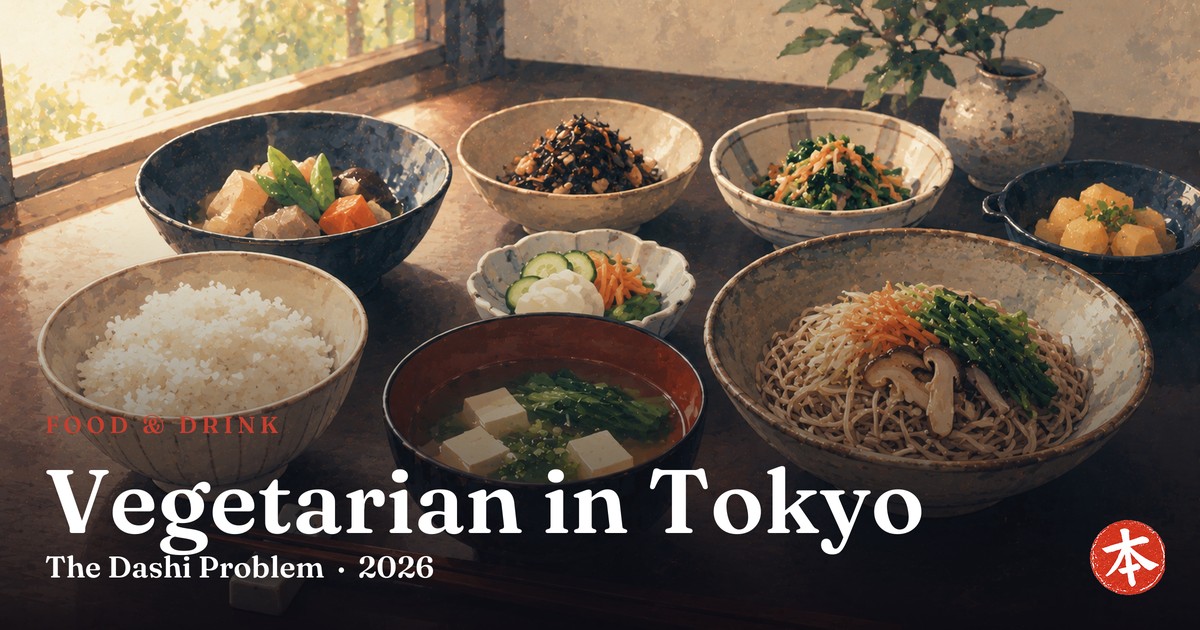
Japan looks like it should be easy. Vegetables everywhere, tofu on every menu, a whole cuisine built on rice and pickles and seaweed. Then you learn what is in the broth.
The single fact that governs vegetarian eating in Japan is that the standard stock — the liquid underneath miso soup, udon, soba, simmered vegetables and tempura dipping sauce — is made with dried bonito. Not as a topping you can remove. Dissolved in it. This guide is built around that one problem, using Japan's own official guidance to restaurants rather than the traveler folklore that fills most English articles on the subject.
The dashi problem, from the government's own guidance
A Buddhist monk makes shojin dashi from nothing but kombu and dried shiitake — the plant-based stock that stands in for the fish flakes this section warns you about. Seven minutes showing exactly what a fish-free Japanese broth is built from.
Question: "If we don't use fish directly as an ingredient, is stock made with bonito acceptable?"
Answer: "Do not use it, even if it is not an ingredient."
The same document states that in Japanese cooking in particular, dashi is used constantly, and that regardless of the cooking method, the use of animal-derived ingredients such as bonito is avoided — advising restaurants to switch to stock made from kombu or other plant sources.
That is not a traveler's opinion about strictness. It is the government telling Japanese restaurants what the standard is.
The same guide includes substitution tables that show exactly which everyday dishes are affected, and they are the ones you would have ordered:
| Dish | Standard version → vegetarian version |
|---|---|
| Tempura bowl | Dipping sauce made with fish stock → kombu and mushroom stock. The batter also has egg removed |
| Miso-simmered udon | Broth made with fish stock → kombu and mushroom stock |
JNTO tells travelers the same thing from the other direction: "Say no meats, seafoods, or animal products including dashi or stocks", warning that "even when meat or fish isn't immediately evident in a dish, there's often hidden ingredients such as meat or bonito flakes" and that with tempura "the accompanying sauce is often dashi (fish stock)". It even flags the sauce sachet that comes with natto as a place dashi hides.
Eating out with an allergy or a diet? Our free Japan allergy card shows 29 allergens as Japanese food labels name them, plus vegetarian, vegan and halal, to show at restaurants.
🚨 Temple cuisine is not automatically vegan
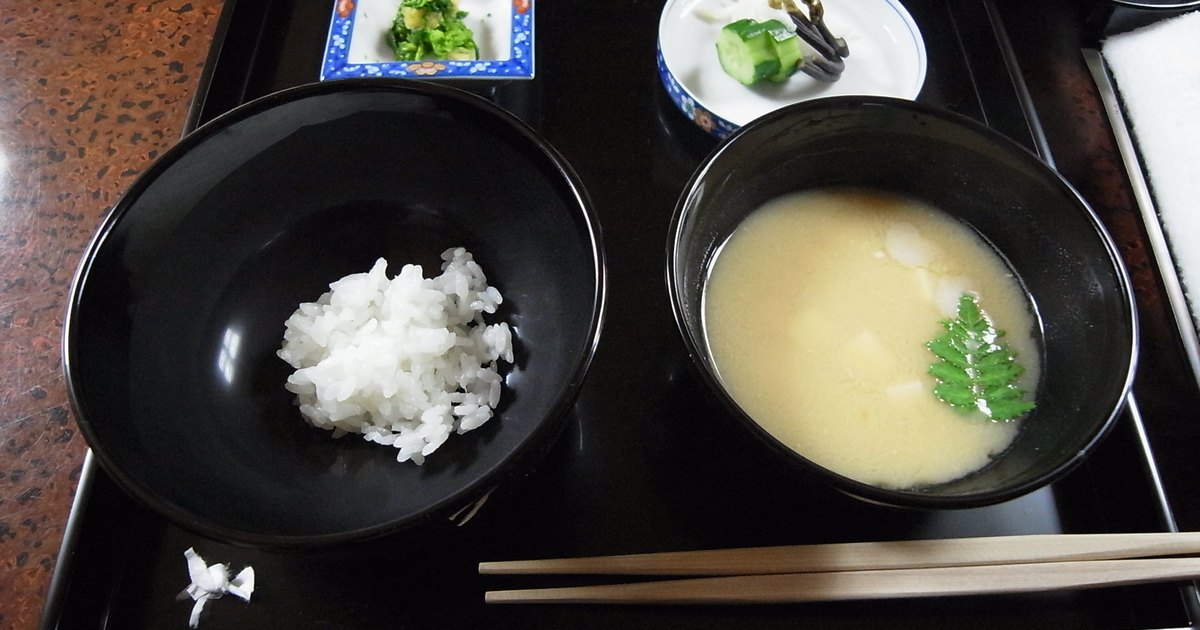
The most common piece of advice given to vegetarian visitors to Japan is to eat shojin ryori, Buddhist temple cuisine. It is good advice about 90% of the time, and the other 10% is why you should still ask.
And here is the proof, published by a restaurant on its own website. A Michelin-starred shojin restaurant in Tokyo states that some of its dishes use a small amount of bonito flakes, and asks guests who want cooking with no animal-derived ingredients at all to say so by the day before.
A famous Buddhist-cuisine restaurant, using fish stock unless you pre-order otherwise. The category name is a style of cooking, not a certification.
(One further reason to phone rather than trust a page: that restaurant's Japanese and English texts don't match on which ingredients are involved. We are not going to guess which is right.)
Of the temple and shojin restaurants we checked, only one states its stock composition at all — a Zen temple in western Tokyo whose site describes a stock made from kombu alone, simmered for three hours. Even that appears as a recollection rather than a formal ingredient declaration. Everywhere else was silent on dashi. Silence is not a no.
Places that put it in writing
The reliable ones are the places that state their ingredients themselves. Here is what each actually claims — in their words, not ours.
- A vegan ramen chain in the stations. Run by a JR East subsidiary, with shops inside Tokyo, Ueno and Ikebukuro stations (and Narita Airport). The operator states it serves ramen made without any animal ingredients at all — no meat, seafood, dairy or eggs. Bowls are ¥1,250 including tax (specials ¥1,700–1,800), vegan gyoza ¥780 for six or ¥1,500 for twelve, vegan gelato ¥650. You order at a ticket machine, and several items are marked as also free of the five pungent vegetables for oriental vegans. This is the single most useful address in this article: it is inside the ticket gates of stations you are already passing through.
- A dedicated vegan restaurant group with branches in Ginza, Shinjuku and Ikebukuro, which defines vegan on its own site as food using no animal ingredients — no meat, fish, dairy or eggs — and brands itself 100% plant-based. The Ginza branch is a minute from Higashi-Ginza station exit 3. Known for pancakes; book for dinner.
- A café group with a vegan menu, notable because its definition is unusually explicit: its vegan menu excludes animal-derived dashi as well as dairy, eggs, honey and refined sugar. 🚨 Only the Omotesando main store is entirely vegan — the operator states that at the other branches the rest of the menu does use animal ingredients, so order from the vegan menu specifically.
- A modern shojin restaurant in Roppongi that states vegan guests can eat there with confidence. Lunch sets from ¥1,980, dinner courses ¥15,400 and ¥18,700 plus a 10% service charge; closed Sundays and public holidays. Its own booking page asks for dietary restrictions to be communicated two days ahead — do that, because the site does not state its stock composition.
🚨 The allergen table will not save you
The instinct of every careful traveler in Japan is to find the allergen chart. Every major chain publishes one, they are detailed, and they are updated constantly. They will not tell you whether something is vegetarian, and the reason is structural.
So the stock that this entire article is about is legally invisible on every allergen table in Japan. A row with no marks against it means "none of those 28 items". It does not mean "no fish", and it certainly does not mean vegetarian.
This is the single most useful thing to understand before you start reading charts in Japanese: a blank row is not a green light.
What the tables are good for is catching the things that would never occur to you. From one conveyor-sushi chain's own allergen data:
- 🚨 Inari — the sweet tofu-pouch sushi every vegetarian visitor assumes is safe — is officially marked as containing mackerel.
- The house dashi is marked for mackerel and gelatin.
- The ponzu sauce is marked for chicken.
- By contrast the seasoned sushi rice, wasabi, pickled ginger and powdered green tea are all marked as containing none of the listed allergens.
The word "veggie" on a Japanese menu is a flavor description, not a dietary claim. So is "vegetable". One family restaurant's "veggie" noodle dish is marked for chicken and pork in its own allergen table, and a popular chain's "vegetable-packed" tanmen ramen officially contains egg, chicken, gelatin and pork. Another chain's "vegetable soup" is marked for chicken, and a burger chain's "almost lettuce" burger contains shrimp.
Read the allergen row, not the product name — and remember the row still can't see the bonito.
The chains, and exactly what they claim
If you are outside central Tokyo, or it is 9pm, chains are the fallback. All three below publish their position — and two of them publish warnings that matter more than the claim.
| Curry chain | Vegetable curry, ¥621 before tax (¥683 with tax), +¥54 takeout. Official wording: a curry that uses no animal-derived ingredients, recommended for vegetarians. Note: the mild spice level isn't available for it |
|---|---|
| Burger chain | Plant-based burger, made without animal-derived main ingredients and without the five pungent vegetables, and certified by a plant-based food body. 🚨 But the company states: "this is not a product aimed at those pursuing complete vegetarianism" and stores share cooking equipment with animal ingredients |
| Coffee chain | Marks qualifying items with a dedicated logo; defines them as using no animal main ingredients. 🚨 But processing aids and carry-over ingredients are explicitly excluded from that definition, and its factories and stores handle animal products |
Equally worth knowing: which chains say no. One of Japan's largest family restaurant groups answers the question in its own FAQ with "we are sorry, but we do not have a vegetarian menu", and adds that it cannot remove ingredients on request. Another family restaurant's plant-based line is marked on its own site as discontinued. A major conveyor-sushi chain states plainly that it does not accept requests to remove or change ingredients for allergen purposes, and that its allergen data excludes the condiments you help yourself to at the table — soy sauce included. No convenience store chain makes a vegetarian claim in writing at all.
For the same reason we do not call the curry vegan. The operator says "no animal-derived ingredients" and "recommended for vegetarians". It does not say vegan, and we are not going to upgrade its claim on its behalf.
Words that actually help
Two definitions from the government glossary are worth carrying, because they are the ones Japanese restaurant staff have been trained on:
- Vegetarian is defined as not eating meat or seafood, with eggs and dairy varying by person. Vegan adds eggs, dairy, honey and gelatin to the exclusions.
- Gokun — the five pungent vegetables: garlic, Chinese chives, rakkyo, onion including spring onion, and asatsuki. Oriental vegans, following Buddhist practice, avoid these too, which is why you will see menu items marked as excluding them.
JNTO's own practical advice is worth following exactly: print a written explanation of your requirements in Japanese and hand it over. It also makes a point that explains a lot of failed restaurant conversations — the loanword for "vegetarian" is widely understood in Japan but used more loosely than in English. Naming the specific things you do not eat works far better than naming the category. And if you want to check for certification, JNTO notes that restaurants display stickers from recognized vegan and vegetarian bodies.
One honest caveat about phrase lists: we could not find any official source publishing traveler phrases, so we are not printing a phrase list dressed up as authoritative. The underlying facts above are official; the sentences you build from them are yours.
A workable day
Practically, the pattern that works is: breakfast and lunch flexible, dinner planned. Convenience-store rice balls with pickled plum or kombu, and edamame, get you through the day cheaply — though check each label, because fillings change. Then book something dedicated for the evening, when the risk of a hidden stock is highest.
The things to be most careful with are the ones that look safest: miso soup, any noodle broth, simmered vegetables, tempura dipping sauce, and the sauce sachets that come with things. If you want a genuinely Japanese meal with no stock risk at all, a tea ceremony and its sweets are a good bet, and street food has plenty of grilled corn, sweet potato and taiyaki — though check the taiyaki batter for egg.
For what everyone else is eating, we have guides to sushi and Tokyo Station's ramen street — useful if you are traveling with people who eat differently and need somewhere everyone can sit down. And keep a data connection live: checking an operator's official ingredient page from the doorway is the single most useful thing you can do here.
(For a reliable plant-based ramen stop, AFURI's Rainbow Vegan Ramen — 100% plant-based with lotus-root-bound noodles — is covered in our AFURI guide, including the two shops that don't serve it.)
(Vegan is not kosher by default. Our kosher in Japan guide covers the delivery service Chabad has run since 2005, Shabbat meals in Tokyo and Kyoto, and the one certified kaiseki course.)
(On garlic-free gyoza: our gyoza in Tokyo guide lists four restaurants that say they serve gyoza without garlic, and notes that garlic-free is not meat-free.)
FAQ
Is it hard to be vegetarian in Tokyo?
What is dashi and why does it matter?
Is shojin ryori vegan?
Where can I eat vegan in Tokyo without a reservation?
Are there vegetarian options at Japanese chain restaurants?
How do I explain my diet in Japanese?
Sources
Checked August 5, 2026: the Japan Tourism Agency's official guide for hosting vegetarian, vegan and Muslim travelers (April 2024) for the Q&A stating that bonito stock must not be used even when fish is not an ingredient, the statement that animal-derived ingredients are avoided regardless of cooking method, the recommendation to use kombu-based stock, and the substitution tables showing fish stock in standard tempura dipping sauce and miso-simmered udon; the same agency's reference volume for the definitions of vegetarian, vegan, gokun and oriental vegan, and for the note that shojin ryori, though traditionally free of animal products, is now made with eggs at some restaurants; JNTO's official vegetarian guide for the advice to refuse dashi and stocks, the warning about hidden bonito and tempura sauce, the note that the word vegetarian is used more loosely in Japan, the advice to carry a printed explanation in Japanese, and the existence of certification stickers; and the operators' own sites for every restaurant and product claim, price and opening time above, including the shojin restaurant's statement about bonito flakes and next-day notice, the kombu-only stock description at a Zen temple restaurant, the station ramen chain's no-animal-ingredients statement and its August 2026 menu prices, the vegan restaurant group's own definition of vegan, the café group's exclusion of animal dashi and its statement that only its main store is all-vegan, the Roppongi shojin restaurant's prices and two-day dietary notice, and the three chains' product pages including the burger chain's statement that its product is not aimed at strict vegetarians and shares cooking equipment, and the coffee chain's exclusion of processing aids and carry-over from its definition. Deliberately not stated: any Japanese phrase list (no official source publishes one), convenience-store products (the official announcements we found date from 2020–21 and we could not confirm current sale), plant-based items at ramen and family-restaurant chains (limited-time or store-specific, unconfirmed for 2026), the operating status of one vegan restaurant whose site carries no recent content, and the widely-repeated claim that a particular Akihabara shojin diner is entirely vegan — its own site states that only for a single dish. Ingredients and menus change; ask the restaurant, and if it matters to you, ask in writing.
Tokyo to Osaka, Tokyo to Kyushu, Tokyo to Hokkaido — day by day — plus seven places most visitors never reach.
- 12 pages, 80 photographs, every stop linked to its guide
- Every price and opening hour read from the official page
- Re-issued monthly, so it does not go stale in your inbox
Free. One email a month, plus the rare change that matters. Unsubscribe with one click in any email. By subscribing you agree to our privacy policy.