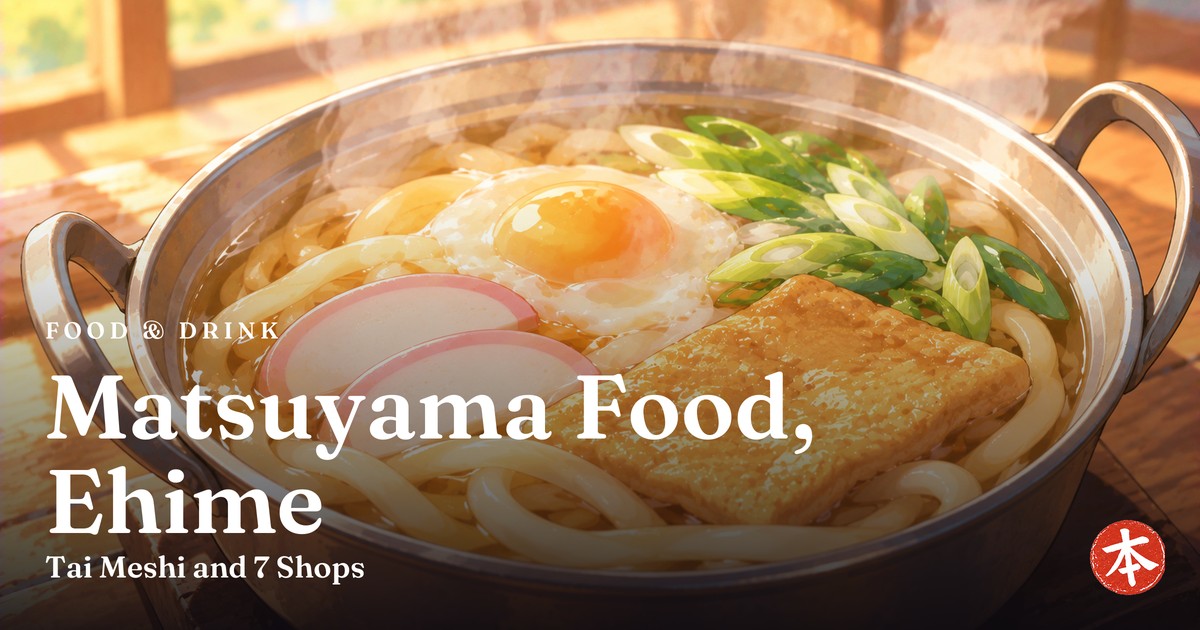
Matsuyama food here means Matsuyama, the capital of Ehime Prefecture on Shikoku, Japan, and its hot spring district of Dogo. The dish to know is tai meshi, sea bream rice, and Matsuyama has two different dishes under that one name: sea bream cooked with rice, or raw sea bream sashimi with egg over hot rice. Add soft, sweet nabeyaki udon, three-color Botchan dango at 280 yen for two, and mikan juice poured from a tap at 220 to 400 yen a cup.
This page reports only what each shop says on its own website, plus the City of Matsuyama’s official tourism pages and the Dogo Onsen area guide: prices, hours, closing days and payment. It is not a ranking. The practical surprises: the main tai meshi shops do not publish their in-shop prices online; two of them close between 15:00 and 17:00 and when the sea bream sells out; neither takes bookings; and the Botchan dango shop founded in 1883 does not take credit cards.
Matsuyama food at a glance
| Shop | What to eat | Price, per the site | Hours | Payment, per the site |
|---|---|---|---|---|
| Akiyoshi (Dogo) | Both tai meshi styles, tai somen | In-shop not published; take-out 1,300 yen | 11:00 to 15:00, 17:00 to 21:00; closed Wed | Cards, UnionPay, PayPay |
| Gansui (Dogo) | Uwajima tai meshi | Dishes not published; local beer 850 yen | 11:00 to 15:00, 17:00 to 21:00; closed Wed | Cards |
| Tai Meshi Stand Kadoya | Two-style tai meshi set | Not published | 11:00 to 19:30, no break | Not listed |
| Dogo Uotake | Nabeyaki udon, tai kamameshi | Nabeyaki udon 968 yen (2022 menu page) | 11:00 to 22:00; to 23:00 Fri, Sat | Not listed |
| Tsuboya | Botchan dango | 2 for 280 yen; 5 for 700 yen | 9:30 to 18:00; closed Tue | No cards; PayPay |
| Ehime no Shokutaku 1970 | Mikan juice from a tap | 220 to 400 yen a cup | 9:00 to 21:00 | Cash, cards, e-money, QR |
| 10 FACTORY Dogo | Mikan juice | Not confirmed | 9:00 to 21:00 | Cards, PayPay |
Prices as of October 5, 2026, with tax where the shop says so. A take-out box of tai meshi and a cup of juice are different things, so the table is not a like-for-like comparison. Check the official site before you go.
What to know before eating in Matsuyama
What is Matsuyama known for?
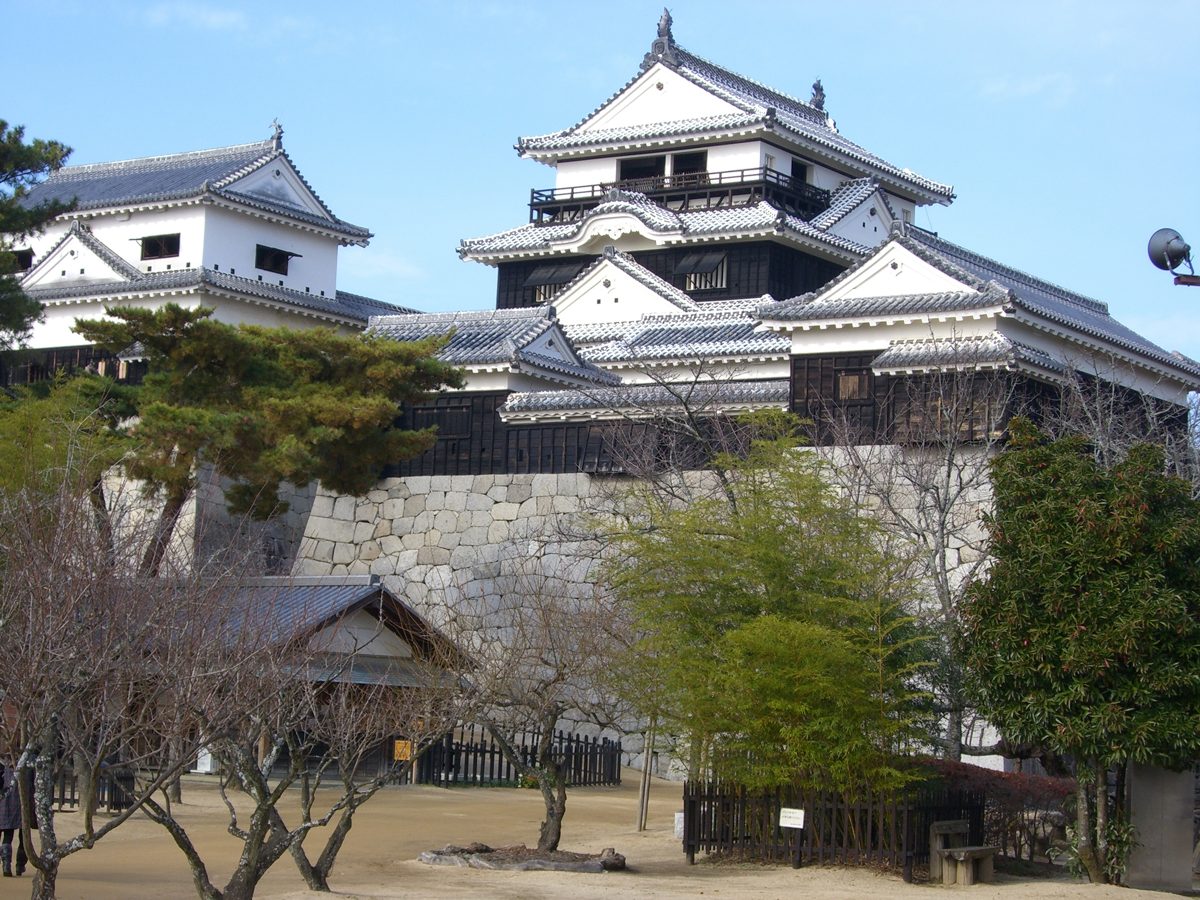
The Matsuyama official tourism site points first to the sea: sea bream, horse mackerel and sardines landed from the Seto Inland Sea. It calls Ehime a “mikan kingdom” and says more than 30 kinds of citrus are grown in the city. It also names five sake breweries that still brew the traditional way, Dogo’s local beer, and two everyday dishes as the city’s representative comfort food: nabeyaki udon and Mitsuhama-yaki.
Where do I eat in Dogo?
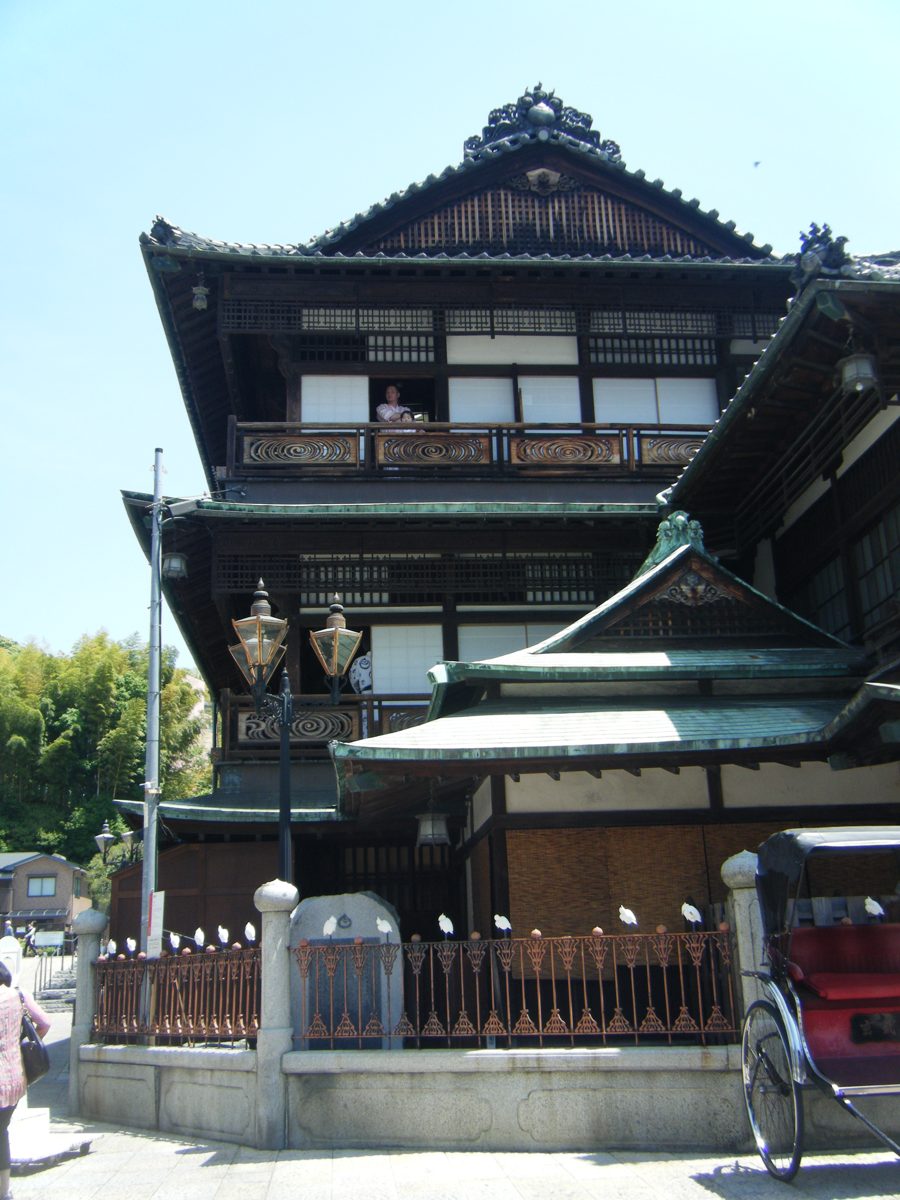
Most of the shops on this page sit in or near the Dogo shopping arcade, by the Dogo Onsen tram stop, so you can walk between them. Dogo Onsen is the bathhouse the City of Matsuyama calls the city’s signature sight, which it says is said to be the oldest in Japan; this page is about the food around it. If you have tattoos and plan to bathe, see our tattoos and onsen in Japan guide. Akiyoshi, Gansui and Kadoya also have shops in central Matsuyama, around Okaido and Ropeway Street.
Why do so many places close in the afternoon?
Tai meshi: two Matsuyama dishes with one name
What is the difference between the two kinds of tai meshi?
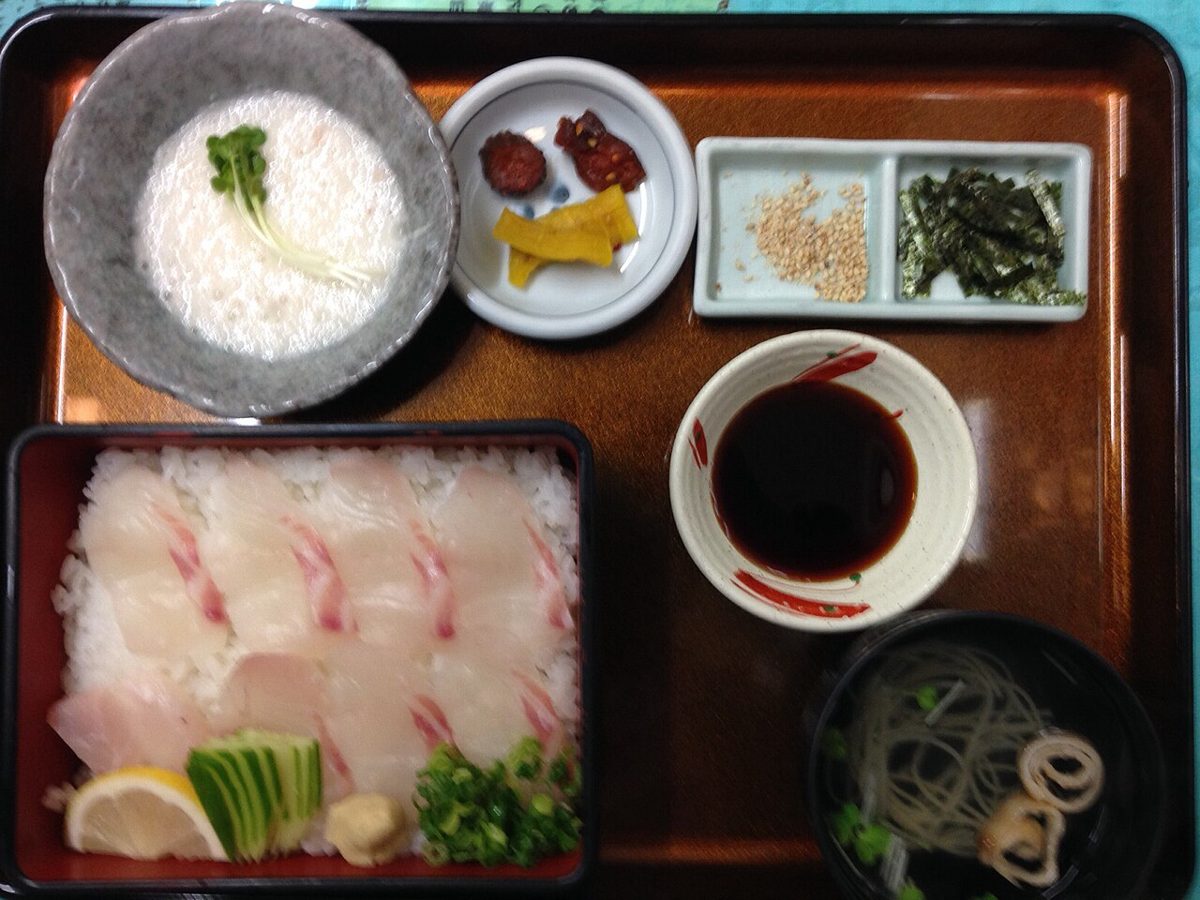
Akiyoshi lays it out on its own site. In eastern and central Ehime, including Matsuyama, tai meshi is a rice dish cooked together with sea bream. In southern Ehime, centered on Uwajima, tai meshi is fresh sea bream sashimi mixed with sauce and put on rice. The city’s tourism site describes the cooked version as kelp laid on rice with a whole sea bream on top, cooked in an earthenware pot, and notes that the Hojo district of Matsuyama eats a Hojo tai meshi with nothing but sea bream added. It says some visitors try both to compare.
The stories behind them are told as stories. Gansui says Uwajima tai meshi is said to have begun when Iyo Suigun seafarers and fishermen, drinking on boats where they could not use fire, put rice and raw sea bream into the bowls they had been drinking from. Akiyoshi gives one legend for the cooked version, tracing it to an offering made by Empress Jingu.
Akiyoshi: both styles under one roof, take-out 1,300 yen
Akiyoshi’s Dogo shop lists three specialties: Matsuyama tai meshi, Uwajima tai meshi and tai somen, and it recommends trying them side by side. Its site sets out three steps for the cooked tai meshi, in English as well as Japanese: first eat it as it is; then add the three condiments, radish leaves, mitsuba and moromi; and finally pour on the dashi for ochazuke. Its site does not publish in-shop prices; the menu appears only as photos.
The one price it gives is for take-out: its tai meshi to take home is 1,300 yen with tax (as of October 2026; Dogo shop page). It takes about 30 minutes to cook, and the shop says it may not be available at peak times such as the New Year holidays and Golden Week. That is a take-out price, not the price of a meal in the shop.
The Dogo shop is on the second floor of the Eight One Building, Dogo-Yunomachi 12-34, about 51 meters from the Dogo Onsen tram stop, just inside the arcade on the left. It opens 11:00 to 15:00 (last order 14:30) and 17:00 to 21:00 (last order 20:30), is closed on Wednesdays, and opens over the New Year holidays. The main shop, at Okaido 3-5-1, opens 11:00 to 15:00 and 17:30 to 20:30 and closes on Tuesdays.
Akiyoshi says it does not take reservations and closes when the sea bream sells out. The Dogo shop takes Mastercard, Visa, JCB, American Express, Diners Club, UnionPay and PayPay; the main shop lists the same without UnionPay. The Dogo shop has some English and simplified Chinese menus, is no-smoking throughout, welcomes children with a kids’ menu, and has an elevator for wheelchair users.
Gansui: Uwajima tai meshi with raw egg
Gansui serves the southern style. Its site says to cut sea bream sashimi into thin strips, combine it with raw egg and the house sauce, and pour it over warm rice. Wild red sea bream appears as a limited dish only when it can be caught that day, and ends when sold out. Its site says the first generation took over the restaurant in 1946 and passed it to the second and third generations. Its site publishes no dish prices.
The Dogo shop, inside the Dogo shopping arcade at Dogo-Yunomachi 13-10, opens 11:00 to 15:00 (last order 14:30) and 17:00 to 21:00 (last order 20:30), and is closed on Wednesdays. Its shop page lists Ehime local beers, Madonna, Botchan, Nobo-san and Soseki, at 850 yen each with tax (as of October 2026; Dogo shop page). A kamaage shirasu bowl is served only at Dogo, and a sea bream tempura bowl only at the main shop.
The main shop is at Okaido 3-7-8, after a change of address; it serves dinner 17:00 to 20:30 (last order 20:00) and has no regular closing day. Its lunch opening time differs between official pages: Gansui’s own site gives 11:00, while its shop page on another official site gives 11:30, both to 15:00. Gansui does not take reservations and closes when the sea bream sells out. The Dogo shop lists Diners, Visa, Mastercard, JCB and American Express; the main shop adds Discover, DC, UnionPay and PayPay.
Kadoya: try both tai meshi at a standing counter
If you want both styles in one sitting, Tai Meshi Stand Kadoya Dogo serves a tai meshi tabekurabe, a set that lets you try Uwajima tai meshi and Matsuyama-style cooked tai meshi at once. The menu has only three dishes. It is a standing counter for about ten people, made for dropping in for a quick meal, at Dogo-Yunomachi 20-19, about 210 meters from Dogo Onsen station.
The stand opens 11:00 to 19:30, every day except January 1, and is no-smoking. Kadoya Dogo Ekimae, 69 meters from the station at Dogo-Yunomachi 6-12-2, has 36 seats, all no-smoking, and opens 11:00 to 14:30 and 17:00 to 21:00. It describes Uwajima tai meshi as fresh red sea bream sashimi mixed with a special dashi containing raw egg, poured with condiments over warm rice. Kadoya’s Ropeway Street shop also serves satsuma meshi, grilled fish flaked and ground with barley miso and dashi into a thick soup over barley rice. Kadoya publishes no prices, and does not list payment methods on its site.
Nabeyaki udon and other Matsuyama comfort food
Why is Matsuyama nabeyaki udon different?
The city’s tourism site describes Matsuyama nabeyaki udon by its aluminum pot, sweetish dashi and soft noodles. It says the dish was born just after the war, when sweet things were still precious, and that it is completely different in taste and texture from Sanuki udon from neighboring Kagawa. If you know firm, chewy udon, expect the opposite. For the firm kind, see our udon in Tokyo guide.
Dogo Uotake: nabeyaki udon and tai kamameshi in Dogo
Dogo Uotake, listed on the Dogo Onsen area guide, calls nabeyaki udon Matsuyama’s soul food. A May 2026 post on its site says its version has homemade dashi with sweet-simmered beef, fried jakoten fish cake and kamaboko, served in an aluminum pot that keeps it hot to the end, with inari sushi on the side. As listed on its menu page (undated), nabeyaki udon with inari is 968 yen (as of October 2026; lunch menu); prices may have changed since, and the page does not say whether tax is included.
The same page lists tai kamameshi, the cooked style, at 1,518 yen, lit after you order so it takes about 20 minutes; Uwajima tai meshi at 1,738 yen; Iyo satsuma meshi at 1,518 yen; a Botchan parfait at 748 yen; and a wagashi set at 715 yen. Uotake is at Dogo-Yunomachi 13-19 and opens 11:00 to 22:00 (last order 21:30) from Sunday to Thursday, and 11:00 to 23:00 on Fridays and Saturdays. Its site does not list closing days, and Uotake does not list payment methods on its site.
What is Mitsuhama-yaki?
The city’s tourism site describes Mitsuhama-yaki as flour batter spread thin like a crepe, sprinkled with fish powder, and folded around cabbage, chikuwa, meat, fish, egg and noodles. It says the port district of Mitsuhama is said to have about 20 specialty shops, with hours and prices varying by shop. We found no shop’s own website, so we name none here.
Matsuyama sweets and mikan juice in Dogo
What are Botchan dango and Matsuyama tart?
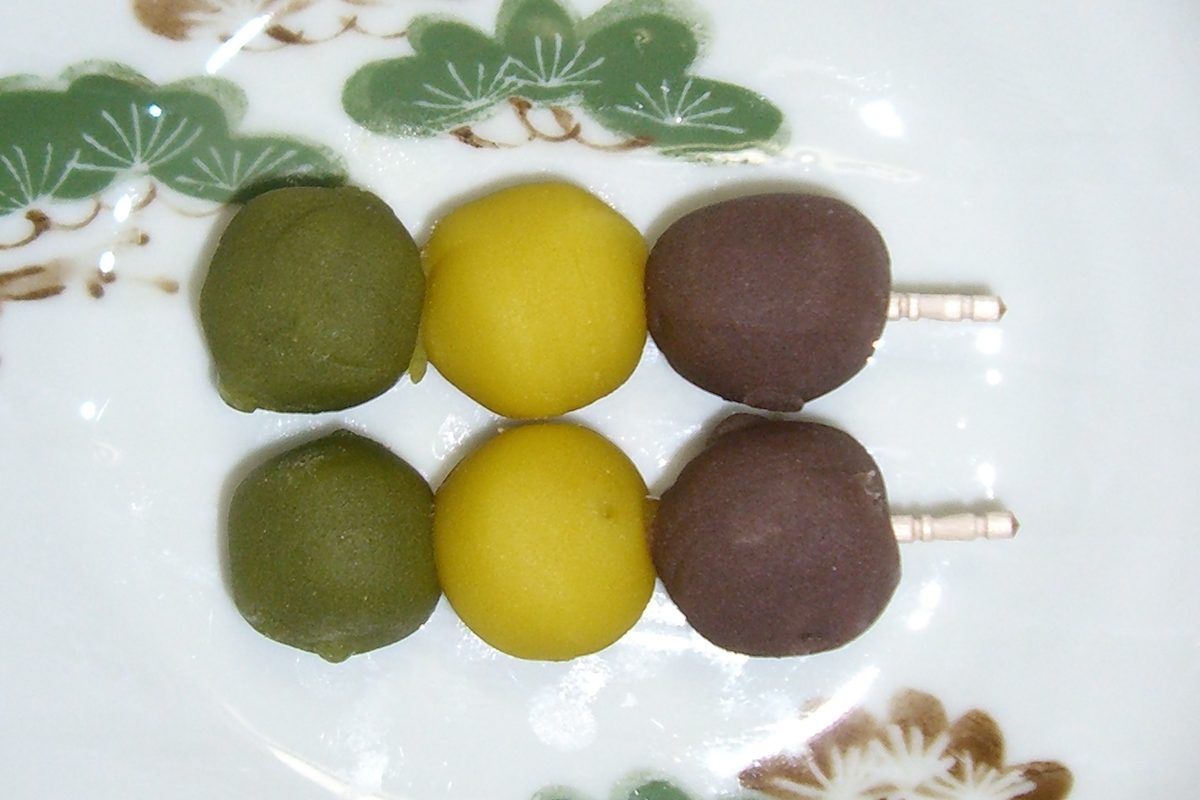
The city’s tourism site says Botchan dango, three-color skewered rice dumplings tinted with matcha, egg and adzuki, took the name after appearing in the novel Botchan, set in Matsuyama, and are served at the Dogo Onsen Honkan. Matsuyama’s tart is not a pie: the site describes a roll cake of sponge wrapped around yuzu-flavored bean paste, which an anecdote links to a technique a Matsuyama lord brought back from Nagasaki in the Edo period. For sweets in the capital, see our wagashi in Tokyo guide.
Tsuboya: Botchan dango since 1883, 280 yen for two
Tsuboya says it was founded in 1883 and that it was the model for the dango shop in Natsume Soseki’s Botchan; that is its own claim. It says its second-generation owner, Aihara Utaro, created the three-color Botchan dango after the novel came out. Its dango are 2 for 280 yen and 5 for 700 yen, up to 1,400 yen for ten and 2,800 yen for twenty (as of October 2026; official site); the dango prices do not say whether tax is included.
Tsuboya says its dango are made without egg or milk, having switched from egg-yolk paste to white bean paste in 2005. Seasonal items include shoyu mochi at 180 yen, made about twice a month, and ohagi only around the spring and autumn equinoxes, so in October the dango are the sure thing.
Ehime no Shokutaku 1970: mikan juice from a tap
The old line that mikan juice comes out of the taps in Ehime homes is said, according to the shop, to have started as a running Ehime joke in the 1970s. Ehime no Shokutaku 1970 calls itself Japan’s first shop serving mikan juice from taps. It has 20 taps of 100 percent straight Ehime citrus juice, including rare varieties such as Beni Madonna, Kanpei and blood orange, plus three taps just for children. A cup is 220 to 400 yen with tax, depending on the variety (as of October 2026; shop page).
It is self-service: take the cup set above each tap, pour, then pay at the register at the back. For several varieties, take a tray for three, five or ten from the entrance. The shop is at Dogo-Yunomachi 12-30, about 100 meters from the tram stop inside the arcade, open 9:00 to 21:00 (last order 20:45), with hours that may change without notice and no regular closing day. It takes cash, credit cards, e-money and QR payments, holds up to 39 people, is no-smoking, and welcomes strollers.
10 FACTORY Dogo, a few steps from the Dogo Onsen tram stop, is another mikan juice stop, open 9:00 to 21:00 with no closing day, taking cards and PayPay, with 14 seats; we did not confirm its prices. It also has a shop on the B2 floor of GINZA SIX in Tokyo. For snacking elsewhere in Japan, see our Japanese street food guide.
What does Matsuyama food cost?
Matsuyama food prices, as published
| Shop | Main item | Other prices | Tax, per the site |
|---|---|---|---|
| Akiyoshi | Take-out tai meshi 1,300 yen | In-shop not published | Included |
| Gansui | Dishes not published | Local beer 850 yen | Included |
| Kadoya | Not published | Not published | — |
| Dogo Uotake | Nabeyaki udon 968 yen | Tai kamameshi 1,518 yen; Uwajima tai meshi 1,738 yen (2022 page) | Not stated |
| Tsuboya | Botchan dango 2 for 280 yen | 5 for 700 yen | Not stated |
| Ehime no Shokutaku 1970 | Juice 220 to 400 yen a cup | — | Included |
Which Matsuyama food prices are recent?
Gansui’s beer price and Akiyoshi’s take-out price are on current shop pages. Dogo Uotake’s menu page shows no date, so treat its prices as a guide. Tsuboya and Ehime no Shokutaku 1970 do not date their prices.
Paying, booking and dietary needs at Matsuyama food shops
Can I pay by card?
Akiyoshi, Gansui, Ehime no Shokutaku 1970 and 10 FACTORY list credit cards; Akiyoshi and Gansui’s main shop also list PayPay, but Gansui’s Dogo shop does not. Tsuboya states it does not take credit cards and accepts PayPay. Kadoya and Dogo Uotake do not list payment methods on their sites, so carry cash.
Is there anything for allergies or children?
Tsuboya’s Botchan dango is made without egg or milk. Uwajima tai meshi uses raw egg and raw fish. Akiyoshi’s Dogo shop has a kids’ menu, and Ehime no Shokutaku 1970 has three juice taps for children. If you are staying in Dogo, our ryokan guide covers how inn meals work.
Which Matsuyama food stop suits you?
For both kinds of tai meshi and an English how-to, Akiyoshi. For the raw Uwajima style with egg, Gansui, before the sea bream runs out. For both in one quick standing meal, or a late-afternoon bite, Kadoya’s stand. For soft, sweet nabeyaki udon in Dogo, Uotake. For Botchan dango, Tsuboya, with cash or PayPay, not on a Tuesday. For a cup of rare citrus juice from a tap, Ehime no Shokutaku 1970.
Frequently asked questions
Is this Matsuyama in Japan or the Matsuyama restaurant in Hawaii?
What is the difference between Matsuyama tai meshi and Uwajima tai meshi?
How much is tai meshi in Matsuyama?
Can I eat tai meshi in the afternoon in Dogo?
Can I book a tai meshi restaurant in Matsuyama?
How much is Botchan dango at Tsuboya?
How does the mikan juice tap work in Dogo?
Can I pay by card at Matsuyama food shops?
Bottom line (2026): In Matsuyama, Ehime, tai meshi means two dishes: sea bream cooked with rice, or raw sea bream with egg over rice. Akiyoshi and Gansui do not take bookings, close 15:00 to 17:00 and when the fish sells out; Kadoya’s stand serves both 11:00 to 19:30. Tsuboya’s Botchan dango is 280 yen for two, with no credit cards.
Sources
Every price and rule on this page is from the shops’ own websites, plus the City of Matsuyama, the Matsuyama official tourism site and the Dogo Onsen area guide: Matsuyama official tourism site: food, Matsuyama tourism: tai meshi, Matsuyama tourism: nabeyaki udon, Matsuyama tourism: Mitsuhama-yaki, Matsuyama tourism: Botchan dango, Matsuyama tourism: tart, City of Matsuyama: tourism, Akiyoshi, Akiyoshi Dogo shop, Akiyoshi main shop, Gansui, Gansui Dogo shop page, Gansui main shop page, Kadoya, Kadoya Dogo Ekimae, Tai Meshi Stand Kadoya Dogo, Kadoya Dogo Tsubakizaka, Kadoya Ropeway Street, Dogo Uotake, Dogo Uotake lunch menu, Dogo Uotake shop guide, Dogo Uotake on nabeyaki udon, Dogo Onsen area guide: Uotake, Tsuboya, Ehime no Shokutaku 1970, Dogo Onsen area guide: Ehime no Shokutaku 1970, 10 FACTORY Dogo, all read on October 5, 2026. Menus, prices and hours change, so confirm on the official site before you go.
Some links on this page may be affiliate links, which means we may earn a commission if you book or buy through them — at no extra cost to you. See our affiliate disclosure.
Tokyo to Osaka, Tokyo to Kyushu, Tokyo to Hokkaido — day by day — plus seven places most visitors never reach.
- 12 pages, 80 photographs, every stop linked to its guide
- Every price and opening hour read from the official page
- Re-issued monthly, so it does not go stale in your inbox
Free. One email a month, plus the rare change that matters. Unsubscribe with one click in any email. By subscribing you agree to our privacy policy.