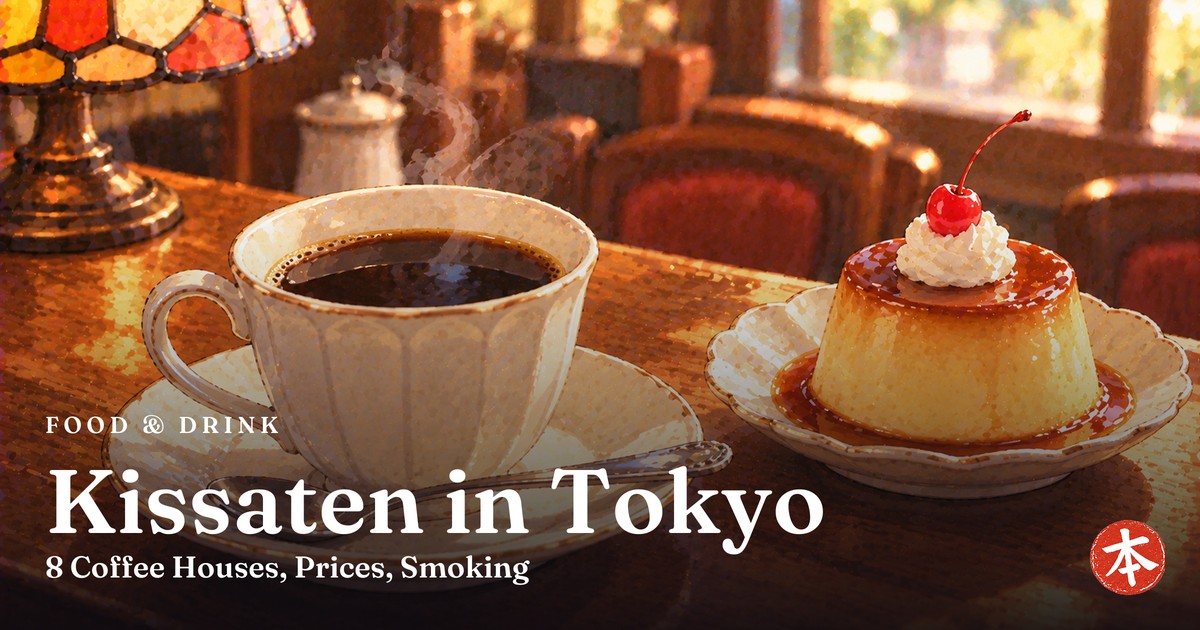
A kissaten is the old-style Japanese coffee house, with deep-roast coffee and quiet rooms. In Tokyo, the eight here range from a coffee-only Ginza shop founded in 1948 to a cave-like basement in Kichijoji. Where the shop publishes prices, a cup costs 1,000 yen at Cafe de L’ambre, 1,320 yen with refills of the same drink at Ginza West and 950 yen at Kugutsusou, all with tax.
This page reports only what each shop says on its own website: prices, hours, booking, payment and smoking. It is not a ranking. The practical surprises: half of these shops publish no prices; one Shinjuku main shop is smoking at every seat, so under-20s cannot go in, while its sister shops are no-smoking; one basement shop is cash only; and one chain stays open until 5:00 but adds a 20 percent service charge on food after 23:00. For what separates a kissaten from a modern cafe, and what the chains charge, see our coffee shops in Japan guide.
Tokyo kissaten at a glance
| Kissaten | Area | Coffee, per the site | Hours | Smoking, per the site | Booking |
|---|---|---|---|---|---|
| Cafe de L’ambre | Ginza | Blend 1,000 yen | 11:00 to 20:00 weekdays; to 18:00 Sun, holidays; closed Mon | Not stated | Not stated |
| Ginza West (main shop) | Ginza | 1,320 yen, refills of the same drink | 9:00 to 21:00 weekdays; 11:00 to 20:00 weekends, holidays | No smoking | No bookings |
| Cafe Paulista (Ginza main shop) | Ginza | Not published | Ground floor from 9:00 (11:30 Sun, holidays) | Not stated | Not stated |
| Kugutsusou | Kichijoji | Blend 950 yen; 850 yen 10:00 to 12:00 | 10:00 to 22:00, every day | Not stated | No bookings; cash only |
| Tajimaya (main shop) | Shinjuku | Not published | 10:00 to 23:00 | Smoking at every seat | No bookings |
| Coffee Seibu (main shop) | Shinjuku | Not published | From 11:00; to 5:00 on Fridays | Not stated | Not stated |
| Tsubakiya (Ginza Honkan) | Ginza | Not published | 10:00 to 5:00 Mon to Sat | Heated tobacco, weekdays only | Not stated |
| Coffee-Kan (chain) | Many shops | Blend 590 to 850 yen | Varies by shop | Not stated | Not stated |
Prices as of October 2, 2026, with tax where the shop says so. A cup at a coffee-only roaster and a cup with refills at a Ginza tearoom are different things, so the table is not a like-for-like comparison. Check the official site before you go.
What to know before visiting a kissaten
What is a kissaten?
GO TOKYO, the city’s official tourism site, says the word kissaten originally meant a place to drink tea, and that these cafes became quiet hideaways where workers could enjoy coffee while reading, thinking or chatting in low voices. It adds that kissaten coffee has largely stayed the same, with most shops still favoring a deep roast. For how kissaten differ from chain cafes, with prices, our coffee shops in Japan guide covers it in full.
Do I have to order something?
Yes, plan on it. GO TOKYO’s kissaten guide says ordering at least one item per person is standard, and Ginza West prints the same request on its menu, except for children of elementary school age and younger. GO TOKYO also notes that it is common to visit a kissaten alone.
Can I smoke in a Tokyo kissaten?
Only where the shop says so, and the eight here are split. One main shop is smoking at every seat, one chain sets the rule branch by branch, one Ginza tearoom is no-smoking throughout, and five do not mention smoking at all. We set out each shop’s own wording further down. For the law itself, including why under-20s cannot enter a smoking area, see our smoking in Japan guide.
Can I take photos inside?
None of the eight shops states a photo rule on its site. GO TOKYO’s kissaten guide says some kissaten prohibit photography or post specific rules on their official social media, so it is best to check beforehand or ask the staff for permission.
Kissaten in Ginza
Cafe de L’ambre: coffee only, since 1948
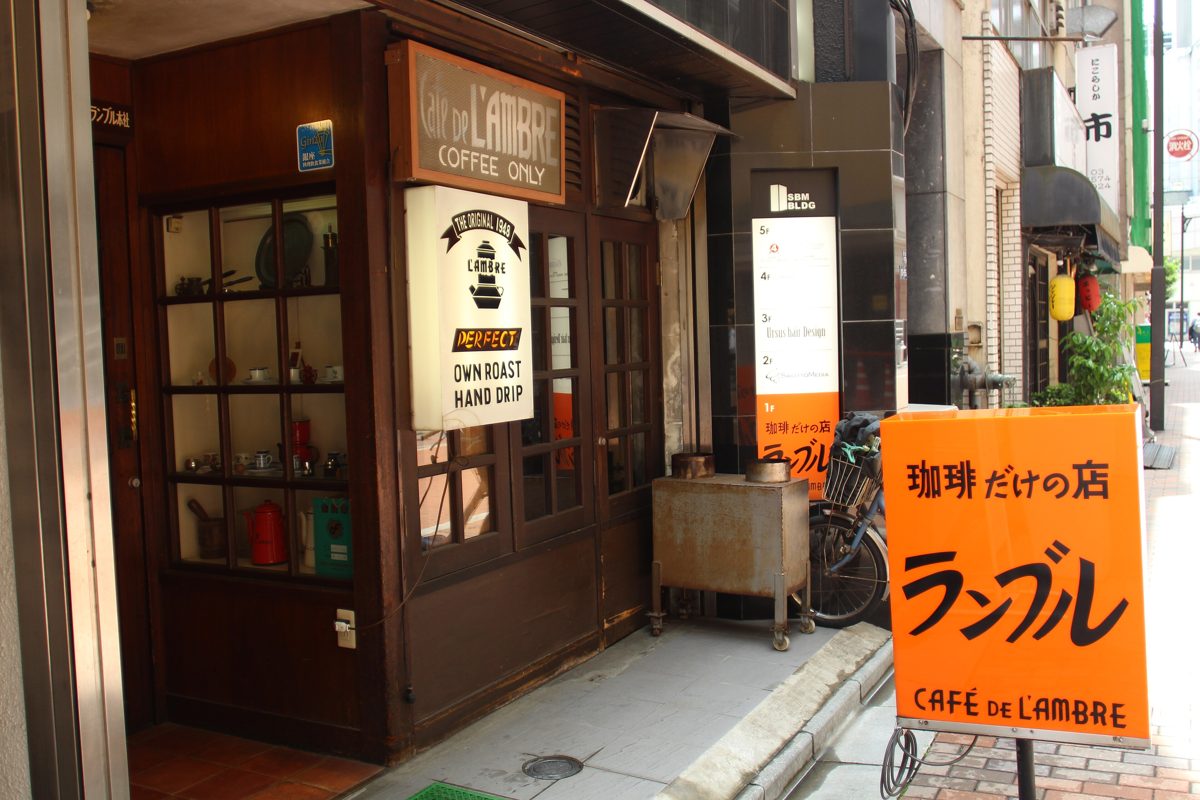
Cafe de L’ambre calls itself a shop that serves only coffee, made with beans it roasts itself and hand-sewn flannel filters, in the same style since it opened in 1948. There are no meals. Its founder, Ichiro Sekiguchi (1913–2017), opened it in Ginza. Its blends are 1,000 yen for a single cup and 1,400 yen for a double: No. 2 Cafe Creme comes in a regular cup with milk, No. 3 Cafe Noir in a medium cup, black, and No. 6 Demi-Tasse in a small cup, strong and black (as of October 2026; store menu). The blend uses five kinds of beans, mainly Colombian, and the shop’s own advice is simple: if in doubt, order the blend.
Single-origin coffees start at 1,100 yen, or 1,600 yen for a double. The house specialty is No. 7, Blanc et Noir, the “Queen of Amber”: sweetened cold coffee with evaporated milk floated on top, served in a champagne glass, for 1,100 yen. The shop says regulars simply order “number seven”. Cafe Oeuf, coffee with egg yolk, and coffee jelly are 1,100 yen each, and coffee soda 1,200 yen. The menu says all prices include tax and is marked 2026.4.
It is at Ginza 8-10-15. Hours are 11:00 to 20:00 on weekdays, last order 19:00, and 11:00 to 18:00 on Sundays and holidays, last order 17:00; it is closed on Mondays. The site gives hours for weekdays and for Sundays and holidays only. Temporary closures are posted in its news section, such as a closure for staff training on August 18, 2026. It says many travelers from Japan and abroad now visit. Cafe de L’ambre does not state a smoking policy on its site; check before you go. It does not list payment methods or booking.
Ginza West, main shop: 1,320 yen with refills
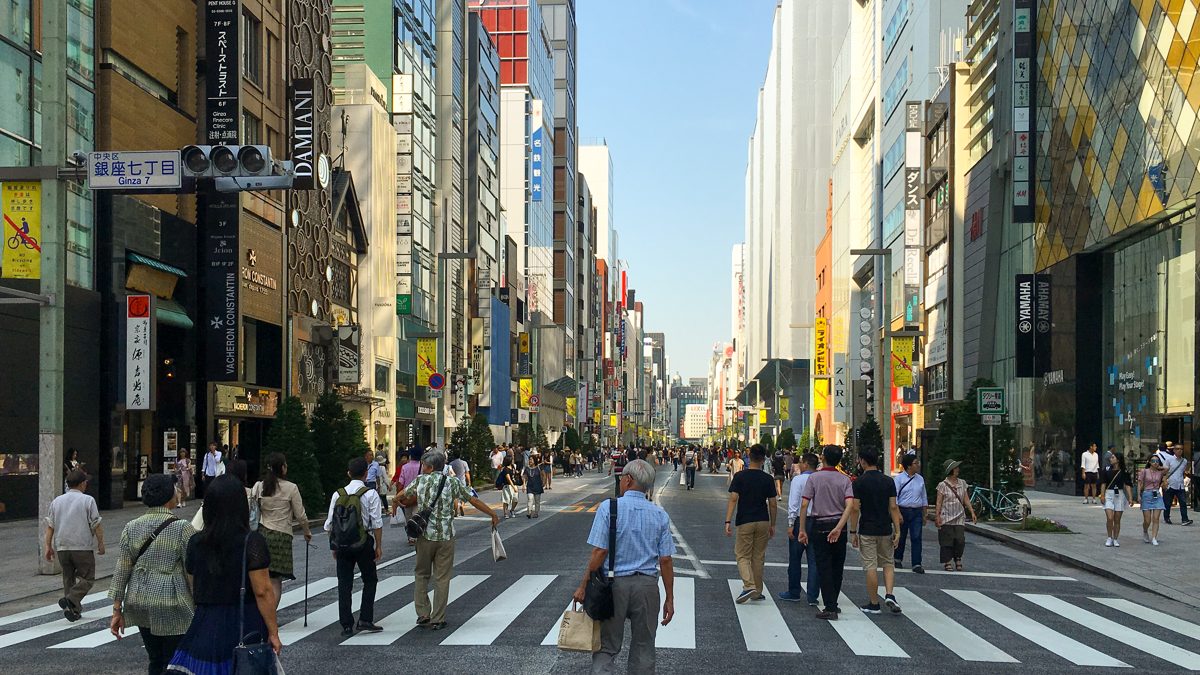
Ginza West has run its main shop since 1947, a shop and tearoom at Ginza 7-3-6, five minutes’ walk from exit C2 of Ginza Station along Sotobori-dori toward Shimbashi. Its tearoom menu lists coffee, blend, American or Vienna, at 1,320 yen, and says refills of the drink you ordered are allowed, hot or iced (as of October 2026; main shop tearoom menu). All prices include 10 percent tax.
A cake set with the cake and drink of your choice is 1,760 yen, though some cakes are excluded, and a dry cake set is 1,529 yen; staff bring samples to your seat so you can choose. French toast made with baguette is 1,430 yen, or 2,310 yen with a drink, and is sold only at the Ginza main shop. Pudding and mille-feuille are 715 yen each. The menu is in Japanese and English and notes that a Korean menu is available. Take-away is not available, and it asks each person to order at least one item. Its hotcakes are sold only at its Aoyama Garden and Bay Cafe Yokohama shops, not at the main shop.
The tearoom has 52 seats, all no-smoking, and Ginza West says none of its tearooms takes bookings. The shop page does not give a closing day, and the site does not list tearoom payment methods. The menu image on its site was updated on September 1, 2026, the day of its price revision.
Cafe Paulista, Ginza main shop: a name from 1911
Cafe Paulista gives three dates, and they are worth keeping apart. The company was founded in 1910; its first Ginza shop opened on December 12, 1911; and the present shop opened on its current site in 1970. It lists Akutagawa Ryunosuke, Yosano Akiko, Mori Ogai, Albert Einstein and John Lennon among the people who loved the place. Its signature beans are its Forest Coffee, grown in Brazil under contract without chemical fertilizers or pesticides.
The shop is on the ground and second floors of the Nagasaki Center Building, Ginza 8-9, seven minutes on foot from Ginza or Shimbashi station. The two floors keep different hours. The ground floor opens 9:00 to 20:00 Monday to Friday, with last orders at 19:00 for food and 19:30 for drinks, 9:00 to 19:30 on Saturdays and 11:30 to 19:00 on Sundays and holidays. The second floor opens 12:00 to 18:30 Monday to Saturday and 12:00 to 19:00 on Sundays and holidays. It is open every day except over the New Year.
Cafe Paulista does not publish in-store prices; its site prices only beans sold online. Cafe Paulista does not state a smoking policy on its site; check before you go. It does not list payment methods or booking.
Kissaten in Shinjuku and Kichijoji
Kugutsusou, Kichijoji: a cave-like basement, cash only
Kugutsusou opened in spring 1979, run by members of Yuki-za, a marionette troupe that traces its history back 380 years. The shop describes its interior as like a cave. Its blend, a French roast, is 950 yen, strong or soft, and a refill is 500 yen; ask if you want it very weak (as of October 2026; coffee menu). It uses old coffee, beans dried naturally and aged for over two years, brewed through flannel. All prices include tax.
Single-origin coffees are Colombia and Kilimanjaro at 1,500 yen, Mandheling at 1,650 yen and Hawaii Kona at 2,000 yen. Each single-origin cup is ground by hand mill to order, which takes about 15 minutes. The Kugutsusou curry, unchanged since opening and simmered for a full day with about ten roasted spices, is 1,600 yen, or 2,200 yen as a set with salad and coffee or tea (as of October 2026; food menu).
Come early for the time service, 10:00 to 12:00: the blend drops to 850 yen, and a toast set with jam, a small salad and coffee or tea is 1,480 yen (as of October 2026; time service menu). A lunch omelet curry set with coffee or tea, 1,900 yen, is served 11:00 to 14:00 and limited to ten a day. Kugutsusou’s menu pages carry no date.
It is in the basement of the Shimada Building, Kichijoji Honcho 1-7-7, Musashino City. From the central ticket gate of Kichijoji Station, turn left and leave by the north exit, enter the Daiya-gai arcade beside Sun Road toward the Tokyu department store, and look for the stairs down on the left after about 150 meters. It opens 10:00 to 22:00, every day. Kugutsusou does not state a smoking policy on its site; check before you go.
Tajimaya Coffee House, main shop: smoking at every seat
Tajimaya’s main shop opened in October 1987 at Nishi-Shinjuku 1-2-6, three minutes from the west exit of Shinjuku Station, by renovating Eden, a pure kissaten that had opened in April 1964. Its history page places the address in the postwar west-exit market now known as Omoide Yokocho, and says the name comes from the founder’s home region, Tajima in Hyogo Prefecture. It roasts on site. It opens 10:00 to 23:00, last order 22:30, and closes only on New Year’s Day. It takes no bookings.
The menu includes its house blend, a dorayaki made with Tokiya, a long-established Shinjuku sweet shop whose dorayaki Tajimaya says was the model for the one in a famous anime, and a Yokocho savarin served with its own coffee spirit. A Napolitan set is sold only at the Ikebukuro shop, and Tajimaya notes that menus differ by shop. Tajimaya does not publish in-store prices, and it does not list payment methods. Its Kichijoji shop takes bookings on weekdays only; the Ikebukuro shop takes none. Its sister cafe, Cafe Terrace Silhouette, is also smoking at every seat.
Coffee Seibu, Shinjuku: stained glass, open until 5:00 on Fridays
Coffee Seibu was founded in 1964, the year Tokyo hosted the Olympics, and its main shop moved to a new site on October 1, 2023. Its operator, Shinjuku Metro Group, describes large stained-glass lights by Matsumoto Stained Glass, coffee and old-fashioned parfaits, and says it now sees foreign visitors too.
The main shop is four minutes from JR Shinjuku Station, with 110 seats. It opens 11:00 to 23:30 Monday to Thursday and Saturday, 11:00 to 5:00 the next morning on Fridays, and 11:00 to 23:00 on Sundays and holidays, and closes on New Year’s Day. The operator’s page links to a map but does not print the new address, so use the official page to find it. The Nishi-Shinjuku shop, near Shinjuku-nishiguchi Station on the Oedo line, has 74 seats and opens 11:00 to 22:30 Monday to Saturday and 11:00 to 22:00 on Sundays and holidays, every day of the year.
Coffee Seibu does not publish prices. Coffee Seibu does not state a smoking policy on its site; check before you go. It does not list payment methods or booking.
Late-night kissaten in Tokyo: Tsubakiya
Tsubakiya Coffee: several branches open until 5:00
Tsubakiya is a retro-styled chain, not a postwar original: it marked its 30th anniversary in April 2026. Its operator, Towa Food Service, describes an old-fashioned room away from everyday life, siphon-brewed coffee and good cakes. The menu includes a beef curry. Tsubakiya does not publish prices, and notes that menus and prices differ at some branches. It does not list payment methods.
The Ginza Honkan, on the second and third floors of the Daiichi Sugawara Building, Ginza 7-7-11, three minutes from Ginza Station, opens 10:00 to 5:00 the next morning, last order 4:30, Monday to Saturday and on days before holidays, and 10:00 to 23:00 on Sundays and holidays. The Ueno shop opens 9:00 to 5:00, and the Shinjuku and Yaesu shops, the latter near Tokyo Station, open 8:00 to 5:00, each with last order at 4:30.
Smoking differs by branch, in Tsubakiya’s own listings. The Ginza Honkan allows heated tobacco only, on weekdays only. The Ginza Shinkan and the Ueno, Shinjuku and Yaesu shops allow both cigarettes and heated tobacco. The Jiyugaoka shop is completely no-smoking. Check the shop search page for the branch you plan to visit (as of October 2026; shop search).
A kissaten-style chain: Coffee-Kan
Coffee-Kan: charcoal-roasted coffee and copper-griddle hotcakes
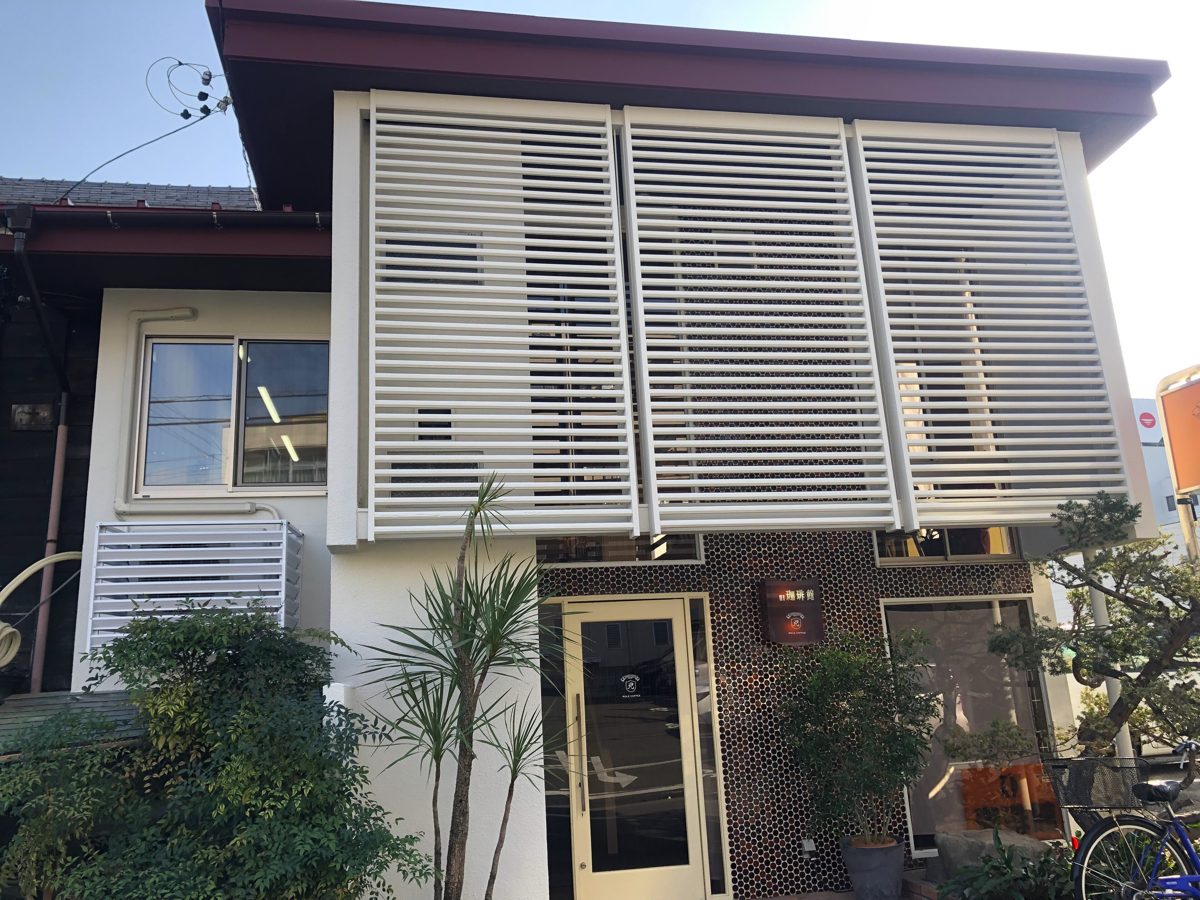
Coffee-Kan opened its first shop in Kanda-Jimbocho, Tokyo, in 1970, and keeps the kissaten format across a chain. Its Original Blend is 590 to 850 yen, and so is its weak American, depending on the shop; its signature charcoal-roasted coffee, roasted over Japanese binchotan, is 650 to 910 yen (as of October 2026; coffee menu). If you order a coffee from that page, a second cup is half price, even a different coffee, though 100 percent Blue Mountain is excluded. Prices are with tax for eating in and differ by shop.
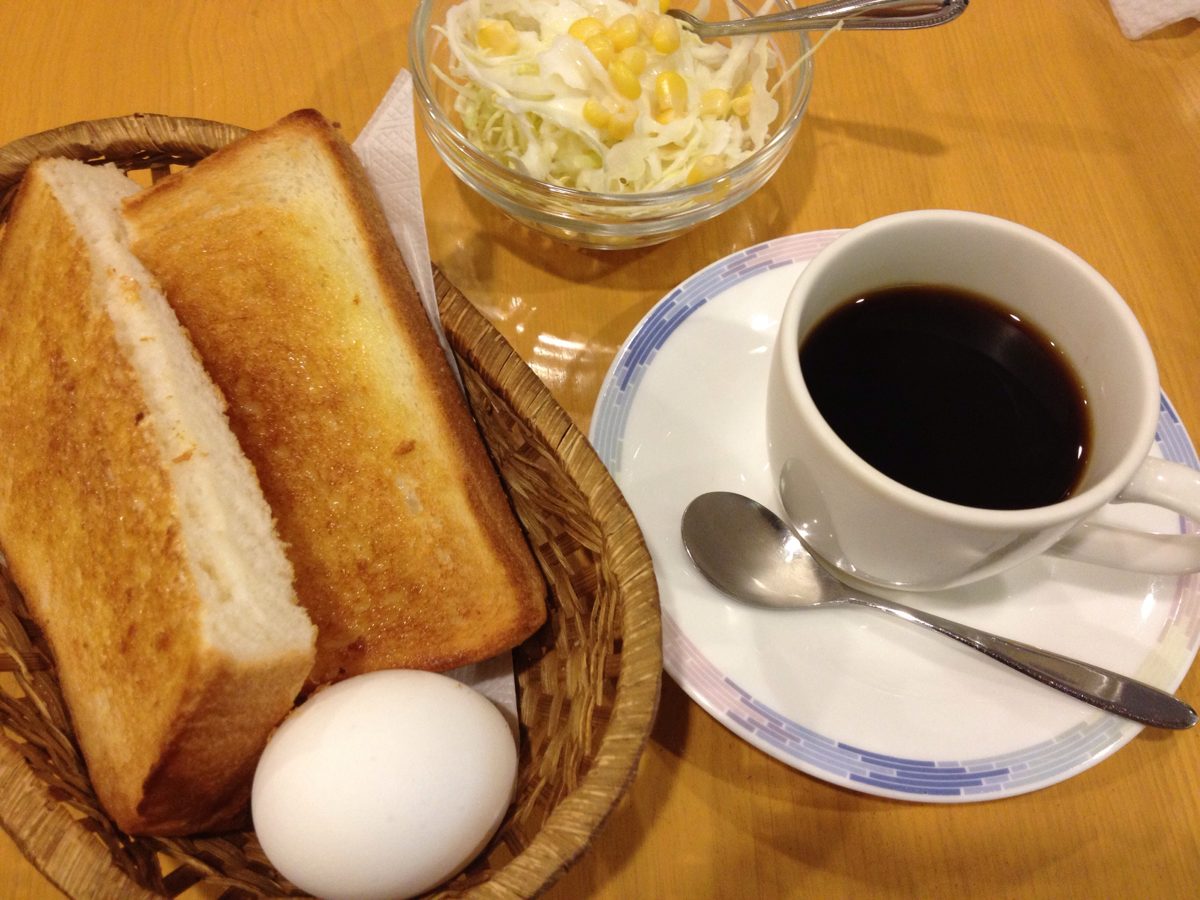
Its traditional hotcakes are cooked by hand on a copper griddle: two with whipped cream are 850 to 1,110 yen, or 650 to 910 yen for one (as of October 2026; hotcake page). From opening until 11:00, its morning menu, ordered with a drink, has toast and a boiled egg for 690 to 950 yen and hotcakes for 840 to 1,100 yen (as of October 2026; morning menu). The page does not limit this to weekdays. For more breakfast ideas, see our Japanese breakfast in Tokyo guide.
Coffee-Kan does not state a smoking policy on its site; check before you go. It does not list payment methods, and its site does not say whether the Jimbocho shop is still open.
What does coffee cost at a Tokyo kissaten?
Kissaten coffee prices, as published
| Kissaten | Blend or house coffee | Other prices | Tax, per the site |
|---|---|---|---|
| Cafe de L’ambre | 1,000 yen; double 1,400 yen | No. 7 Queen of Amber 1,100 yen; single origins from 1,100 yen | Included; menu marked 2026.4 |
| Ginza West main shop | 1,320 yen, refills of the same drink | Cake set 1,760 yen; French toast 1,430 yen | Included, 10 percent |
| Kugutsusou | 950 yen; 850 yen 10:00 to 12:00; refill 500 yen | Curry 1,600 yen; toast set 1,480 yen | Included |
| Coffee-Kan | 590 to 850 yen; second cup half price | Hotcakes 850 to 1,110 yen | Included, eat-in |
| Cafe Paulista, Tajimaya, Coffee Seibu, Tsubakiya | Not published | Not published | — |
Ginza West’s 1,320 yen includes refills of the same drink, Coffee-Kan halves the second cup, and Kugutsusou charges 500 yen for a refill, so compare within a shop, not across them.
Smoking at Tokyo kissaten, shop by shop
Which kissaten are no-smoking?
Ginza West’s main shop is no-smoking at all 52 seats. Tajimaya’s Kichijoji and Ikebukuro shops are no-smoking at every seat, and Tsubakiya’s Jiyugaoka shop is completely no-smoking.
Which kissaten allow smoking?
Tajimaya’s main shop in Shinjuku is smoking at every seat, so under-20s cannot enter, and its sister cafe Silhouette is the same. Tsubakiya’s Ginza Honkan allows heated tobacco only, on weekdays only, while its Ginza Shinkan, Ueno, Shinjuku and Yaesu shops allow cigarettes and heated tobacco.
Which kissaten do not say?
Cafe de L’ambre, Cafe Paulista, Kugutsusou, Coffee Seibu and Coffee-Kan do not state a smoking policy on their sites. Do not assume either way. Read the sign at the door, or ask before you sit down.
Booking, paying and etiquette at Tokyo kissaten
Can I book a table?
Mostly not. Ginza West takes no bookings at any tearoom, Kugutsusou takes none, and Tajimaya’s main shop takes none; Tajimaya’s Kichijoji shop books on weekdays only. The other shops do not describe booking.
Can I pay by card?
Kugutsusou is the only one of the eight that states its payment rule, and it is cash only. The other seven do not list tearoom payment methods on their sites, so carry cash.
Which Tokyo kissaten suits you?
For coffee and nothing else, ordered as “number seven,” Cafe de L’ambre, but not on a Monday. For cake samples at your table and refills of your coffee, Ginza West. For a name that goes back to 1911, Cafe Paulista. For curry in a cave with cash in your pocket, Kugutsusou. For a smoking room by Omoide Yokocho, Tajimaya’s main shop, or its no-smoking Kichijoji shop. For stained glass and a parfait, Coffee Seibu. For coffee at 3:00 in the morning, Tsubakiya, with the food surcharge in mind. For hotcakes before 11:00, Coffee-Kan.
Frequently asked questions
How much is a cup of coffee at a kissaten in Tokyo?
Can you smoke in kissaten in Tokyo?
Can under-20s go into a kissaten in Tokyo?
Can I pay by card at Tokyo kissaten?
Can I book a table at a kissaten in Tokyo?
Which kissaten in Tokyo are open late?
Can I take photos inside a kissaten?
Do Tokyo kissaten serve breakfast?
Bottom line (2026): A blend at a Tokyo kissaten is 1,000 yen at Cafe de L’ambre, 1,320 yen with refills at Ginza West and 950 yen at Kugutsusou, which is cash only; Coffee-Kan lists 590 to 850 yen. Tajimaya’s main shop is smoking at every seat, Ginza West is no-smoking, and Tsubakiya varies by branch and adds 20 percent to food after 23:00.
Sources
Every price and rule on this page is from the shops’ and operators’ own websites, including menu images and PDFs on those sites, plus GO TOKYO for etiquette: GO TOKYO Gourmet: Tokyo kissaten culture, Cafe de L’ambre, Cafe de L’ambre menu, Cafe de L’ambre about, Cafe de L’ambre hours, Cafe de L’ambre closure notice, Ginza West, Ginza West shops, Ginza West main shop tearoom menu, Cafe Paulista Ginza shop, Cafe Paulista history, Kugutsusou, Kugutsusou about, Kugutsusou coffee, Kugutsusou food, Kugutsusou drinks, Kugutsusou time service, Kugutsusou access, Tajimaya Coffee House, Tajimaya shops, Tajimaya history, Tajimaya specialties, Coffee Seibu (Shinjuku Metro Group), Tsubakiya 30th anniversary, Tsubakiya menu, Tsubakiya shop search, Coffee-Kan, Coffee-Kan about, Coffee-Kan coffee, Coffee-Kan morning, Coffee-Kan hotcake, Coffee-Kan price revision PDF, all read on October 2, 2026. Menus, prices and hours change, so confirm on the official site before you go.
Some links on this page may be affiliate links, which means we may earn a commission if you book or buy through them — at no extra cost to you. See our affiliate disclosure.
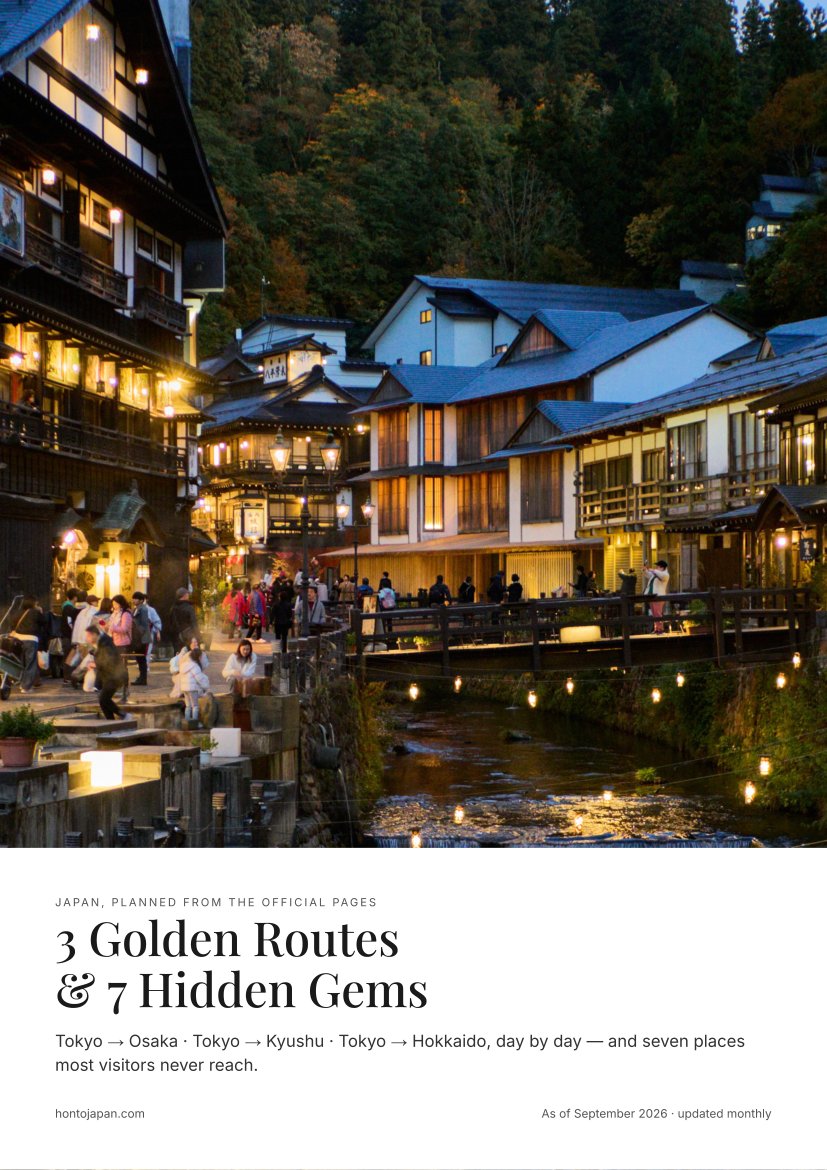
Tokyo to Osaka, Tokyo to Kyushu, Tokyo to Hokkaido — day by day — plus seven places most visitors never reach.
- 12 pages, 80 photographs, every stop linked to its guide
- Every price and opening hour read from the official page
- Re-issued monthly, so it does not go stale in your inbox
Free. One email a month, plus the rare change that matters. Unsubscribe with one click in any email. By subscribing you agree to our privacy policy.