Japan is the Pokémon motherland, and 2026 is its biggest year in decades: PokéPark Kanto is open, the Mega Tokyo flagship reopens August 24, and the store network runs deeper than any visitor expects. This hub is the circuit map — every Honto guide to Pokémon in Japan, organized by what kind of fan you are.
The Pokémon circuit at a glance
| Mission | Guide |
|---|---|
| Hit the stores | Pokémon Centers in Tokyo — every megastore compared |
| The theme park | PokéPark Kanto guide + tickets guide |
| Cards | Buying Pokémon cards in Japan |
| Exclusive goods | Merchandise guide · Design Lab Shibuya |
| Buying from home | Online store guide |
| Character dining | Themed cafés · Kirby Café |
| Vintage hunting | Mandarake · Akihabara shopping |
Start here: stores, park, or cards?
Which guide fits which fan?
Collectors start with the Centers guide and the merchandise guide — together they answer where the exclusives actually live. Families start with the PokéPark guide and, crucially, its tickets companion — the timed-entry system rewards planning ahead more than any other attraction in this hub. Card players go straight to the cards guide, which covers the official channels and the second-hand shops with equal honesty. And the nostalgic — the ones who want the 1999 plush they lost — belong at Mandarake.
How do the two PokéPark guides split the job?
Deliberately: the visit guide answers what the park actually is — the areas, the scale, how long a family needs, what the queues feel like — while the tickets guide handles the part that decides whether you get in at all: how the timed-entry sales work, when they open, and the mistakes that leave visitors outside. Read the tickets one first if your dates are fixed; read the visit one first if you're deciding whether to go. Families with mixed ages should also skim the themed cafés guide for the food plan — the park day pairs naturally with a character-dining evening.
The Shibuya axis: Design Lab and the modern flagship
What makes the Shibuya Center different?
Shibuya is where the brand experiments: the Design Lab lets you compose your own merchandise — the closest thing to a Pokémon atelier anywhere — inside a Center built for the district's fashion crowd. Pair it with the Centers guide's notes on DX (Nihonbashi's grown-up flagship with its café) and the reopening Mega Tokyo, and the three-store crawl becomes a day: Shibuya for creation, Nihonbashi for elegance, Ikebukuro for volume. The Suica penguin and other only-in-Japan character ecosystems live one guide over, for fans whose affections run broader than one franchise.
The 2026 calendar for Pokémon fans
A Japanese roundup of the seasonal Pokémon events – stamp rallies, limited goods, tie-ins – which is the layer of the circuit that English sources almost never cover because it is announced only in Japanese.
What's changing this year?
Two dates anchor the year. August 24, 2026: the Mega Tokyo flagship in Ikebukuro reopens after renovation — expect launch crowds and exclusive items, covered in the Centers guide. And PokéPark Kanto's first full year keeps evolving — seasonal events and ticket-system tweaks land in the tickets guide as they're announced. Everything dated flows into the Changes Tracker, which is the page to check the week before you fly.
Practical playbook: money, timing, language
What does a Pokémon day actually cost?
Store entry is free everywhere — the spend is merchandise, café sets and PokéPark tickets, each carrying current official prices inside its linked guide. Two timing rules stretch the budget: weekday mornings beat weekends at every Center (new-release Saturdays are the crush), and café bookings open on a fixed calendar the cafés guide explains — the single most common failure in a Pokémon itinerary is discovering the café requires a reservation the week you wanted it. Language is a non-issue at the stores; where a system runs Japanese-first (some lottery-sale items, certain app draws), the guides call it out and give the workaround rather than leaving you to find out at the register.
Beyond the official: the second-hand universe
The official stores are half the story. Tokyo's second-hand ecosystem — Mandarake's graded rarities, Akihabara's card floors, the arcade prize machines where plush still costs a few hundred yen of skill — is where the finds live. Budget an afternoon; our guides flag which floors matter so you don't drown in the wrong building.
Sample itineraries: one day and three days
What does the ideal Pokémon day look like?
One day in Tokyo: Shibuya Center at opening (Design Lab slot booked if you want custom goods), Harajuku or Omotesando lunch, DX Nihonbashi and its café area in the afternoon, then Akihabara's arcades and card floors until dinner. Three days: add a full PokéPark day (tickets secured in advance via the tickets guide) and a hunting day — Mandarake in Nakano, the card shops, and after August 24, the reopened Mega Tokyo as the finale. Both plans assume advance bookings for the café and park; everything else is walk-in. Rainy-day insurance: the entire circuit above is indoor except the park, so a typhoon afternoon costs you nothing but reshuffling of the outdoor half. Souvenir logistics tip: buy heavy or bulky items on the last day, or lean on the online store guide to know what can be re-bought domestically before you fill a suitcase on day one.
(The Osaka cafe's own reservation quirks — solo seating, the 10-minute check-in rule — are covered in our Pokemon Cafe Osaka guide.)
FAQ
How many Pokémon Centers are there in Tokyo?
What is PokéPark Kanto?
Where can I buy Pokémon cards in Japan?
Is there Pokémon merchandise you can only get in Japan?
Can I order from the Pokémon Center online store from abroad?
Is there a Pokémon Café in Tokyo?
What’s the best Pokémon day plan for Tokyo?
Do I need to speak Japanese for any of this?
How much should I budget for a Pokémon day?
What’s new for Pokémon fans in Japan in 2026?
Bottom line (2026) — Japan is the Pokémon motherland and 2026 is its biggest year yet: PokéPark Kanto is open and the Mega Tokyo flagship returns August 24, 2026. This hub connects every Honto Pokémon guide — Centers, merchandise, cards, the online store, themed cafés and Tokyo’s second-hand ecosystem — with each linked guide carrying its own official sourcing.
Sources
Each linked guide carries its own official sourcing — store pages, park systems and operator announcements, quoted verbatim and dated inside the guide. This hub asserts only cross-checked highlights (like the August 24, 2026 Mega Tokyo reopening) and routes everything else to the guide where the current numbers live. Hub compiled August 12, 2026.
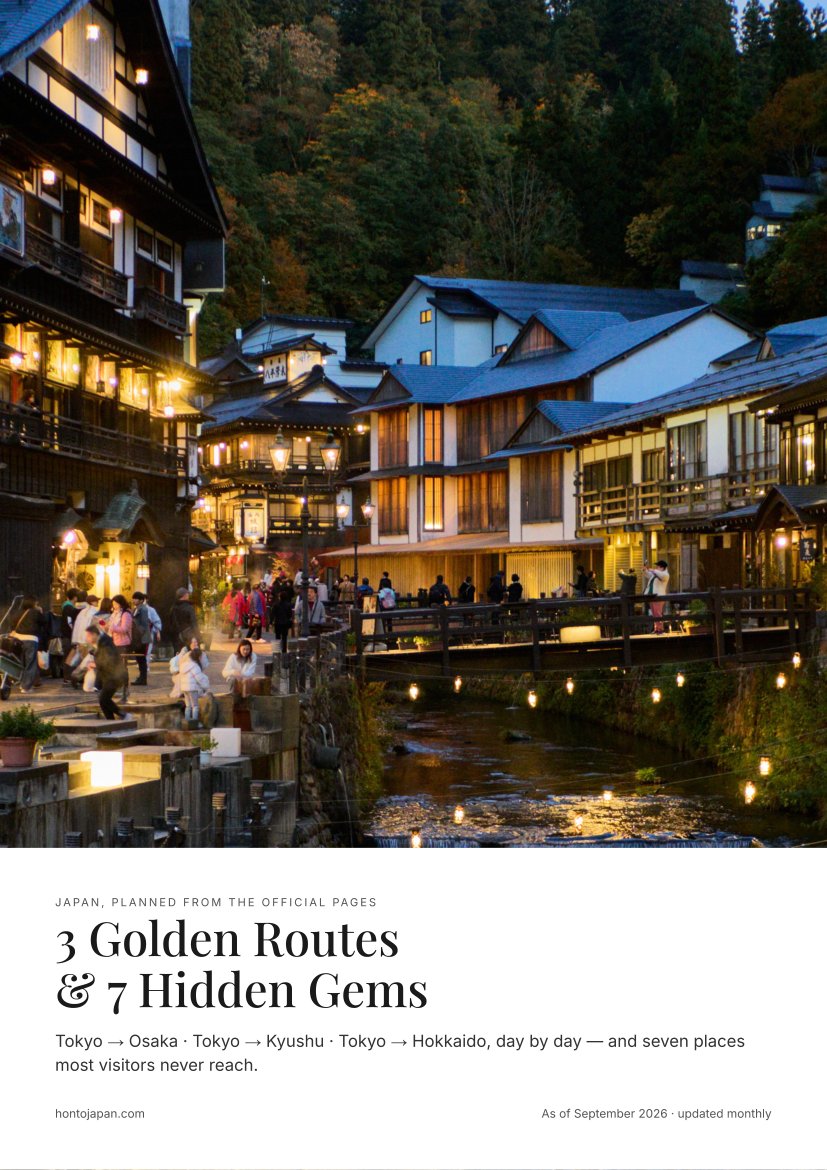
Tokyo to Osaka, Tokyo to Kyushu, Tokyo to Hokkaido — day by day — plus seven places most visitors never reach.
- 12 pages, 80 photographs, every stop linked to its guide
- Every price and opening hour read from the official page
- Re-issued monthly, so it does not go stale in your inbox
Free. One email a month, plus the rare change that matters. Unsubscribe with one click in any email. By subscribing you agree to our privacy policy.