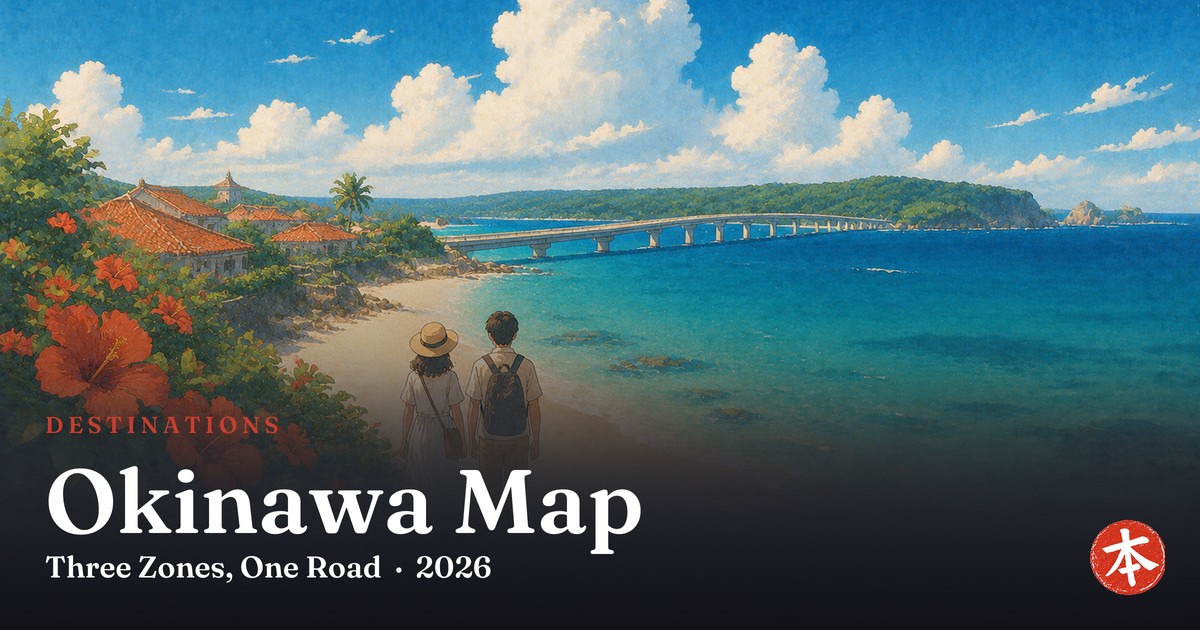
Okinawa's main island confuses first planners because it's not a city with sights — it's a 110km-long island with three distinct zones, one monorail that covers exactly one of them, and driving distances mainlanders underestimate (the famous aquarium is officially two hours from Naha). The 2026 twist every guide will be rewriting: Shuri Castle's rebuilt main hall opens November 23, and admission jumps ¥400 → ¥1,000 the same day. Here's the working map, from official sources.
The main island at a glance
| Zone / system | Official answer (Aug 2026) |
|---|---|
| South (Naha) | Airport · Kokusai St (1.6km, ~600 shops, Sunday transit mall 12:00–18:00) · Shuri Castle · peace sites |
| Central | Chatan's American Village · Yomitan pottery · Koza — limousine bus routes LIM-A/B from the airport |
| North | Onna resort coast · Yanbaru forests · Churaumi Aquarium ¥2,180 (~2h drive from Naha, official) |
| Yui Rail | 19 stations, ~40 min end-to-end · ¥250–390 · day pass ¥1,000 (24-hour clock) / 48h ¥1,800 |
| 🚨 Shuri Castle | Seiden opens Nov 23, 2026 · until Nov 22: ¥400 · from Nov 23: ¥1,000 |
| Kerama day trips | Zamami: fast boat ~1h ¥3,950 / ferry ~2h ¥2,900 · Tokashiki: ~40 min ¥2,608 (Tomari Port) |
The island, zone by zone:
South: Naha, the monorail zone
Which airport arrival moves matter?
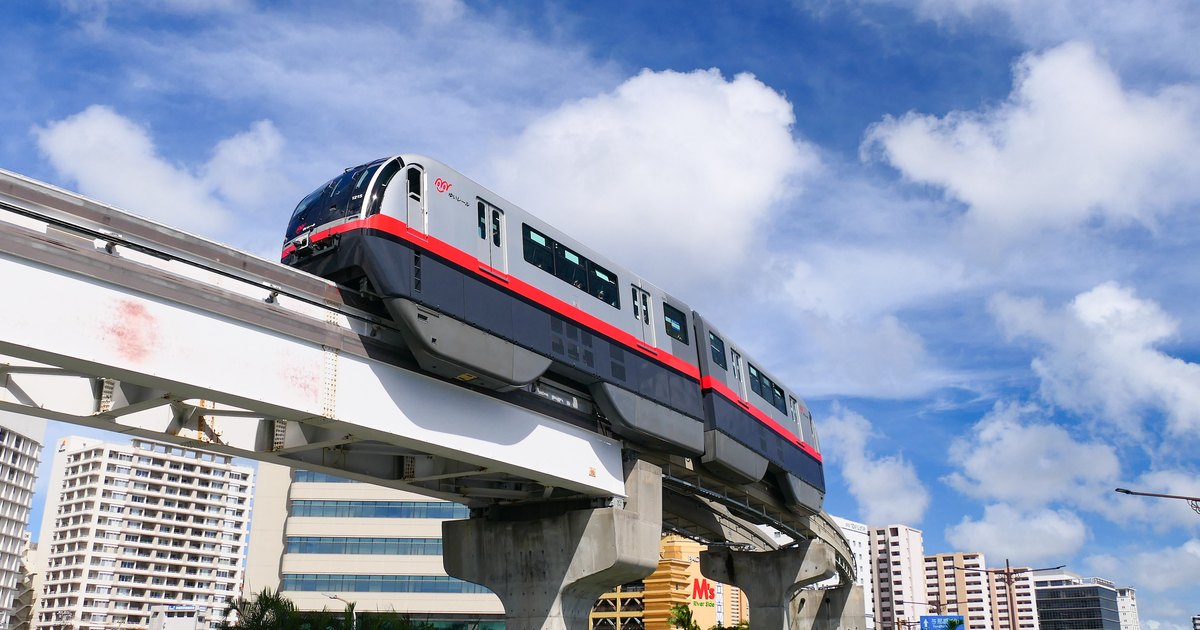
Three, in the first hour. The Yui Rail station connects directly to the terminal — buy the 24-hour pass there if Naha is today's chapter. The limousine bus counters handle resort-bound arrivals (LIM routes to Chatan, Yomitan, Onna and Nago) without a car. And rental-car pickups run on shuttle buses to off-airport lots — budget 30–60 minutes for the paperwork queue in peak season before promising the aquarium by noon.
What can you do without ever renting a car?
The whole southern chapter. The Yui Rail threads the airport to town in minutes — Prefectural Office and Makishi stations bracket Kokusai Street — and its ¥1,000 pass runs a true 24 hours from purchase, so an afternoon activation covers next morning too, with built-in discounts (Shuri's ¥400 era tickets drop to ¥320 with it). Kokusai Street earns an evening and a Sunday: 1.6km of shops and izakaya the city's own materials call the "Miracle Mile," car-free every Sunday 12:00–18:00, with the Makishi market arcades supplying the sea-grape-and-soki-soba deep dive. Up the hill, Shuri Castle is mid-metamorphosis: the ¥400 ticket through November 22 buys the restoration's final act; from November 23 the finished Seiden opens at ¥1,000 — a date change we've logged on the 2026 tracker because it flips every older article's "you can only watch the construction" framing overnight.
North: the aquarium run and the wild half
How do you do the Churaumi day right?
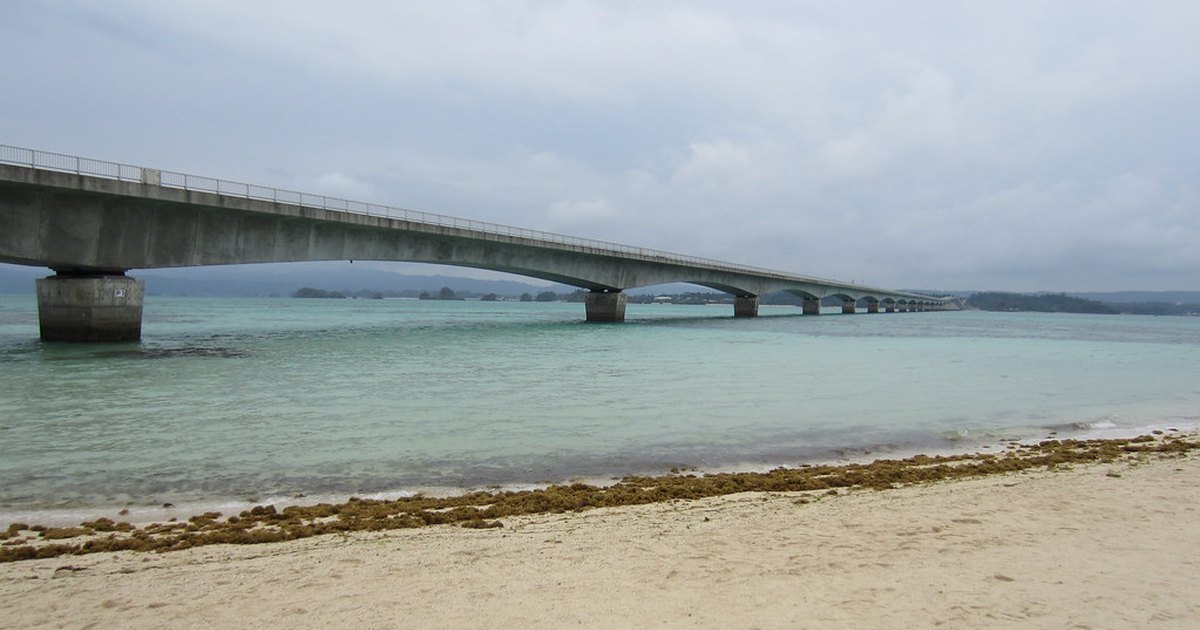
Respect the distance first: the aquarium's own access page says about two hours by car from Naha (about three by express bus), which makes it the anchor of a full northern day, not an add-on. Current tickets run ¥2,180 (the whale sharks remain Japan's best aquarium spectacle at any price; summer 2026 adds evening hours to 20:00–21:00 in peak weeks, and no closure days are scheduled through March 2027). Build the loop: up the west coast past the Onna resort strip, aquarium late morning as tour buses rotate out, then Kouri Island's bridge or the Motobu backroads before the sunset drive south. Drivers need the Geneva-Convention IDP + passport + home license set (or an official translation for a few license countries); the car-free fallback is real but thinner — limousine routes LIM-C/CD serve Onna and Nago, and express buses reach the aquarium. The far north beyond — Yanbaru's national-park forests — is the island's quiet masterpiece for second visits.
West: the Kerama blue, and the calendar that rules everything
What does the central zone add between the two anchors?
The central strip is the island's most American-inflected chapter and the natural drive-break: Chatan's American Village for oceanfront sunset dining, Yomitan's pottery villages for the yachimun kilns and studio shopping, and Koza's music-bar streets for the island's live-house tradition — all served by the airport limousine's LIM-A and LIM-B routes for the car-free. It rarely headlines an itinerary and reliably steals an afternoon of one.
Which day trip and which season?
The Kerama Islands turn a city trip into a reef trip in under an hour: from Naha's Tomari Port, Zamami by high-speed boat (~1 hour, ¥3,950) or budget ferry (~2 hours, ¥2,900), Tokashiki by Marine Liner (~40 minutes, ¥2,608) — both with the improbable blue that named a color. Summer rules: book boats ahead, buy tickets 30 minutes before sailing, and swim inside the jellyfish nets that managed beaches deploy as standard kit. The macro-calendar, per the tourism bureau: beaches open from March, water runs 21°C (February) to nearly 30°C (August), and typhoons cluster in August–September (possible June–October) — the flexible buffer day isn't optional in late summer. Where Okinawa fits the bigger journey: it wants its own flight and three-plus nights inside a two-week route, and this zone-first approach is the same one our map series applies to Japan's other geography-puzzle destinations.
(For the capital in more detail, our Naha map guide covers the monorail line, the walking blocks around Kokusai-dori, and where the ferry piers sit relative to the airport.)
(Getting down there: our how to get to Okinawa guide covers the flights, and the 25-hour ferry from Kagoshima that starts at 14,880 yen.)
(For where the islands sit in the year, our Japan in September guide covers the month when Okinawa is warmest, wettest and most exposed to typhoons at once.)
FAQ
How is Okinawa’s main island organized?
Do I need a rental car in Okinawa?
What is the Yui Rail and what does it cost?
What’s happening with Shuri Castle in 2026?
How far is the Churaumi Aquarium — and what does it cost now?
What is Kokusai Street — and the Sunday rule?
Can I day-trip to the Kerama Islands?
When is beach season — and what about typhoons?
How many days does the main island need?
Bottom line (2026) — Okinawa’s main island runs on a simple map — Naha and the south (monorail territory), the central American-village coast, and the wild north with the Churaumi Aquarium two hours from Naha by car. The 2026 headline: Shuri Castle’s rebuilt main hall opens November 23, and admission jumps. Rent a car for anything north of Naha.
Sources
Zone structure and descriptions: the Okinawa Convention & Visitors Bureau's official English (visitokinawajapan.com) and Japanese (okinawastory.jp) sites. Yui Rail fares and pass terms: the monorail's official fare pages. Rental-vehicle document rules and season/typhoon guidance: the bureau's official planning pages. Churaumi prices, hours and access: the aquarium's official pages. Shuri Castle's opening dates and both fee schedules: the park's official notices. Kokusai Street figures and the transit mall: the street association's and Naha tourism's official pages. Ferry fares: the Zamami and Tokashiki village official sites. Airport bus routes: Naha Airport's official pages. All read on August 20, 2026. The embedded video is by its creator.
Some links on this page may be affiliate links, which means we may earn a commission if you book or buy through them — at no extra cost to you. See our affiliate disclosure.
Tokyo to Osaka, Tokyo to Kyushu, Tokyo to Hokkaido — day by day — plus seven places most visitors never reach.
- 12 pages, 80 photographs, every stop linked to its guide
- Every price and opening hour read from the official page
- Re-issued monthly, so it does not go stale in your inbox
Free. One email a month, plus the rare change that matters. Unsubscribe with one click in any email. By subscribing you agree to our privacy policy.