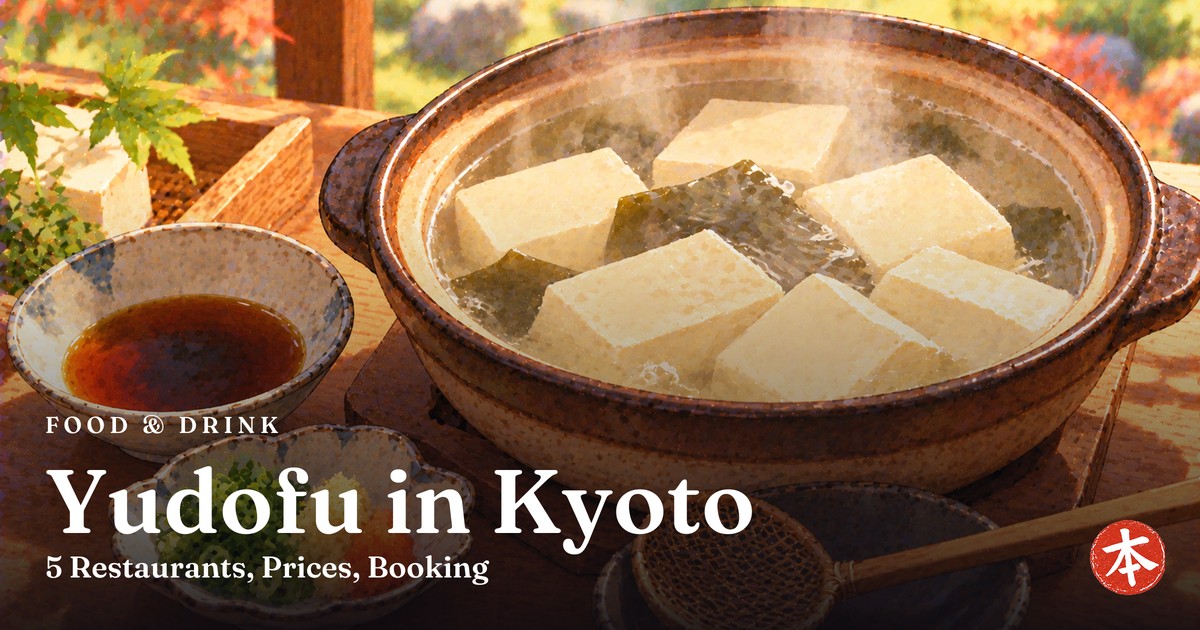
Yudofu, tofu simmered in a pot of hot water and eaten with a dipping sauce, is served across Kyoto, from the temple gates of Nanzenji and Kiyomizu-dera to Arashiyama. At the five yudofu restaurants here, it comes as a set or course, from 2,500 yen with tax at Kiyomizu Junsei Okabeya and 3,850 yen with tax at Nanzenji Junsei, to tofu kaiseki lunches from 5,000 yen at Tousuiro.
This page reports only what each restaurant says on its own website: prices, tax, hours, booking, payment, children and English, plus what goes into the stock. It is not a ranking. The practical surprises: Nanzenji Junsei’s yudofu courses cannot be reserved, only requested for priority seating; Shoraian does not admit children under junior high age and makes even its vegetarian course with bonito stock; Yudofu Sagano closes when its tofu runs out; and two restaurants have announced price revisions this year. If you are still planning your days, our how many days in Kyoto guide splits the city into an east-side day around Nanzenji and Kiyomizu and an Arashiyama day, which is how this page is organized too.
Yudofu in Kyoto at a glance
| Restaurant | Area | Cheapest yudofu set | Hours | Booking | English |
|---|---|---|---|---|---|
| Nanzenji Junsei | Nanzenji | Hana course 3,850 yen with tax | 11:00 to 15:30, 17:00 to 21:30; irregular closing days | Priority request only for yudofu; kaiseki bookable | English site |
| Kiyomizu Junsei Okabeya | Kiyomizu-dera | Yudofu Fuji 2,500 yen with tax (confirm) | 10:30 to 16:00; closing days posted on its news page | Priority registration online | English page |
| Yudofu Sagano | Arashiyama | Yudofu set 4,400 yen with tax | 11:00 to 17:30; ends when tofu runs out | Takes bookings; cancellation fees | No English page |
| Shoraian | Arashiyama | Shoyo lunch 5,500 yen with tax (confirm) | Closed Wednesdays (open in November) | Lunch: booking advised; weekend dinner: booking required | English site |
| Tousuiro (2 shops) | Kiyamachi, Gion | Lunch course 5,000 yen, tax and service included | Lunch from 11:30, dinner from 17:00, last entry 20:00 | Phone; email in English | English site |
Prices as of October 1, 2026. What comes with the tofu, and the setting, differ from one restaurant to the next, so the table is not a like-for-like comparison. Check the official site before you go.
What to know before eating yudofu
What is yudofu?
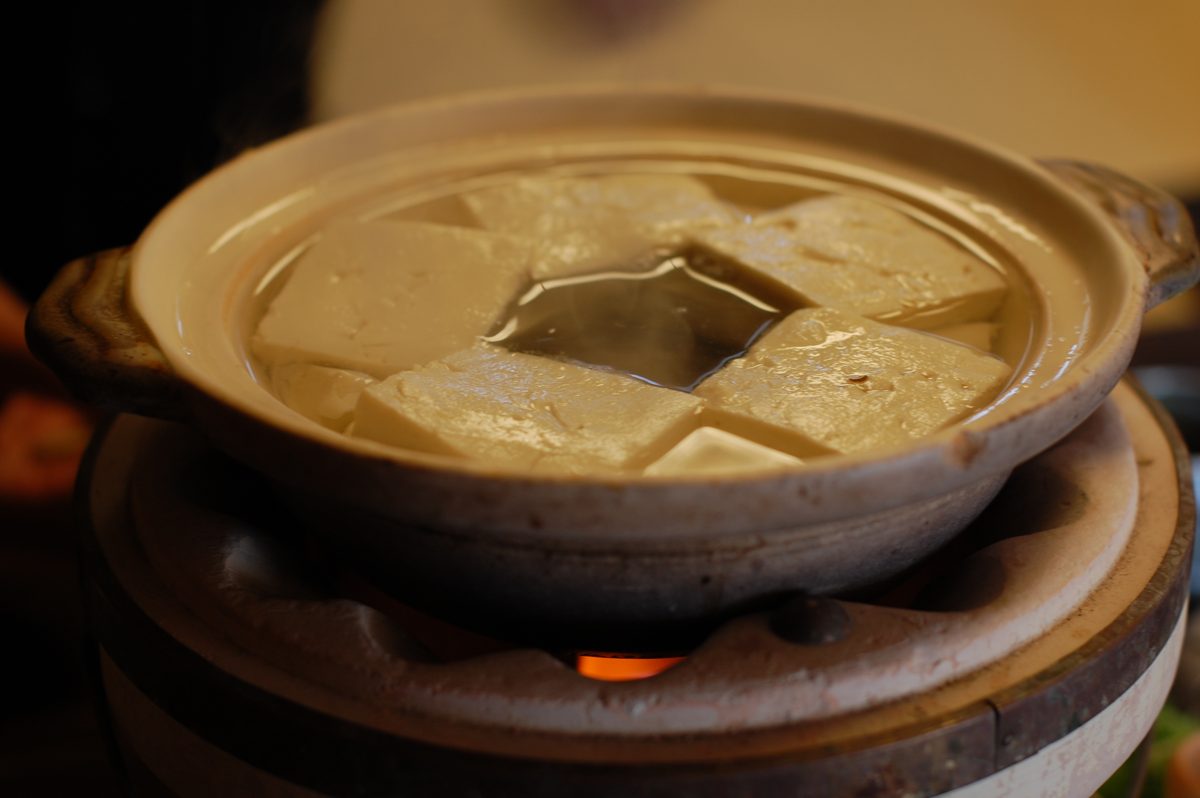
Blocks of tofu warmed in hot water at the table and dipped in a sauce. Junsei says you eat it with its special yudofu sauce, tasting the sweetness of the tofu and a lingering bitterness of soybeans. Okabeya says that tofu warmed to just the right temperature brings out its sweetness, followed by a pleasant bitterness and the aroma of soybeans, and that its own sauce draws out more flavor.
Why are Nanzenji and Arashiyama the yudofu districts?
Junsei calls its yudofu a specialty born as teahouse fare at the gate of Nanzenji. It quotes an Edo-period Kyoto guidebook, the Karaku Meisho Zue, which described the yudofu at a shop named Tangoya as a long-standing specialty that travelers always tried, and says this shows Nanzenji’s yudofu was already famous then. In Arashiyama, both restaurants here name Saga tofu: Sagano says it uses traditional Kyoto Saga tofu, and Shoraian says it uses Saga tofu from Morika. Several shops make their own claims about where yudofu began, so we do not name a first one.
Do you order yudofu on its own?
Not at these five. None lists a single yudofu price. It comes in a set or course with small dishes such as simmered vegetables, tofu dengaku with miso, vegetable tempura, rice and pickles, so the price covers a full meal.
Is yudofu only for winter?
No. These restaurants serve it all year. Junsei says you can choose chilled tofu in summer, and Sagano offers yudofu, chilled mustard tofu or cold somen noodles in summer. In autumn, Shoraian opens on Wednesdays during the November foliage season; our Japan in November guide covers the season.
Yudofu near Nanzenji and Kiyomizu-dera
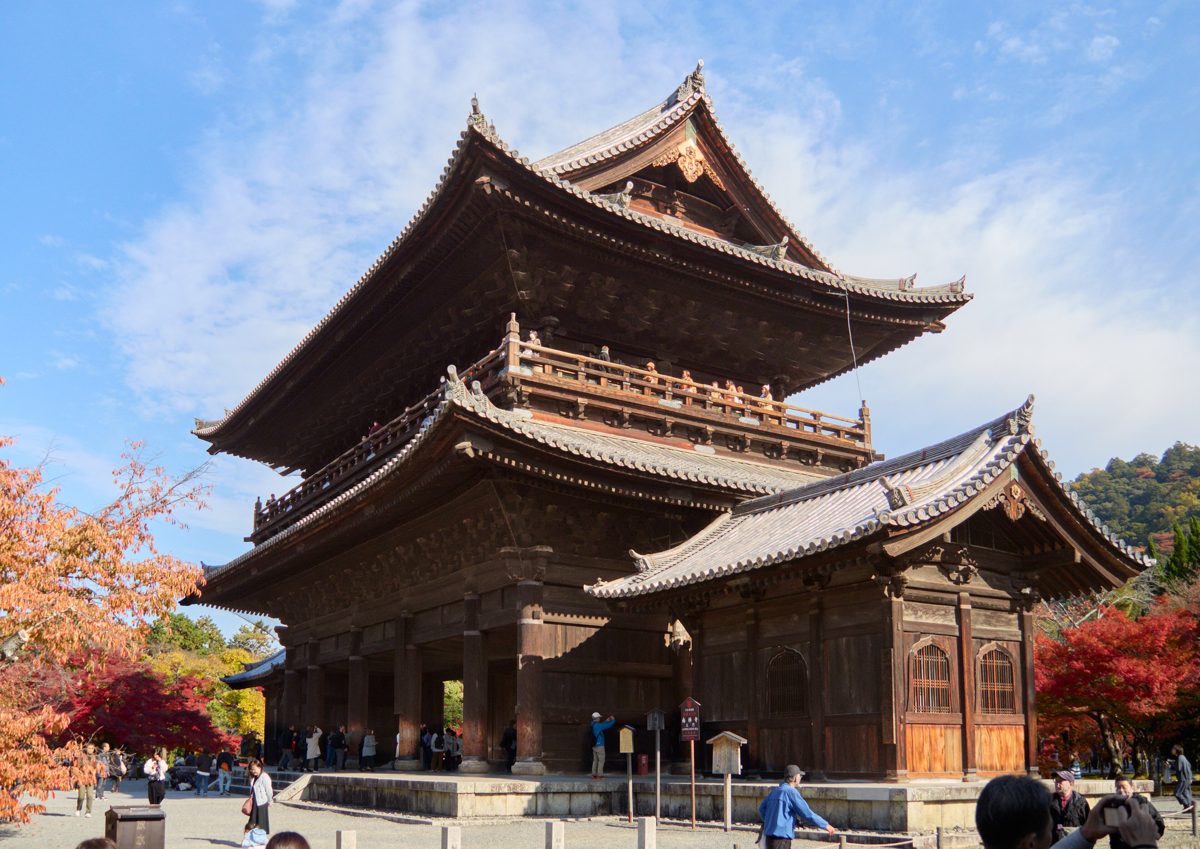
Nanzenji Junsei: yudofu courses from 3,850 yen at the temple gate
Nanzenji Junsei lists three yudofu courses, all with tax: Hana at 3,850 yen, Tsuki at 4,950 yen and Yuki at 5,830 yen (as of October 2026; official menu). Its English menu gives the same prices. For the Hana course, you choose yudofu or yuba as the main pot, with an example menu of a small dish, simmered vegetables, dengaku, vegetable tempura, rice and pickles (as of October 2026; Hana course). The yuba is made from soy milk like the tofu, and you make the fresh yuba yourself.
Above that, the Yudofu Shunsai courses Aoi and Satsuki are 7,700 and 9,350 yen with tax. The yudofu kaiseki courses run from 11,000 to 16,500 yen with tax, served in private rooms with a 10 percent service charge on top, and shabu-shabu starts at 11,000 yen with tax, service extra.
Junsei is in front of Nanzenji, in Sakyo-ku, five minutes from exit 2 of Keage Station on the Tozai subway line. Nanzenji itself is two minutes away, the Suirokaku aqueduct three and Eikando eight. Lunch is 11:00 to 15:30, last order 14:30, and dinner 17:00 to 21:30, last order 19:00. Closing days are irregular: its latest notice lists October 7 and 14, 2026, and later dates had not been announced on October 1, 2026. It takes cash and credit cards, has no parking, and has an English site.
The building, Junsei Shoin, was begun in 1839 by a scholar of Dutch learning as a medical school, took three years to build, and is a registered tangible cultural property, the restaurant says.
Kiyomizu Junsei Okabeya: a 2,500-yen yudofu set by Kiyomizu-dera
Okabeya, in front of Kiyomizu-dera, lists its Yudofu Fuji set at 2,500 yen with tax: yudofu, simmered vegetables, sesame tofu, tofu dengaku, vegetable tempura, rice and pickles (as of October 2026; official menu). A yuba set is 2,750 yen with tax. Its English page gives the same amounts but does not say whether tax is included; the Japanese page says it is.
It is at Kiyomizu 2-chome, Higashiyama-ku, about ten minutes on foot from the Gojozaka bus stop on city bus 206, or about 25 minutes from Kiyomizu-Gojo Station on the Keihan line. It opens 10:30 to 16:00, last order 15:00; after 15:00 it takes only groups and tour operators who have booked ahead. It does not list a regular closing day; it announces closing days on its news page instead. In July to September they fell on Wednesdays, plus a summer break, and no dates from October on had been posted on October 1, 2026.
Its site has a button to register for priority seating through an outside booking service. It has an English page and links a halal menu page. There is no parking. Payment methods are not listed on the pages we read.
Yudofu in Arashiyama
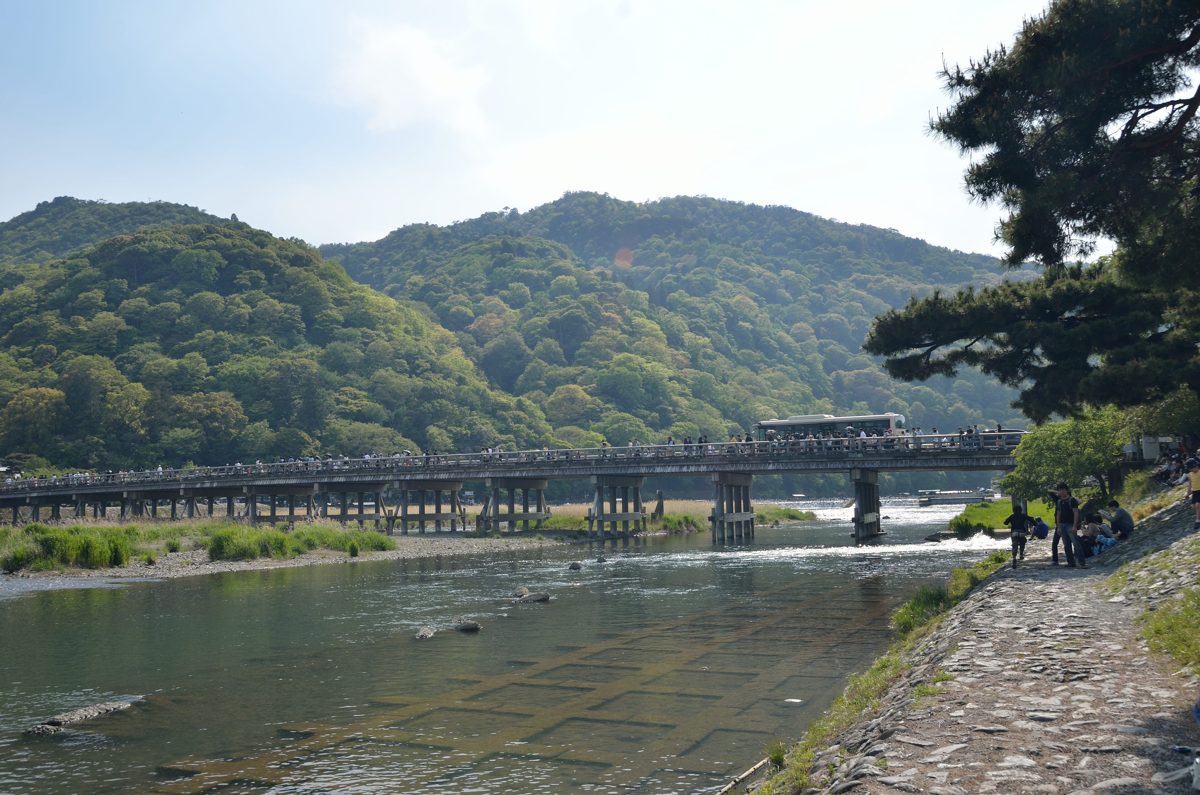
Yudofu Sagano: a 4,400-yen set near Tenryuji
Yudofu Sagano’s yudofu set is 4,400 yen with tax (as of October 2026; official menu). Made with traditional Kyoto Saga tofu, it comes with a warm dish, a fried dish, a small dish and pickles. In summer you can pick yudofu, chilled mustard tofu or cold somen noodles. The Sagano Gozen, at 6,600 yen with tax, adds Kyoto vegetables and yuba: a soup, a six-item hassun platter, yuba sashimi, simmered seasonal vegetables, a seasonal dish, vegetable kakiage, rice, pickles and dessert, with yudofu.
It is at Saga Tenryuji Susukinobaba-cho 45, Ukyo-ku, near the grounds of Tenryuji, which its site places five minutes’ walk from Togetsukyo Bridge. From JR Saga-Arashiyama Station it is ten minutes on foot; from the Arashiyama Tenryuji or Arashiyama bus stops, five. It has parking for 20 cars. The building is described as sukiya-style, with tatami rooms on two floors; its new wing is not open at present.
Sagano takes bookings through links on its home page and charges for late cancellations: nothing up to two days before, 50 percent for notice the day before or on the day, and 100 percent with no notice. Its site does not say whether you can walk in without a booking. It has no English page and does not list payment methods.
Shoraian: tofu kaiseki upstream of Togetsukyo, from 5,500 yen
Shoraian sits upstream of Togetsukyo Bridge in a house it says is known as a former villa of Konoe Fumimaro. Its lunch courses, with tax, are Shoyo at 5,500 yen, with a starter, a hassun platter, yudofu, agedashi tofu, rice and pickles and dessert; Shorai at 6,500 yen; Shoryu at 7,000 yen, built around yuba shabu-shabu instead of yudofu; and Shofu at 8,000 yen, with yudofu and a small wagyu fillet steak (as of October 2026; Japanese menu). Dinner courses are Shorin at 10,000 yen, Shofuku at 10,000 yen with yuba shabu-shabu, and Shoju at 12,000 yen. Its English menu gives the same amounts (as of October 2026; English menu). The tofu, it says, is Saga tofu from Morika.
It opens 11:00 to 17:00 on Mondays, Tuesdays and Thursdays, and 11:00 to 20:00 on Fridays, weekends and holidays. It closes on Wednesdays, but opens on Wednesdays during Golden Week and the November foliage season, and closes over the New Year. Dinner is served only on Fridays, weekends and holidays, and must be booked by 17:00 the day before. Lunch does not need a booking, but the shop is small and often full, so it asks you to book by phone if you can. It takes bookings by phone or online.
Shoraian is 15 minutes on foot from Randen Arashiyama Station, 20 from Hankyu Arashiyama and 25 from JR Saga-Arashiyama. It stands inside a public park that cars cannot enter, so there is no parking. Seating is mostly tatami, with one table room for up to four. It takes Visa, Mastercard, JCB, American Express and Diners, and PayPay. If you are spending a slow day on this side of the city, our tea ceremony in Kyoto guide covers another sit-down experience.
Tofu kaiseki in central Kyoto: Tousuiro
Tousuiro, Kiyamachi and Gion: refillable oboro tofu from 5,000 yen
Tousuiro runs two shops serving tofu kaiseki, and every price includes tax and service. At Kiyamachi, the Rindou course is 5,000 yen, lunch only, followed by Takasegawa at 8,000 yen, Miyabi at 12,000 yen and the vegetarian Rokuhara at 12,000 yen (as of October 2026; Kiyamachi menu). At Gion, the Obana course is 5,000 yen, lunch only, followed by Shirakawa at 8,000 yen, Kiyomizu at 12,000 yen, Rokuhara at 12,000 yen, and gluten-free versions of Rokuhara and Kiyomizu at 13,000 yen each (as of October 2026; Gion menu). The gluten-free courses carry a note asking for booking three days ahead.
Its signature is oboro tofu with free refills, listed hot or chilled depending on the course. The course descriptions change with the seasons, so we give only names and prices. Tousuiro says its Rokuhara course uses no meat, seafood or dairy and no dried sardines or bonito flakes in the stock, and the Gion gluten-free courses also avoid wheat flour, down to the seasonings. For more on eating without wheat, see our gluten-free Japan guide, and for the wider format, our kaiseki in Tokyo guide.
The Kiyamachi shop is on Kiyamachi-dori north of Sanjo, Nakagyo-ku, about five minutes from Kyoto Shiyakusho-mae subway station. Its riverside deck, the kawayuka, runs from early May to late September with a seat charge of 1,500 yen per person, so it is out of season in October, and the shop is closed all day on October 21, 2026 while the deck is taken down. The Gion shop is on Higashioji-dori, Higashiyama-ku, about 15 minutes from Gion-Shijo Station on the Keihan line, in a converted machiya with a storehouse room that seats up to eight at two tables.
Both list lunch from 11:30 and dinner from 17:00, with last entry at 20:00, and no regular closing day. Bookings are by phone, at set hours: 10:00 to 11:30, 15:00 to 17:00 and 19:30 to 21:00. Its English site takes email bookings until three days before your visit, and says same-day cancellations are charged 100 percent. Payment methods are not listed on the pages we read.
What does yudofu cost in Kyoto?
Yudofu prices in Kyoto, as published
| Restaurant | Yudofu set or lunch | Higher courses | Tax, per the site |
|---|---|---|---|
| Kiyomizu Junsei Okabeya | 2,500 yen; yuba set 2,750 yen | Not covered here | With tax; price revision from May 1, 2026 |
| Nanzenji Junsei | 3,850, 4,950 or 5,830 yen | 7,700 to 9,350 yen; kaiseki 11,000 to 16,500 yen | With tax; kaiseki adds 10 percent service |
| Yudofu Sagano | 4,400 yen | 6,600 yen | With tax |
| Tousuiro | 5,000 yen, lunch only | 8,000 to 13,000 yen | Tax and service included |
| Shoraian | 5,500 to 8,000 yen at lunch | 10,000 to 12,000 yen at dinner | With tax; price revision from August 1, 2026 |
Why don’t yudofu prices compare directly?
Because the meals are not the same. A 2,500-yen set by Kiyomizu-dera and a 5,500-yen lunch course in a villa above the river are different experiences, and Junsei’s kaiseki adds a service charge while Tousuiro’s prices already include it. Compare within a restaurant, not across them.
Which yudofu prices may change?
Two restaurants have announced revisions this year. Okabeya said some items would change from May 1, 2026, and Shoraian said its prices would rise from August 1, 2026. We could not confirm that either menu page reflects the change, so treat those figures as a guide and confirm before you go.
Is yudofu in Kyoto vegetarian?
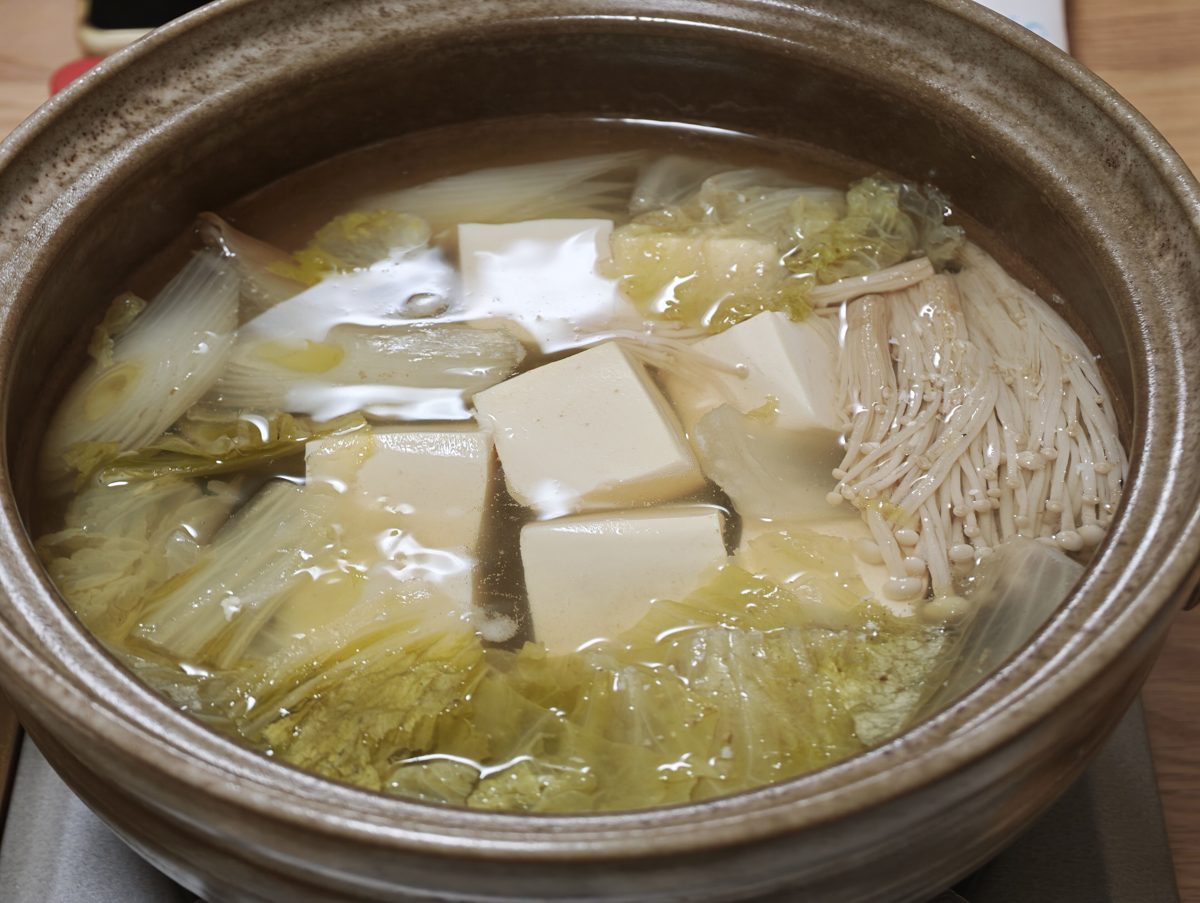
Which restaurants use fish stock?
Tofu sounds vegetarian, but the stock and sauce may not be. Shoraian says all its dishes, including its vegetarian courses, are made with bonito stock, so they do not suit strict vegetarians or vegans. Tousuiro says its Rokuhara course uses no meat, seafood or dairy and no dried sardines or bonito flakes in its stock. Tenryuji’s own shojin restaurant, Shigetsu, says it uses no animal ingredients, though its current menu does not list yudofu.
What about the other restaurants?
Junsei, Okabeya and Sagano do not say what goes into their dipping sauce or stock, so ask when you order. Okabeya links a halal menu page. For more on eating meat-free in Japan, see our vegetarian restaurants in Tokyo guide.
Booking, paying and children at Kyoto yudofu restaurants
Can I book a table?
It depends. Junsei takes only priority requests for its yudofu courses, for two to four people, and normal bookings for kaiseki. Okabeya has a priority registration button. Sagano takes bookings with cancellation fees but does not say whether they are required. Shoraian asks you to book lunch if you can and requires a booking for weekend dinners. Tousuiro books by phone, or by email in English three days ahead.
Can I pay by card?
Junsei takes cash and credit cards, and Shoraian takes major cards and PayPay. Okabeya, Sagano and Tousuiro do not list payment methods on the pages we read, so carry cash.
Can I bring children?
Not to Shoraian, which does not admit children younger than junior high school age. The other four do not mention an age limit on the pages we read.
Is there an English menu?
Junsei, Shoraian and Tousuiro have English sites with prices, and Okabeya has an English page. Sagano has no English page.
Which yudofu restaurant in Kyoto suits you?
For the cheapest set by a famous temple, Okabeya at Kiyomizu-dera, after confirming the price. For yudofu at the gate of Nanzenji with a historic building, Junsei, accepting that you request priority rather than book. For a set near Tenryuji in Arashiyama, Sagano, arriving early. For a riverside villa and tofu kaiseki, Shoraian, without young children and not on a Wednesday outside November. For a vegetarian or gluten-free meal with stock free of fish, Tousuiro, in Kiyamachi or Gion.
Frequently asked questions
How much does yudofu cost in Kyoto?
Can I book yudofu at Nanzenji Junsei?
Is yudofu vegetarian?
Can I bring children to a yudofu restaurant in Kyoto?
Where can I eat yudofu in Arashiyama?
Where can I eat yudofu near Kiyomizu-dera?
Is yudofu only a winter dish?
Why is Nanzenji famous for yudofu?
Bottom line (2026): Yudofu in Kyoto comes as a set or course, from 2,500 yen with tax at Okabeya and 3,850 yen with tax at Nanzenji Junsei, whose yudofu courses take priority requests, not reservations. Sagano closes when its tofu runs out. Shoraian admits no children under junior high age and uses bonito stock even for vegetarians; Tousuiro’s Rokuhara course uses none.
Sources
Every price and rule on this page is from the restaurants’ and temple’s own websites: Nanzenji Junsei, Nanzenji Junsei (English), Nanzenji Junsei menu, Nanzenji Junsei Hana course, Nanzenji Junsei Yudofu Shunsai, Nanzenji Junsei kaiseki, Nanzenji Junsei access and hours, Nanzenji Junsei priority seating, Nanzenji Junsei on its yudofu, Nanzenji Junsei on its building, Nanzenji Junsei closing days notice, Kiyomizu Junsei Okabeya, Kiyomizu Junsei Okabeya (English), Kiyomizu Junsei Okabeya halal menu, Kiyomizu Junsei Okabeya yudofu, Kiyomizu Junsei Okabeya yuba, Kiyomizu Junsei Okabeya access, Kiyomizu Junsei Okabeya closing days notice, Kiyomizu Junsei Okabeya price revision notice, Yudofu Sagano, Yudofu Sagano menu, Yudofu Sagano access and hours, Yudofu Sagano rooms, Yudofu Sagano about, Shoraian, Shoraian menu (English), Shoraian reservations and FAQ (English), Shoraian (Japanese), Shoraian menu (Japanese), Shoraian reservations (Japanese), Tousuiro, Tousuiro (English), Tousuiro Kiyamachi menu, Tousuiro Gion menu, Tousuiro Kiyamachi, Tousuiro Gion, Tousuiro English menu, Tenryuji Shigetsu, all read on October 1, 2026. Menus, prices and hours change, so confirm on the official site before you go.
Some links on this page may be affiliate links, which means we may earn a commission if you book or buy through them — at no extra cost to you. See our affiliate disclosure.
Tokyo to Osaka, Tokyo to Kyushu, Tokyo to Hokkaido — day by day — plus seven places most visitors never reach.
- 12 pages, 80 photographs, every stop linked to its guide
- Every price and opening hour read from the official page
- Re-issued monthly, so it does not go stale in your inbox
Free. One email a month, plus the rare change that matters. Unsubscribe with one click in any email. By subscribing you agree to our privacy policy.