AFURI is the ramen shop travelers photograph most and understand least. Yes, the yuzu shio — a citrus-bright salt broth as far from heavy tonkotsu as ramen gets — is the order. But the two facts that actually shape your visit appear in almost no guide: the official menu publishes no prices at all (every number you've read is unofficial), and at least 13 Tokyo-area branches take no cash whatsoever. Here's the full official picture: all 17 Tokyo shops, the late-night branches, the lotus-root vegan bowl, and the ordering playbook.
AFURI at a glance
| The order | Yuzu shio ramen · also yuzu shoyu, spicy yuzu ratan, 4 tsukemen styles, summer chilled yuzu bowl |
|---|---|
| Tokyo shops | 15 in the 23 wards + 2 in west Tokyo (official list) · plus Yokohama ×2, Niseko, and ZUND-BAR — the Atsugi original |
| Late night | Ebisu daily to 5:00 a.m. · Roppongi Crossing / Sancha / Dogenzaka to 5:00 Fri–Sat & pre-holidays · all "until the soup runs out" |
| 🚨 Payment | At least 13 branches fully cashless (official markings) — card or IC required |
| 🚨 Prices | Not published officially — any number you see elsewhere is third-party |
| Vegan | Rainbow Vegan Ramen: 100% plant-based, lotus-root-bound noodles · not at Yokohama Joinus / ZUND-BAR |
| Don't confuse | AFURI Karakurenai (Shinjuku Subnade, Harajuku) = separate spicy yakuzen concept |
The bowl, the counter and the yuzu, on camera:
What yuzu shio ramen actually is
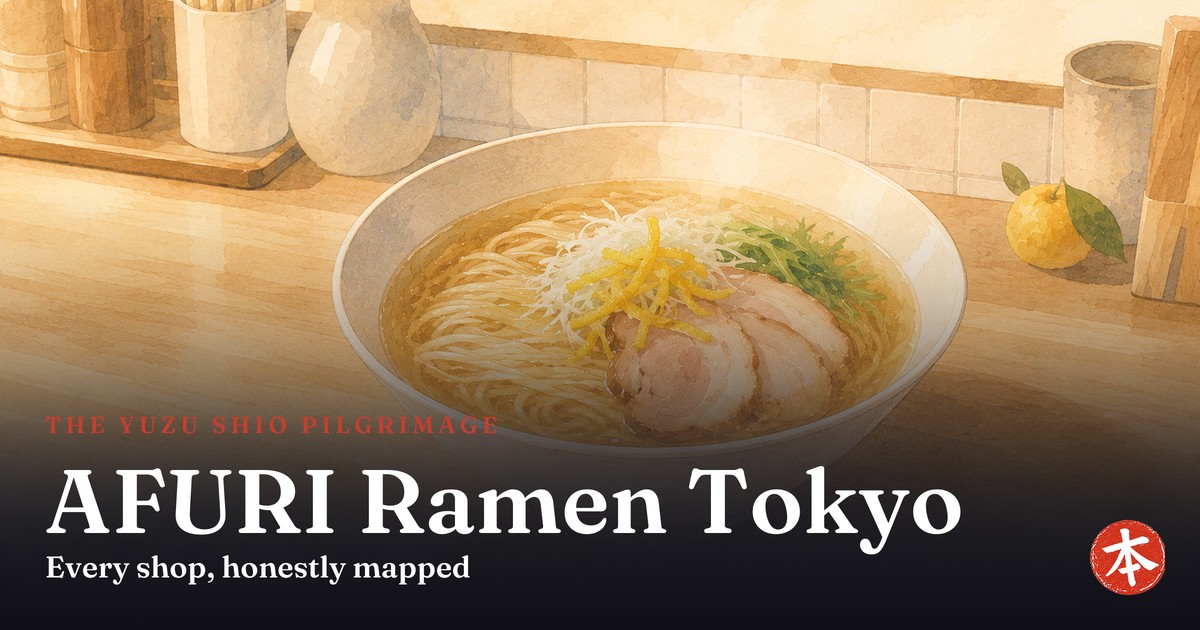
Ramen's broad church runs from pork-bone sludge (glorious) to chicken-and-dashi clarity, and AFURI planted its flag at the clear end: a salt-based broth finished with yuzu, the Japanese citrus, so the bowl reads bright, aromatic and almost light. The official menu keeps the family tight — yuzu shio and yuzu shoyu as the twin pillars, a chili-driven yuzu ratan for heat, and tsukemen (dipping noodles) in four broth styles from sweet to yuzu-spicy. Summer 2026 brings the official seasonal chilled yuzu shio noodles, and August adds a limited shiso-and-plum cold bowl marking the Naka-meguro shop's 15th anniversary. The lineage matters for connoisseurs: the company began with ZUND-BAR in the Tanzawa foothills of Atsugi — still operating, still on the official list — and named itself for Mt. Afuri above it.
Every Tokyo location, sorted by use case
Which branches matter for a visitor?
The official list runs 17 shops across greater Tokyo; these are the ones that solve actual itinerary problems. Harajuku (technically Sendagaya 3-chome, north of the scramble): opens 10:00, the earliest of the pack — a legitimate late breakfast. Ebisu: the marquee shop, 11:00 to 5:00 a.m. daily. Roppongi Crossing / Sangenjaya / Shibuya Dogenzaka: weekend nights to 5:00 a.m. Shinjuku Lumine (10:00–22:00) and Shinjuku Sumitomo Building for the west side; Yurakucho — opened June 2025 — for Ginza-adjacent days; Takanawa Gateway — September 2025, in the Newman complex — for the shinkansen-adjacent south. Roppongi Hills, Naka-meguro, Azabu-juban and Minami-aoyama round out the fashionable middle. Every listing carries the same honest asterisk: the shop closes when the soup runs out, so don't bet a 4:30 a.m. bowl on it.
🚨 The cashless rule and the missing prices
Why can't I find official prices anywhere?
Because they don't exist online: AFURI's official menu page names every bowl and prices none of them — we verified the raw page has no yen figures at all. That's why this guide refuses to quote a number; the blogs quoting one are copying each other, not the source. The payment rule is better documented and more consequential: the official store list marks at least 13 branches as completely cashless — Ebisu, Harajuku, Naka-meguro, Azabu-juban, both Roppongi shops, Sancha, Shinjuku Sumitomo, Minami-aoyama, Dogenzaka and more. A contactless credit card or a Suica/Pasmo IC card sails through; a wallet of cash may not. (A few shops — Shinjuku Lumine, Yurakucho, Takanawa — carry no cashless marking, but don't rely on it.) For the wider strategy of eating well in this city, our food tour guide covers the have-a-local-order approach, and the Tokyo Station Ramen Street guide maps the eight-shop alternative when you want ramen variety in one corridor.
The vegan bowl: lotus-root noodles, real limits
The Rainbow Vegan Ramen is AFURI's serious answer to a question most ramen shops dodge, and the official description is worth quoting in substance: 100% plant-based from broth to toppings, with seasonal vegetables and noodles bound with lotus root instead of egg. The equally official limits: it's one dish on an otherwise conventional menu, the vegetable lineup rotates with the seasons, and two locations — Yokohama Joinus and ZUND-BAR — don't serve it at all. For travelers building whole plant-based days in this city, our vegetarian Tokyo guide is the companion piece; AFURI slots in as the reliable ramen stop on that circuit.
Beyond Tokyo: the family tree
Two branches of the family are worth knowing. Karakurenai ("deep crimson") is AFURI's spicy yakuzen-ramen spinoff with shops in Shinjuku Subnade and Harajuku — a different menu behind a similar logo, so check the sign before queueing. And the overseas network — Portland since 2016, then Lisbon, Singapore, Hong Kong, Brooklyn, LA, Toronto per the official history and store list — runs under "AFURI Franchise Inc. USA" on the North American site. The official pages don't detail the corporate arrangement, so neither will we; what matters to an eater is that the Tokyo shops are the source code.
(The stylistic opposite of Afuri's yuzu bowls: Ichiran's current prices and booth system, updated for the July 2026 revision.)
FAQ
What is AFURI famous for?
How many AFURI locations are there in Tokyo?
Is AFURI open late at night?
How much does AFURI ramen cost?
Does AFURI take cash?
Does AFURI have vegan ramen?
What is AFURI Karakurenai?
Is the AFURI in Portland or Brooklyn the same as the Tokyo one?
Do I need to line up? Can I reserve?
Which AFURI branch is best for a first-timer?
Bottom line (2026) — AFURI’s yuzu shio ramen runs across 17 Tokyo-area shops, with a 100% plant-based Rainbow Vegan Ramen bound with lotus-root noodles. Two facts most guides miss: the official menu publishes no prices, and at least 13 branches are completely cashless. Late-night options include Ebisu (11:00–5:00 a.m.) and Friday–Saturday 5:00 a.m. closes at Roppongi Crossing, Sangenjaya and Dogenzaka — subject to the shop’s “closes when soup runs out” caveat.
Sources
Store locations, addresses, hours (including Ebisu's 11:00–5:00 a.m., Harajuku's 10:00 opening, and the Friday–Saturday 5:00 a.m. closes at Roppongi Crossing, Sangenjaya and Dogenzaka), the "closes when soup runs out" caveats and the cashless-store markings: AFURI's official store list. Menu names, the Rainbow Vegan Ramen's composition (100% plant-based, lotus-root-bound egg-free noodles), its two excluded locations and the seasonal items: the official menu page and official press announcements (chilled yuzu shio, June 2026; Naka-meguro 15th-anniversary August bowl, July 2026). Company history, ZUND-BAR origins and overseas milestones: the official company page. The absence of published prices was verified against the official menu page's raw text. All read on August 12, 2026. The embedded video is by its creator.
Tokyo to Osaka, Tokyo to Kyushu, Tokyo to Hokkaido — day by day — plus seven places most visitors never reach.
- 12 pages, 80 photographs, every stop linked to its guide
- Every price and opening hour read from the official page
- Re-issued monthly, so it does not go stale in your inbox
Free. One email a month, plus the rare change that matters. Unsubscribe with one click in any email. By subscribing you agree to our privacy policy.