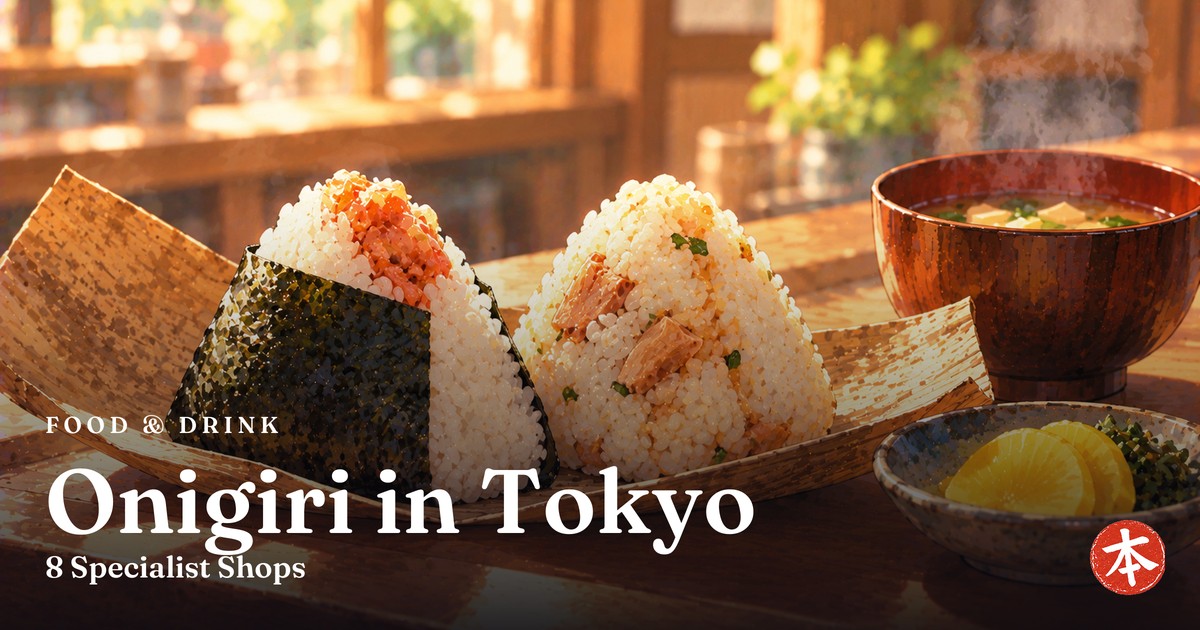
Onigiri, rice shaped by hand around a filling and wrapped in nori seaweed, is a convenience store staple in Japan. The specialist shops in Tokyo are something else: one says it makes each onigiri after you order, like a sushi counter, and one says it has been doing this behind Senso-ji since 1954. A single onigiri at the shops that list them costs from 130 yen to 800 yen, and a sit-down set with miso soup from 814 yen.
This page covers eight onigiri shops in Tokyo and reports only what each says on its own website: prices, tax, sets, hours, takeout rules, payment and English, plus how each says it makes its onigiri. It is not a ranking. If you are after the convenience store kind, our konbini sandwich guide has a section on onigiri.
Onigiri in Tokyo at a glance
| Shop | Area | Cheapest single onigiri | How you eat | Payment | English |
|---|---|---|---|---|---|
| Onigiri Asakusa Yadoroku | Asakusa, behind Senso-ji | No single-item list; set of 2 from 814 yen | Counter and tables, takeout | Cash only | English page |
| Onigiri Bongo | Otsuka | 400 yen with tax | Counter, takeout (phone orders) | Not listed | Not mentioned |
| Onigiri Manma | Shinjuku | 400 yen with tax (mobile order) | Takeout by mobile order | Cards, Apple Pay, Google Pay online | Not mentioned |
| Onigiri Cafe Risaku | Sendagi | 220 yen, tax not stated | Cafe, takeout | Not listed | Introduction page |
| Omusubi Gonbei | 40 shops in Tokyo | 130 yen (takeout, 8% tax) | Takeout; eat-in at some shops (10% tax) | Not listed | English site |
| Onigiri Konga | Haneda Airport, Nihombashi, Akasaka and more | From 390 yen, as listed | Varies by shop | Not listed | Not mentioned |
| Kikutaya | Tokyo Station (Daimaru), Shinjuku Station | 240 yen with tax | Takeout | Not listed | Menu in English, Korean, Chinese |
| Honnoriya | Inside Tokyo Station, Yaesu Central gate | No regular price list; new item from 270 yen with tax | 18 seats, takeout | Mobile order: credit card only | Not mentioned |
Prices as of September 28, 2026. The shops do not publish weights, and sizes and fillings differ, so the table shows the cheapest item each lists, not a like-for-like comparison. Check the official site before you go.
What makes an onigiri specialist shop in Tokyo different?
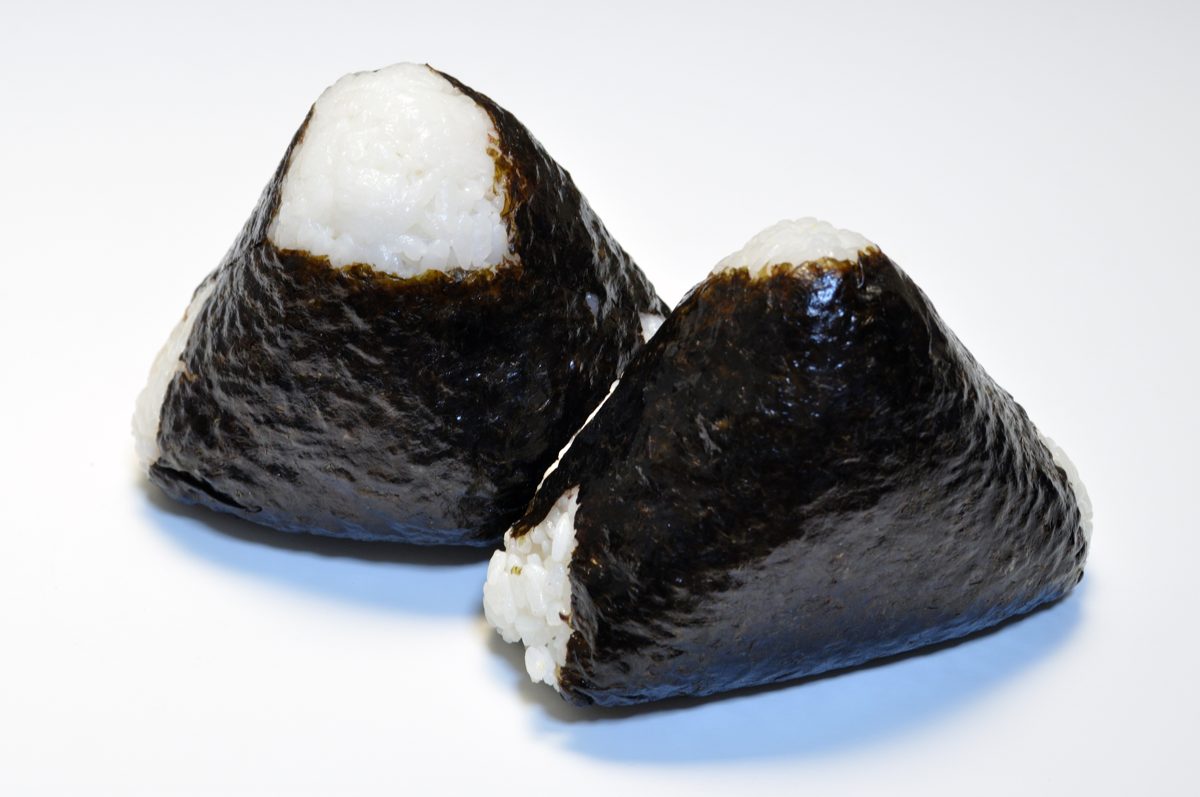
What exactly is onigiri?
Yadoroku’s English page defines onigiri as a traditional Japanese rice ball, white rice formed into triangular or oval shapes and often wrapped in nori seaweed. Its Japanese page describes its own as Koshihikari rice cooked in a large pot and wrapped in fragrant Edomae nori. Omusubi Gonbei’s English site calls omusubi a daily staple in Japan: rice and a savory filling wrapped in nori.
Onigiri or omusubi: is there a difference?
Both words mean a rice ball. Omusubi Gonbei, which uses omusubi, explains its choice: its staff do not grip the rice, nigiru, they tie it together with care, musubu, by hand and without a mold. Honnoriya also calls its rice balls omusubi. That is how these shops describe their own food, not a rule that other shops follow.
Warm from the counter, or made to be eaten cool?
Two of the shops describe opposite ideals. Onigiri Bongo says it makes each onigiri after you order, the way a sushi restaurant works, and that it has a counter so it can hand you a warm onigiri on the spot. Omusubi Gonbei says an omusubi shows what the rice is really worth once it has cooled. Neither is a rule for the other shops here.
How do the shops shape their onigiri?
Each has its own method. Bongo says its onigiri are not squeezed at all but wrapped in crisp nori, with rice and filling at a basic ratio of 2 to 1 and some filling placed on top as a marker, so you know where to start eating. Kikutaya says it shapes the rice as if wrapping cotton candy: soft inside, firm outside, adjusting the water for the rice variety and the day’s temperature. Onigiri Konga spreads freshly cooked rice on a tray to let the steam off, and says the rice and filling hold together without gripping hard. Honnoriya says you meet the filling wherever you bite the triangle.
Sit-down onigiri shops in Tokyo
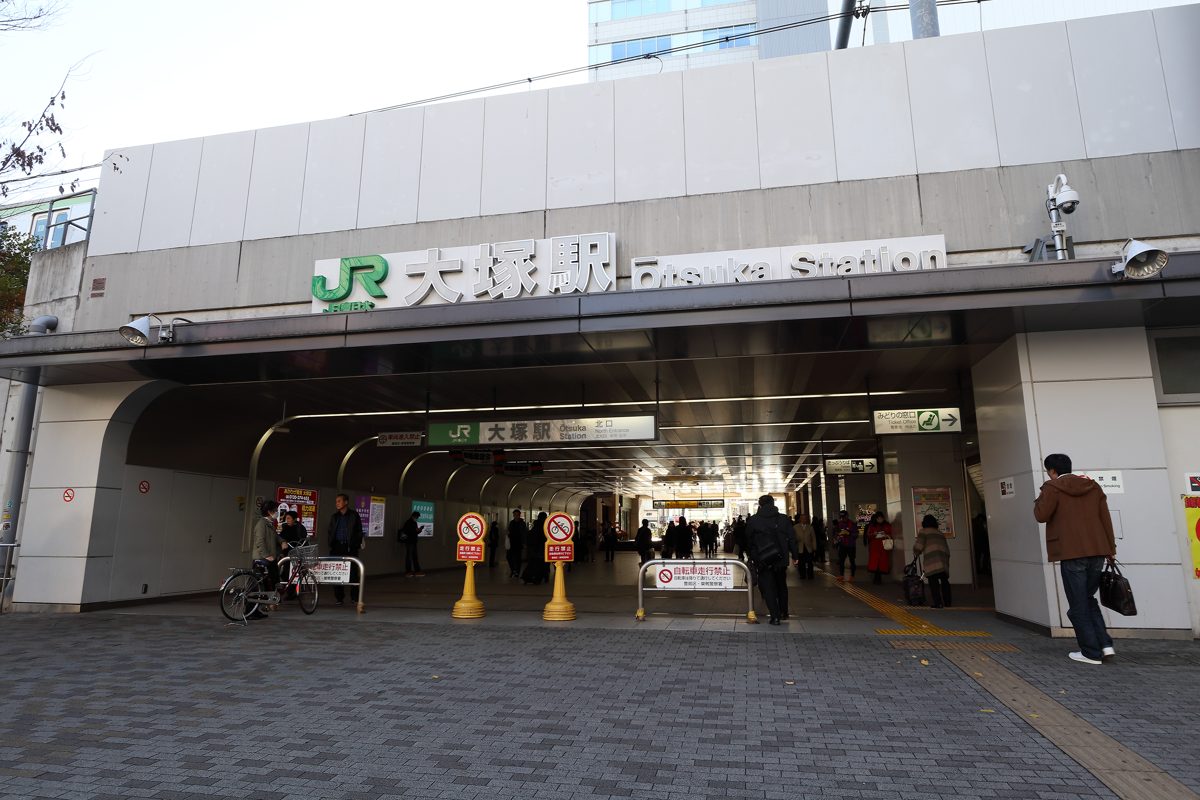
Onigiri Asakusa Yadoroku: since 1954, behind Senso-ji
Yadoroku calls itself the oldest onigiri specialist in Tokyo. It says it opened in 1954, when plain white rice was still a treat, on the back side of Asakusa Kannon, the Senso-ji temple. It is at Asakusa 3-9-10, Taito-ku, behind the main hall of Senso-ji on Kototoi-dori. Its English page lists Asakusa Station on the Ginza, Tobu Skytree and Toei Asakusa lines and the Tsukuba Express, and the Oku-Asakusa bus stop; it does not give a walking time.
At lunch, a set of two onigiri with tofu miso soup and takuan pickles is from 814 yen, and three onigiri from 1,100 yen. Onigiri priced above 320 yen are charged the difference, and the English page adds 165 yen to change the soup to shijimi clam, wakame seaweed or nameko mushroom. The site does not publish a price list for single onigiri, and does not say whether prices include tax. You can eat in or take away, and it will make as few as one.
Hours are listed as opening at 11:30 for lunch and 17:00 for dinner, closing when the rice runs out. Lunch is closed on Sundays, and dinner on Sundays, Tuesdays and Wednesdays. It has 8 counter seats and two tables seating 8, and it is cash only. Unscheduled closures are posted on its Facebook and Instagram. If you are still choosing where to stay, see our budget hotels in Tokyo guide.
Onigiri Bongo, Otsuka: 56 fillings, made to order
Bongo describes itself as a long-established shop founded 66 years ago, with 56 kinds of onigiri, and says you can combine toppings into your own onigiri. Its new address is Kita-Otsuka 2-27-5, Toshima-ku, two minutes from the north exit of JR Otsuka Station. An older page on its site about how it makes onigiri still gives a previous location, so use the address on the top page.
Its 2026 takeout menu image lists single onigiri at 400 yen with tax for plain, ume, raw or grilled tarako, karashi mentaiko, okaka bonito flakes, cheese, natto and miso; 450 yen for fillings such as squid with mentaiko, negitoro tuna, shirasu and egg yolk marinated in soy sauce; 500 yen for salmon, beef tendon, minced meat, mentaiko mayo with cream cheese, peperoncino and jako with shichimi; 550 yen for hokki clam salad; and 800 yen for sujiko salmon roe and eel. Two fillings in one onigiri, extra filling or a large portion of rice costs from 50 yen more.
On weekdays from 9:00 to 14:00, a set of two onigiri with tofu miso soup is 900 yen and three is 1,300 yen, as listed, with free refills of miso soup; onigiri from 400 yen up are charged the difference. Saturdays have a special set at 1,000 yen, limited to 100 people. On their own, tofu miso soup is 200 yen, nameko soup 300 yen, pickles 250 yen and ochazuke 850 yen. The takeout menu image gives hours of 9:00 to 21:00, closed on Sundays; the site’s text pages do not list hours. Phone orders are taken first come, first served, and it does not take orders online. The menu asks you to eat takeout onigiri within three hours. The top page also carries notices of a price change and a temporary closing day that do not give a year, so check the site before you go.
Onigiri Cafe Risaku, Sendagi: a cafe with bamboo-wrapped takeout
Risaku is at Sendagi 2-31-6, Bunkyo-ku, one minute from Sendagi Station on the Tokyo Metro Chiyoda Line, open 9:00 to 15:00 and 17:30 to 20:00, closed on Wednesdays. Its onigiri page, which carries no date, lists onigiri without nori from 220 yen for a salt onigiri, with greens rice at 250, brown rice at 300 and grilled miso rice crust at 340 yen, and onigiri with nori from 250 yen for Kishu ume, through red salmon at 280, tarako and mentaiko at 330, anago eel at 350 and sujiko at 400, to 480 yen for salmon with sujiko or sujiko with natto. The page does not say whether tax is included. Risaku announced a price revision in June 2025, and the undated page does not show whether it reflects it.
The morning set, from opening to 11:00, is 800 yen for two onigiri and miso soup. At lunch, 11:00 to 15:00, the A set is 980 yen for two onigiri of your choice and a soup of your choice, and the Risaku plate is 2,100 yen. Set onigiri are covered up to 300 yen, with the difference charged above that. Takeout onigiri are made fresh and wrapped in bamboo sheath, an onigiri bento is 650 yen plus the onigiri, large orders need a booking, and the cafe can be booked privately for up to 20. Its English page is an introduction to the shop, not a menu. For more places to start the day, see our Japanese breakfast in Tokyo guide.
Takeout onigiri in Tokyo: Shinjuku and a citywide chain
Onigiri Manma, Shinjuku: order on your phone, pick up the same day
Onigiri Manma’s official site is a mobile order site for its Shinjuku store, so its prices are takeout order prices, and it says they include tax. Single onigiri start at 400 yen for ume, miso or green shiso, then 420 yen for shiso kombu or takana, 460 yen for grilled tarako or karashi mentaiko, 500 yen for salmon or egg yolk marinated in soy sauce, 560 yen for minced meat or negitoro, 610 yen for mentaiko mayo with cream cheese and 780 yen for sujiko. It lists its three most popular two-filling onigiri: egg yolk with minced meat at 710 yen, sujiko with salmon at 930 yen, and takana with karashi mentaiko at 530 yen. Sets run from 1,050 to 2,190 yen, and tofu miso soup is 250 yen.
The store is open 8:30 to 21:00, every day, and mobile orders can be picked up from 9:30 to 20:00. Mobile orders are takeout only and same-day pickup only, and it asks you to come only after you receive the email saying your order is ready. Online, it takes American Express, Apple Pay, Google Pay, JCB, Mastercard, Shop Pay and Visa; it does not say how you can pay at the counter. The site does not give the Shinjuku store’s address, so check it on the official site before you set out. There is also a Manma shop in Jiyugaoka.
Omusubi Gonbei: 40 shops in Tokyo, from 130 yen
Omusubi Gonbei lists 40 shops in Tokyo, including Ikebukuro, Shibuya and Kichijoji. Its Keio Shinjuku shop is on basement level 1 at Nishi-Shinjuku 1-1-4, outside the department store ticket gate, and its Marunouchi MY PLAZA shop is on basement level 2 of that building. The shop list marks which shops have eat-in space and which deliver through Uber Eats. It does not list opening hours, so check each shop’s page.
White rice omusubi start at 130 yen for salt, then 180 yen for nori wasabi or Hokkaido kombu, 190 yen for sesame takana, 200 yen for Japanese-style tuna, cheese with okaka or Kishu Nanko ume, 240 yen for red salmon, 250 yen for grilled tarako or mentaiko, and 330 yen for tenmusu, a rice ball with shrimp tempura. Gonbei says the listed prices include the 8 percent tax for takeout, and that eating in is taxed at 10 percent, so it costs more to sit down. It says it uses no preservatives, that some items are not sold at every shop, and that bags cost 5 yen for plastic and 50 yen for paper. For the convenience store version, see our 7-Eleven Japan guide.
Onigiri at Tokyo Station, Shinjuku and Haneda Airport
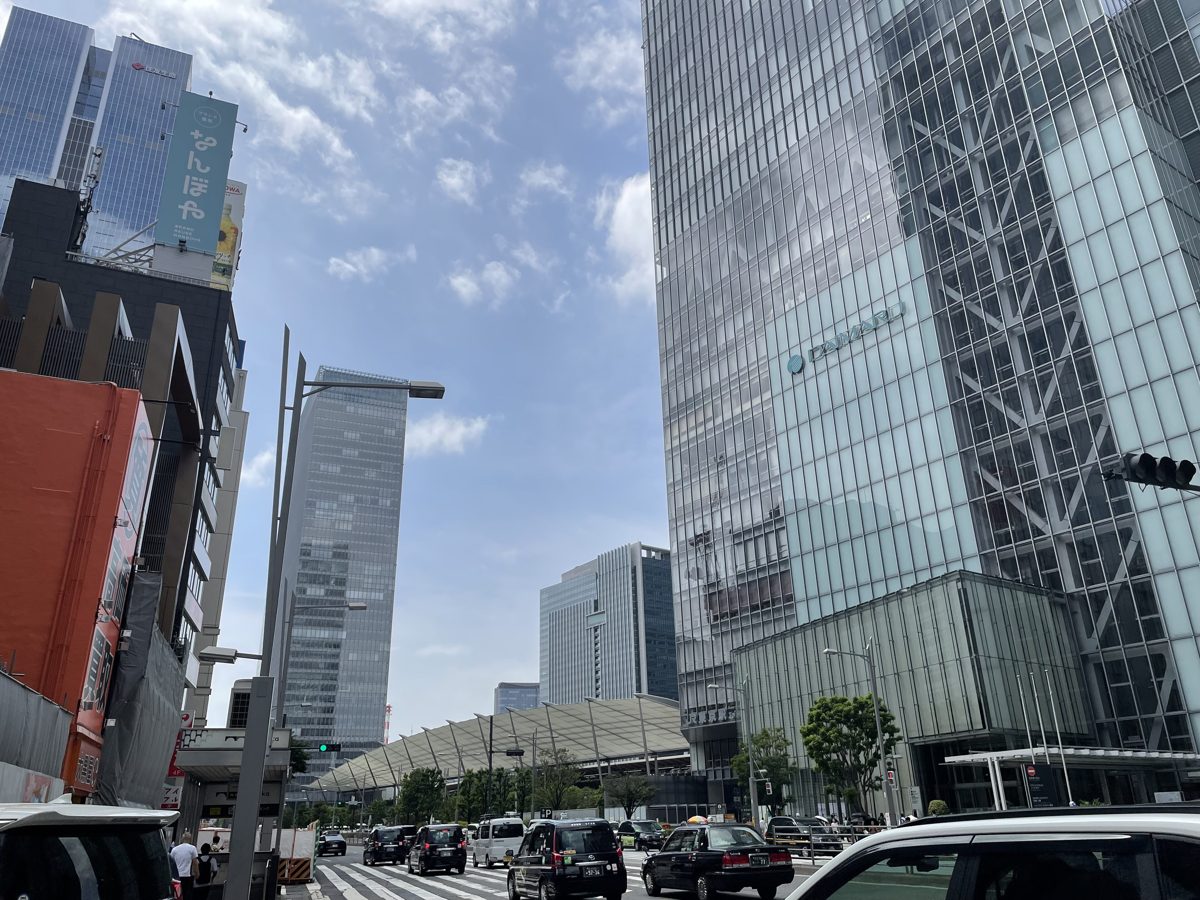
Kikutaya: a rice dealer’s onigiri at Tokyo Station and Shinjuku
Kikutaya is a rice dealer that runs onigiri shops. Its Daimaru Tokyo shop is on basement level 1 of the Daimaru Tokyo store at Marunouchi 1-9-1, right outside the JR Tokyo Station Yaesu North gate, open 10:00 to 20:00 and closed January 1 and 2 with the building. Its menu PDF lists a salt onigiri at 240 yen with tax, brown rice at 240, okaka at 290, kombu at 320, sekihan red bean rice at 330, ume at 340, chirimen sansho at 350, salted mackerel at 380, and tarako, karashi mentaiko and red salmon at 390 yen. September’s seasonal onigiri is a simmered egg at 360 yen with tax.
The NEWoMan Shinjuku shop is in the 2nd floor station concourse, inside the JR Shinjuku Station New South ticket gate, open 8:00 to 21:00 every day, and its menu has fillings such as tuna mayo and corn that the Tokyo Station menu does not. A third shop is on basement level 1 of the Tamagawa Takashimaya S.C. main building, connected to Futako-Tamagawa Station. The menu PDFs are in Japanese, English, Korean and Chinese. Kikutaya does not say whether its shops have seating or which payment methods they take.
Honnoriya: inside the Yaesu Central gate at Tokyo Station
Honnoriya’s Tokyo main shop, run by JR East Cross Station, is on the 1st floor of Tokyo Station inside the Yaesu Central ticket gate. It is open 6:00 to 22:00 on weekdays, Saturdays, Sundays and holidays, and has 18 seats. It says it keeps around 14 kinds of omusubi at all times. Its site has no price list for the regular menu; its September 16, 2026 launch lists a matsutake and mushroom rice omusubi from 350 yen with tax and grilled salmon with mentaiko and takana from 270 yen with tax.
Its mobile order lets you choose items and a pickup time and pay online, then collect without lining up. Pickup runs from 7:00 to 20:00, and mobile orders take credit cards only. We could not read which payment methods the counter takes, and the site does not mention English.
Onigiri Konga: Haneda Airport, Nihombashi and Akasaka
Onigiri Konga’s menu lists salt, grilled tarako, karashi mentaiko, takana and shiso kombu from 390 yen, tuna mayonnaise from 420 yen, salmon from 450 yen, egg yolk in soy sauce and negitoro from 490 yen, and sujiko from 690 yen. Most items are marked as including tax, but ume at the same 390 yen is marked without tax, so read these prices as listed. Tofu miso soup is from 180 yen and nameko soup from 280 yen, marked with tax, and a tofu soup set from 900 yen, marked without tax. It says some shops charge different prices.
At Haneda Airport, Konga has a shop on the 4th floor of the international passenger terminal, open 7:30 to 20:30, and one in the Terminal 2 food plaza on the 3rd floor, open 8:30 to 18:30. In the city, the Nihombashi Takashimaya S.C. shop is on basement level 1 of the annex, open 10:30 to 20:00 with last orders at 19:30, and the Akasaka Biz Tower shop is on basement level 1, open 8:00 to 20:00, last order 19:30. It also has shops in Kamata, Shiodome, Otemachi One and at the National Stadium; the Shiodome and Otemachi One shops close on Saturdays, Sundays and holidays.
What does onigiri cost in Tokyo?
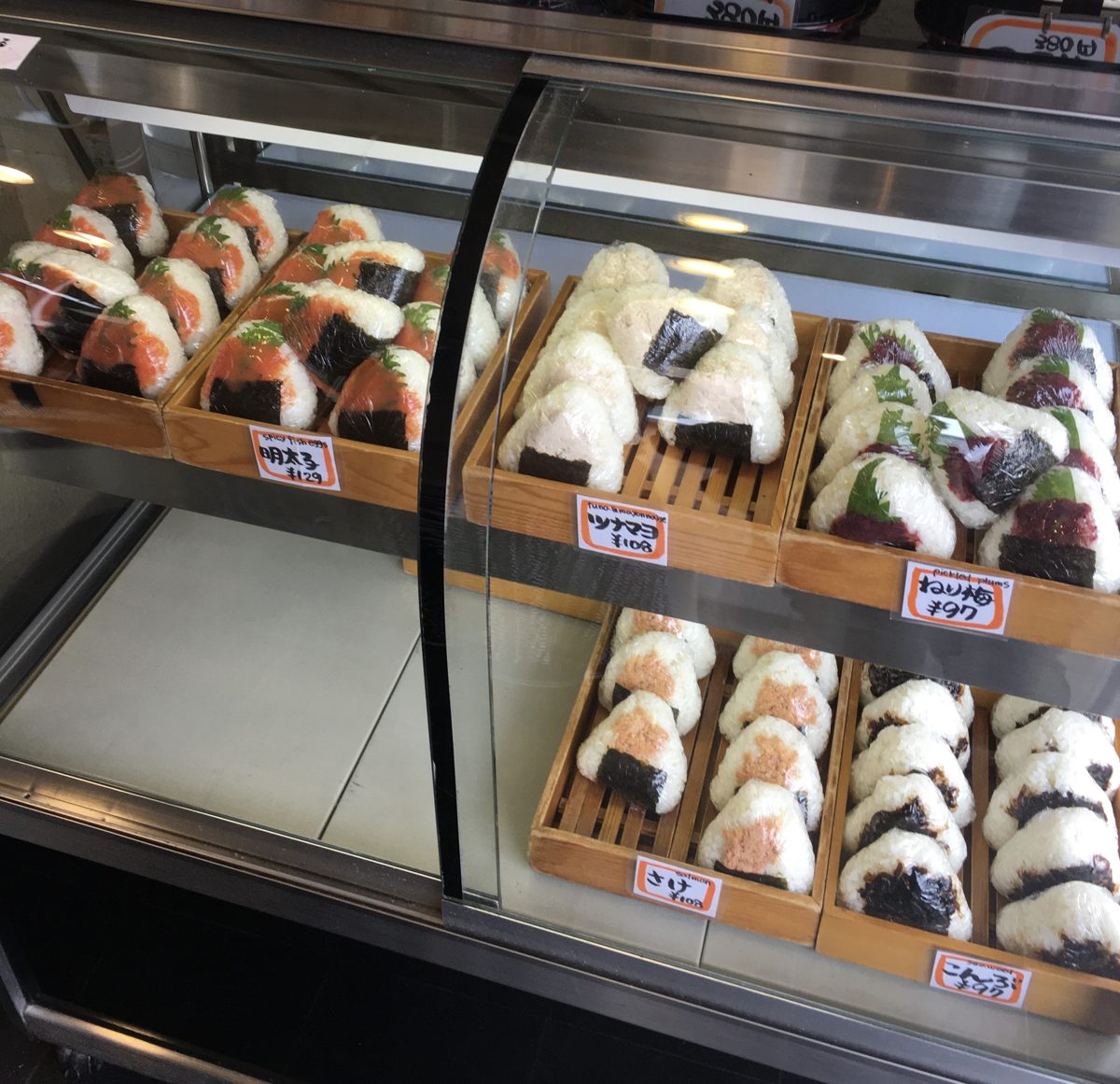
Onigiri prices in Tokyo, as published
| Shop | Single onigiri, as listed | Sets | Tax, per the site |
|---|---|---|---|
| Omusubi Gonbei | 130 to 330 yen | Not covered here | With 8% tax for takeout; 10% to eat in |
| Onigiri Cafe Risaku | 220 to 480 yen | Morning 800 yen; lunch 980 yen | Not stated |
| Kikutaya (Daimaru Tokyo) | 240 to 390 yen | Bento 680 to 1,030 yen | Marked on salt onigiri and bento |
| Honnoriya | New items from 270 and 350 yen | Not listed | With tax |
| Onigiri Konga | From 390 to 690 yen | Tofu soup set from 900 yen | Mixed; as listed |
| Onigiri Bongo | 400 to 800 yen | Weekday 900 / 1,300 yen | With tax (takeout menu) |
| Onigiri Manma | 400 to 780 yen | 1,050 to 2,190 yen | With tax (mobile order) |
| Onigiri Asakusa Yadoroku | No single-item list | 2 onigiri from 814 yen; 3 from 1,100 yen | Not stated |
Why don’t onigiri prices compare directly?
Because the shops do not publish weights, and their own descriptions point to different builds: Bongo puts filling on top and works to a 2 to 1 rice-to-filling ratio, while Kikutaya shapes its rice soft inside and firm outside. Compare within a shop, not across shops.
Is tax included in onigiri prices?
Bongo, Manma and Honnoriya mark their prices as including tax, and Kikutaya marks its salt onigiri and bento that way. Omusubi Gonbei’s prices include the 8 percent takeout tax, with 10 percent charged for eating in. Onigiri Konga marks most items with tax and a few without. Yadoroku and Risaku do not say either way on the pages we read.
Which onigiri fillings will I see on the menus?
The same names come up across the menus: ume (pickled plum), salmon, tarako (salted cod roe) and mentaiko (spicy cod roe), okaka (bonito flakes), kombu (kelp), takana (pickled mustard greens), negitoro (minced tuna) and sujiko (salmon roe in its sac). Egg yolk marinated in soy sauce appears at Bongo, Manma and Konga. For more of Japan’s grab-and-go food, see our Japanese street food guide.
Takeout, paying and English at Tokyo onigiri shops
Can I take onigiri away?
Yes. Yadoroku will make a single onigiri to take away. Bongo takes phone orders, first come, first served, but not online orders, and asks you to eat within three hours. Risaku wraps takeout onigiri in bamboo sheath and takes large orders by booking. Manma’s mobile orders are takeout only, collected the same day. Honnoriya’s mobile order lets you collect without lining up. Gonbei’s listed prices are takeout prices.
Can I pay by card at onigiri shops?
Only three shops say. Yadoroku is cash only. Manma’s mobile order site takes cards, Apple Pay, Google Pay and Shop Pay, and Honnoriya’s mobile order takes credit cards only. The other pages we read do not list payment methods, so bring cash in case.
Is there an English menu?
Kikutaya’s menu PDFs are in Japanese, English, Korean and Chinese. Yadoroku’s English page names its fillings in English but does not say whether the shop has an English menu. Omusubi Gonbei has an English site about the brand and its shops, and Risaku has an English introduction page. Bongo, Manma, Konga and Honnoriya do not mention English.
Do I need a train ticket for the station onigiri shops?
For two of them, you need to be inside the ticket gates. Honnoriya is inside the Yaesu Central gate at Tokyo Station, and Kikutaya’s NEWoMan Shinjuku shop is inside the New South gate at Shinjuku Station. We did not check platform ticket prices for this page. Kikutaya’s Daimaru Tokyo shop is outside the Yaesu North gate, and Gonbei’s Keio Shinjuku shop is outside the department store gate.
Which onigiri shop in Tokyo suits you?
For a sit-down onigiri near Senso-ji, with cash in hand, Yadoroku. For onigiri made to order at a counter, with 56 kinds, Bongo in Otsuka. For a cafe breakfast or lunch set in Sendagi, Risaku. For takeout ordered on your phone in Shinjuku, Manma. For onigiri from 130 yen at 40 shops in Tokyo, Omusubi Gonbei. Before a train from Tokyo Station, Honnoriya inside the gates or Kikutaya just outside, and before a flight, Onigiri Konga at Haneda.
(For Tokyo’s traditional sweets: our wagashi in Tokyo guide reads the official sites of eight shops, including Eitaro, which says its Nihonbashi main shop has stood on the same spot since 1857.)
Frequently asked questions
How much does onigiri cost at a specialist shop in Tokyo?
What is the difference between onigiri and omusubi?
Where can I get onigiri at Tokyo Station?
Which onigiri shops in Tokyo can I sit down at?
Can I pay by card at onigiri shops in Tokyo?
Why does onigiri cost more to eat in at Omusubi Gonbei?
Can I get onigiri at Haneda Airport?
Is there an English menu at onigiri shops in Tokyo?
Bottom line (2026): A single onigiri at a Tokyo specialist shop costs from 130 yen at Omusubi Gonbei to 800 yen for salmon roe at Bongo. Yadoroku in Asakusa serves sets from 814 yen and is cash only. At Gonbei, eating in is taxed at 10 percent instead of 8. At Tokyo Station, Honnoriya is inside the Yaesu Central gate and Kikutaya is on basement level 1 of Daimaru.
Sources
Every price and rule on this page is from the shops’ own websites and the menu images, PDFs and mobile order sites they run: Onigiri Asakusa Yadoroku, Yadoroku English page, Onigiri Bongo, Bongo menu, Bongo on how it makes onigiri, Bongo access, Onigiri Manma Shinjuku (mobile order site), Manma onigiri list, Manma news, Manma payment, Onigiri Cafe Risaku, Risaku onigiri, Risaku sets, Risaku takeout, Risaku shop information, Omusubi Gonbei, Gonbei white rice menu, Gonbei Tokyo shops, Gonbei on omusubi, Gonbei English site, Onigiri Konga (FBIH), Konga menu, Konga shops, Konga on how it makes onigiri, Kikutaya, Kikutaya Daimaru Tokyo menu PDF, Kikutaya NEWoMan Shinjuku menu PDF, Honnoriya, Honnoriya concept, Honnoriya shop information, Honnoriya September 2026 launch, Honnoriya mobile order, all read on September 28, 2026. Menus, prices and hours change, so confirm on the official site before you go.
Some links on this page may be affiliate links, which means we may earn a commission if you book or buy through them — at no extra cost to you. See our affiliate disclosure.
Tokyo to Osaka, Tokyo to Kyushu, Tokyo to Hokkaido — day by day — plus seven places most visitors never reach.
- 12 pages, 80 photographs, every stop linked to its guide
- Every price and opening hour read from the official page
- Re-issued monthly, so it does not go stale in your inbox
Free. One email a month, plus the rare change that matters. Unsubscribe with one click in any email. By subscribing you agree to our privacy policy.