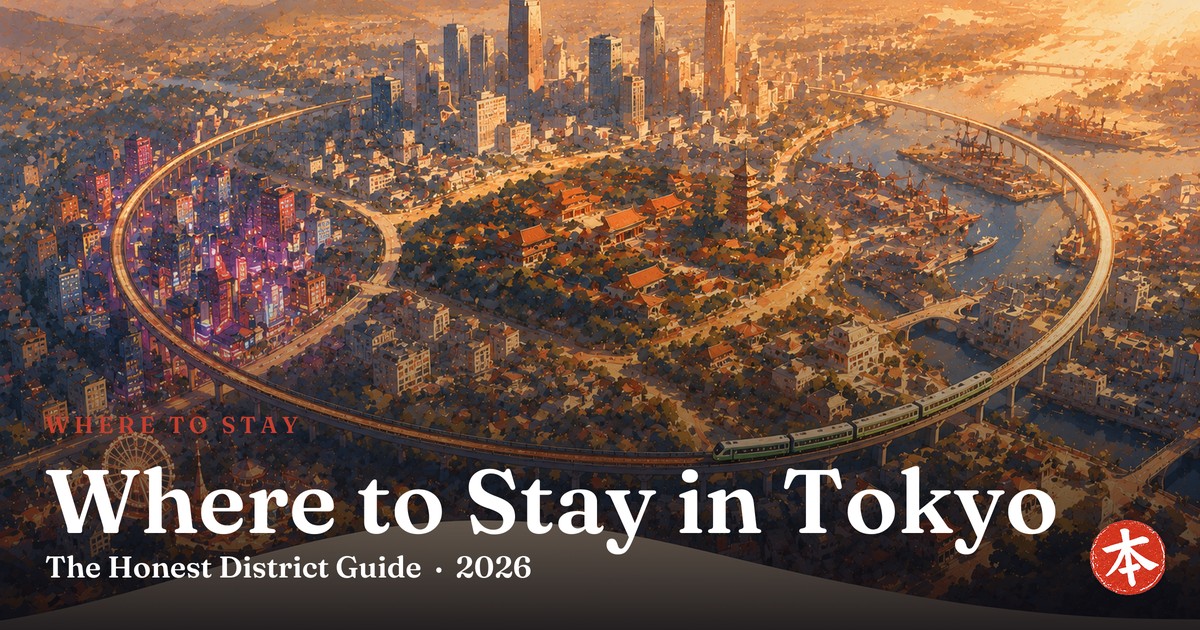
Every "where to stay in Tokyo" debate misses the point: Tokyo doesn't have a city center — it has a dozen of them, strung along the Yamanote loop line like beads, each a complete downtown with its own personality. That's why the district question has no universal answer, and why picking by hype ("everyone says Shinjuku") produces so many mismatched trips. This guide sorts the districts by what your trip actually is — and gives you the one rule that outranks every district debate.
(Traveling as a family of 4–6, or hunting the cheapest good bed? Two dedicated companions: the family rooms guide and the budget tiers guide.)
The one rule: sleep on (or near) the Yamanote line
A Japanese trip around the entire Yamanote loop, station by station, with a read on what each neighborhood is actually like. It is about the line rather than about hotels — which is precisely the point of this section.
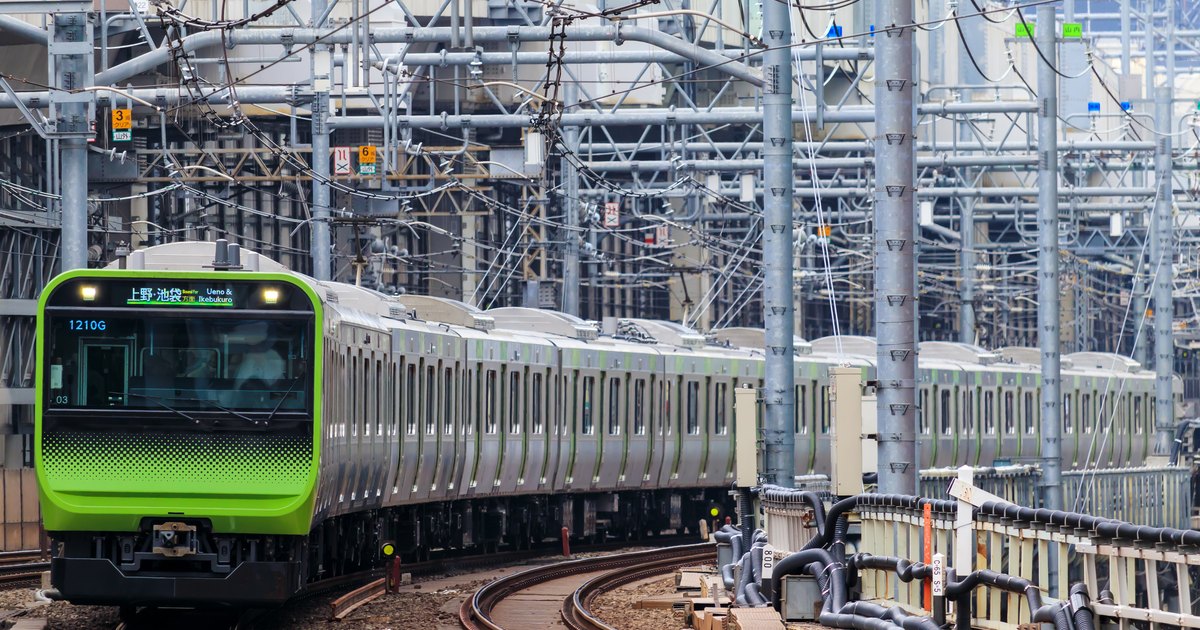
Before any district debate: stay within a short walk of a Yamanote-line station (or one stop off it). The loop connects nearly every major hub — Shinjuku, Shibuya, Tokyo Station, Ueno, Ikebukuro, Shinagawa — every few minutes, and it turns any base into a viable one. The trips that go wrong are rarely "wrong district"; they're a hotel that looked cheap because it's a 15-minute bus from any station. Distance-to-rail is the spec that matters most in this city.
The districts, honestly
| Shinjuku | The everything hub — neon, nightlife, giant station, airport buses. Big, loud, endlessly convenient |
|---|---|
| Shibuya | Young & trendy — the crossing, fashion, cafés; Harajuku next door. Slightly calmer than Shinjuku at night |
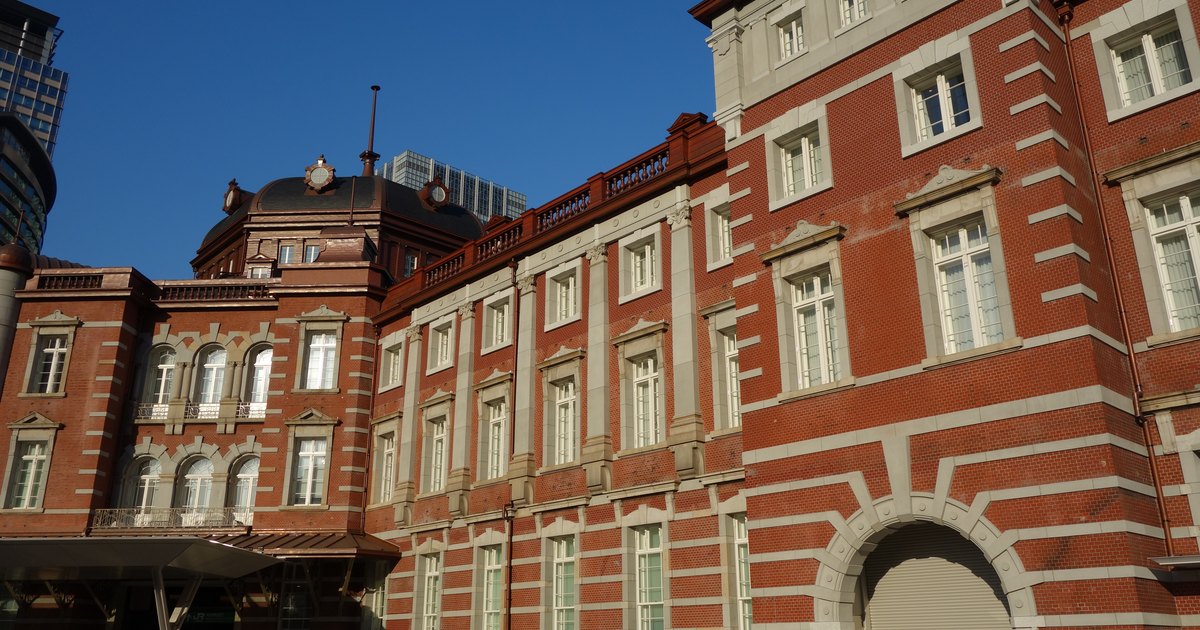
| Tokyo Station / Marunouchi | Logistics king — every shinkansen, airport express; quiet evenings. Full area guide |
| Ginza | Polished — flagship shopping, fine dining, walkable to the station area. Premium tier by default |
| Asakusa / Kuramae | Traditional & value — temple town, craft district, standout hostels. Off the loop (subway life) |
| Ueno | Underrated value — museums, park, market energy, easy Skyliner airport run |
| Ikebukuro | Practical value hub — Yamanote + airport buses, big full-service hotels, anime culture |
| Shinagawa | Transit specialist — Haneda access + shinkansen; business-hotel land, little charm |
Pick by trip type
- First trip, want the Tokyo of the movies: Shinjuku or Shibuya. Accept the crowds; that's the product. Business-chain rooms keep it affordable — our MyStays guide covers that tier's tricks.
- Shinkansen-heavy route or day-trip base: the Tokyo Station area, no contest — here's how to choose between its two sides, and the family-room specialist five minutes from the gates.
- Traditional atmosphere, budget-friendly: Asakusa/Kuramae — with Nui.'s converted toy warehouse as the neighborhood's signature stay, or Kagurazaka's UNPLAN for the other stylish-hostel flavor.
- Families needing real space: hunt quads and tatami rooms, not districts — Karaksa's family inventory and Ikebukuro's Metropolitan (tatami suite for six, airport bus at the door) are the proven answers we've reviewed.
- The luxury trip: Marunouchi, Ginza and the high-floor towers — compared properly in the five-star guide.
- The ryokan itch: mostly scratch it outside Tokyo — our ryokan guide explains why an onsen town does it better than a city imitation.
Two specific places are worth naming because they sit at opposite ends of the same decision. Centurion Hotel & Spa Ueno is the case for staying north — cheaper, on the loop, with a bath attached. And Hundred Stay Tokyo Shinjuku is worth reading for the opposite reason: it is closed, and it still appears in guides and booking results. If a Shinjuku long-stay name looks unusually available, check that it still exists.
The mistakes that cost real money (or evenings)
Season note: room prices across every district spike in cherry-blossom weeks, Golden Week and autumn-foliage season — if your dates touch those windows (the month-by-month guide maps them), book earlier than feels necessary.
(Basing yourself in Shinjuku? Golden Gai is a few minutes from the station — read the seat charge and photography rules before you go.)
(For the cabin-hotel tier — stand-up capsules with real beds — see our First Cabin guide, including which Tokyo branches still exist.)
(At the budget floor of all this: Tokyo's capsule hotels — the no-lock law, the 6+/12+/18+ age maze and the two chains worth knowing.)
(At the opposite end of the price scale, the reopened Park Hyatt Tokyo — renovation, restaurants and the famous bar — has its own guide.)
(The business-hotel baseline itself — APA — and its systems are covered in a dedicated guide.)
(Kabukicho's landmark hotel has its own guide — Hotel Gracery Shinjuku: four Godzilla room types, not the two most guides list.)
(For a base on the old-Tokyo side, our Asakusa View Hotel guide covers the room categories and the walking distance to the nearest subway and Tobu lines.)
(For a base directly above the long-distance bus terminal, our Yaesu Terminal Hotel guide covers the entrance route from Tokyo Station and the price bands the official site publishes.)
(Staying on the west side? Our Narita to Shibuya guide has the current Skyliner fare of 2,580 yen and the routes that avoid a change at Nippori.)
(For a city chain with public baths, our Mitsui Garden Hotels guide lists the 22 properties with a large bath, the no-service-charge pricing, and the cancellation scale that starts at 20 percent three days out.)
FAQ
What is the best area to stay in Tokyo for first-timers?
Is it better to stay in Shinjuku or Shibuya?
Should I stay in two different areas during one Tokyo trip?
Is Asakusa a good place to stay in Tokyo?
Where should I stay in Tokyo with a family?
Is it worth staying near the airport instead of central Tokyo?
Bottom line (2026) — Tokyo has no single best area; the one rule that beats every district debate is sleep on or near the Yamanote line. Shinjuku, Shibuya, Tokyo Station and Asakusa are decoded by the trip you’re actually taking, and nightly rates are deliberately not quoted — individual hotel specifics live in each linked review, checked against official sources.
Sources
District characters, rail structure and logistics are stable public facts about the city. Individual hotel specifics live in the linked reviews, each checked against official sources on its own page. Nightly rates are deliberately not quoted anywhere in this guide. As of July 2026.
Some links on this page may be affiliate links, which means we may earn a commission if you book or buy through them — at no extra cost to you. See our affiliate disclosure.
Tokyo to Osaka, Tokyo to Kyushu, Tokyo to Hokkaido — day by day — plus seven places most visitors never reach.
- 12 pages, 80 photographs, every stop linked to its guide
- Every price and opening hour read from the official page
- Re-issued monthly, so it does not go stale in your inbox
Free. One email a month, plus the rare change that matters. Unsubscribe with one click in any email. By subscribing you agree to our privacy policy.