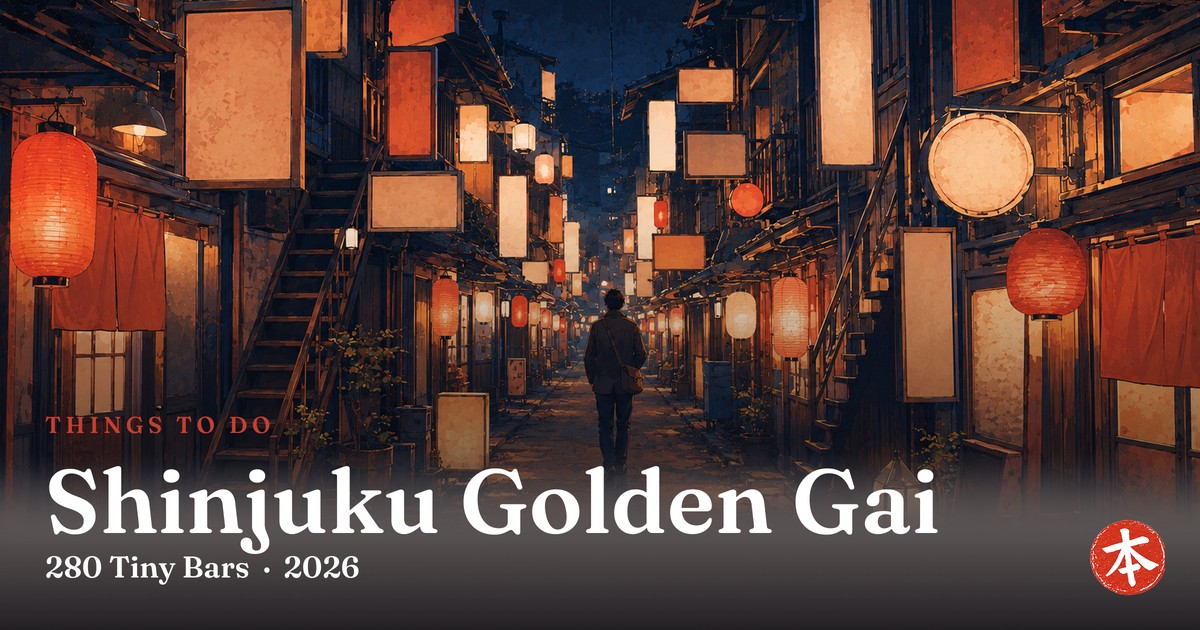
Golden Gai is about 280 bars squeezed into six alleys behind Shinjuku, most of them the size of a walk-in closet, many of them seating six people. It survived the bulldozers that flattened the rest of the neighborhood, and it is the single most photographed drinking street in Tokyo.
It is also the place where visitors most reliably get something wrong — usually one of three things: the seat charge that appears on your bill before you order anything, the bars that will politely refuse you because you weren't introduced by a regular, and the photography rule, which exists because those alleys are not public streets at all. Every rule below is published by the merchants' associations that run the area.
Golden Gai at a glance
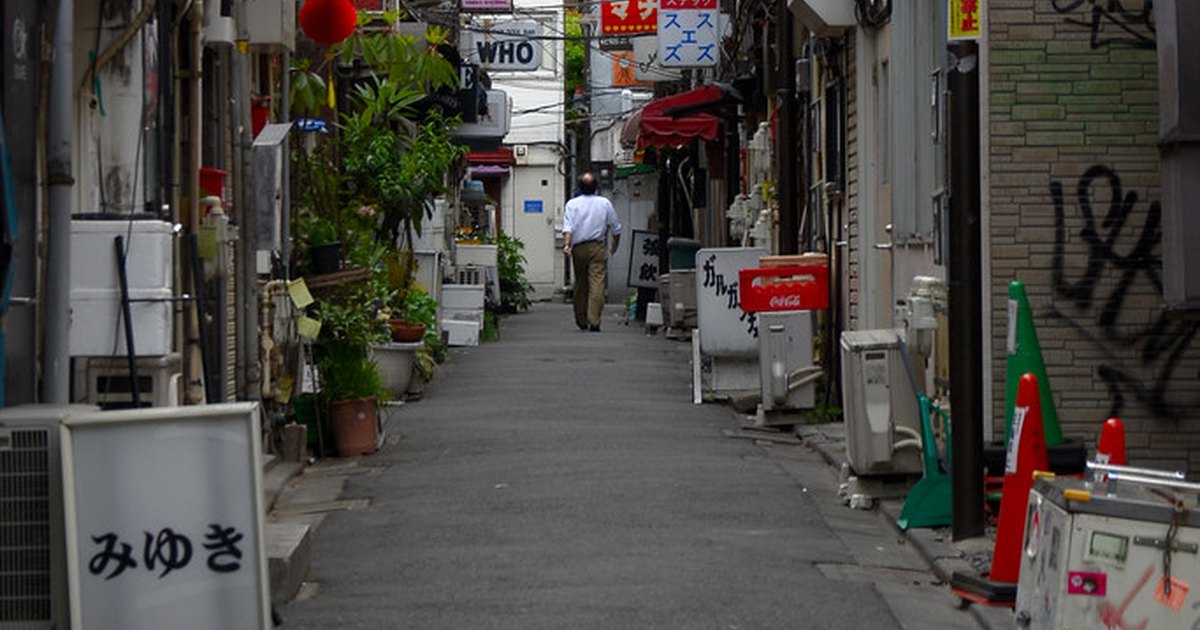
| Size | Approximately 280 bars across six narrow alleys, run by two merchants' associations |
|---|---|
| Seat charge | ¥500–1,500 per person, separate from your drinks (official figure) |
| Realistic budget | Roughly ¥2,500–4,000 for one bar and two drinks |
| Group size | 2–3 people, and confirm before you sit down (official guidance) |
| Some bars | Regulars only — entry by introduction from an existing patron |
| Photography | Private roads. Shooting requires permission — even close-ups of signage |
| On the alleys | No smoking, no drinking while walking, no loitering or noise |
| Food | Minimal. Eat before you go |
The seat charge, in plain English
You sit down. A tiny dish of something — pickles, edamame, a few slices of fish cake — arrives without you ordering it. That is otoshi, and it is not a gift. In the association's own words, most bars charge an admission fee or otoshi-dai which is separate from the drink charge, and this fee varies from ¥500 to ¥1,500.
This is not a scam and it is not aimed at tourists — it is how small Japanese bars have covered the cost of a seat for decades, and locals pay it too. But it changes the math of bar hopping. Three bars means three seat charges before a single drink, so a four-bar crawl can quietly cost ¥6,000 in cover before alcohol. The efficient version of a Golden Gai night is one or two bars, properly — sit, talk to whoever is next to you, and let the place work on you.
One practical note: bring cash. Some bars take cards, plenty don't, and these are one-person operations without a payment terminal budget. Japan is far more cashless than it was, but a six-seat bar in a wooden shack from the 1950s is exactly where that trend stops.
The photography rule nobody mentions
The published fee schedule shows what the rule is really built for: ¥10,000–40,000 per hour for stills, ¥20,000 per hour for individual or student shoots before 6 PM and ¥30,000 after, ¥50,000 for film and drama, ¥100,000 for commercials. Approved crews apply by email with a proposal and wear a permit armband.
What to actually do: the rule as written is aimed at shoots, and how a single phone snap is treated is not something the associations publish. So behave like a guest: no tripods, no staged shoots, never point a camera through a bar door or at the people inside, and ask staff before photographing indoors. The reason the rule exists is worth respecting anyway — the fees pay for the streetlights, drains and fire safety of a street with no public budget behind it.
How to walk into a bar that wants you
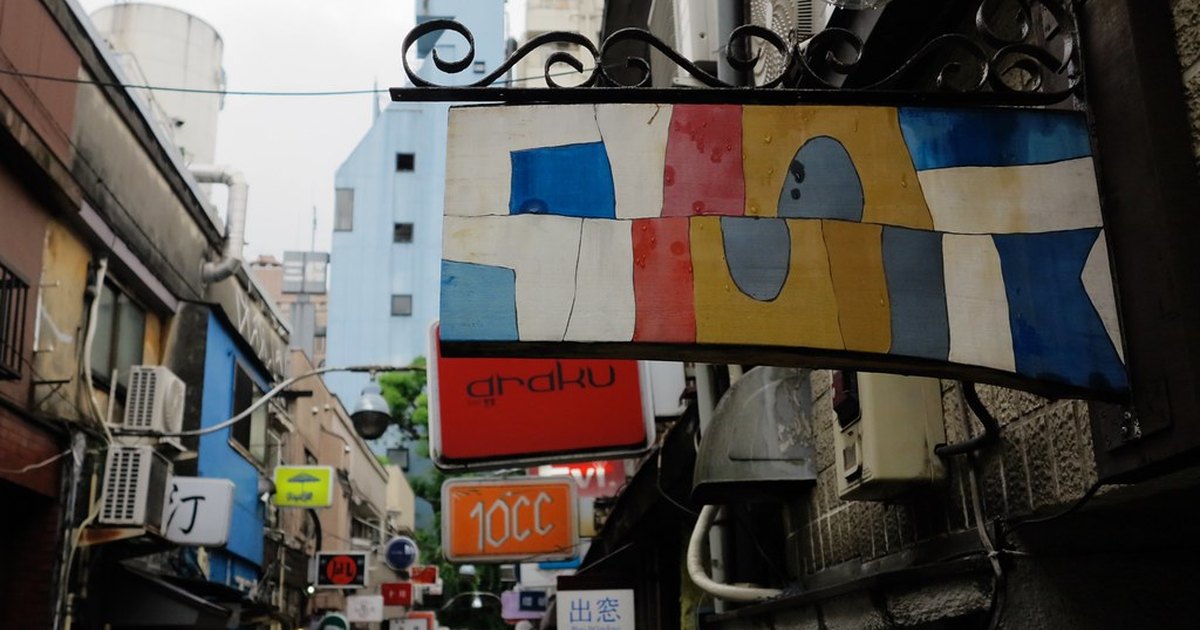
The association's guidance answers the question most visitors are too nervous to ask. Some bars are reserved exclusively for regulars, and you cannot get in without an introduction from an existing patron. That is not rudeness aimed at foreigners; it is a bar with eight seats whose owner has known the same eight people for twenty years. The rest of the street — the majority — is open to anyone.
- Go in twos and threes. The official guidance asks for small groups of 2–3 and says to receive confirmation before entering. A group of six cannot physically fit, and trying is the fastest way to be turned away.
- Open the door and ask. "Is it okay?" with a gesture at the seats works fine. A yes means sit down; a polite no means the next door, and there are 280 of them.
- Look for the signals. An English menu, a sign in the window, a price list posted outside — those bars have decided they want visitors. Nothing posted at all, on a door with frosted glass, usually means the opposite.
- Ask the seat charge before you sit if you're watching your budget. It's a normal question and it prevents the only genuinely bad Golden Gai experience: surprise at the bill.
- Expect to stand. The guidance notes plainly that all the bars are small and cramped and that in some of them people drink standing.
The etiquette that keeps the street alive
These are published rules, not vibes, and they exist because a few hundred people live and work in a wooden alley that a few thousand people a night now walk through:
- No smoking on the pathway.
- No drinking while walking, and no carrying a drink from a bar out onto the path or street.
- Don't hang around, sit down or make noise in the alleys. Move through, or be inside a bar.
- Don't damage signs or buildings — vandalism and graffiti are called out explicitly.
- Give up your seat when the bar fills. The association describes this as the courteous thing to do in Golden Gai, and it is the single most local piece of etiquette on this page. A bar with six seats and twelve people waiting only works if people leave.
Fitting it into a night
Golden Gai is a drinking street — food is minimal to nonexistent, so eat first. The natural pairing is a proper meal at an izakaya (where the same otoshi custom applies, so you'll already understand your bill), or a fast, cheap plate from a street food stand, and then two bars here. If the night runs long, a bowl of ramen is the traditional ending.
It sits a few minutes' walk from Shinjuku Station, which makes it easy to bolt onto almost any evening — see where to stay in Tokyo if you're choosing a base, and kabuki if you want the other half of old Tokyo, the half that starts at 11 AM and involves no drinking at all.
(Sleeping a few minutes away? Our Hotel Gracery Shinjuku guide explains why the Godzilla terrace has been closed since 2023 and where the entrance actually is.)
(If seat charges are what put you off, our Torikizoku guide covers a chain that publishes a flat no-otoshi, no-seating-fee policy.)
FAQ
How much does Golden Gai cost?
Can tourists go to Golden Gai?
Can you take photos in Golden Gai?
How many bars are in Golden Gai?
What are the rules in Golden Gai?
What time should you go to Golden Gai?
Bottom line (2026) — Golden Gai is 280 tiny bars across six alleys, most charging a seat fee of ¥500–1,500 on top of your drink, with some closed to anyone without an introduction. The photography rule catches out almost every visitor, and it is a published rule from the associations that run the street — not a vibe.
Sources
Checked August 4, 2026: the Shinjuku Golden Gai merchants' association official English site — the count of approximately 280 bars, and the visitor guidance quoted above for the ¥500–1,500 admission or otoshi charge separate from drinks, the request to visit in groups of 2–3 and confirm before entering, the note that all bars are small and cramped with some standing-only, the statement that some bars are for regulars and require an introduction, the seat-giving courtesy, and the alley rules on smoking, walking with drinks, loitering and vandalism — plus the associations' official photography notice and application page for the private-road status, the requirement of permission even for close-ups of scenery and signage, the published hourly fee schedule and the permit-armband process. Deliberately not stated: individual bar names, their opening hours, their prices, which ones speak English, and how the photography rule is applied to casual phone snaps — none of that is published officially, and bars here change hands often.
Some links on this page may be affiliate links, which means we may earn a commission if you book or buy through them — at no extra cost to you. See our affiliate disclosure.
Tokyo to Osaka, Tokyo to Kyushu, Tokyo to Hokkaido — day by day — plus seven places most visitors never reach.
- 12 pages, 80 photographs, every stop linked to its guide
- Every price and opening hour read from the official page
- Re-issued monthly, so it does not go stale in your inbox
Free. One email a month, plus the rare change that matters. Unsubscribe with one click in any email. By subscribing you agree to our privacy policy.