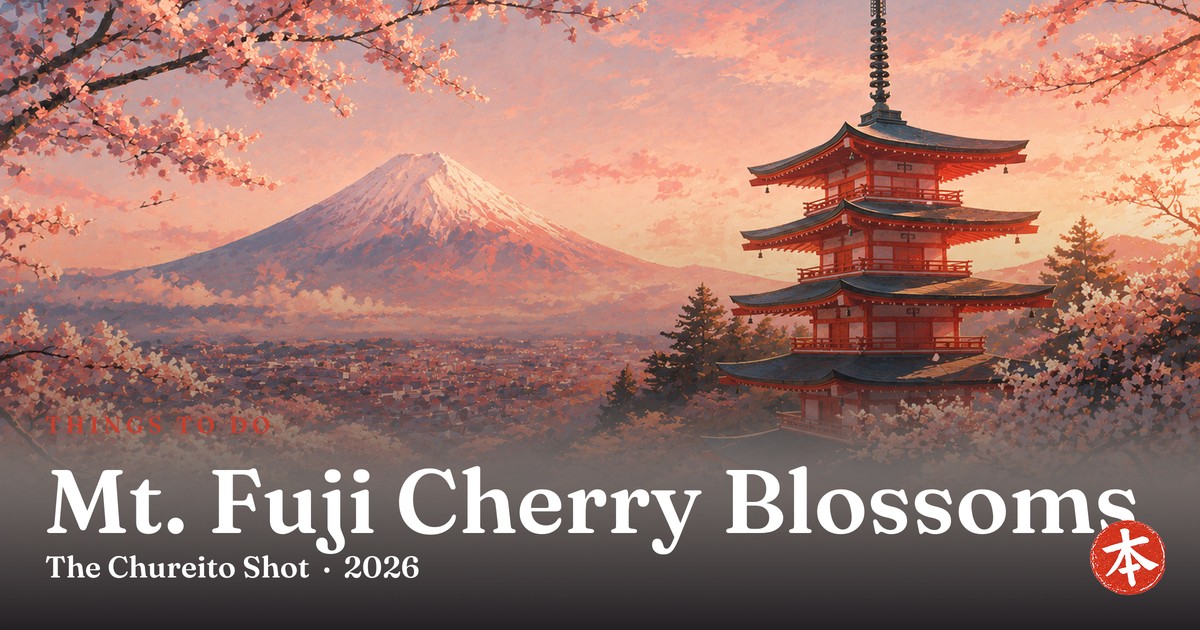
You've seen the photo: a vermilion five-storied pagoda, a slope of cherry blossoms, and Mt. Fuji floating behind it all. It's real, it's reachable by train, and it comes with the best-kept secret of Japan's sakura season: the Fuji area blooms one to two weeks after Tokyo. Missed the capital's bloom by days? The mountain gives you a second chance. This guide covers the pagoda, the lakeside alternative, the pink-carpet festival that isn't actually cherry blossom, and how to time the whole thing.
(New to how the season works? Start with how full bloom moves and how long it lasts; picnic culture is covered in the hanami guide.)
Fuji × sakura at a glance
| The famous shot | Chureito Pagoda, Arakurayama Sengen Park (Fujiyoshida) — pagoda + blossoms + Fuji |
|---|---|
| The climb | ~398 steps from the park entrance to the viewing platform |
| Timing | 1–2 weeks after Tokyo — commonly mid-April (varies yearly) |
| The other classic | Lake Kawaguchiko north shore — blossoms over the water, Fuji behind |
| The pink carpet | Shibazakura Festival (moss phlox, not cherry) — later window, paid entry |
| Cloud reality | Fuji hides often — go early morning, build in a spare day if the shot matters |
Chureito Pagoda: the shot and the stairs
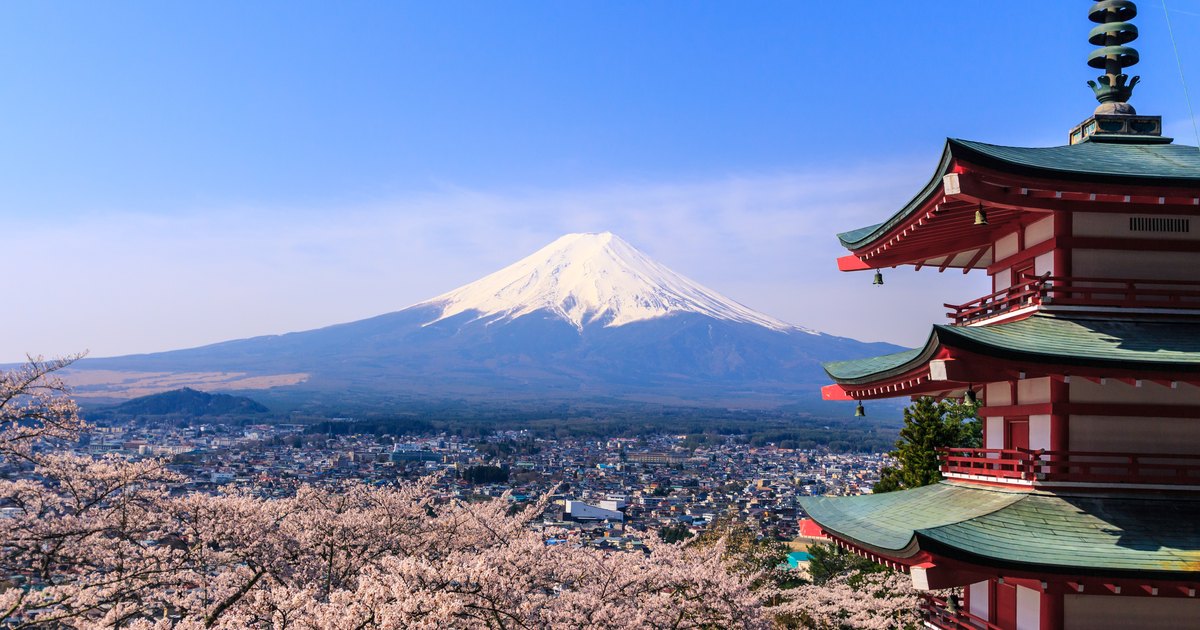
The pagoda is the Chureito — a five-storied war memorial from the late 1950s — standing on the hillside of Arakurayama Sengen Park above Fujiyoshida, with Fuji rising exactly where a photographer would order it. In blossom season the hillside fills with sakura and the viewing platform behind the pagoda produces the image on half of Japan's tourism posters. The costs of the shot: around 398 steps up from the park entrance (a sloped path exists too — allow 15–20 minutes either way), and in peak season, company — arrive early morning for breathing room and the clearest mountain. The platform area may operate queues or time limits on the busiest mornings; follow the signage and it all flows.
Getting there (and the Kawaguchiko pairing)
From Tokyo, rail runs Shinjuku → Otsuki (JR) → Shimoyoshida (Fujikyuko line), and the park entrance is a short walk from Shimoyoshida's small station. Highway buses from Shinjuku to the Fuji Five Lakes are the common alternative. The natural same-day pairing is Lake Kawaguchiko's north shore — cherry trees along the lakefront with Fuji across the water — a couple of stops further on the same line. Do Chureito at dawn, the lake through late morning, and you've banked two icons before the afternoon clouds roll in. As a day trip it's long but standard; as an overnight by the lake it's a pleasure (and pairs with the Hakone side of Fuji country if your route swings that way).
The late-bloom advantage
Shibazakura: the pink carpet that isn't sakura
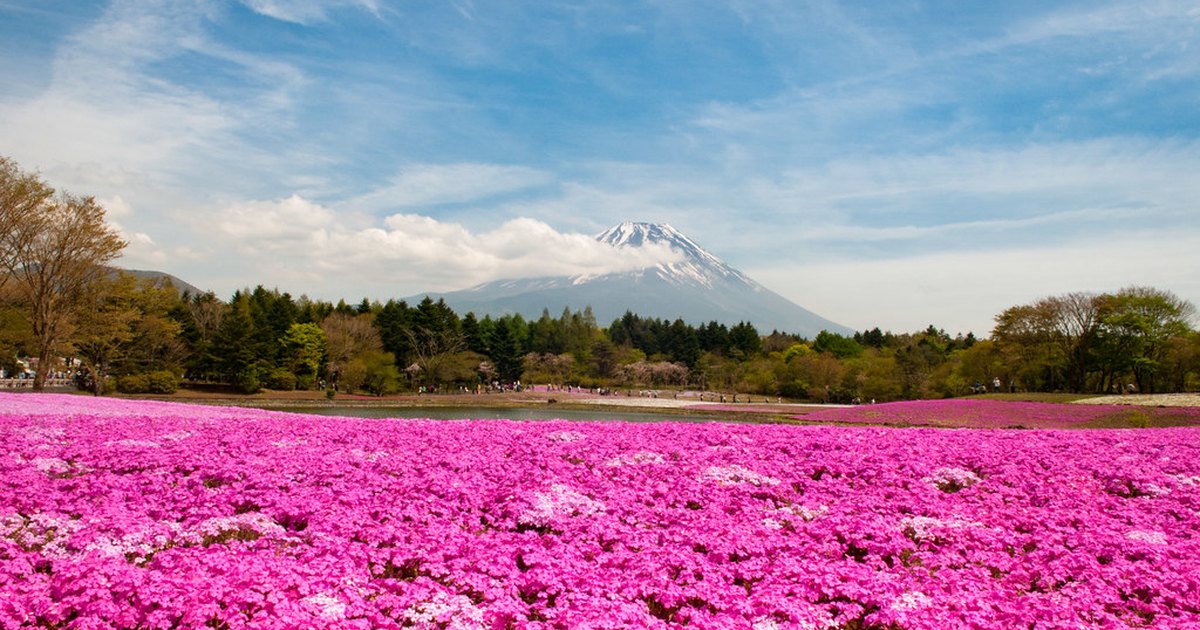
One clarification that saves disappointment: the "pink fields with Fuji" photos are shibazakura — moss phlox, a ground-cover flower — at the Fuji Shibazakura Festival near Lake Motosu, not cherry trees. It runs on its own, later calendar (roughly mid-April into late May in recent years, with paid admission), which makes it the season-extender: miss the tree sakura entirely and the carpet may still be at peak. Dates, prices and shuttle details change yearly — the official festival page is the source. As spectacle-per-effort it's one of the best flower events in the country.
Where this fits in the sakura map
This is the Fuji spoke of our sakura cluster: the spots guide covers the national map, the full-bloom guide covers timing mechanics, the hanami guide covers the picnic itself, and the month-by-month guide places the season in your trip. If the Chureito shot is on your list, plan it as a weather-flexible day — the mountain doesn't take bookings.
(Before the lakes turn pink, the cities do: our Japan in March guide shows why the blossoms belong to the last week of the month on the JMA’s averages.)
FAQ
Where is the famous pagoda photo with Mt. Fuji and cherry blossoms taken?
When do cherry blossoms bloom near Mt. Fuji?
How do I get to the Chureito Pagoda from Tokyo?
What is the Fuji Shibazakura Festival — is that cherry blossom?
Is Lake Kawaguchiko good for cherry blossoms?
What if Mt. Fuji is hidden by clouds?
Bottom line (2026) — The pagoda-sakura-Fuji shot is real: it’s Arakurayama Sengen Park above Shimoyoshida, roughly 398 steps up to the Chureito Pagoda. Better still, the Fuji area blooms a week or two after Tokyo, giving late travelers a second window — pair it with Kawaguchiko’s north shore and the Shibazakura Festival near Lake Motosu, and always confirm the season’s live forecast before locking dates.
Sources
Locations and access (Arakurayama Sengen Park, the Chureito Pagoda's memorial history, the ~398-step climb, Shimoyoshida access, Kawaguchiko's north shore, the Shibazakura Festival near Lake Motosu) are stable, publicly documented facts. Bloom timing follows elevation and shifts yearly — recent-year patterns are given as orientation only; the season's live forecast and the festival's official page are the current sources. As of July 2026.
Some links on this page may be affiliate links, which means we may earn a commission if you book or buy through them — at no extra cost to you. See our affiliate disclosure.
Tokyo to Osaka, Tokyo to Kyushu, Tokyo to Hokkaido — day by day — plus seven places most visitors never reach.
- 12 pages, 80 photographs, every stop linked to its guide
- Every price and opening hour read from the official page
- Re-issued monthly, so it does not go stale in your inbox
Free. One email a month, plus the rare change that matters. Unsubscribe with one click in any email. By subscribing you agree to our privacy policy.