Soba, buckwheat noodles served cold with a dipping sauce or hot in broth, is on menus all over Tokyo. At the eight soba restaurants here, a plain bowl of cold soba costs from 450 yen at the Fuji Soba chain to 1,320 yen at Kanda Yabusoba, and a bowl with tempura from 620 yen to 3,400 yen.
This page reports only what each restaurant says on its own website: prices, tax, hours, booking, payment, English and diet notes, plus how each describes its soba. It is not a ranking. The practical surprises are booking and cash: two of the eight take no cards, one opens only on weekdays and closes when the soba runs out, and one has announced new prices from November 2026. If you prefer thick wheat noodles, see our udon in Tokyo guide.
Soba in Tokyo at a glance
| Restaurant | Area | Plain cold soba | Closed | Payment | English |
|---|---|---|---|---|---|
| Kanda Matsuya | Kanda Sudacho | Mori 770 yen with tax | Sundays, Mondays | Not listed | Not mentioned |
| Kanda Yabusoba | Kanda Awajicho | Seiro 1,320 yen, as listed | Wednesdays | Not listed | No own English page |
| Muromachi Sunaba | Nihonbashi | Mori 990 yen with tax; new prices from November 2026 | Sundays, holidays | Not listed | Not mentioned |
| Toranomon Osakaya Sunaba | Toranomon | Mori 1,000 yen with tax | Saturdays, Sundays, holidays | Cash only | English shop page |
| Sarashina Horii | Azabu-Juban | Mori 1,000 yen, sarashina 1,100 yen, with tax | Not listed | Not listed | See below |
| Honmura-an | Ogikubo | Seiro 1,000 yen with tax | Tuesdays; 1st and 3rd Wednesdays | Cash, cards; no e-money or QR | Seasonal menu page |
| Owariya | Asakusa | Mori 800 yen with tax | Fridays | Cash only | Not mentioned |
| Fuji Soba | Many shops in and around Tokyo | Mori 450 yen with tax; varies by area | Varies by shop | Varies by shop | How-to video |
Prices as of September 29, 2026. Portions and noodles differ, from white sarashina to 100 percent buckwheat, so the table shows each restaurant’s plain cold soba, not a like-for-like comparison. Check the official site before you go.
What to know before eating soba in Tokyo
What is the difference between zaru and mori?
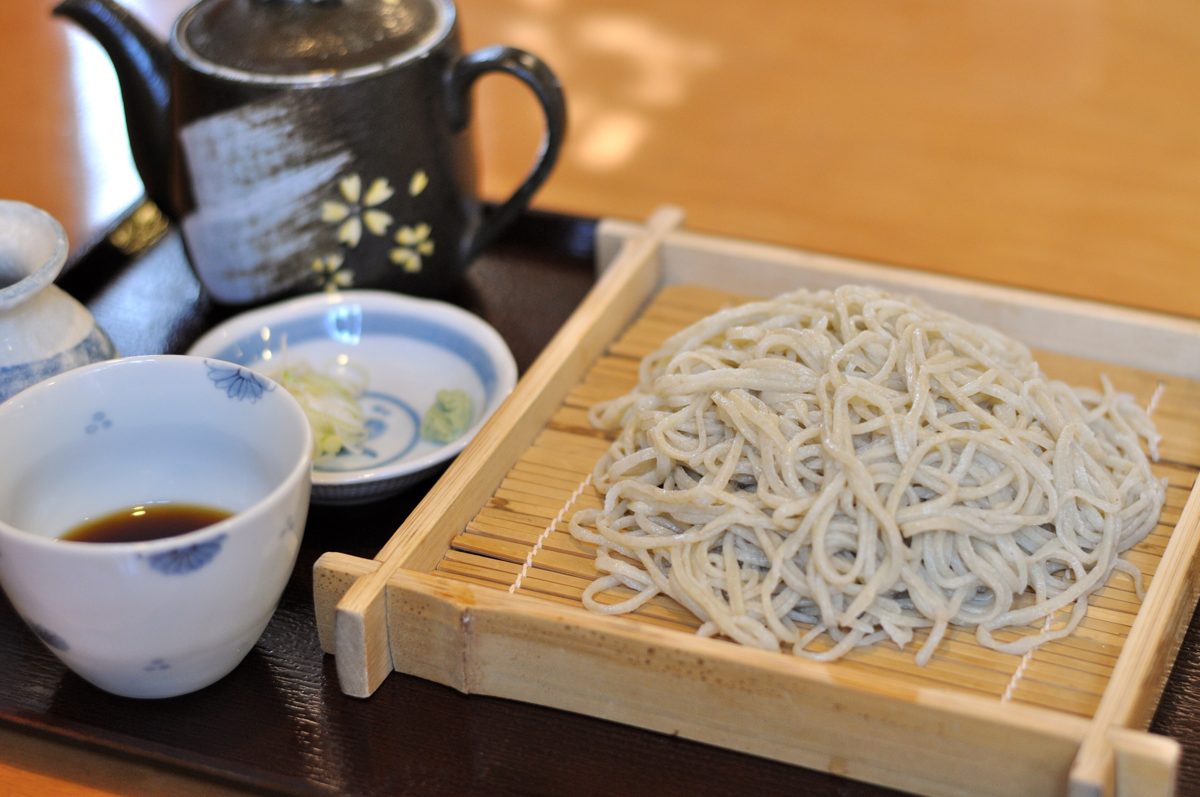
Muromachi Sunaba in Nihonbashi gives the clearest answer, for its own menu. Its zaru is made from sarashina flour, ground from only the core of the buckwheat and bound with egg, which it says gives fine, smooth noodles with a clean sweetness. Its mori uses buckwheat flour such as whole-grain hikigurumi, bound at a two-to-eight ratio, which it says keeps the aroma and color of the buckwheat. Other restaurants use the names their own way, so read each menu.
Why is some soba white and some dark?
At Sarashina Horii in Azabu-Juban, the sarashina is a pure white soba made from only the core of the buckwheat seed, and it says it has a gentle sweetness and slips down easily. Its futouchi is a thick, country-style soba made from buckwheat ground with the husk, and it says it uses no binder at all: 100 percent buckwheat. It also notes that how much buckwheat a soba contains and what color it is are not closely related, so a darker noodle is not proof of more buckwheat.
What are ten-zaru and ten-mori?
Cold soba that you dip into a warm broth with tempura in it. Muromachi Sunaba says it was the first to serve tempura soba this way, and calls itself the place where ten-zaru and ten-mori began; that is its own account. Its broth has kakiage tempura of small shrimp and kobashira shellfish with mitsuba herb. If you like dipping noodles, our tsukemen in Tokyo guide covers the ramen version.
What is soba-yu?
Soba-yu means, literally, soba hot water. Only one restaurant here mentions it on its site: Kanda Matsuya, describing its goma soba, invites you to try the soba-yu, which it says is a little different from the mori dipping sauce. None of the eight publishes a step-by-step way to drink it, so if you are unsure, ask when it arrives.
What does “santate” mean at a soba restaurant?
Honmura-an in Ogikubo says the conditions for good soba are called santate, the three “freshly” words: freshly milled, freshly made and freshly boiled. It says its soba boils for about 30 seconds.
The old soba restaurants of Kanda and Nihonbashi
Kanda Matsuya: Edo-style soba near Awajicho Station
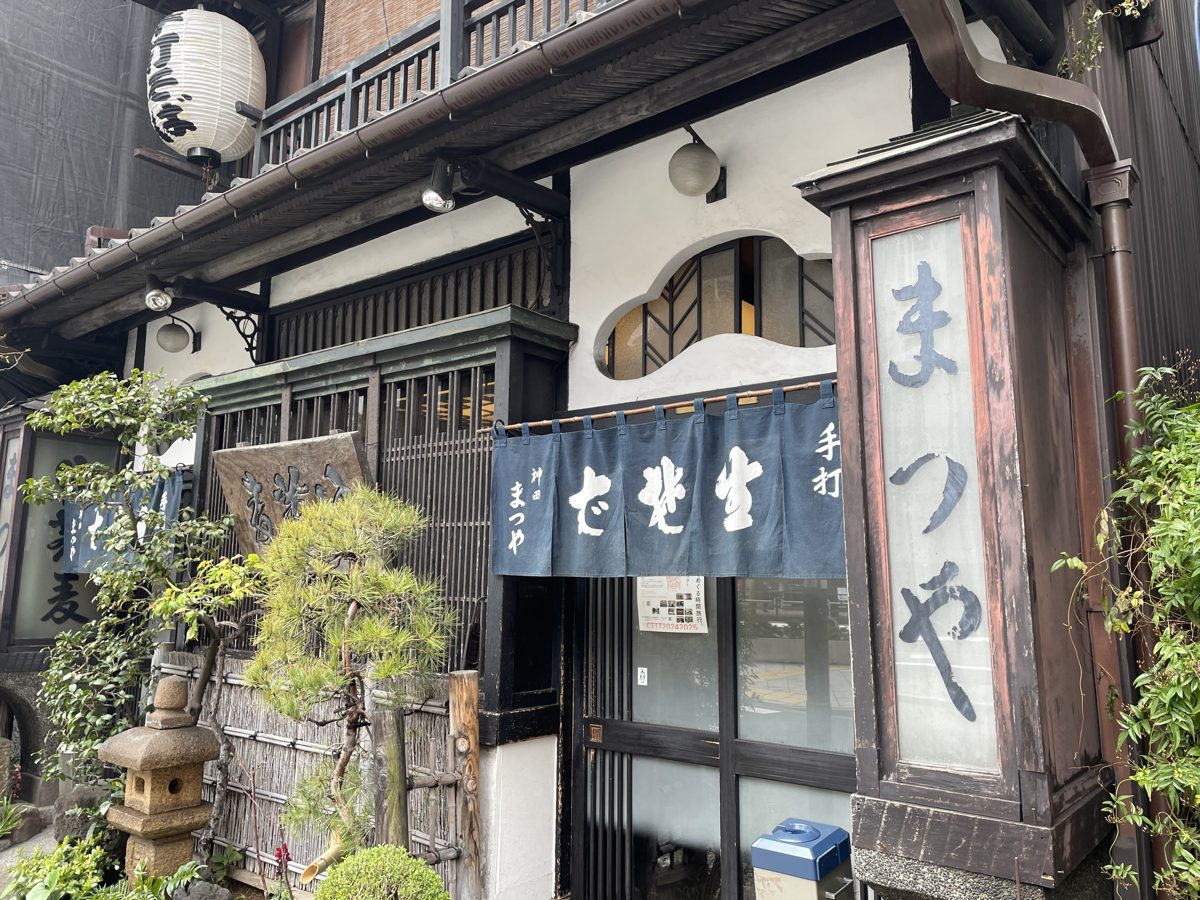
Kanda Matsuya is at Kanda Sudacho 1-13, Chiyoda-ku, one minute from exit A3 of Awajicho Station on the Marunouchi Line or Ogawamachi Station on the Toei Shinjuku Line, and five minutes from the east exit of JR Kanda Station. It opens 11:00 to 20:00 Tuesday to Friday and 11:00 to 19:00 on Saturdays and holidays, and closes on Sundays and Mondays. Temporary closures are posted in the news section of its site.
Its site lists four recommended dishes, all with tax: mori soba 770 yen, kake soba 770 yen, goma soba with sesame 935 yen and tempura soba 2,310 yen. There is no full price list, and the page carries no date. It describes its dipping sauce as the taste of Edo, slightly strong but with plenty of dashi. It does not list payment methods, English or bookings.
Kanda Yabusoba: seiro soba and first-floor bookings
Kanda Yabusoba is at Kanda Awajicho 2-10, Chiyoda-ku. It opens at 11:30 with last orders at 20:00, and closes on Wednesdays, with changes around national holidays. Its site does not name the nearest station. The first floor has 77 seats and the second floor 20, in three private rooms for 6, 6 and 8. It says it is barrier-free, with an accessible toilet, no steps, and an elevator to the second floor that takes wheelchairs.
The menu lists seiro soba at 1,320 yen, kake soba 1,320 yen, tsukimi soba with egg 1,760 yen, tempura soba 2,860 yen, kamo seiro with duck 3,190 yen, kamo nanban 2,860 yen and anago nanban with conger eel 3,850 yen. Snacks include soba sushi at 1,650 yen and aiyaki at 2,200 yen. These are as listed: the menu does not say whether tax is included. Two set courses, Dangozaka and Renjaku, are 12,100 and 14,300 yen, drinks extra.
Kanda Yabusoba takes first-floor bookings for up to 8 seats an hour, made by the day before; other guests are seated in order of arrival. Second-floor private rooms need a booking two days ahead for two or more, with a room charge of 5,500 yen. Its English link goes to an outside association’s page, not its own. It says it cannot cater to vegan, vegetarian or gluten-free diets because of the nature of its main dishes.
Muromachi Sunaba, Nihonbashi: where it says ten-zaru began
Muromachi Sunaba’s Nihonbashi restaurant is at Nihonbashi Muromachi 4-1-13, Chuo-ku, three minutes from Kanda Station or Mitsukoshimae Station on the Ginza Line. Its menu shows prices before tax, with the with-tax price beside each: mori, betsusei zaru and kake 990 yen with tax (900 before tax), ten-zaru, ten-mori and tempura soba 2,200 yen with tax, sobagaki buckwheat dumpling, small, 1,650 yen, and tamagoyaki 880 yen.
Hours: Saturdays 11:30 to 16:00, closed on Sundays, national holidays and January 1 to 4. For weekdays, its site gives two versions: the Nihonbashi restaurant page lists 11:30 to 21:00, with alcohol until 20:00, while a November 2024 notice lists 11:30 to 15:30 and 16:30 to 21:00 “for the time being”, with a preparation break in between. Check the site before a mid-afternoon visit. It also has a restaurant in Akasaka. It does not list payment methods or English.
Soba in Toranomon, Azabu-Juban and Asakusa
Toranomon Osakaya Sunaba: a 1923 building, weekdays and cash only
Toranomon Osakaya Sunaba says its building dates from 1923, and its English page says it was registered as a tangible cultural property in 1996. It says the restaurant opened in 1872 as a branch licensed by the head Sunaba house. It is at Toranomon 1-10-6, Minato-ku, three minutes from exit 1 of Toranomon Station, five minutes from Kasumigaseki Station exits C2 and C3, and eight minutes from the Hibiya gate of Shimbashi Station.
Cold soba: mori soba 1,000 yen with tax, gomadare soba with sesame sauce 1,300 yen, kamo seiro 2,400 yen and a shiba shrimp kakiage ten-seiro 2,200 yen. Hot soba: kake soba 1,000 yen, kuruma prawn tempura soba 2,200 yen and kamo nanban 2,400 yen. Seasonal items when we read the site included ao-yuzu kiri, soba flavored with green yuzu, at 1,500 yen, and junsai soba at 1,900 yen.
It is open for weekday lunch and dinner and closes on Saturdays, Sundays and holidays. It closes early, lunch or dinner, when the soba sells out. We are not giving opening times, because its site shows three different versions; check the official shop page. It is cash only, with no credit cards or e-money, and at busy times such as lunch it asks guests to share tables. It takes bookings only for evening banquets, and says guests who are not drinking should come without one. Its English shop page lists a few dishes, such as morisoba at 1,000 yen.
Sarashina Horii, Azabu-Juban: white sarashina soba
Sarashina Horii says, according to the Horii family, that it was founded in 1789. Its main restaurant in Azabu-Juban is at Motoazabu 3-11-4, Minato-ku, five minutes from exit 7 of Azabu-Juban Station on the Toei Oedo Line and seven minutes from exit 4 on the Namboku Line. On weekdays it opens 11:30 to 15:30, last order 15:00, and 17:00 to 20:30, last order 20:00; at weekends and on holidays, 11:00 to 20:30, last order 20:00. One warning: it says there are three restaurants called “Sarashina” around Azabu-Juban and that the other two are run separately. This guide covers only Sarashina Horii.
All prices are with tax: mori 1,000 yen, sarashina 1,100 yen, futouchi 1,600 yen, kake 1,000 yen, kamo seiro 2,400 yen, and tempura soba 2,310 yen with one prawn or 3,600 yen with two. A seasonal kawari soba, sarashina soba flavored with something different through the year, is 1,240 yen. Its calendar lists chrysanthemum from September 22 to October 9, goji berry from October 10 to 31, and gardenia from November 1 to 21.
It takes seat-only bookings on weekdays; at weekends and on holidays, bookings are for kaiseki meals only, and it takes no bookings in December. Its Japanese pages do not list payment methods. It has an English site, but the prices on it did not match the Japanese menu when we read it, so we went by the Japanese pages.
Owariya, Asakusa: two big prawns on the tempura soba
Owariya says it was founded in 1860. It is at Asakusa 1-7-1, Taito-ku, about five minutes from exit 3 of Asakusa Station, open 11:30 to 20:00, and 11:30 to 16:00 on Thursdays, closed on Fridays. It has 70 seats. It says its tempura soba and tendon come with two prawn tempura so large they stick out of the bowl.
Prices include tax: tempura soba 2,000 yen, jo tempura soba with kuruma prawns 3,400 yen, mori soba 800 yen, zaru soba 900 yen, kamo seiro 1,800 yen, ten-seiro 1,500 yen and tendon 2,000 yen. It is cash only: no credit cards, e-money or QR code payments. It does not take seat-only bookings, and says tables turn over fast, so even in busy seasons it can seat you in around 10 minutes; that is the restaurant’s own description. A small detail from its menu: it names a takeout dish hiyashi haikara, explaining that since the late Edo period it has not eaten animals such as tanuki or kitsune. For more tempura, see our tempura in Tokyo guide.
Tokyo soba beyond the center, and early in the morning
Honmura-an, Ogikubo: stone-milled soba worth the trip west
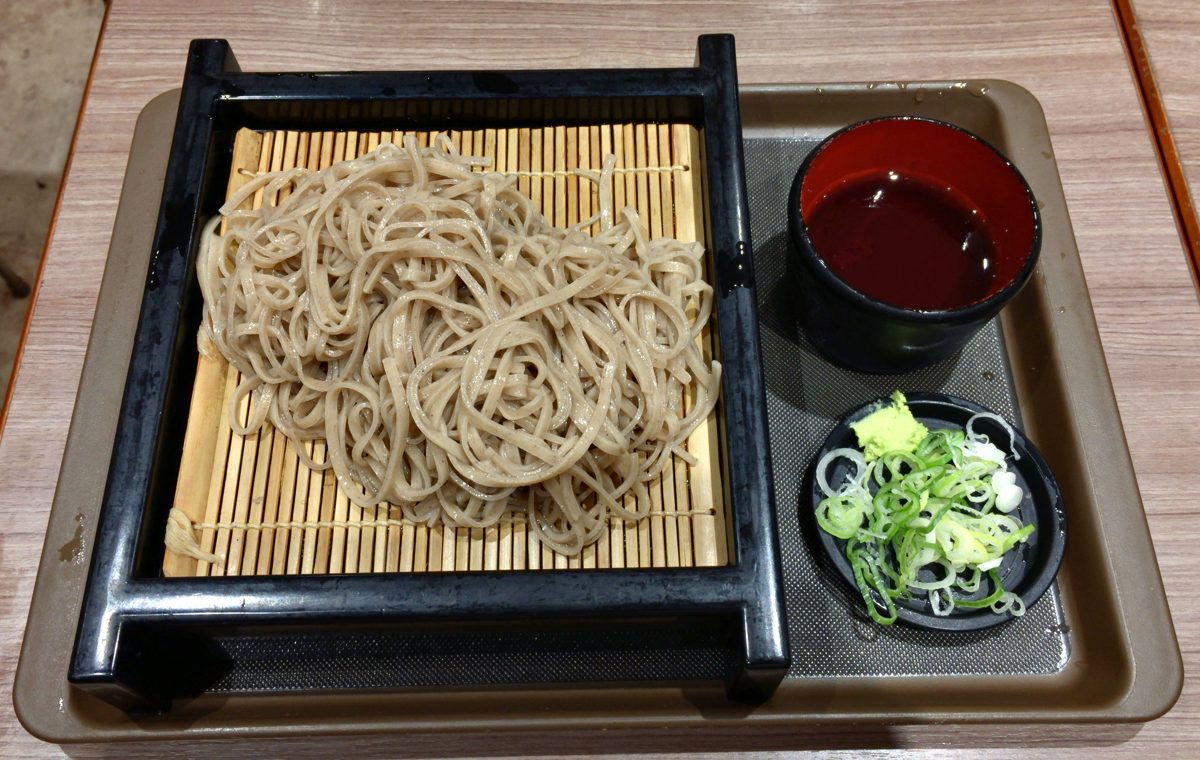
Honmura-an says it has milled its own buckwheat with stone mills, coarse-ground it and made its soba by hand for 40 years. It is at Kamiogi 2-7-11, Suginami-ku, about 8 minutes on foot from Ogikubo Station along the tracks, per the restaurant. It opens 11:00 to 21:30, last order 21:00, and closes on Tuesdays (open on a holiday, then closed the next weekday) and the first and third Wednesdays. It has 82 seats, is non-smoking all day, has a wheelchair-accessible toilet and 30 free parking spaces.
Its menu PDF, dated March 11, 2026, gives prices with 10 percent tax: seiro soba 1,000 yen, zaru soba 1,080 yen, inaka soba of hikigurumi flour 1,100 yen, kamo seiro 2,000 yen, ten-seiro 2,400 yen, kake soba 1,000 yen and tempura soba 2,800 yen. Each is also offered as udon at the same price. Its English seasonal page, dated September 23, 2026, lists yuzu kiri soba at 1,600 yen and matsutake soba from 4,500 yen at the season’s price.
A special set menu is 7,500 yen per person with tax, for 2 to 30 people by booking. The English page also lists a seasonal prix fixe menu at 6,300 yen that takes no reservations. Honmura-an takes cash and credit and debit cards (UC, Visa, Mastercard, JCB, American Express, Diners), including contactless card payment, but no e-money or QR code payments.
Fuji Soba: 450-yen soba and a morning set from 5:00
Nadai Fuji Soba is a soba chain with shops in Tokyo’s 23 wards and beyond, and in Saitama, Kanagawa and Chiba. After a price revision on August 1, 2026, its menu lists kake soba and mori soba at 450 yen with tax, tempura soba 620 yen, korokke soba with a croquette 610 yen and katsudon 630 yen, and says prices differ by area. Each soba can also be ordered as udon. Its morning soba comes with an onsen egg for 470 yen with tax, sold at every shop from 5:00 to 10:00 every day.
Fuji Soba says fresh noodles are delivered to each shop every morning and boiled to order, then rinsed in water to firm them, as at a regular soba restaurant. Hours differ by shop: its Shibuya East Exit shop, for example, notes that it closes from 3:00 to 4:00 a.m. Payment also differs by shop; the shop list shows Alipay, au PAY and d barai at Shibuya East Exit and PASMO at Shibuya Sakuragaoka. Its English page is a video showing how to use the shops.
What does soba cost in Tokyo?
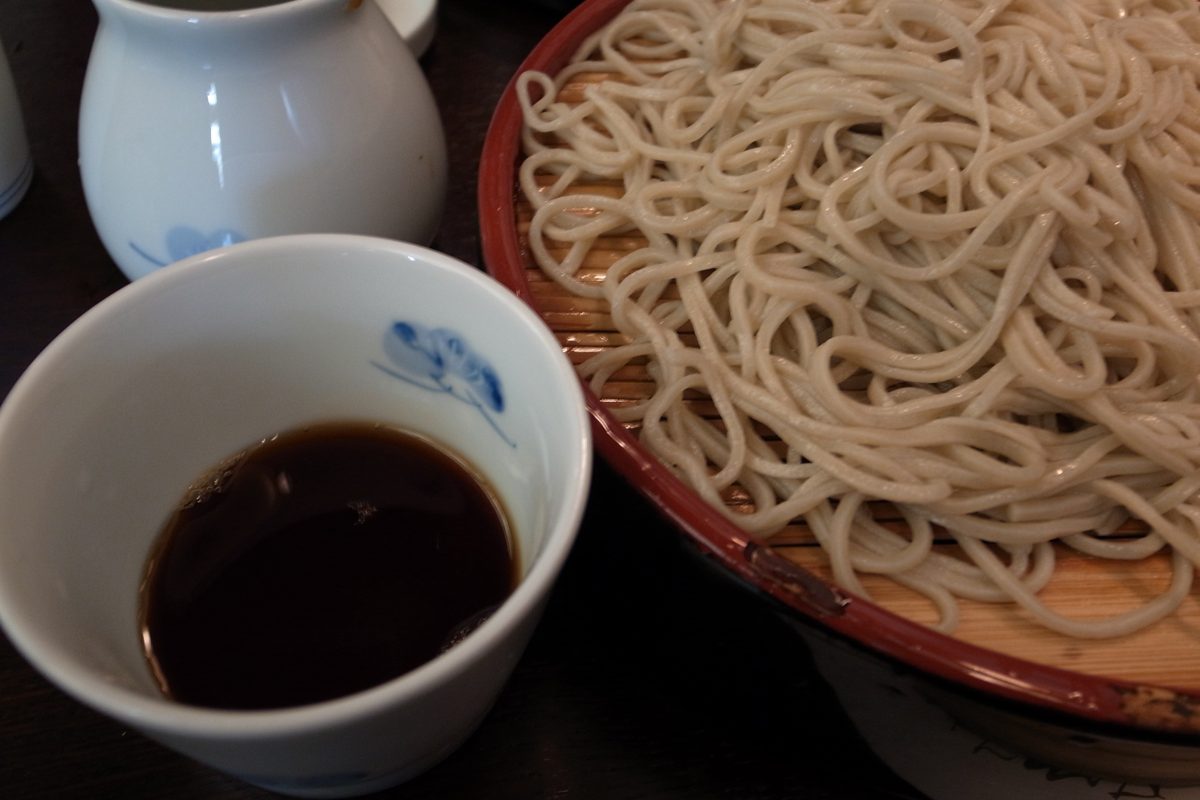
Soba prices in Tokyo, as published
| Restaurant | Plain cold / hot soba | Tempura soba | Tax, per the site |
|---|---|---|---|
| Fuji Soba | 450 / 450 yen | 620 yen | With tax; varies by area |
| Kanda Matsuya | 770 / 770 yen | 2,310 yen | With tax |
| Owariya | 800 yen (mori) | 2,000 yen; 3,400 yen with kuruma prawns | With tax |
| Muromachi Sunaba | 990 / 990 yen | 2,200 yen | Before-tax and with-tax both shown; changing from November 2026 |
| Toranomon Osakaya Sunaba | 1,000 / 1,000 yen | 2,200 yen (kuruma prawn) | With tax |
| Sarashina Horii | 1,000 / 1,000 yen | 2,310 yen (one prawn) | With tax |
| Honmura-an | 1,000 / 1,000 yen | 2,800 yen | With 10% tax, as of March 11, 2026 |
| Kanda Yabusoba | 1,320 / 1,320 yen | 2,860 yen | Not stated; as listed |
Why don’t soba prices compare directly?
Because the noodles are not the same thing. Sarashina Horii’s futouchi is 100 percent buckwheat; Muromachi Sunaba’s zaru is core-flour soba bound with egg; Fuji Soba’s shops boil noodles delivered each morning. None of the eight publishes portion weights. Compare within a restaurant, not across them.
Is tax included in soba prices?
Kanda Matsuya, Toranomon Osakaya Sunaba, Sarashina Horii, Owariya and Fuji Soba say their prices include tax, and Honmura-an’s PDF says it includes 10 percent tax. Muromachi Sunaba shows the price before tax with the with-tax price beside it. Kanda Yabusoba’s menu does not say either way.
Which soba prices are about to change?
Muromachi Sunaba has announced new prices from November 2026 without publishing them yet. Fuji Soba’s prices changed on August 1, 2026. Kanda Matsuya’s price page has no date, so it is not clear when its prices were set. Honmura-an dates its menu PDF March 11, 2026.
Booking, paying and diet notes at Tokyo soba restaurants
Can I book a soba restaurant in Tokyo?
It depends on the restaurant. Kanda Yabusoba books up to 8 first-floor seats an hour, by the day before. Sarashina Horii books seats on weekdays, kaiseki only at weekends and holidays, and nothing in December. Honmura-an books its 7,500-yen set menu for 2 to 30 people. Toranomon Osakaya Sunaba books only evening banquets, and Owariya does not book seats only. Kanda Matsuya, Muromachi Sunaba and Fuji Soba do not describe bookings on the pages we read.
Can I pay by card at soba restaurants?
Toranomon Osakaya Sunaba and Owariya are cash only. Honmura-an takes cash and major cards, with contactless card payment, but no e-money or QR codes. Fuji Soba lists payment methods shop by shop. Kanda Matsuya, Kanda Yabusoba, Muromachi Sunaba and Sarashina Horii do not list payment methods on the pages we read, so carry cash.
Is soba OK for vegans, vegetarians or a gluten-free diet?
Do not assume it is. Kanda Yabusoba says it cannot cater to vegan, vegetarian or gluten-free diets. Muromachi Sunaba says its zaru soba contains egg, and that udon, made from wheat flour, is heated in the same pot as its soba. None of the eight makes an allergy promise on the pages we read, so ask staff about your own needs. Our vegetarian restaurants in Tokyo guide covers places built around meat- and fish-free menus.
Is there an English menu at soba restaurants?
Toranomon Osakaya Sunaba has an English shop page with a few dishes and prices. Honmura-an has an English page for its seasonal menu. Fuji Soba’s English page is a how-to-use video. Sarashina Horii has an English site whose prices differ from its Japanese menu. Kanda Yabusoba links to an outside page, and Kanda Matsuya, Muromachi Sunaba and Owariya do not mention English.
Which soba restaurant in Tokyo suits you?
For Edo-style soba with a strong dipping sauce, open Tuesday to Saturday, Kanda Matsuya. For a booked seat on the first floor and set courses, Kanda Yabusoba. To try ten-zaru where it says the dish began, Muromachi Sunaba in Nihonbashi, before its November price change. For a weekday lunch in a 1923 building, with cash in hand, Toranomon Osakaya Sunaba. For white sarashina and 100 percent buckwheat side by side, Sarashina Horii. For stone-milled soba and paying by card, Honmura-an in Ogikubo. For big prawn tempura soba near Senso-ji, Owariya. For a 450-yen bowl or a 5:00 a.m. breakfast, Fuji Soba.
(For another Tokyo specialty: our gyoza in Tokyo guide reads six restaurants’ own sites, including Kameido Gyoza, which says it has served only gyoza since 1953.)
Frequently asked questions
How much does soba cost in Tokyo?
What is the difference between zaru soba and mori soba?
What are ten-zaru and ten-mori?
Can I book a table at a soba restaurant in Tokyo?
Which soba restaurants in Tokyo are cash only?
Is soba suitable for vegans or a gluten-free diet?
Where can I eat soba early in the morning in Tokyo?
Is there an English menu at soba restaurants in Tokyo?
Bottom line (2026): Plain cold soba in Tokyo costs from 450 yen with tax at Fuji Soba to 1,320 yen at Kanda Yabusoba. Toranomon Osakaya Sunaba and Owariya are cash only, and Toranomon Sunaba closes on weekends and when the soba sells out. Muromachi Sunaba will change its prices from November 2026. Kanda Yabusoba says it cannot cater to vegan, vegetarian or gluten-free diets.
Sources
Every price and rule on this page is from the restaurants’ own websites and the menu PDF on one of them: Kanda Matsuya, Kanda Matsuya recommended soba, Kanda Matsuya on its soba, Kanda Matsuya access, Kanda Yabusoba, Kanda Yabusoba menu, Kanda Yabusoba shop information, Kanda Yabusoba first-floor booking, Muromachi Sunaba, Muromachi Sunaba Nihonbashi, Muromachi Sunaba Nihonbashi menu, Muromachi Sunaba about, Muromachi Sunaba price change notice, Muromachi Sunaba hours notice (2024), Toranomon Osakaya Sunaba, Toranomon Sunaba cold soba, Toranomon Sunaba hot soba, Toranomon Sunaba seasonal soba, Toranomon Sunaba shop information, Toranomon Sunaba English page, Toranomon Sunaba history, Toranomon Sunaba news, Sarashina Horii, Sarashina Horii Azabu-Juban, Sarashina Horii Azabu-Juban menu, Sarashina Horii about, Sarashina Horii on its soba, Honmura-an, Honmura-an menu, Honmura-an menu PDF (March 11, 2026), Honmura-an access, Honmura-an English seasonal menu, Honmura-an on santate, Honmura-an on making soba, Owariya, Owariya menu, Fuji Soba, Fuji Soba menu, Fuji Soba shops, Fuji Soba on its noodles, Fuji Soba English page, all read on September 29, 2026. Menus, prices and hours change, so confirm on the official site before you go.
Some links on this page may be affiliate links, which means we may earn a commission if you book or buy through them — at no extra cost to you. See our affiliate disclosure.
Tokyo to Osaka, Tokyo to Kyushu, Tokyo to Hokkaido — day by day — plus seven places most visitors never reach.
- 12 pages, 80 photographs, every stop linked to its guide
- Every price and opening hour read from the official page
- Re-issued monthly, so it does not go stale in your inbox
Free. One email a month, plus the rare change that matters. Unsubscribe with one click in any email. By subscribing you agree to our privacy policy.