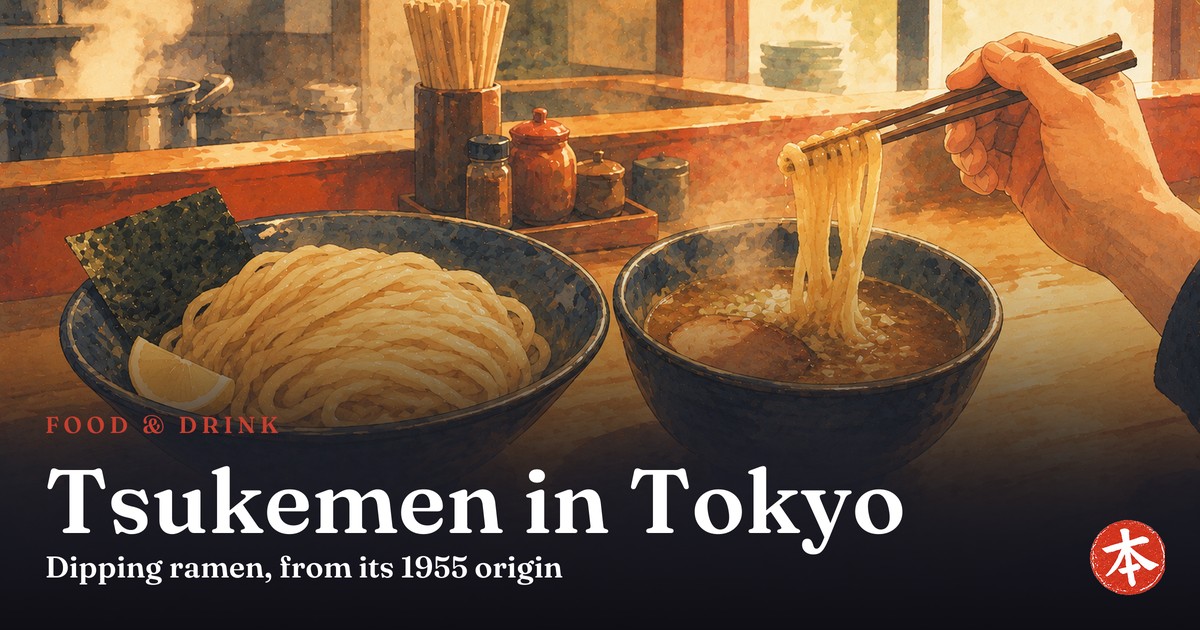
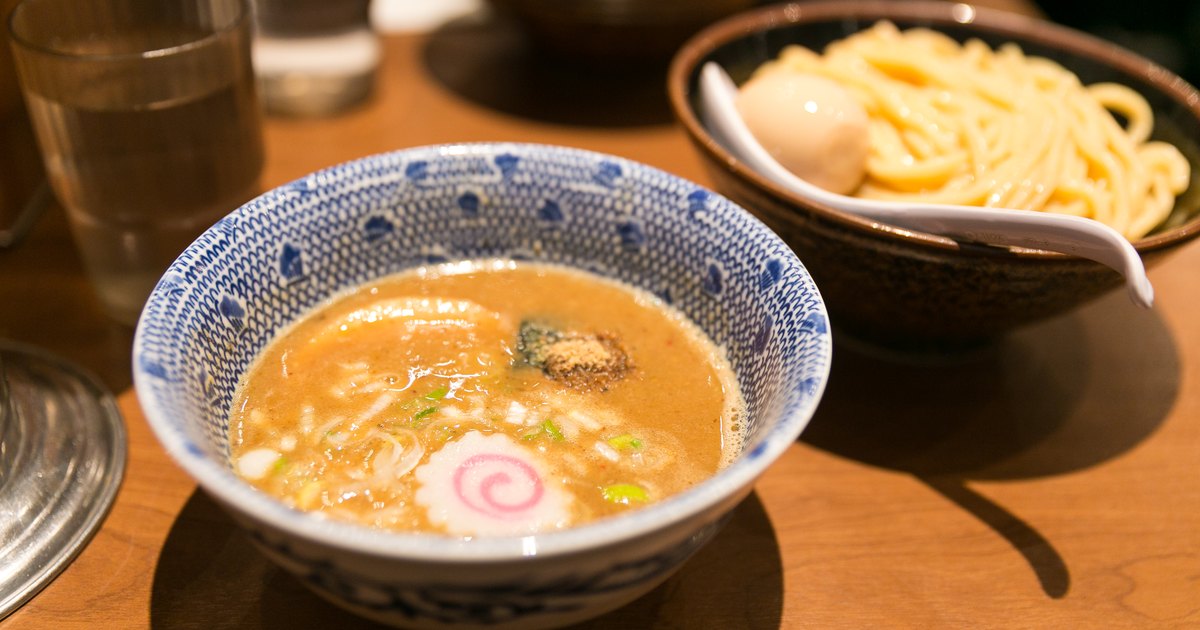
Tsukemen is ramen taken apart and rebuilt for maximum chew: thick cold-rinsed noodles on one plate, a concentrated dipping broth in another bowl, married one mouthful at a time. It was born in Tokyo — as a staff meal that hit a menu in 1955 — and Tokyo still runs the genre: the queue-famous Rokurinsha (with a 7:30 a.m. loophole), the 15-seat cult of Fu-unji, Tsujita's three-act eating script, and the shrimp heresy of Gonokami. Here's the history, the technique and the shops, from their own official pages.
Tokyo tsukemen at a glance
| Shop | Official hours | Official prices | The move |
|---|---|---|---|
| Rokurinsha (Tokyo Ramen Street) | Daily 7:30–9:45 & 10:00–23:00 | Not published | 7:30 morning session, station-exclusive bowl |
| Fu-unji (Yoyogi) | 11:00–15:00 / 17:00–21:00 · daily · until soup runs out | ¥1,000 · tokusei ¥1,300 | Open or 17:00 sharp · 15 seats |
| Tsujita (Kanda Ochanomizu +) | By branch | Not published (varies by branch) | The three-stage method: plain → sudachi → shichimi |
| Gonokami Seisakusho (Sendagaya) | Daily 11:00–21:30 | Shrimp tsukemen ¥1,000–¥1,500 | The shrimp-bisque outlier |
| Higashi-Ikebukuro Taishoken | Not published officially | Not published | The pilgrimage: the original-style morisoba |
Rokurinsha's tokusei bowl, dipped properly:
The origin: a staff meal that rewired ramen
Why do the dates in most articles not add up?
The official Taishoken history tells it precisely. Kazuo Yamagishi's "special morisoba" began as a staff meal at the Nakano Taishoken — noodles dipped into leftover broth — and joined the menu in April 1955, named after the soba of his native Shinshu. His own legendary shop, Higashi-Ikebukuro Taishoken, opened in 1961 — which is why "invented at East Ikebukuro in 1955" is wrong twice, and why even the official site hedges with "said to be the originator of tsukemen." The shop itself outlived its founder and a 2007 redevelopment eviction, reopening in 2008 under his apprentice; the morisoba still anchors the menu in Minami-Ikebukuro. One research warning we'll pass along: the official site's posted hours (10:00–17:00, closed Sunday) belong to its mail-order desk, not the restaurant — call or queue like everyone else. For the broader noodle canon, our Shibuya ramen guide and Ichiran system guide cover the soup side of the family.
Technique: dip, stage, and the soup-wari finish
What separates a tourist from a regular at the counter?
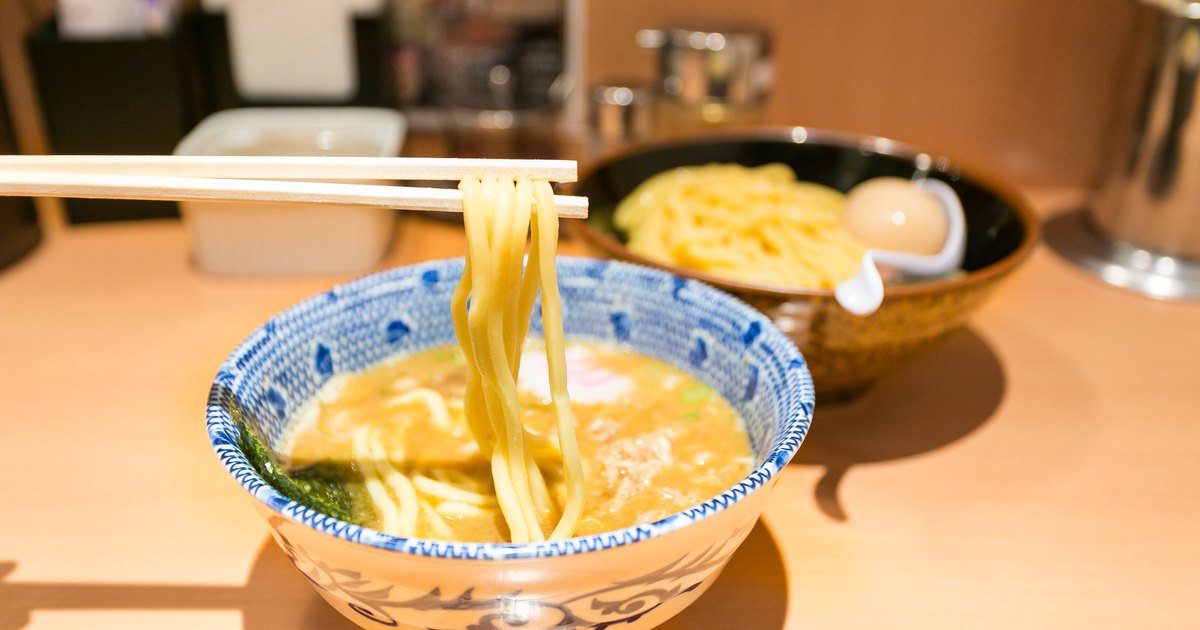
Three moves. The dip: bundle a bite, submerge a third to half of it — full immersion kills the temperature contrast that is the whole point. The stages: Tsujita's official method — first third plain, second third with sudachi citrus squeezed over the noodles, final third dusted with black shichimi — works at any shop and rescues palate fatigue in heavy bowls. The finish: when the noodles are gone, hand your broth bowl over and say "soup-wari" — Rokurinsha's menu spells out that staff will cut the dip with yuzu-scented fish dashi into a drinkable soup. Skipping soup-wari isn't rude, but it's leaving the last chapter unread. Temperature call: hiyamori (cold noodles, the default) for chew, atsumori (re-warmed, per Taishoken's official definition "like kamaage") for winter.
The shops: queues, sellouts and a shrimp heresy
How do you plan a day around soup that runs out?
Rokurinsha is the volume king — "making tsukemen a culture" is its official slogan — and its Tokyo Station flagship runs the genre's most useful schedule: 7:30–9:45 for the morning session (with a station-exclusive morning bowl), closed briefly, then 10:00–23:00. Queue math: an hour at lunch, minutes at 7:45. It anchors the Tokyo Ramen Street basement, with branches in Ikebukuro, Solamachi, Ueno and Haneda. Fu-unji in Yoyogi is the opposite model: 15 seats, two essential menu items, chicken-paitan-plus-seafood broth, ¥1,000 — and officially open every day now until the soup runs out, which retires the "closed Sundays" line every old guide repeats. Gonokami Seisakusho swaps fish for shrimp bisque (¥1,000–¥1,500, daily 11:00–21:30) at an address that reads Shibuya-ku but lives five minutes from Shinjuku's New South Exit. And Tsujita, the Ochanomizu-born chain (2005), is the etiquette school — its branches publish no unified prices, so read the machine. All four fit one well-paced day inside the Yamanote line, morning bowl to early dinner.
Ordering at the machine: a 60-second script
What do the ticket-machine choices actually mean?
Every shop here sells by ticket machine, and the buttons follow one grammar. Size first: tsukemen portions are quoted by noodle weight, and "normal" often means 300-plus grams — more than a ramen serving — with many shops pricing small, regular and large identically, which is generosity, not a typo. Then the build: plain, with egg (ajitama), or tokusei — the loaded version with egg, extra chashu and nori, usually the best ¥300 upgrade on the board. Hand the ticket over, answer the one question — atsumori or hiyamori — and sit. Water is self-serve, the counter has paper bibs at the splashier shops, and the soup-wari request comes at the end, bowl in hand. Total Japanese required: two words, both of which this article already taught you.
(Another city, another school — our Sapporo ramen guide covers miso, the curly noodle and which places are open until 5am.)
(For the buckwheat version of dipping noodles: our soba in Tokyo guide explains ten-zaru and ten-mori, cold soba dipped into a warm broth with tempura in it.)
FAQ
What exactly is tsukemen — and how is it different from ramen?
Who invented tsukemen?
How do you eat it properly?
What are atsumori and hiyamori?
How do I beat the Rokurinsha queue at Tokyo Station?
What does a bowl cost?
Is Fu-unji really worth the hype?
Where is Gonokami Seisakusho — Shinjuku or Shibuya?
Can I do a tsukemen crawl in one day?
Bottom line (2026) — Tsukemen — thick noodles dipped into concentrated broth — was born at a Tokyo shop in 1955, and the city still sets the standard. Beat Rokurinsha’s Tokyo Station queue at 7:30 a.m., hit Fu-unji’s 15-seat counter (¥1,000, now open daily), and follow Tsujita’s three-stage eating method for the classic experience.
Sources
Origin story, 1955 menu debut, Nakano staff-meal genesis, 1961 East Ikebukuro opening, 2007–2008 closure and revival, and the atsumori definition: Taishoken's official history and menu pages. Rokurinsha's slogan, noodle-chilling explanation, soup-wari instructions and Tokyo Station two-session hours: rokurinsha.com and its operator's official store pages. Tsujita's founding and three-stage method: its official about page. Fu-unji's address, hours, daily operation, seat count and prices: fu-unji.com. Gonokami's address, hours and prices: its official shop page. All read on August 19, 2026. Unpublished prices are not quoted. The embedded video is by its creator.
Tokyo to Osaka, Tokyo to Kyushu, Tokyo to Hokkaido — day by day — plus seven places most visitors never reach.
- 12 pages, 80 photographs, every stop linked to its guide
- Every price and opening hour read from the official page
- Re-issued monthly, so it does not go stale in your inbox
Free. One email a month, plus the rare change that matters. Unsubscribe with one click in any email. By subscribing you agree to our privacy policy.