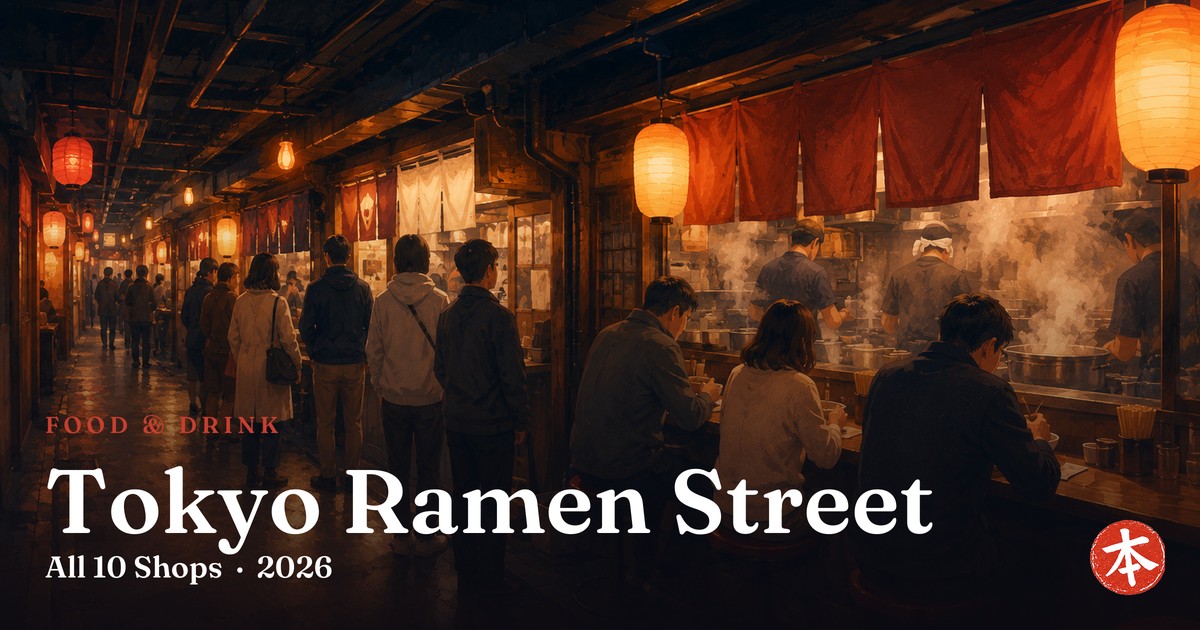
Tokyo Station hides one of the city's great food cheats: a basement corridor where ten serious ramen shops stand door to door, curated like a festival lineup — tsukemen, tonkotsu, salt, dried-sardine broth — all outside the ticket gates, all reachable with a suitcase in hand. It's called Tokyo Ramen Street, and it turns a train transfer into a destination meal.
This guide covers the current lineup, the shop that started the queues, how the ticket-machine ordering works, and when to go so the line doesn't eat your day.
Tokyo Ramen Street at a glance
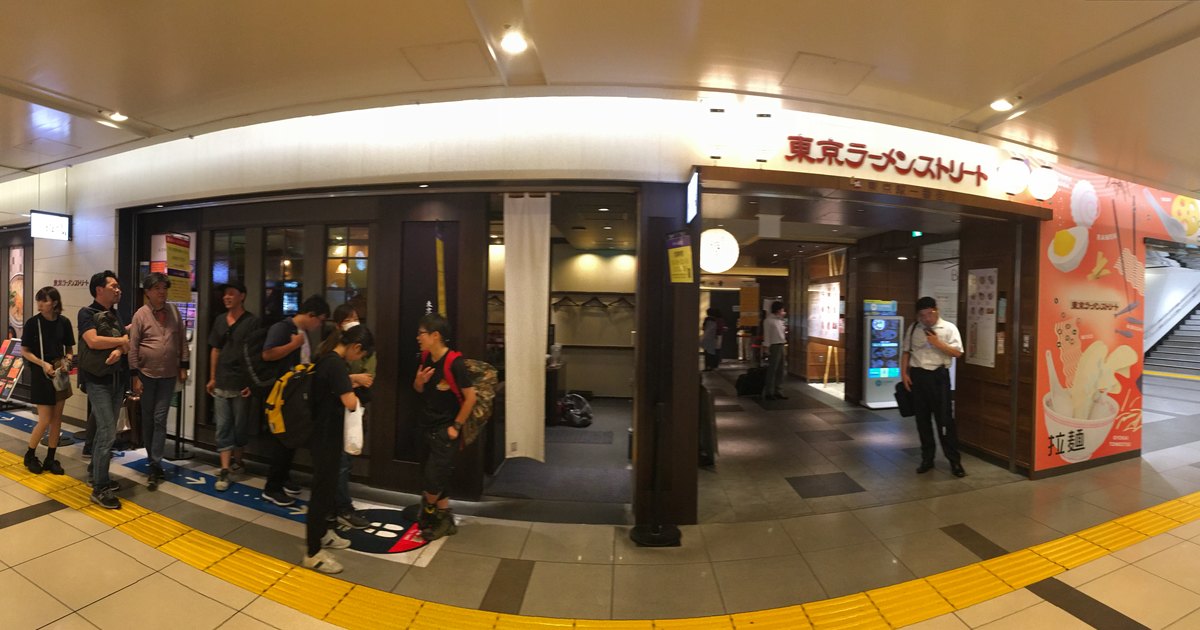
| What | 10 ramen shops in one corridor (as of July 2026, per the official site) |
|---|---|
| Where | B1 of First Avenue Tokyo Station, Yaesu side — closest to the Yaesu South exit |
| Ticket gates? | Outside them — no train ticket needed |
| The famous one | Rokurinsha (六厘舎) — the tsukemen legend with the street's signature queue |
| Ordering | Ticket machine at the door — pay first, hand over the ticket, slurp |
| Best times | Opening hour · 14:00–17:00 · late evening. Avoid the weekday 12:00 crush |
The current lineup (as of July 2026)
Per the official page, the ten shops are: Rokurinsha (六厘舎 — the tsukemen flag-bearer), Tokyo Eki Ikaruga (斑鳩 — a refined double-broth classic), Hirugao (ひるがお — shio/salt specialist, the light-and-elegant end of the street), Oreshiki Jun (俺式 純 — tonkotsu), Tokyo Niboshi Ramen Tama (らーめん玉 — niboshi done Tokyo-style), Hirakoya (ひらこ屋 — Tsugaru-style dried-sardine broth from Aomori), Sora no Iro NIPPON, Hanamichian (花道庵), Kakushinya TOKYO (革新家 — the "innovator" of the row) and Kourai Ramen (好来ラーメン). Between them you can eat your way across most of the Japanese ramen map without leaving the basement.
Rokurinsha: the queue that built the street
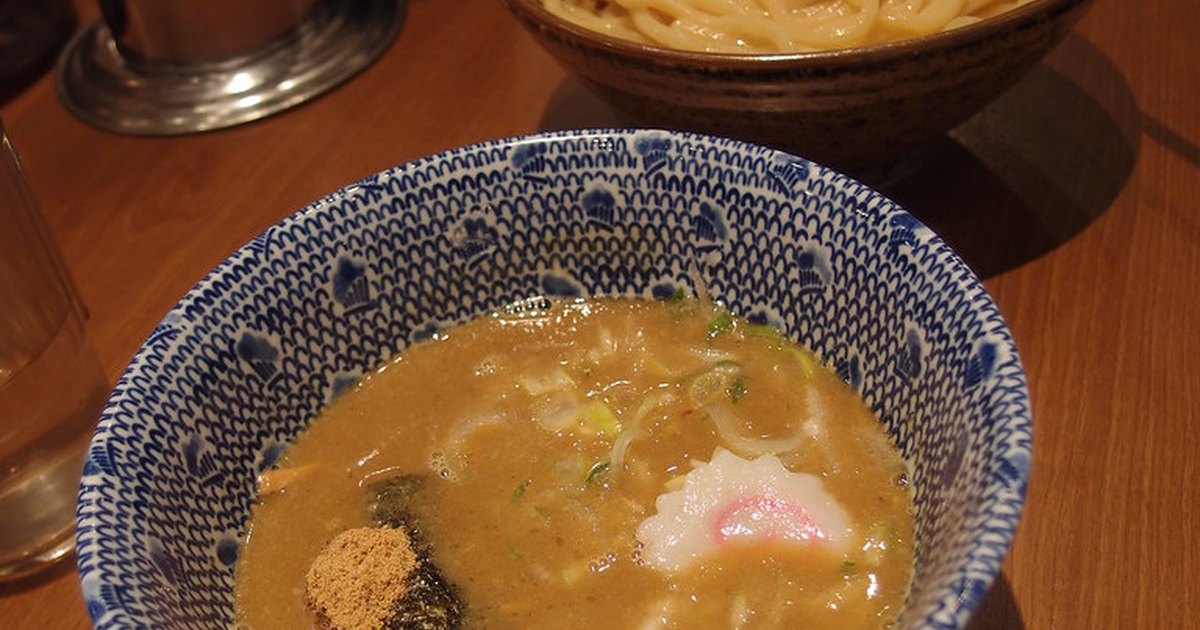
One shop explains the crowds. Rokurinsha popularised modern tsukemen — thick, chewy noodles served cold beside a scalding, almost gravy-rich dipping broth — and its original shop's lines grew so unmanageable it famously had to shut. The Tokyo Station branch is the successor, and the queue is part of the ritual: it moves quicker than it looks, and the payoff is a bowl that converts tsukemen skeptics on the spot. First visit to the street? This is the default answer. Ask for the hot-finish option (atsumori) if you prefer everything steaming, and there's usually a soup-wari pour at the end to thin the leftover broth into a drinkable finale.
How it works (and the etiquette)
- Ticket machine first: pay at the machine by the door — cash always works, many machines take IC cards too (your Suica earns its keep) — then hand the ticket to staff.
- Queue solo-friendly: counter seating dominates; solo diners are the norm, and groups may be seated separately at peak.
- Eat, don't camp: fast turnover is the deal that keeps queues moving. Slurp freely (it's correct), finish, free the seat.
- Luggage: doable with a carry-on; with big suitcases, use a station coin locker first — the corridor gets tight at rush.
Where it fits in a Tokyo trip
Ramen Street is the best possible use of the awkward hours a traveler inevitably spends at Tokyo Station — before a shinkansen, after landing, mid-transfer on day one of a longer route. It's not the whole story of Tokyo ramen, though: the neighborhood shops are their own universe, and our Shibuya ramen guide covers that side of town bowl by bowl. And if you're eating your way through the city more broadly, the street food guide and sushi guide round out the trio.
(Want the other end of the ramen spectrum — clear golden broth with yuzu instead of thick and heavy? Our AFURI guide covers the bowl, the two free customizations, and the branches that refuse cash entirely.)
(Vegan ramen exists inside the stations — see eating vegetarian in Tokyo.)
(Comparing chains? What Ichiran actually costs now — the Tokyo price rose in July 2026, and the ¥980 figure everyone quotes is a Kyushu price.)
(Rokurinsha's dipping noodles deserve their own story — the 1955 invention, the morning session and the soup-wari ritual are in our tsukemen guide.)
(One floor up from the ramen queues, Tokyo Station's other food institution — the 150-variety ekiben hall — now has a full guide.)
(The northern school gets its own guide — ramen in Sapporo, where the shop credited with inventing miso ramen calls the famous origin story an urban legend.)
(If you want the Hakata original rather than a Tokyo interpretation, our Ippudo guide covers Shiromaru versus Akamaru and the shop-only bowls worth crossing town for.)
FAQ
Where exactly is Tokyo Ramen Street?
How many shops are on Tokyo Ramen Street?
What is Rokurinsha and why is the line so long?
How do I order at these ramen shops?
When should I go to avoid the lines?
Is Tokyo Ramen Street worth it compared to ramen elsewhere in Tokyo?
Bottom line (2026) — Ten ramen shops in one basement corridor at Tokyo Station, inside First Avenue Tokyo Station (Tokyo Eki Ichibangai) and anchored by Rokurinsha, the tsukemen shop that made the street famous. It’s the best possible use of the awkward hours before a shinkansen, after landing or mid-transfer — check the official page for the current lineup and pick your queue accordingly.
Sources
Shop count and lineup from the official First Avenue Tokyo Station (Tokyo Eki Ichibangai) Ramen Street page, checked July 30, 2026. Individual shop hours and prices vary and change — the official page and each shop's signage are the live sources. Rokurinsha's history is as reported in Japanese food media over many years; queue observations are general patterns, not guarantees.
Tokyo to Osaka, Tokyo to Kyushu, Tokyo to Hokkaido — day by day — plus seven places most visitors never reach.
- 12 pages, 80 photographs, every stop linked to its guide
- Every price and opening hour read from the official page
- Re-issued monthly, so it does not go stale in your inbox
Free. One email a month, plus the rare change that matters. Unsubscribe with one click in any email. By subscribing you agree to our privacy policy.