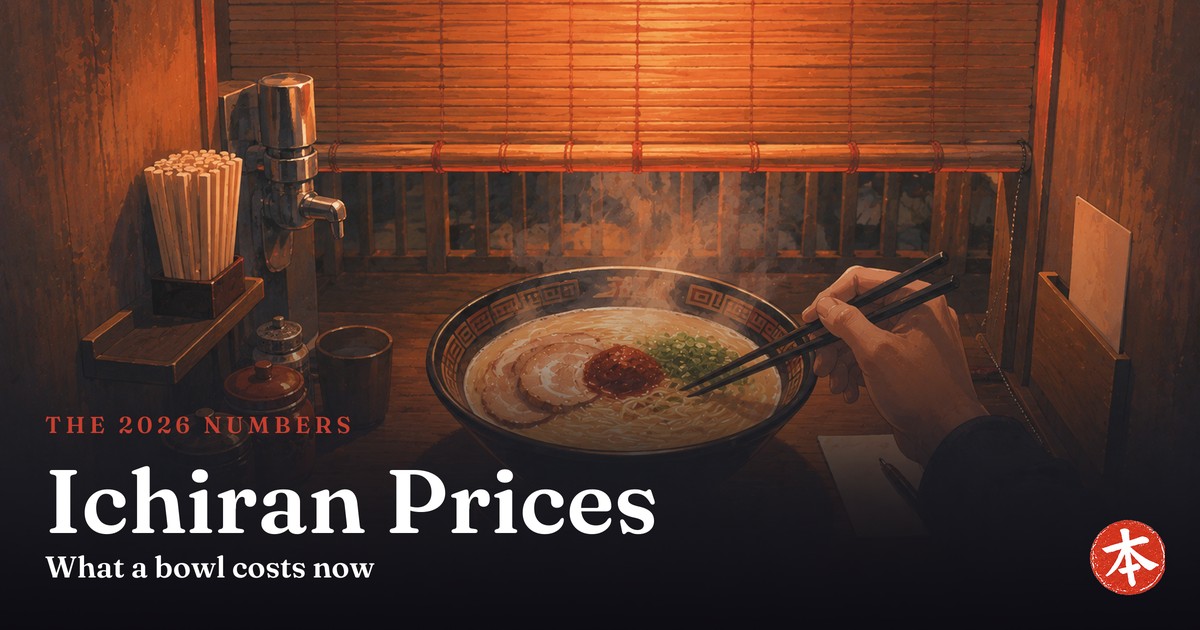
Ichiran publishes its prices — on each shop's own page, which is exactly why the internet keeps getting them wrong. The chain revised prices at some shops on July 1, 2026, and the headline number moved: the signature tonkotsu bowl is now ¥1,180 at Tokyo shops, while the ¥980 everyone still quotes survives only at Kyushu shops like the original Nanokawa branch. Here's the current official price list, the famous solo-booth ordering system, the late-night surcharge nobody's heard of, and which Tokyo shops genuinely never close.
Ichiran prices at a glance (Tokyo, after the July 2026 revision)
| Item | Tokyo (Shibuya page) | Kyushu (Nanokawa page) |
|---|---|---|
| Tonkotsu ramen (the original bowl) | ¥1,180 | ¥980 |
| Kae-dama / half | ¥210 / ¥150 | ¥210 / ¥150 |
| Half-boiled salted egg | ¥160 | ¥140 |
| Extra chashu (4 slices) | ¥290 | ¥260 |
| Scallions · kikurage · garlic | ¥160 each | ¥130–¥140 |
| Rice / small rice | ¥300 / ¥250 | ¥250 / — |
| Take-home 5-pack (suggested retail) | ¥2,300 straight · ¥2,150 curly · cup ¥537 | |
The whole ritual in three minutes — ticket machine, order sheet, booth, bamboo screen:
Why did the price change — and why do articles disagree?
What exactly happened on July 1, 2026?
Ichiran's own notice, dated June 29, says it plainly: ramen and topping prices were revised at some shops from July 1, with details posted on ticket machines and the website. That per-shop structure is the whole story of the confusion. Ichiran doesn't run one national price list — each shop page carries its own menu, and after the revision the Tokyo pages we checked (Shibuya, Asakusa, Ueno) all read ¥1,180 while Fukuoka's Nanokawa page still reads ¥980. So an article quoting "¥980 at Ichiran" isn't lying — it's quoting the wrong city, or the wrong year. Same logic for toppings: Tokyo's egg is ¥160, Kyushu's ¥140. When you plan a budget, open the page of the specific shop you'll visit.
The ordering system: seven choices, zero conversation
What do the seven items on the order sheet mean?
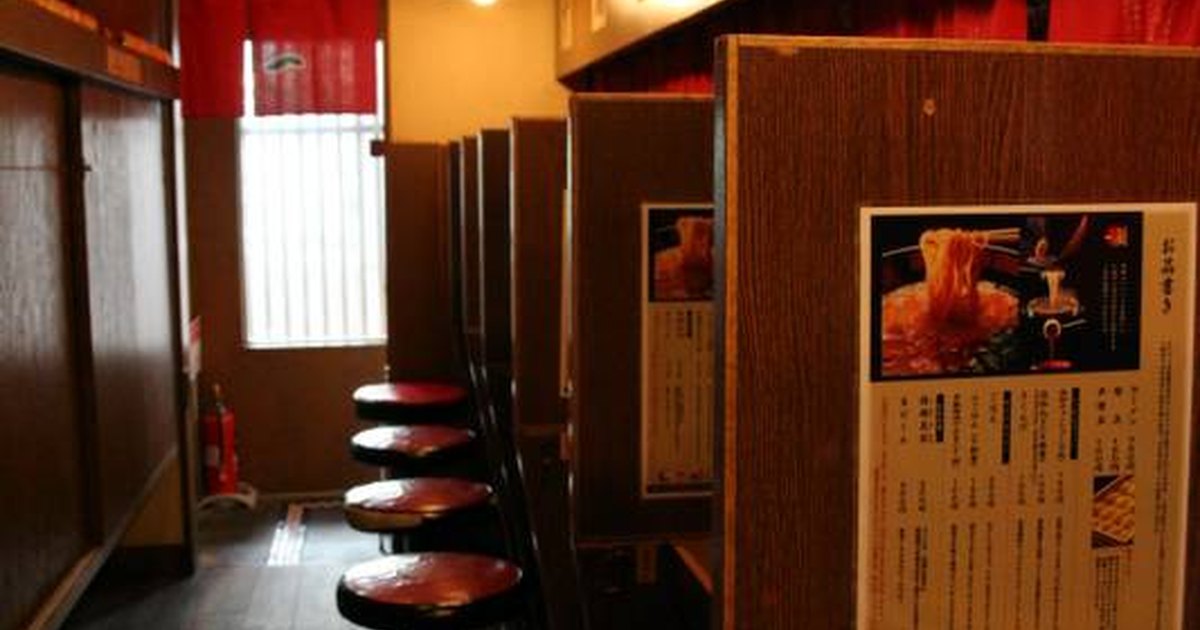
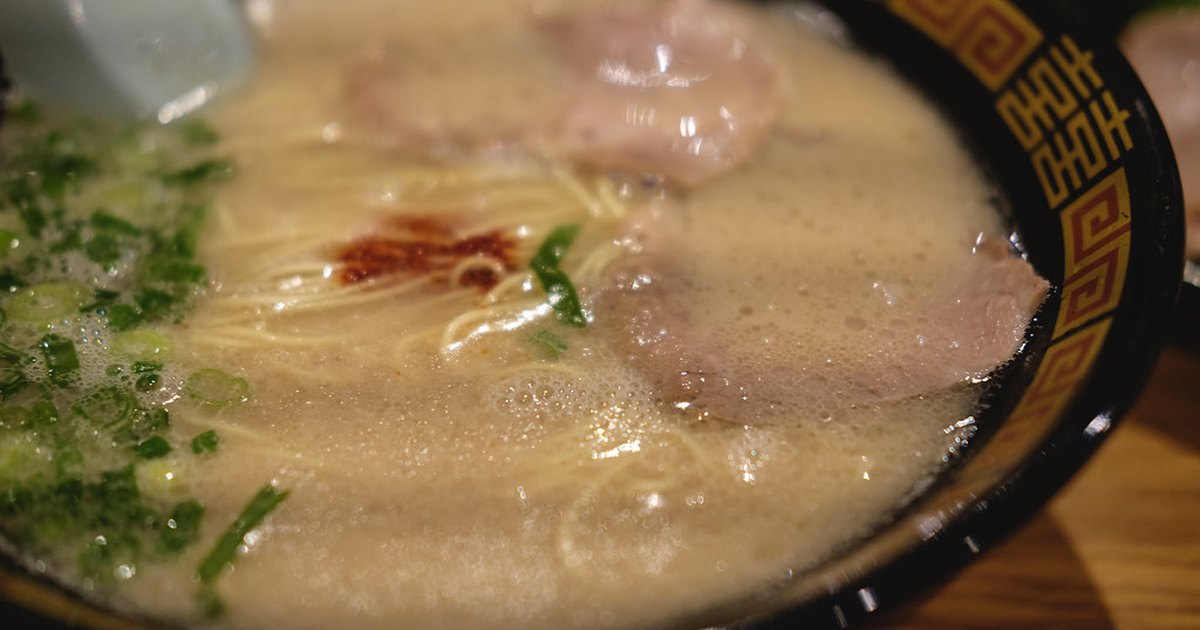
The company's English site lists the customization set officially: noodles (firmness), dashi, richness, chashu, scallion, spice (the red sauce, scalable to 20x for ¥140 extra at Tokyo prices), and garlic. Sheets exist in English, Korean and Chinese — mark your boxes, slide the paper under the bamboo screen, and the kitchen answers with a bowl. The solo booths — "flavor concentration" seating, officially — mean nobody watches you eat and nobody needs your Japanese. When the noodles run out, the kae-dama plate goes on the call button: a chime sounds, the plate disappears, more noodles arrive. First-timers who want the full context of Tokyo's ramen scene should read our Shibuya ramen guide and the Tokyo Station ramen street piece — Ichiran is the on-ramp, not the ceiling.
Hours, surcharges and payment: the fine print that changed
Which shops really run 24 hours?
Ten of Tokyo's 18, per the official hours table: Ueno's Atre branch, Shimbashi, Shibuya and Shibuya Spain-zaka, both central Shinjuku shops, Ikebukuro Station, Shimokitazawa, Tachikawa and Machida. Daytime-district shops close: Asakusa at 22:00, Harajuku at 22:00. Two recent-era details old guides miss entirely: a late-night surcharge applies 22:00–6:00 (introduced in 2025; the rate isn't published on any readable official page, so read the ticket machine), and payment went modern — Shibuya's machine officially takes five credit-card brands, transit IC, QUICPay, iD, Edy and ten QR services alongside cash. Ichiran's own caveat applies to all of it: hours and menus "may change suddenly." For the running list of dated changes like the July revision, our 2026 tracker keeps score. And if the queue defeats you, Afuri — the yuzu-shio counterpoint — is the stylistic opposite and takes almost no cash at all.
What does a full Ichiran meal actually cost?
Three real budgets, using only official Tokyo prices
The minimalist (¥1,180): the bowl, nothing else — and honestly, on a first visit this is the right call, because the order sheet's seven dials are the experience. The standard (¥1,550): bowl plus the half-boiled salted egg (¥160) and kae-dama (¥210) — the configuration most regulars land on, and still cheaper than a coffee-shop lunch in Shibuya. The full spread (¥2,480): bowl, extra chashu (¥290), egg, garlic (¥160), kae-dama, and the matcha annin tofu dessert (¥450) — dessert in a ramen booth sounds wrong and tastes right. Add a draft beer (¥650) and you're at izakaya-dinner territory, which is the honest framing: Ichiran priced itself out of the cheap-eats bracket years ago and into the reliable-experience bracket. After 22:00, remember the surcharge stacks on top of whatever you build — the machine shows the final number before you commit, which is more than most izakaya menus can say.
One etiquette note the booths make easy: slurping is expected, phones on silent is house courtesy, and the bamboo screen drops the moment your bowl arrives — the system is engineered so the noodles get your full attention while they're at their officially recommended firmness. Eat first, photograph the empty bowl's "last drop" message after.
When should you go to skip the line?
The queue is the only real cost Ichiran doesn't print. The pattern that holds across the 24-hour Tokyo shops: lunch (12:00–14:00) and the post-dinner tourist wave (19:00–22:00) stack the longest lines; the golden windows are 15:00–17:00 and — at the round-the-clock shops — anything after midnight, when the booth system was arguably designed to shine. Solo diners move much faster than groups since booths free up one at a time, which makes Ichiran one of the few Tokyo restaurants where eating alone is a structural advantage. If the wait is posted at 45 minutes-plus, walk: at Shibuya you're ten minutes from a dozen bowls just as good.
(The other Fukuoka-born tonkotsu chain works differently: our Ippudo guide covers its fixed menu, the six shops with a plant-based Akamaru, and the app that earns points but cannot book a seat.)
For a first-hand account, Tia’s Is Ichiran ramen in Japan overhyped? on Becoming Tia checked three Ichiran locations before finding a reasonable waitlist, then waited about an hour while walking around the area.
FAQ
How much is a bowl of ramen at Ichiran in Tokyo?
How much are kae-dama and toppings?
How does ordering at Ichiran actually work?
How do I order extra noodles without talking?
Is Ichiran open 24 hours?
Does Ichiran charge more late at night?
Does Ichiran take credit cards?
Can I buy Ichiran ramen to take home?
Which Tokyo Ichiran should I go to?
Bottom line (2026) — A bowl at Ichiran’s Tokyo shops is ¥1,180 as of the July 1, 2026 price revision — not the ¥980 still quoted everywhere, which is now a Kyushu price. The full order runs on a seven-item sheet with a booth system, a kae-dama chime and a late-night surcharge; skip the queue by going 15:00–17:00 or, at 24-hour shops, after midnight.
Sources
Bowl, kae-dama, topping and payment details: Ichiran's official shop pages for Shibuya, Asakusa, Ueno and Fukuoka Nanokawa. The July 1, 2026 revision: Ichiran's official news release dated June 29, 2026. Ordering system, order-sheet items and kae-dama chime: Ichiran's official English pages. 24-hour list and closing times: the official business-hours table. Souvenir prices: the official product pages (suggested retail). All read on August 17, 2026. The late-night surcharge rate is not officially published and is not quoted. The embedded video is by its creator.
Tokyo to Osaka, Tokyo to Kyushu, Tokyo to Hokkaido — day by day — plus seven places most visitors never reach.
- 12 pages, 80 photographs, every stop linked to its guide
- Every price and opening hour read from the official page
- Re-issued monthly, so it does not go stale in your inbox
Free. One email a month, plus the rare change that matters. Unsubscribe with one click in any email. By subscribing you agree to our privacy policy.