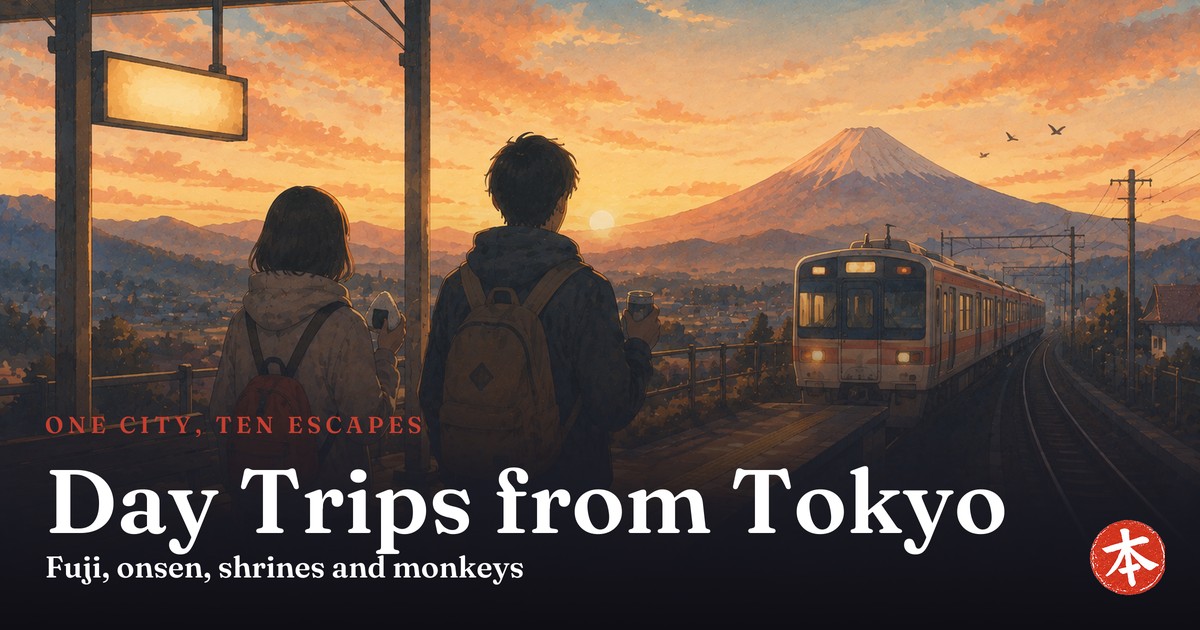
Tokyo's superpower is what surrounds it: within one to three hours sit Mt. Fuji viewpoints, World Heritage shrines, onsen towns, a harbor city and hot-spring-bathing monkeys — all reachable on trains that leave every few minutes. This hub organizes all fourteen Honto day-trip guides by the only question that matters: what kind of day do you want?
Every day trip at a glance
| Mood | Where | Time from Tokyo |
|---|---|---|
| Easy half-day | Yokohama (+ what to do) | ~30 min |
| Seaside onsen + fireworks | Atami | ~50 min |
| Temples by the sea | Kamakura | ~1 h |
| The classic sampler | Hakone Freepass · things to do · map | ~1.5 h |
| Mt. Fuji front row | Lake Kawaguchiko | ~2 h |
| World Heritage grandeur | Nikko map · things to do | ~2 h |
| Onsen pilgrimage | Kusatsu | ~4 h |
| Snow monkeys | Jigokudani | ~3 h |
| The deer (honest verdict: go from Kyoto) | Nara | ~3 h |
| Zero planning | Hato Bus guided days | door to door |
Picking by season
When does each trip peak?
Summer: Atami's bay fireworks (14 official dates a year) and Kawaguchiko's lavender terraces. Autumn: Nikko is the king — and the one place whose own city officially warns that foliage traffic can turn 45 minutes into four hours, so read the Nikko guide's timing advice. Winter: the snow monkeys in the steam, and Kusatsu's yubatake under snowfall. Spring: Kamakura's temple gardens and Hakone's clear-day Fuji views. Any Tuesday: Yokohama, which asks nothing of you but thirty minutes and an appetite.
Picking by effort level
How much logistics can you tolerate?
Zero-effort tier: Yokohama and Atami — walk-up trains, no seat reservations, bail out whenever. One-decision tier: Kamakura (one train, then your feet) and Kawaguchiko (book the bus, then the local passes handle the lake). Systems tier: Hakone — the famous loop of trains, cablecars, ropeways and boats runs beautifully if you buy the Freepass and read the map guide first. Expedition tier: Kusatsu, the snow monkeys and Nara, where four-plus hours of travel demand either an early alarm or an overnight bag. Matching the tier to your energy — not the destination to your bucket list — is what separates good day-trip weeks from exhausted ones.
Overnight or day trip? The honest line
Which of these deserve a hotel?
Three earn the overnight outright: Kusatsu (the yubatake lights up after the day-trippers leave, and the town is built for inn dinners), Nikko in foliage season (the official four-hour-traffic warning makes the morning-after start the only calm one), and Kawaguchiko for photographers — dawn over the lake is the Fuji shot, and it belongs to people who slept there. The rest genuinely work as day trips, which is their whole charm: Yokohama and Kamakura barely dent an afternoon, Atami's last comfortable train leaves after dinner, and Hakone's loop closes neatly back at the station. When a fireworks date or festival tempts you to linger, the Changes Tracker and each guide's events notes flag the nights worth staying for.
The transport homework, honestly
One day trip run end to end on a pass, without a car – Romancecar out, the loop around Hakone, and back. A useful reality check on how much of a day the transport itself actually consumes.
What should I know before buying tickets?
Three honest notes from our research. JR fares changed in March 2026 and the official pages resist verification — our transport guides deliberately point you to official JR channels rather than printing stale numbers. Some routes changed this summer: the Karuizawa–Kusatsu express bus suspended itself in August, and Nikko's Akechidaira Ropeway is closed until September 2027 — the Changes Tracker keeps the list. Passes are trip-specific: the Hakone Freepass genuinely pays for itself; others depend on your route — each guide runs the math rather than assuming.
Combining day trips into a week
How many is too many?
Three big excursions in a seven-day Tokyo stay is the sustainable ceiling — the city itself deserves the other days, and back-to-back dawn departures turn vacation into commuting. The pairing logic our 7-day itinerary uses: alternate excursion days with city days, put the earliest-alarm trip (Fuji or the monkeys) the day after a lazy one, and keep the final day trip short — Yokohama's thirty minutes exist precisely for the day before a flight. Two structural tips that survive any plan: buy round-trip or pass tickets in the morning calm rather than the evening scramble, and screenshot the return timetable before you leave the station — rural lines run hourly, and knowing the last two departures home is the difference between a glorious lingering sunset and a taxi bill with a story attached.
(Kawagoe now has its own full guide — Little Edo in a day, with the bell times, the 2026 wind-chime dates and the passes that still exist.)
(Kamakura's full guide — the Buddha, the bamboo temple and the 2026 prices — is now live.)
(The sacred-island half of the Shonan coast — our Enoshima guide — covers the 2025 price revisions most guides missed.)
(Kamakura's transit math changed in March 2026 — our Tokyo-to-Kamakura guide has the current fares and passes.)
(If Nikko becomes an overnight trip: our Nikko Kanaya Hotel guide covers a hotel that traces itself to the Kanaya Cottage Inn of 1873, with last check-in at 20:00 and a free shuttle from Tobu-Nikko Station.)
FAQ
What’s the easiest day trip from Tokyo?
Which day trip has the best mountain scenery?
Can I see the snow monkeys in a day?
Is Nikko doable in one day?
What about Kamakura?
Which onsen town is the best day trip?
Is Nara possible as a Tokyo day trip?
What if I don’t want to plan anything?
Do these trips need reservations?
What’s the best day-trip strategy for a first visit?
What to pack for any of these
The universal day-trip kit?
An IC card with balance (every route here starts with a tap), cash for the rural end (Kusatsu's free baths have no lockers and mountain shrines take coins), a phone battery pack (the guides, maps and return timetables all live on your screen), and one layer more than Tokyo needs — Okunikko and the Fuji lakes run meaningfully cooler than the city year-round. Onsen-bound travelers add a small towel and leave the swimsuit (it's not that kind of bath — etiquette notes live in the onsen guides). And everywhere: comfortable shoes over stylish ones. Every destination in this hub is, at heart, a walking day with trains attached — the shrines climb, the lakesides stretch, and the yokocho crawls reward the unhurried. Pack light, start early, and let the last train home stay a fact you checked rather than a race you ran. If one item defines the successful Tokyo day-tripper it is the unglamorous morning onigiri bought at the station konbini: breakfast solved, hands free, and the first train caught while the tour groups are still at their hotel buffet. Thirty yen of rice and seaweed buys the empty morning shrine, the mist still on the lake, the photo without strangers in it — the entire economics of the Japanese day trip, available on any convenience-store shelf before six in the morning.
Bottom line (2026) — Within three hours of Tokyo you can reach Mt. Fuji’s front row, World Heritage Nikko, onsen towns from Atami to Kusatsu, Kamakura’s Great Buddha and the snow monkeys. This hub organizes all fourteen Honto day-trip guides by mood, season and honest transport math, and flags cross-checked highlights like the Nikko traffic warning and the 2026 suspensions.
Sources
Every destination guide linked above sources the operators' official pages — fares, hours, closure notices — with verbatim quotes and as-of dates inside each guide. This hub carries only cross-checked highlights (the Nikko traffic warning, the 2026 suspensions) and routes the current numbers to the guides. Hub compiled August 12, 2026.
Some links on this page may be affiliate links, which means we may earn a commission if you book or buy through them — at no extra cost to you. See our affiliate disclosure.
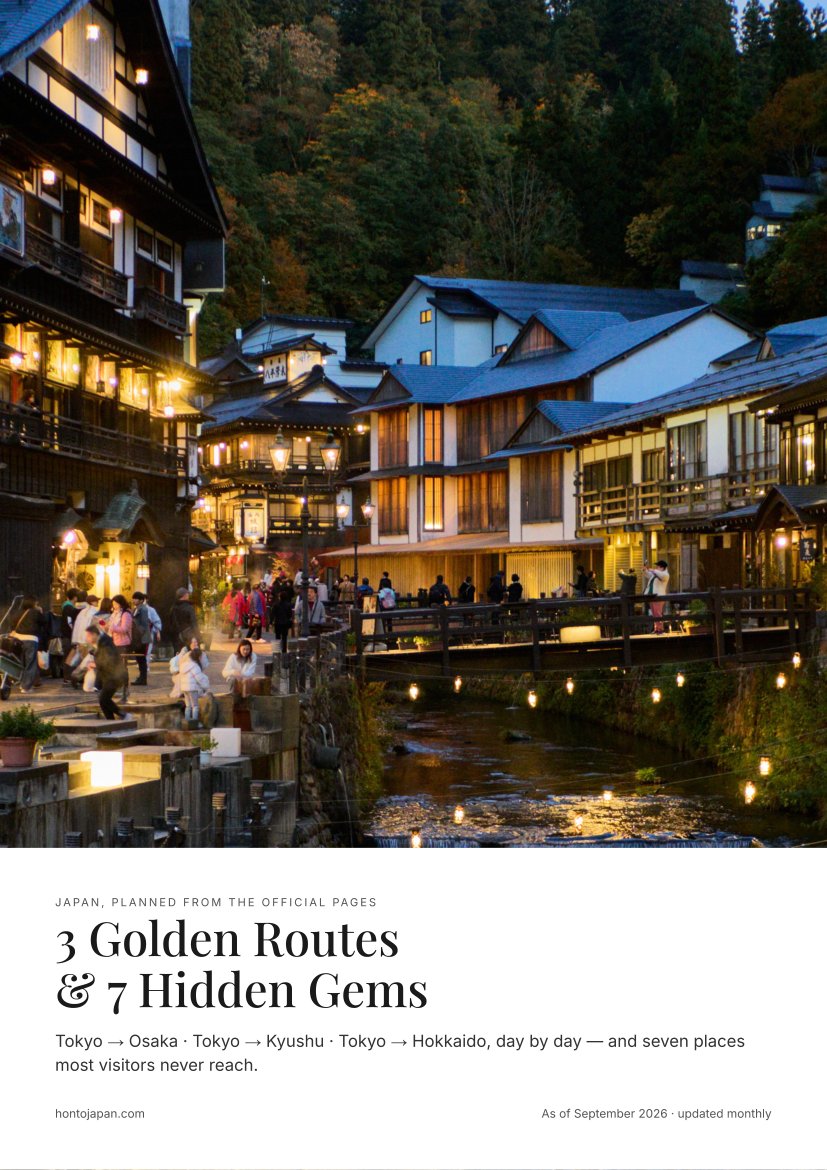
Tokyo to Osaka, Tokyo to Kyushu, Tokyo to Hokkaido — day by day — plus seven places most visitors never reach.
- 12 pages, 80 photographs, every stop linked to its guide
- Every price and opening hour read from the official page
- Re-issued monthly, so it does not go stale in your inbox
Free. One email a month, plus the rare change that matters. Unsubscribe with one click in any email. By subscribing you agree to our privacy policy.