Gion is smaller than its reputation and easier to navigate than any map app makes it look: one famous lane running south (Hanamikoji), one canal-side pocket to the north (Shirakawa / Gion Shinbashi), and Yasaka Shrine pinning the east end, open around the clock. Kyoto's official description is the honest one — a district that grew as the town before Yasaka's gate, where geiko and maiko live and work. That last part is why 2024 brought a formal set of visitor rules. Here's the layout, the stations that actually work, what's free, what costs ¥5,500 — and what the official rules really say, without the viral-headline version.
Gion at a glance
| Zone | What it is | Cost |
|---|---|---|
| Hanamikoji Street | The signature tea-house lane, lantern-lit at night · don't walk the middle of the road (official request) | Free to walk |
| Shirakawa / Gion Shinbashi | Canal, willows, preserved tea-house quarter — a national preservation district since 1976, tea houses since 1712 | Free to walk |
| Yasaka Shrine | The shrine Gion grew around · grounds open 24 hours, no admission fee listed · shrine office 9:00–17:00 | Free grounds |
| Gion Corner | Official culture show, 18:00 & 19:00, ~50 min · winter (Dec 1–Mar 11): Tue–Fri only | ¥5,500 adult · ¥3,850 (16–22) · ¥3,300 (7–15) |
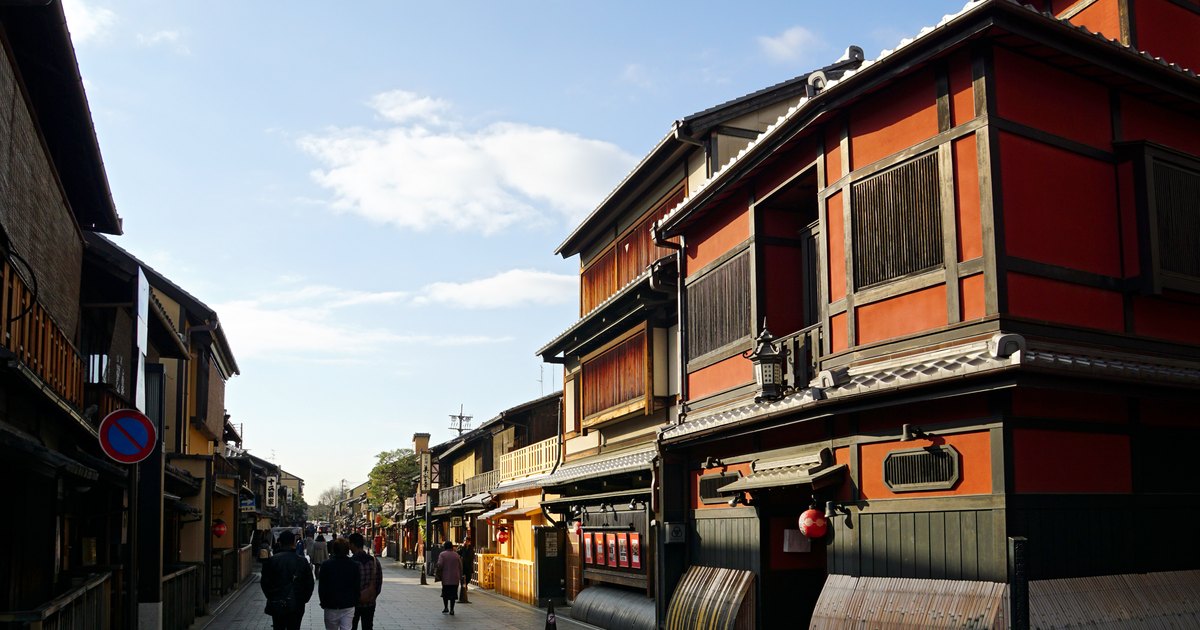
What the district feels like after dark — lanterns, stone paving, and why the etiquette rules exist:
How is Gion actually laid out?
Which of the three zones should you walk first?
Think of Shijo-dori — the big east–west shopping street — as Gion's spine. South of it runs Hanamikoji, the postcard: tea houses, restaurants, and in the official phrasing a street where elegant tea houses share frontage with bars, cafes and general stores. North of Shijo, the mood changes completely at Gion Shinbashi, the preserved quarter along the Shirakawa canal: about 75 buildings, roughly 70 percent traditional, on stone paving under willows — a townscape formally protected since 1976 and in the tea-house business since 1712. East of everything, across Higashioji-dori, Yasaka Shrine anchors the district — its grounds never close. If you have one hour: Shinbashi first (quietest), Hanamikoji second, Yasaka last as the sun drops. If Kyoto planning is the bigger question, our how-many-days guide slots Gion into a realistic itinerary.
How do you get to Gion?
From Kyoto Station: why not just take the bus?
Two stations put you at the door. Keihan Gion-shijo is the closest — about 5 minutes on foot to Yasaka Shrine by the shrine's official count, with a tourist information counter in the station (10:00–18:00, English support) and even a currency-exchange machine. Hankyu Kyoto-kawaramachi — that's the current official name; older guides still say "Kawaramachi" — is about 8 minutes away, and from the Shijo-Kawaramachi crossing the walk is about 13 minutes at sightseeing pace. From Kyoto Station itself, city buses run to the Gion stop at a flat ¥230 (children ¥120) — but Kyoto's own access guidance is refreshingly blunt that Shijo-dori congestion can eat your schedule. The official workarounds: ride the subway to Higashiyama Station (about 15 minutes) and walk down, or on weekends and holidays take the EX100 express sightseeing bus (¥500), which stops in the Gion area. We don't quote train fares — check Keihan and Hankyu's official sites when you ride.
The geisha rules: what's actually official in 2026?
What did the district's 2024 message change?
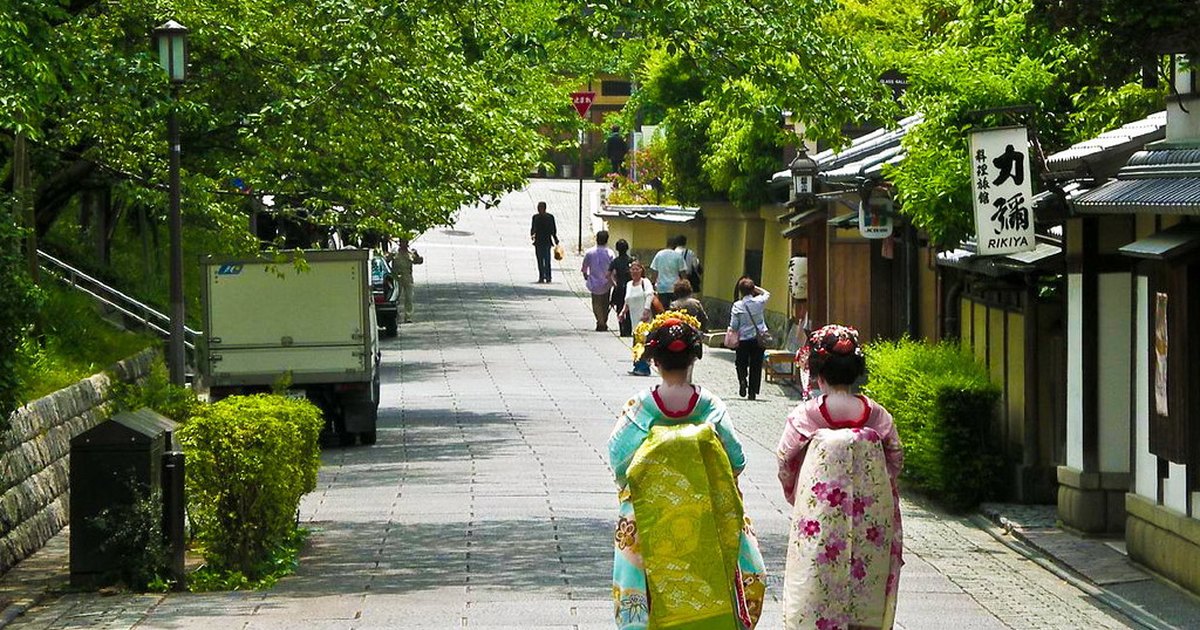
In January 2024, the tea-house association, the geiko association, Kenninji Temple and the local district council jointly published a visitor message — carried on Kyoto's official tourism site — and its core is one sentence: do not stop, touch, follow, or take unauthorized photos or videos of any geiko or maiko. Kyoto City's own etiquette pages say the same thing plainly: photographing maiko without permission is strictly prohibited, and so is stopping them to ask. The message also spells out that the behavior involved already carries legal consequences in Japan — obstructing someone's path or tailing them can mean up to 30 days' detention or a fine, and yanking a sleeve is treated far more seriously. Add the practical rules — no tripods (traffic obstruction), keep out of the middle of Hanamikoji — and the district's position is clear: the streets are a workplace, not a photo set. The sanctioned alternative is real: Gion Corner runs performances at 18:00 and 19:00 exactly so visitors can watch — and photograph — the arts properly. For how the rest of Japan's visitor rules keep shifting this year, our 2026 changes tracker logs the dated, official ones.
What's free — and what costs ¥5,500?
Is Gion Corner worth the ticket?
The free list is generous: both preserved streetscapes, the canal, and Yasaka Shrine's grounds, open 24 hours with no admission fee listed (the office keeps 9:00–17:00 hours). The lantern-lit evening walk down Hanamikoji costs nothing. The one ticket most visitors weigh is Gion Corner: about 50 minutes, seven traditional arts including a maiko dance, shows at 18:00 and 19:00. Pricing runs ¥5,500 for adults, ¥3,850 for 16–22, ¥3,300 for 7–15, free under 6, ¥6,600 premium. The trap is seasonal: December 1 to March 11 it runs Tuesday–Friday only (holidays excepted), plus dark days on July 16, August 16 and December 26–January 4 — "daily" is only true most of the year. Time your evening around it, then eat: Nishiki Market is a 15-minute walk west for daytime grazing, and a proper Kyoto matcha session fills the afternoon between.
When should you go — and how do you dodge the crowds?
Kyoto City publishes an official congestion forecast with live cameras covering Hanamikoji among its monitored spots, broken down by time of day — the official advice is simply that shifting your visit by an hour avoids the crush, and it works. Concretely: Shinbashi at 8:00 is yours alone; Hanamikoji at 18:30 is lantern-lit and busy but moving; midday on a weekend is the crush. The district rewards the edges of the day, and the rules above matter most exactly when the lanterns come on — which is when performers are commuting to work.
(For Kyoto's opposite register — a mountain temple, a ridge hike and a riverside shrine village — see our Kurama guide.)
(From Osaka, the Keihan line delivers straight to Gion-Shijo — fares and the premium-car trick are in our Osaka-to-Kyoto guide.)
FAQ
Is Gion free to walk around?
Can I photograph geisha in Gion?
Is the famous ¥10,000 photography fine real?
What’s the closest station to Gion?
What’s the best way from Kyoto Station?
What is Hanamikoji Street?
What is Gion Shinbashi, and why does it look so perfect?
Is the Gion Corner show worth ¥5,500?
When is the best time to walk Gion?
Bottom line (2026) — Gion is three walks, not one: the tea-house lanes of Hanamikoji, the willow-lined Shirakawa canal, and Yasaka Shrine anchoring the east end, with the ¥5,500 Gion Corner show as the paid option. The January 9, 2024 joint statement from the tea-house and geiko associations, Kenninji and the Southern Gionmachi district council sets a legal-penalty framework on photography and tripods in the private lanes.
Sources
District description, Hanamikoji descriptions, photography and tripod rules, and the congestion forecast: Kyoto City's official tourism site (kyoto.travel / global.kyoto.travel). The January 9, 2024 visitor message and its legal-penalty framework: the joint statement by the Gion tea-house and geiko associations, Kenninji Temple and the Southern Gionmachi district council, published on the official tourism site. Yasaka Shrine hours, walking times and no-parking note: Yasaka Shrine's official pages. Flat bus fare (¥230/¥120): Kyoto City Transportation Bureau's official English fare page. Subway and EX100 guidance: the official Gion access page. Gion Corner prices, showtimes, winter schedule and dark days: Gion Corner's official site. Gion Shinbashi preservation facts (1712, 1976, ~75 buildings): Kyoto City's official preservation-district page. All read on August 17, 2026. Train fares were not verifiable against official pages and are not quoted. The embedded video is by its creator.
Some links on this page may be affiliate links, which means we may earn a commission if you book or buy through them — at no extra cost to you. See our affiliate disclosure.
Tokyo to Osaka, Tokyo to Kyushu, Tokyo to Hokkaido — day by day — plus seven places most visitors never reach.
- 12 pages, 80 photographs, every stop linked to its guide
- Every price and opening hour read from the official page
- Re-issued monthly, so it does not go stale in your inbox
Free. One email a month, plus the rare change that matters. Unsubscribe with one click in any email. By subscribing you agree to our privacy policy.