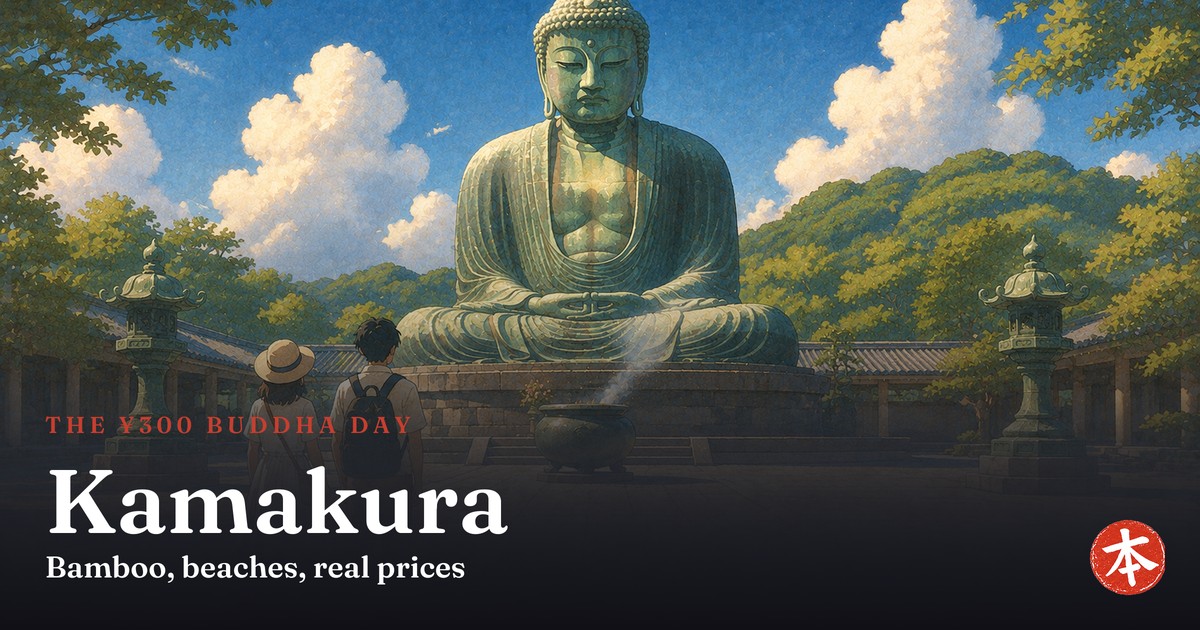
Kamakura is Tokyo's medieval hour: a 13th-century capital an hour south where a 750-year-old bronze Buddha sits in the open air, a Zen garden grows two thousand stalks of bamboo, and a shrine invites you to launder your money in a cave spring. It's also where English guidebook prices go to fossilize — the Buddha, the tea, the train pass and the hydrangea temple have all revised prices that most articles miss. This guide covers what to do with current official numbers; for the layout and transport bones, our companion Kamakura map guide carries the district logic.
Kamakura at a glance (2026 official prices)
| Spot | Hours | Price |
|---|---|---|
| Great Buddha (Kotoku-in) | 8:00–17:30 (Oct–Mar –17:00) | ¥300 · interior ¥50 |
| Hasedera | 8:00–16:30 (Apr–Jun –17:00) | ¥400 · June hydrangea ticket extra |
| Hokoku-ji (bamboo) | 9:00–16:00 · closed Dec 29–Jan 3 | ¥400 · matcha ¥600 |
| Tsurugaoka Hachimangu | Gates 6:00–20:00 year-round | No fee listed for grounds |
| Zeniarai Benzaiten | 8:00–16:30 (arrive by 16:00) | Offerings |
| Enoden Noriorikun pass | One calendar day | ¥800 (kids ¥400) |
| Yuigahama beach season | Jul–Aug, 9:00–17:00 | Free |
The day in six minutes — Buddha, bamboo, Enoden and the coast:
The Buddha hour: what ¥350 total actually buys
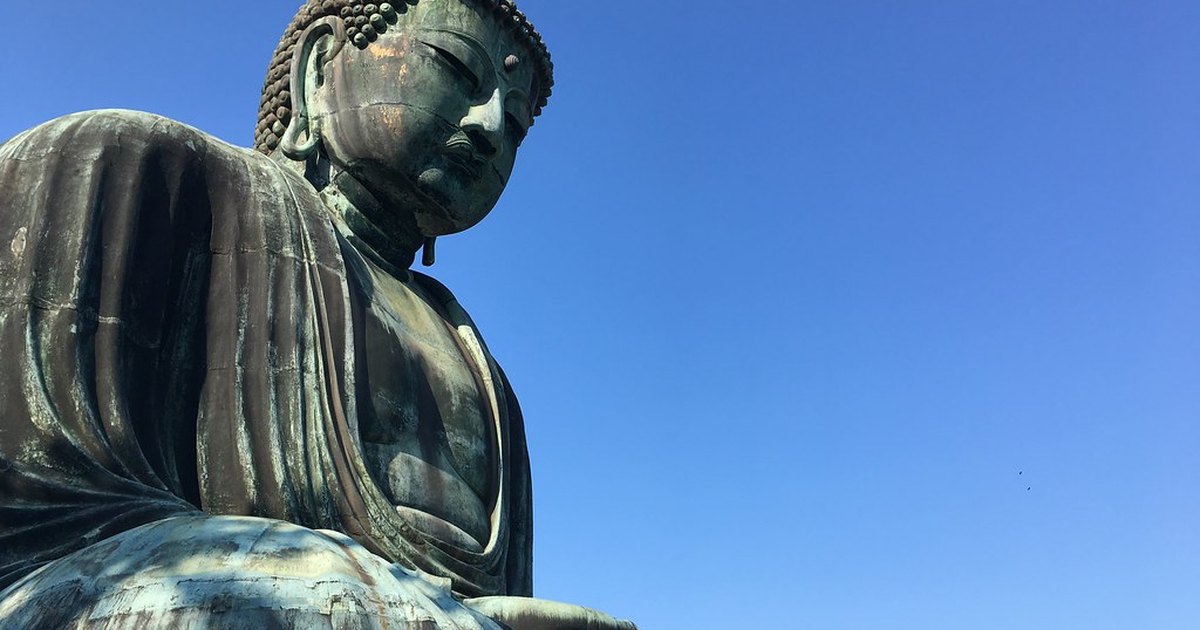
Why is going inside the statue the best 50 yen in Japan?
Kotoku-in's Great Buddha — cast from 1252, about 11.3 meters and 121 tons of seated Amida, a National Treasure weathered to green — costs ¥300 to visit (students ¥150, preschoolers free), and the strangest bargain in the country is the ¥50 ticket into its hollow interior, where you stand inside the casting seams of a medieval bronze (8:00–16:30, year-round). Gates open at 8:00 — be there then, ahead of the buses, when the courtyard is briefly monastic. Ten minutes downhill, Hasedera (¥400) pairs the eleven-headed Kannon with a terrace over the bay; its June hydrangea season now runs a separate timed-ticket system, introduced in 2026 — check hasedera.jp before a June visit, because the seasonal rules officially vanish from the site after the bloom.
East side: bamboo, matcha and the money cave
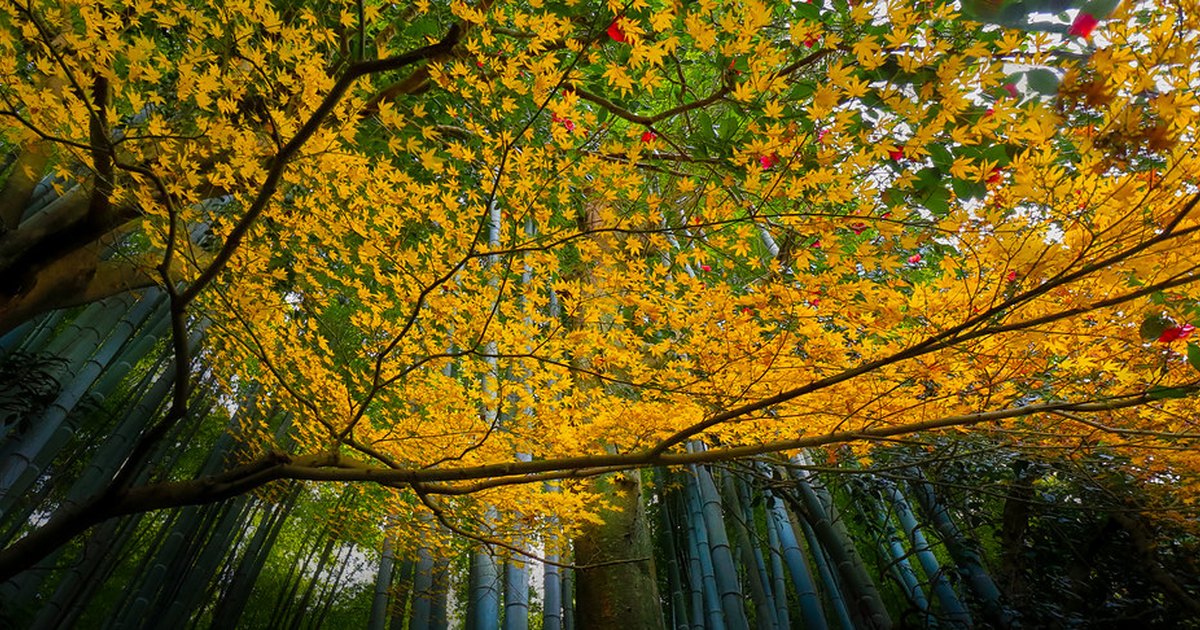
How do you do the quiet Kamakura most day-trippers skip?
Bus or walk east of Hachimangu and the crowds thin immediately. Hokoku-ji (¥400, 9:00–16:00) is the payoff: roughly 2,000 stalks of moso bamboo in a compact Zen garden, with matcha and a dry sweet for ¥600 at the pavilion facing the grove (tea reception closes 15:30 — old articles still say ¥500; the official sheet says otherwise). Back west, tucked in a cliff-cut tunnel of torii, Zeniarai Benzaiten runs on offerings and optimism: ladle the spring water over your cash (8:00–16:30, arrive by 16:00 per the association's official listing) and spend it "multiplied." Round out the temple ledger with Meigetsu-in (¥500) in Kita-Kamakura if hydrangeas are the mission in June — it and Hasedera split the blue-flower fame.
The rules and the rails: manners, passes and the beach
What does the "no eating while walking" ordinance actually say?
Kamakura's famous 2019 rule is the most misquoted line in town. The city's official page frames it as a manner ordinance — it defines eating while walking "in narrow or crowded places" where food could soil someone's clothes as a nuisance to avoid, and attaches no penalty. So: not illegal, genuinely discourteous in the Komachi-dori crush — buy the croquette, step out of the stream, eat it, walk on. Transit truth: the Enoden Noriorikun day pass is ¥800 now (children ¥400, paper at station machines or digital via EMot), the ¥650 of blog memory long gone. And when the temples fill your quota, Yuigahama beach runs its official swimming season July–August, 9:00–17:00, five minutes from the tracks — the correct final hour before the train north. How Kamakura ranks against the other escapes: the day-trips hub does the honest comparison, and our Kawagoe guide covers the Edo-flavored rival. Dated changes across all of them land on the 2026 tracker.
A route that beats the tour buses
What order actually works?
The town punishes the default order (station → Komachi-dori → Hachimangu → Buddha), which is exactly the tour-group conveyor. Run it backwards and early: 8:00 at the Buddha when the gates open, Hasedera at 9:00 as its doors part, then the Enoden back to the station and a bus east to Hokoku-ji before 11:00 — you'll have had all three headliners in near-solitude while the crowds were still queueing for shirasu toast on Komachi-dori. Lunch late, walk the shopping street when you're fed and patient, take Hachimangu's long approach in the softer afternoon light, and spend the golden hour at Zeniarai Benzaiten or on the sand at Yuigahama. Ten temples in a day is a checklist; four done slowly is a memory — Kamakura is emphatically the second kind of town.
(The Great Buddha now has its own deep guide — current prices, the ¥50 interior and the storm story guides get wrong.)
(The classic add-on across the water — Enoshima: the shrine climb, the candle-lit caves and the escalator's new price.)
FAQ
How much is the Great Buddha — and can you really go inside?
How tall is the Great Buddha actually?
Is the bamboo temple worth the trip east?
What’s the deal with the money-washing shrine?
Do I need the Enoden day pass?
Is eating while walking really banned in Kamakura?
When does the hydrangea crowd hit Hasedera — and what changed?
What are Tsurugaoka Hachimangu’s hours — and is it free?
Can you swim in Kamakura?
Is Kamakura doable with Enoshima in one day?
Bottom line (2026) — Kamakura’s headline sights come with current official prices: the 750-year-old Great Buddha at Kotoku-in is ¥300, plus ¥50 to climb inside, and Hokoku-ji’s bamboo garden charges ¥600 for matcha. Hasedera has posted 2026 hydrangea-ticket notices, and most English guides quote prices one or two revisions old.
Sources
Great Buddha hours, prices, interior visit, dimensions and history: Kotoku-in's official site. Hasedera hours, admission and the 2026 hydrangea-ticket notices: hasedera.jp official pages (seasonal notices confirmed by title before deletion). Hokoku-ji hours, admission, closures and matcha price: houkokuji.or.jp. Hachimangu gate hours and access: the shrine's official site. Zeniarai Benzaiten and Yuigahama details: the Kamakura City Tourism Association's official listings. Meigetsu-in prices: the association's official page. Noriorikun pass: Enoden's official ticket page. The manner ordinance: Kamakura City's official page. All read on August 18, 2026. Rail fares are not quoted. The embedded video is by its creator.
Some links on this page may be affiliate links, which means we may earn a commission if you book or buy through them — at no extra cost to you. See our affiliate disclosure.
Tokyo to Osaka, Tokyo to Kyushu, Tokyo to Hokkaido — day by day — plus seven places most visitors never reach.
- 12 pages, 80 photographs, every stop linked to its guide
- Every price and opening hour read from the official page
- Re-issued monthly, so it does not go stale in your inbox
Free. One email a month, plus the rare change that matters. Unsubscribe with one click in any email. By subscribing you agree to our privacy policy.