Nagoya is the city most people see from a Shinkansen window, and the reason is not that there is nothing here. It is that the sights are spread across a grid with the station on one edge, the castle to the north, the shopping district of Sakae to the east and the Tokugawa district beyond that, and nobody tells you they are all on one bus. The Me~guru sightseeing loop, listed on the city’s official tourism site, is 210 yen a ride, 500 yen for the day, and connects every stop on this page.
It also has a rule that decides your itinerary before you arrive: it does not run on Mondays, and neither do most of the museums it serves. This map is built around that bus, with the hours and fees the city itself publishes, and with the castle’s keep listed as what it is — closed.
Nagoya at a glance
| Item | Official figure |
|---|---|
| Loop bus | Me~guru: 210 yen a ride (child 100), 500 yen day pass (child 250) |
| Bus days | Tuesday–Sunday. Closed Mondays (next day if holiday) and Dec 29–Jan 3 |
| Bus frequency | Every 20–40 min weekends and holidays; 30–60 min weekdays |
| Nagoya Castle | 9:00–16:30; 500 yen (400 with pass); junior high and under free; keep closed |
| Toyota Commemorative Museum | 1,000 yen (800 with pass); closed Mondays |
| Sky Promenade | Floors 44–46, 220 m; 1,000 yen (800); 11:00–22:00 |
| Tokugawa Art Museum | 1,600 yen (1,400); 2,000 (1,800) from April 7; closed Mondays |
| City Archives | Free; 1922 former courthouse; closed Mondays and 3rd Thursdays |
The Nagoya map in five zones
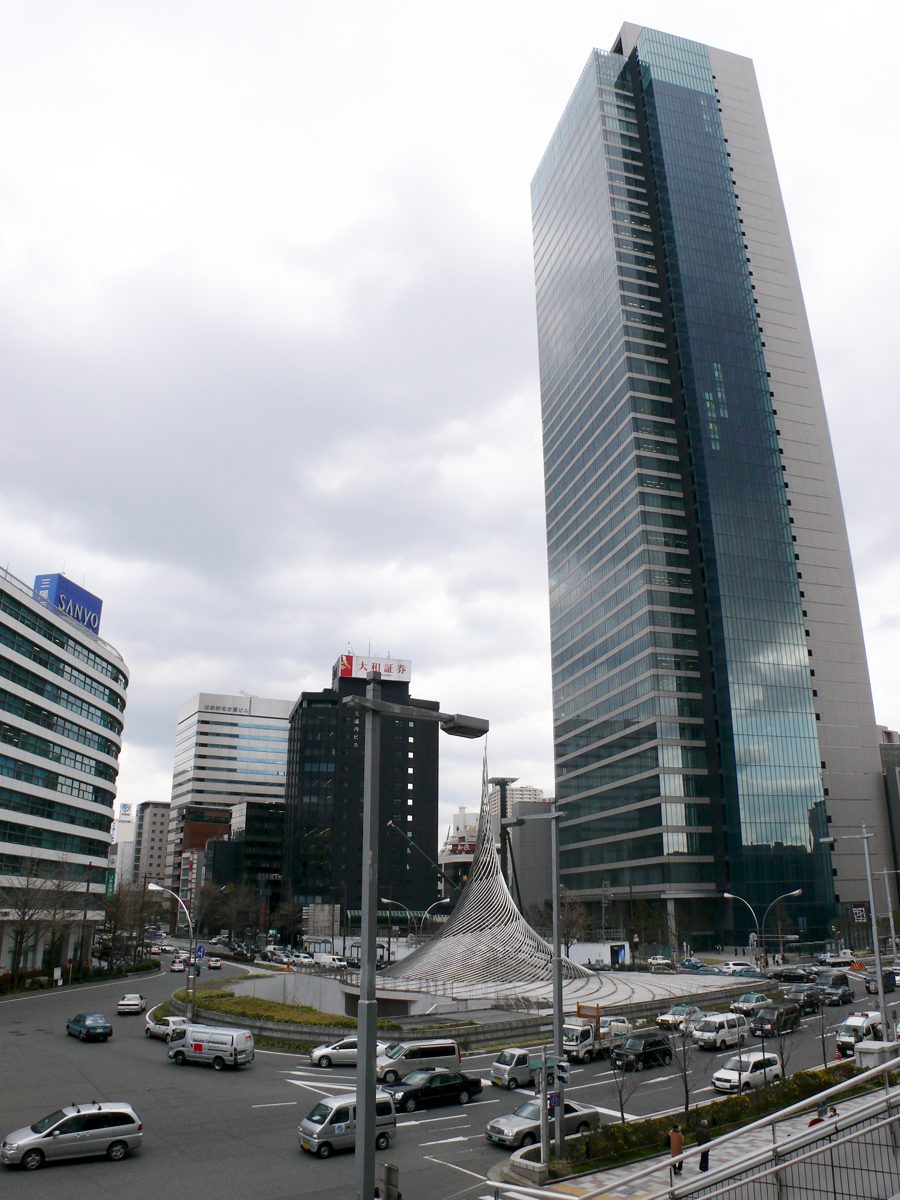
Zone 1: Nagoya Station and Meieki
The Shinkansen stops here, on the line our Shinkansen map covers, roughly halfway on the Tokyo–Osaka run. The Me~guru leaves from bus stop 11. Directly above is Midland Square and its Sky Promenade, the open-air deck on floors 44 to 46 at 220 meters: 1,000 yen, 800 with the bus pass, 11:00 to 22:00 with last entry at 21:30, and reduced hours of 13:00 to 21:00 from early January to late February. On New Year’s Day it opens 5:30 to 8:30 for the first sunrise.
Zone 2: Noritake and Toyota, north-west of the station
Two stops out. The Toyota Commemorative Museum of Industry and Technology occupies a red-brick factory from the Taisho period at the birthplace of the Toyota group, with textile machinery and the company’s first passenger car: 1,000 yen adults, 600 seniors, 500 university students, 300 secondary, 200 primary, all discounted with the pass. Noritake Garden has a craft center where you watch porcelain being made and can paint a piece, 500 yen for adults. Both close on Mondays.
Zone 3: Shikemichi and the castle, to the north
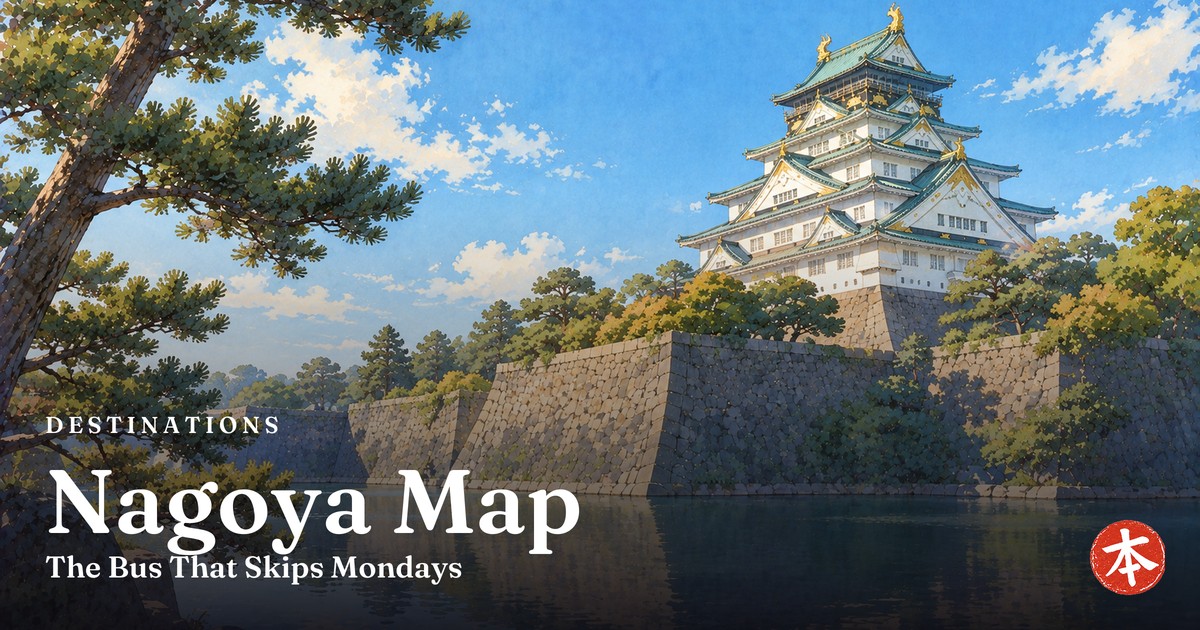
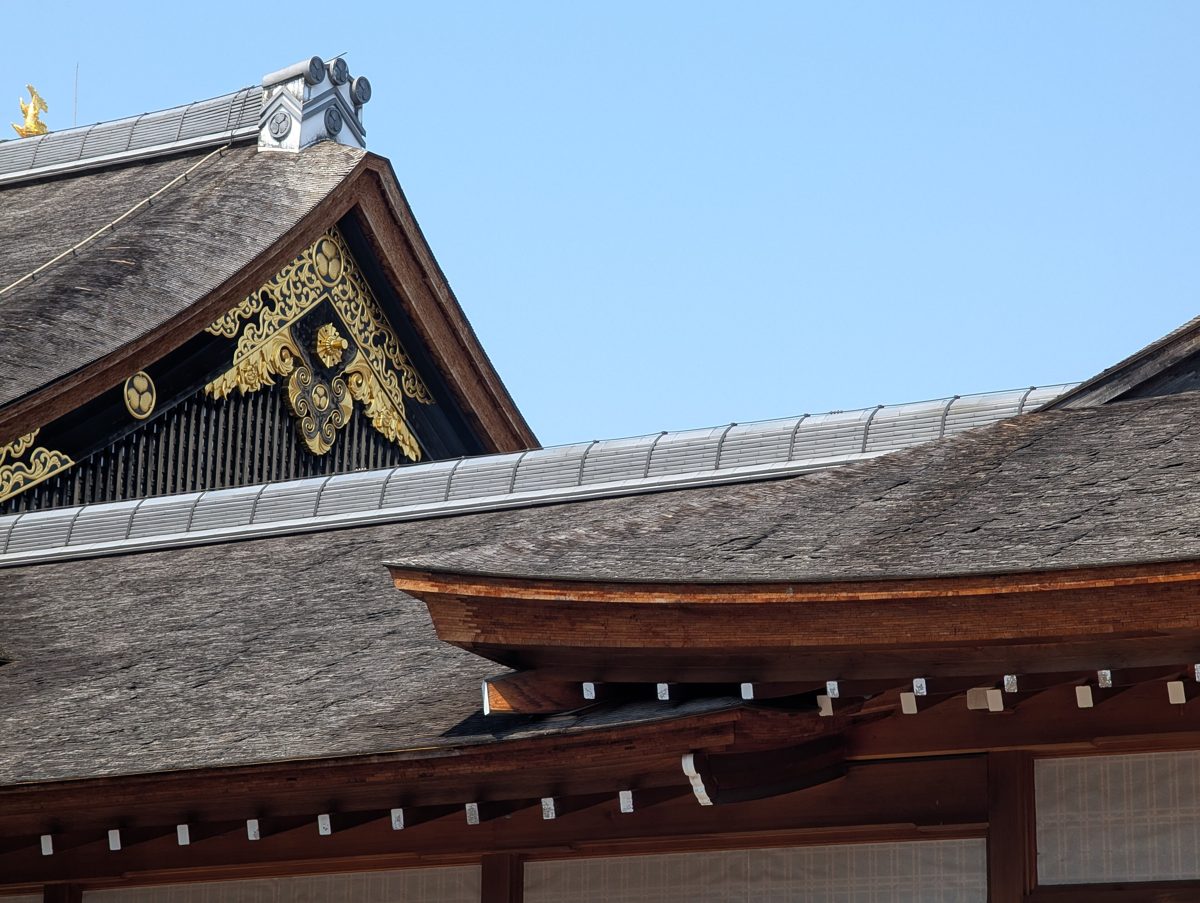
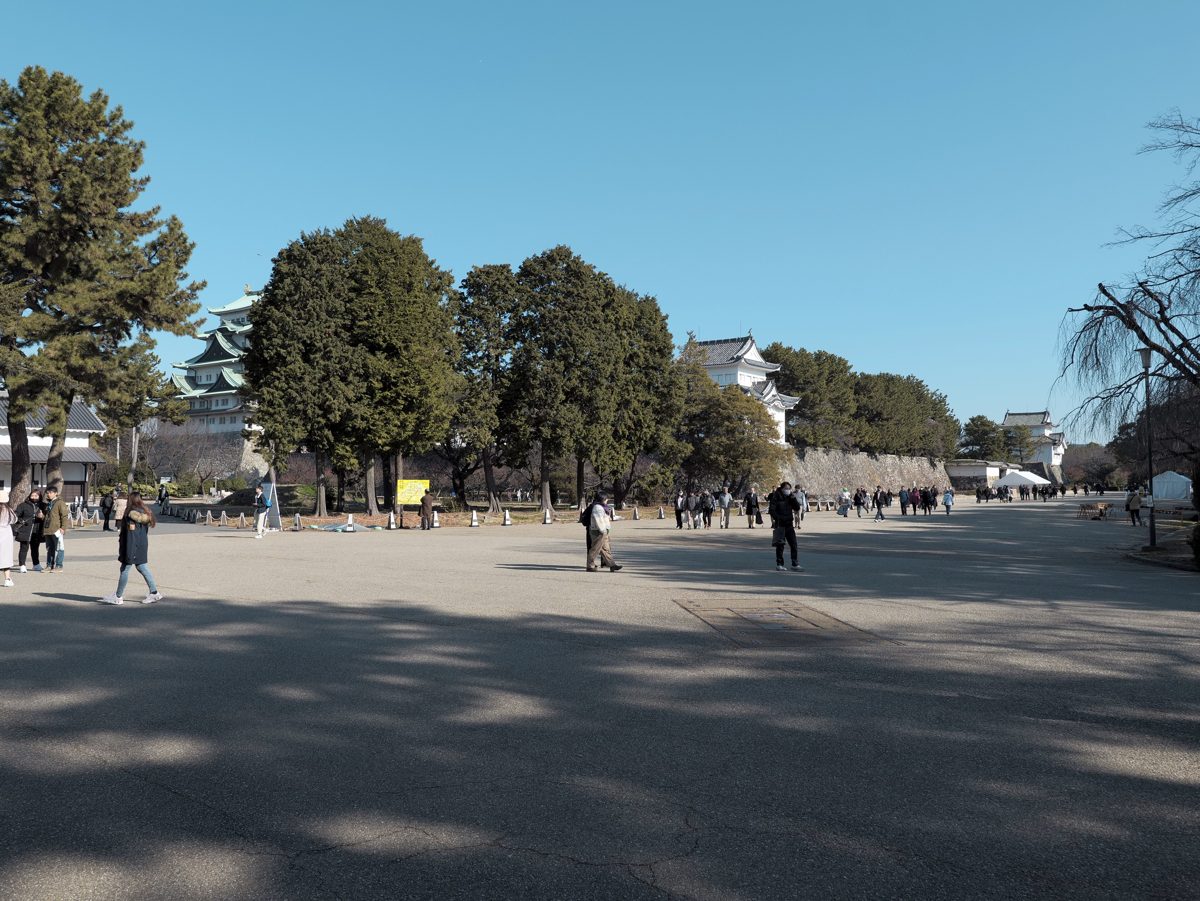
Shikemichi is a preserved merchants’ quarter of stone-walled warehouses built with the original castle town, next to the Endoji shopping street whose Tanabata festival has run since 1956. Then Nagoya Castle: golden shachihoko on the keep, the Hommaru Palace restored and opened in 2018, 9:00 to 16:30, 500 yen. The official listing says it plainly: the keep is currently closed to the public. Our castle guide covers what that means for a visit.
Zone 4: The Tokugawa district, east of the castle
The Tokugawa Art Museum holds the possessions of the Owari Tokugawa lords: more than 10,000 items, nine National Treasures including the Tale of Genji scrolls, 59 Important Cultural Properties, shown in rotation. 1,600 yen now, and the city’s listing already carries the rise to 2,000 yen from April 7. Next door, Tokugawaen garden is 300 yen. On the way, the City Archives, a 1922 former courthouse with detention cells and a stained-glass stair, is free.
Zone 5: Sakae and Fushimi, the center
The shopping and eating district, with the Chubu Electric Power MIRAI TOWER as its landmark and the loop’s Sakae and Fushimi stops. The city’s food listings for its local dishes point here, but they are advertising placements, so we name no restaurants. The port, with SEA LIFE Nagoya and Legoland, is a separate trip to the south by the Aonami line, not on the loop.
The Me~guru bus: rules that decide your day
What does it cost?
210 yen per ride for adults and 100 for children, or a one-day pass at 500 yen (250 for children) sold on the bus and at the tourist information centers at Nagoya Station, Oasis 21 and Kanayama, and at Transportation Bureau service centers. The pass gives the discounts listed above at every attraction on the route, and tickets without a date stamp are invalid.
How often does it run?
Every 20 to 40 minutes on weekends and holidays, every 30 to 60 minutes on weekdays. That weekday gap is long enough to plan around: check the timetable before you leave a museum.
Which buses are not normal buses?
Three, per the official route notes. The 8:30 and 9:00 departures from Nagoya Station are direct to Nagoya Castle and stop nowhere else. The 14:23 departure from the castle is an express back to the station stopping only at the MIRAI TOWER. The 17:00 departure from the station runs a shortened loop that does not stop at the castle, Shikemichi, Noritake or the Toyota museum on the way back. Outbound and inbound use the same stop, so read the direction.
Which cards and passes work?
The manaca IC card is valid, as are the Transportation Bureau’s weekend eco ticket and its bus-and-subway one-day ticket. Commuter passes and the subway-only one-day ticket are not valid. The Me~guru day pass is also accepted on the C-758 city center loop bus on days the Me~guru operates.
Is there a guide on board?
Volunteer guides ride in the morning on Saturdays, Sundays and national holidays, per the city. Weekdays, it is a bus.
Hours and fees, stop by stop
| Stop | Sight | Hours | Adult fee (with pass) | Closed |
|---|---|---|---|---|
| 0 Nagoya Station | Sky Promenade | 11:00–22:00 (last 21:30) | 1,000 (800) | Never; weather |
| 1 | Toyota Commemorative Museum | See museum | 1,000 (800) | Mondays, New Year |
| 2 | Noritake Garden craft center | See garden | 500 (450) | Mondays |
| 3 Shikemichi | Historic quarter, Endoji street | Open street | Free | — |
| 4 | Nagoya Castle | 9:00–16:30 | 500 (400) | Dec 29–Jan 1 |
| 5 / 8 | City Archives | 9:00–17:00 | Free | Mondays, 3rd Thursdays |
| 6 | Tokugawa Art Museum / Tokugawaen | See museum | 1,600 (1,400); 300 (240) | Mondays, mid-Dec to New Year |
All from the city’s official Me~guru listings; “see museum” means the listing gave the closing day but we did not read the museum’s own hours page.
What order makes sense?
The 8:30 or 9:00 direct bus to the castle, then walk or bus east to the Tokugawa district, then back through Sakae for lunch, then the western stops, Noritake and Toyota, in the afternoon, and the Sky Promenade last because it is at the station and open until 22:00. That is the loop’s own direction. On a Monday, reverse the logic: castle and tower are open; the museums are not.
How much does a full day cost?
With the pass: 500 for the bus, 400 for the castle, 800 for Toyota, 450 for Noritake, 1,400 for the Tokugawa museum, 800 for the tower. That is 4,350 yen on the official figures, against 5,100 paying full price at each. The pass covers itself on the discounts alone before you count a single ride.
Getting to Nagoya and out again
By Shinkansen
Every Nozomi, Hikari and Kodama on the Tokaido line stops at Nagoya. The station is the city’s western edge, which is why the loop starts here and why the walk to the castle is not a walk. Our Shinkansen map shows where Nagoya sits on the line.
How do the Shinkansen and the loop bus meet?
Badly, for anyone carrying luggage. The Shinkansen platforms are on the west side of the station complex and the Me~guru leaves from stop 11 on the east side, so a stopover means crossing the whole building on foot. Coin lockers exist, but the city’s bus page does not list them and we did not survey them, so budget the time to find one rather than assuming a locker at the exit. A traveler with a suitcase and four hours is better off at the Sky Promenade and the castle only, both reachable without the loop, and leaving the western museums for a longer visit.
By air
Chubu Centrair airport is on an island south of the city, reached by the Meitetsu line into Nagoya Station. We did not read the Meitetsu fare page for this article and are not quoting the fare or time.
What is the weather?
On the JMA normals, Nagoya averages 18.6 C with 164.7 mm of rain in October and 12.6 C with 79.1 mm in November. It is one of the sunnier cities of the main island in autumn, at 167 hours in November.
Three things travelers get wrong about Nagoya
“There is nothing to see”
The loop above has seven stops with a castle, a Tokugawa treasure house holding nine National Treasures, a working porcelain studio, the factory where a car company began, a preserved merchant quarter and a 220-meter open deck, all inside one 500-yen day. What Nagoya lacks is not sights but a single famous image, and the reputation follows the image rather than the list. The city’s own tourism site is more useful than most because it prints fees and closing days on the bus page itself, which is why this article is built from it.
“The castle is the main event”
It would be if the keep were open. It is not, and the official listing says so without a date. The Hommaru Palace, restored in 2018, is the part worth the 500 yen; the golden shachihoko are seen from the outside. Visitors who arrive expecting to climb a keep, as at Himeji or Matsumoto, should read the listing first and then decide whether the Tokugawa Art Museum, one stop east, is the better use of the morning. On the numbers it usually is.
“I can do it on the way through”
You can, but only Tuesday to Sunday. The single most useful fact on this page is the day of the week: the bus and four of its attractions close on Mondays. A traveler who builds a Nagoya stopover into a Monday between Tokyo and Kyoto will find a castle with a closed keep, an open observation deck, and a subway map. Move the stopover by a day and the whole loop opens.
Nagoya map FAQ
What is the best way to get around Nagoya’s sights?
Does the Me~guru bus run on Mondays?
Can I use a Suica or subway pass on the Me~guru?
Is Nagoya Castle’s keep open?
What is at Nagoya Station itself?
Which sights close on Mondays?
How much is the Tokugawa Art Museum?
Is the Toyota museum worth the detour?
Bottom line (2026). Nagoya’s sights sit on the Me~guru loop bus: 210 yen a ride, 500 yen for the day with discounts at every stop, from bus stop 11 at the station. It does not run on Mondays, and neither do the Toyota museum, Noritake or the Tokugawa Art Museum. The castle is open 9:00–16:30 for 500 yen but the keep is closed. The Tokugawa Art Museum goes from 1,600 to 2,000 yen on April 7. Take the 8:30 direct bus to the castle and end at the 220-meter Sky Promenade at the station.
Sources
Fares, timetable rules, the three exceptional departures, accepted cards, purchase points, and every attraction’s admission, hours and closing days are from Visit Nagoya, the official tourism site of the City of Nagoya, including its Me~guru route, ticket and guide pages, read on September 14, 2026; the city dates its brochure information to April 1, 2024. Climate figures are Japan Meteorological Agency 1991–2020 normals for the Nagoya observatory.
Some links on this page may be affiliate links, which means we may earn a commission if you book or buy through them — at no extra cost to you. See our affiliate disclosure.
Tokyo to Osaka, Tokyo to Kyushu, Tokyo to Hokkaido — day by day — plus seven places most visitors never reach.
- 12 pages, 80 photographs, every stop linked to its guide
- Every price and opening hour read from the official page
- Re-issued monthly, so it does not go stale in your inbox
Free. One email a month, plus the rare change that matters. Unsubscribe with one click in any email. By subscribing you agree to our privacy policy.