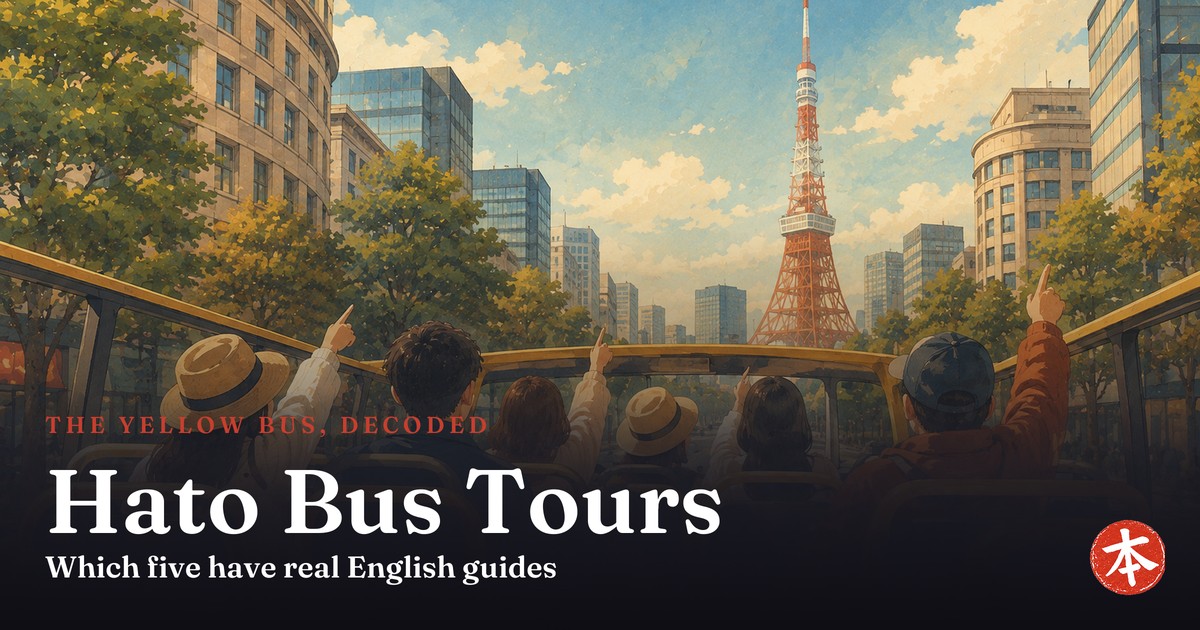
The Hato Bus — Tokyo's yellow tour institution since 1948 — is simultaneously over- and under-rated by foreign visitors, usually because they're reading about the wrong product. The company runs 263 tours in Japanese but only 14 for foreign visitors, and of those, just five carry a live English-speaking guide — the rest use GPS-triggered audio. Sort that correctly and the value is real: ¥6,300 guided half-days, a ¥2,200 open-top hour, and a Fuji day trip with a one-way catch nobody mentions.
Hato Bus for visitors at a glance
| Tour | Guide | Official price (Aug 2026) |
|---|---|---|
| Tokyo Morning / Afternoon (AE301/302, half-day) | 🎤 Live English | ¥6,300 (child ¥4,300) |
| Panoramic Tokyo (AE308, full day) | 🎤 Live English | ¥13,000 |
| Dynamic Tokyo (AE305, full day) | 🎤 Live English | ¥15,000 · 🚨 runs Sep 2–Dec 16 (Mon/Wed/Fri) |
| Mt. Fuji & Arakura Sengen (RE789) | 🎤 Live English | ¥15,000 · returns Shinjuku only · min. 10 people |
| Tokyo Panorama Drive (A1301, open-top hour) | 📱 GPS audio ×8 languages | ¥2,200 weekday / ¥2,400 weekend |
| Night open-top / Skytree night (B1314/B1601) | 📱 GPS audio | ¥3,400–3,600 / ¥4,200–4,510 |
| Departures | Tokyo Sta. Marunouchi South · Shinjuku East (Alta) · Haneda Airport Garden — 🚨 no hotel pickup, no Hamamatsucho | |
What the ride feels like from the open top deck:
The five real-guide tours: where the English value lives
Which one should a first-timer actually book?
For most first visits, Tokyo Morning (AE301) is the sweet spot: ¥6,300, departures from Shinjuku (8:20) and Tokyo Station (9:00), back around 13:00, covering the Imperial Palace Plaza, Tokyo Tower and Asakusa's Kannon Temple and Nakamise street with a licensed English-speaking guide — the entire postcard core, narrated, before lunch (minimum one participant, so it always runs). The Afternoon twin (AE302) repeats the trick from 14:00. The step-ups: Panoramic Tokyo (AE308, ¥13,000) stretches to a full day, and Dynamic Tokyo (AE305, ¥15,000) adds a tea ceremony, a bay cruise and a hotel buffet lunch — with the official calendar caveat that it's paused until September 2, 2026, then runs Mondays, Wednesdays and Fridays through December 16.
The Fuji day trip and its one-way catch
What does the official page admit that reviews don't?
RE789 (¥15,000) is the guided answer to Japan's most photographed view: Fuji's 5th Station, a hotel lunch by Lake Kawaguchiko, flower-framed Fuji at Oishi Park, and the Chureito Pagoda at Arakura Sengen Shrine. Read the official fine print before booking: the tour ends at Shinjuku West Exit only — the page states flatly that it does not return to Tokyo Station — the pagoda viewpoint is 398 steep steps up (the guide waits with the less vertical), and it needs ten participants minimum, running weekdays March 11 to November 30. If you'd rather build the same day yourself at local-bus prices, our Kawaguchiko guide maps the DIY version — the trade is your logistics against their guide.
The GPS-audio fleet: open-top hours and night rides
Is the audio-guide experience good enough?
For scenery products, honestly yes. The Tokyo Panorama Drive (A1301) puts everyone on the roofless upper deck — assigned seats, officially ¥2,200 weekdays / ¥2,400 weekends — for an hour's sweep past the Ginza, Tokyo Tower and the bay, with commentary served by GPS in eight languages through your phone while a Japanese-speaking staff guide handles the humans. (Official clarifications worth repeating: it is not a hop-on-hop-off, storms cancel it, and departure times vary by season — trust your ticket, not a blog.) After dark, Premium Night Drive (B1314, ¥3,400–3,600) does the illuminated loop, and B1601 (¥4,200–4,510) pairs the open-top with the Skytree's observation deck — running Thursday–Sunday April through September and daily in the late-July–August peak. These are the products where skipping the live guide costs you least: the city is the narration.
Logistics: stands, booking, cancellation — 2026 reality
Departure stands, per the current official pages: Tokyo Station Marunouchi South Exit (main), Shinjuku East Exit stand 2 opposite the Alta screen, and Haneda Airport Garden. Two pieces of obsolete internet advice to discard: Hamamatsucho Bus Terminal no longer appears on the foreign-tour departure list, and hotel pickup is officially suspended. Booking: website plus credit card up to one hour before departure; Tokyo city tours also sell same-day at the Tokyo Station counter (cash or card; parties of 10+ must prepay). Cancellation, officially and on Japan time: free to 11 days out, then 20% (10–8 days), 30% (7–2 days), 40% (day before), 50% (same day pre-departure), 100% after or no-show. For how a bus morning fits a longer stay, our 7-day itinerary uses exactly this trick on day one — and when the subject is dinner rather than landmarks, a guided food tour is the evening equivalent.
FAQ
What is the Hato Bus, exactly?
Which Hato Bus tours have a real English-speaking guide?
What does the cheapest tour cost?
Is the Mt. Fuji tour good? Any catches?
Where do the buses leave from?
How do I book, and how late can I?
What’s the cancellation policy?
Is Dynamic Tokyo running right now?
Hato Bus or a private guide or a food tour — which suits me?
Are the seats guaranteed? What about the night tours?
Bottom line (2026) — Hato Bus runs 14 foreign-language tours, but only 5 have a live English guide — the rest use GPS audio. Expect ¥6,300 half-days and a ¥2,200 open-top hour; the Dynamic Tokyo tour runs September 2 – December 16, and RE789 is a weekday-season, Shinjuku-only return with a 10-person minimum. Hotel pickup is suspended.
Sources
Tour lineup (14 foreign-language tours, 5 with English guides), prices, itineraries, operating seasons (including Dynamic Tokyo's September 2 – December 16 window and RE789's weekday season, Shinjuku-only return, 398 steps and 10-person minimum): the official Hato Bus foreign-language tour pages. Departure stands and the suspended hotel pickup: the official departure and pickup pages. Booking rules (web, one hour before; same-day counter; 10+ prepay) and the cancellation scale: the official FAQ and conditions pages. Open-top details (all-upper-deck assigned seating, weather policy, eight-language GPS audio, not hop-on-hop-off) and the current "Tokyo Open Top Tour" naming: the official open-top feature page and tour pages. Company founding and registration: the official corporate page. The 263-course Japanese catalog count: the official Japanese course search. All read on August 12, 2026; prices are seasonal and change with the tour calendar. The embedded video is by its creator.
Some links on this page may be affiliate links, which means we may earn a commission if you book or buy through them — at no extra cost to you. See our affiliate disclosure.
Tokyo to Osaka, Tokyo to Kyushu, Tokyo to Hokkaido — day by day — plus seven places most visitors never reach.
- 12 pages, 80 photographs, every stop linked to its guide
- Every price and opening hour read from the official page
- Re-issued monthly, so it does not go stale in your inbox
Free. One email a month, plus the rare change that matters. Unsubscribe with one click in any email. By subscribing you agree to our privacy policy.