Kanazawa rewards planning more than almost any Japanese city, because its two most distinctive experiences both have rules nobody warns you about. The Ninja Temple takes phone reservations only, refuses bookings made on your behalf, bars preschool children, tours in Japanese and forbids you from having a friend interpret. The 21st Century Museum's famous underground pool needs a reservation you can only make from 9:00am on the day itself — and the museum closes entirely from May 2027 to March 2028. Meanwhile Kenrokuen, the thing everyone comes for, is free before 6:45am. Here is the city as its own official pages describe it.
Kanazawa at a glance
| Place | Admission | Hours | Watch out for |
|---|---|---|---|
| Kenrokuen | 320 yen (free before 6:45am) | 7:00–18:00 (Mar 1–Oct 15) · open year-round | Cards accepted — the English page saying cash-only is stale |
| Kanazawa Castle Park | Free (turrets 320 yen) | Same as Kenrokuen · free night opening Saturdays to 21:00 | Kahokumon and Nezumitamon gates are free |
| 21st Century Museum | Public Zone free · exhibitions ~450 / ~1,200 yen | Public 9:00–22:00 · exhibitions 10:00–18:00, closed Mon | 🚨 Closed May 2027 – March 2028 |
| Myoryuji (Ninja Temple) | 1,200 yen, cash only | 9:00–16:00 · ~40 min tours | 🚨 Phone booking only · no proxy · no preschoolers · Japanese only |
| Shima (teahouse, ICP) | 600 yen | 9:30–17:30 (winter 17:00) · open daily | 🚨 No bare feet — bring socks · no video |
| Kaikaro (teahouse) | 750 yen adults | 10:00–17:00 (last entry 16:30) | Irregular closing days — check the calendar |
| Nomura Samurai House | 550 yen | 8:30–17:30 (Oct–Mar 16:30) | Matcha rose to 500 yen on Oct 1, 2025 |
| D.T. Suzuki Museum | 310 yen · free under 18 | 9:30–17:00, closed Mon | Closed Aug 31 – Sep 9, 2026 |
| Higashi Chaya / Kazuemachi | No admission at all | Shops mostly 10:00–17:00 | 🚨 Eating while walking is not allowed in the preservation district |
The standard first-day route — Kenrokuen and the Higashi Chaya district — walked in Japanese:
The Ninja Temple: the hardest booking in the city
What is it actually?
A Nichiren Buddhist temple — and the temple wants that understood. Its own words: this is a Nichiren temple, not a ninja house, with nothing whatsoever to do with ninja, and it is not a facility for ninja experiences or shows. The nickname comes from the building itself: a defensive maze of concealed staircases, hidden rooms and trick floors built when the Maeda lords were watched by the shogunate. Photography and audio recording inside are prohibited. Allow about 40 minutes, and note that small lockers exist but large suitcases will not fit.
Kenrokuen: go before breakfast
Why the early opening is the best free thing in Kanazawa
Because it is the same garden, empty, at no charge. From April 1 to August 31 the gates open at 4:00am and stay free until 6:45; in March and from September to mid-October it is 5:00, and from November through February 6:00. The conditions are specific — entry only via the Renchimon and Zuishinzaka gates, and you must be out 15 minutes before paid hours start. Regular admission is a modest 320 yen anyway, so this is about crowds and light rather than money. Be careful with the other "free days" you will read about: weekend free entry is for Ishikawa residents with ID, and the over-65 exemption likewise needs proof.
And in winter?
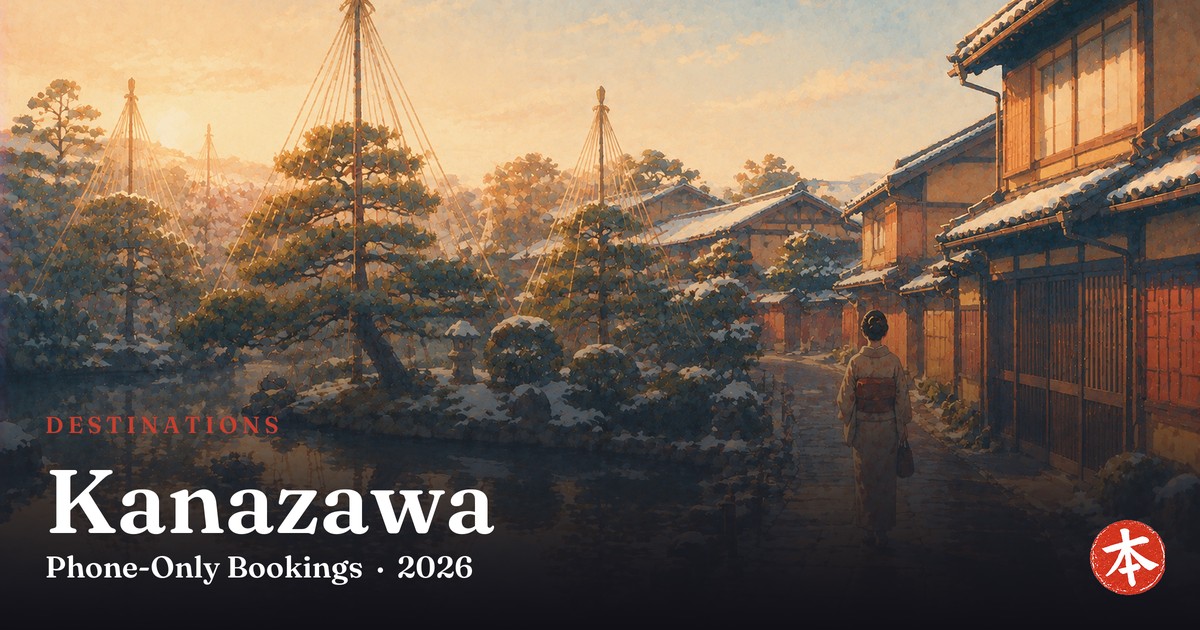
The yukitsuri — the rope-and-pole rigging that protects the pines from snow — is the reason to come in the cold months, and the prefecture publishes the schedule down to the hour. Work begins at 9:00am on November 1 with the celebrated Karasaki pine, which alone takes five central poles and roughly 800 ropes; the whole garden runs to 52 apple-style riggings, 59 trunk riggings and around 700 other spots, using about 4,000kg of straw rope and some 500 worker-days. It finishes in mid-December. Removal starts March 16 and ends March 23, the Karasaki pine last. Also in winter and autumn: during the seasonal evening illuminations, Kenrokuen admission is free, 18:00 to 20:45, and Kanazawa Castle Park opens free every Saturday evening from sunset to 21:00. The castle's outer stone walls are lit every night until 22:00.
The 21st Century Museum, and its two zones
Free zone or paid zone?
Both, and the split is the thing to understand. The Public Zone is free and open 9:00 to 22:00, closed only over New Year — and it includes the view down onto the surface of Leandro Erlich's Swimming Pool, which is the photograph everyone recognizes. The Exhibition Zone is ticketed, open 10:00 to 18:00 (to 20:00 Friday and Saturday), closed Mondays, and priced per exhibition: roughly 1,200 yen for a special exhibition, 450 yen for the collection exhibition, free for preschoolers. So "how much is the museum?" has no single answer, and any guide printing one is wrong by a factor of two or three in one direction or the other.
Getting under the pool
You need a timed reservation made from 9:00am on the day of your visit — not before — through the web or a ticket machine at the Hondori entrance. Phone bookings are not accepted. You also need a ticket to one of the exhibitions; there is no separate charge for the pool itself. Visits run about five minutes, and children from roughly age two need their own reservation. Check the closure notices too — the work was scheduled to be closed October 19 to 30, 2026. If it is shut or booked out, the free view from above is still there.
The teahouse districts, and how to behave in them
What are Higashi Chaya and Kazuemachi?
Preserved geisha quarters, and they are free to walk through — there are no gates, no hours and no admission, though most shops run 10:00 to 17:00. Higashiyama Higashi was designated a national preservation district in November 2001; Kazuemachi followed in June 2008, and is the first place in Japan to have restored its old town name, in 1999. The tourism association is precise about the living side of it: five teahouses still operate with a dozen or so geiko, and Kanazawa maintains the "no first-time customers" convention — without an introduction you cannot go inside one. The two you can enter are museums: Shima, a nationally designated Important Cultural Property, and Kaikaro, a city-designated building the operator calls the largest in the district.
For how the walk there actually feels, Kirk’s Kanazawa – Kenrokuen Garden, Higashi Chaya District, and Lunch at Morimori Sushi on mmm-yoso heads down the hill from Kenrokuen and across the Asanogawa Ohashi Bridge into Higashi Chaya, which he found quite touristy, but in a low-keyed, mellow way.
The rules that are actually official
Two, and they are specific. First: eating while walking is not allowed in the designated preservation area — the tourism association says the basic expectation is to eat inside the shop's premises. Second, inside Shima: you may bring in only your phone, video recording is asked to be refrained from, larger bags go in a coin locker, and bare feet are not permitted — bring or wear socks. What is not an official rule, despite appearing in English guides: any ban on photography in the streets themselves. We found none; the association actively encourages photographs. The one photo-related instruction the city does publish is to not photograph geiko without permission and to refrain from speaking to them in the street. Note also that Kaikaro's own two pages give different child admissions, so we are not quoting one.
Practicalities: buses, trains and what to eat
The bus system, and the pass price nobody agrees on
The Kanazawa Loop Bus circles the sights from stand 7 at the station's east exit — not stands 3 or 8, which are ordinary route buses — at 220 yen a ride since the April 1, 2026 revision, running clockwise 8:30 to 18:00 every 15 minutes and counterclockwise every 20. The Kanazawa One-Day Free Pass is 800 yen and covers Hokutetsu route buses in a designated central zone, the Loop Bus, JR buses, and the Flat and Shopping buses — but not the Light-Up Bus. Two things to know: it is not sold on board, and Kanazawa City's own English page lists it at 1,000 yen while the operator says 800. We follow the operator. The Light-Up Bus runs Saturdays only, 19:00 to 21:40 every 20 minutes, 300 yen a ride, and is likewise not sold on board. And carry cash: the city states that nationwide IC cards are not accepted on ordinary Hokutetsu buses (the Loop Bus does take them), while JR buses refuse contactless credit.
Getting there after the 2024 extension
From Tokyo, nothing changed: a direct Hokuriku Shinkansen in about 2 hours 32 minutes on a Kagayaki, around 14,600 yen with a reserved seat — and note that Kagayaki is entirely reserved seating, so the usual "save money with unreserved" advice does not apply. From Osaka and Kyoto it did change, on March 16, 2024: the through Thunderbird to Kanazawa no longer exists, and you now change at Tsuruga — roughly 2h29m from Osaka (about 9,410 yen) and 1h50m from Kyoto (about 7,720 yen). The old conventional line west of the city passed to two third-sector operators, Hapi-Line Fukui and IR Ishikawa Railway, meeting at Daishoji — so rail passes do not automatically cover that stretch. For where Kanazawa fits in a longer route, see our 10-day and two-week itineraries, and our shinkansen and JR Pass guide for what a pass does and does not buy you here.
What to eat, on official sources only
Jibu-ni is the dish that is genuinely Kanazawa. Japan's Ministry of Agriculture describes it as duck and sudare-fu wheat gluten simmered with seasonal vegetables, thickened because the duck is dusted with flour — a samurai-household dish eaten since at least the Edo period, with the ministry noting that accounts of its origin vary. Kanazawa oden is defined by Ono soy sauce, faintly sweet, with local ingredients you will not see in Tokyo: ring-shaped kuruma-fu, the red-and-white spiral akamaki fish cake, flat white fukashi, whelks, and the sweet, soft Gensuke daikon. The famous crab-shell kani-men is seasonal, early November to late December only. And the gold leaf: Kanazawa produces about 99% of Japan's output, at a thickness of one ten-thousandth of a millimeter, a craft the city traces to a record of Maeda Toshiie ordering leaf-beating in 1593. One honest note on Omicho Market: the market's own site publishes no overall opening hours or closing days at all, only per-shop notices. The commonly quoted 9:00 to 16:00 comes from the city's tourism site, which adds that it varies by store.
(For how the city fits together and what the buses now cost, our Kanazawa map guide has the 2026 fares — the Hokutetsu day pass went from 600 to 800 yen.)
(Timing a visit to the color? Our Japan in November guide has the JMA’s average maple dates by region, with Hokuriku reaching the line at the end of the month.)
FAQ
How do I book the Ninja Temple, and why is it so hard?
Is the Ninja Temple actually about ninja?
When is Kenrokuen free?
Is Kenrokuen cash only?
How much is the 21st Century Museum?
How do I get into the underground part of the Swimming Pool?
Is anything closing that I should plan around?
Which bus pass should I buy, and where?
Do my Suica or ICOCA work on Kanazawa buses?
How do I get to Kanazawa now that the shinkansen reaches Tsuruga?
Bottom line (2026) — Myoryuji (the Ninja Temple) takes reservations by phone only, refuses proxy bookings, bars preschool children, and forbids interpreting inside the building. The 21st Century Museum shuts for renovation from May 2027 to March 2028, and Kenrokuen is free before 6:45am. Plan the temple visit well ahead, and time Kenrokuen to the early-morning free window.
Sources
Kenrokuen and Kanazawa Castle Park admission, hours, early opening and night opening: Ishikawa Prefecture's castle and garden office. Yukitsuri schedules and figures: the prefecture's press releases of October 2024 and March 2026. Zones, pricing, the Swimming Pool reservation rule and the renovation closure: the 21st Century Museum of Contemporary Art. Reservation rules, admission, age limits and the temple's own statement about ninja: Myoryuji. Teahouse district status, the eating rule, geiko etiquette and food descriptions: the Kanazawa Tourism Association and Kanazawa City. Shima's in-house rules and Kaikaro's admission: their own sites. Bus fares, stands, timetables and pass terms: Hokutetsu. Rail fares and journey times: JR West's official fare and timetable tool, queried for August 24, 2026. Third-sector transfers: Hapi-Line Fukui and IR Ishikawa Railway corporate pages. Jibu-ni: Japan's Ministry of Agriculture, Forestry and Fisheries. All read on August 21, 2026. The embedded video is by its creator.
Some links on this page may be affiliate links, which means we may earn a commission if you book or buy through them — at no extra cost to you. See our affiliate disclosure.
Tokyo to Osaka, Tokyo to Kyushu, Tokyo to Hokkaido — day by day — plus seven places most visitors never reach.
- 12 pages, 80 photographs, every stop linked to its guide
- Every price and opening hour read from the official page
- Re-issued monthly, so it does not go stale in your inbox
Free. One email a month, plus the rare change that matters. Unsubscribe with one click in any email. By subscribing you agree to our privacy policy.