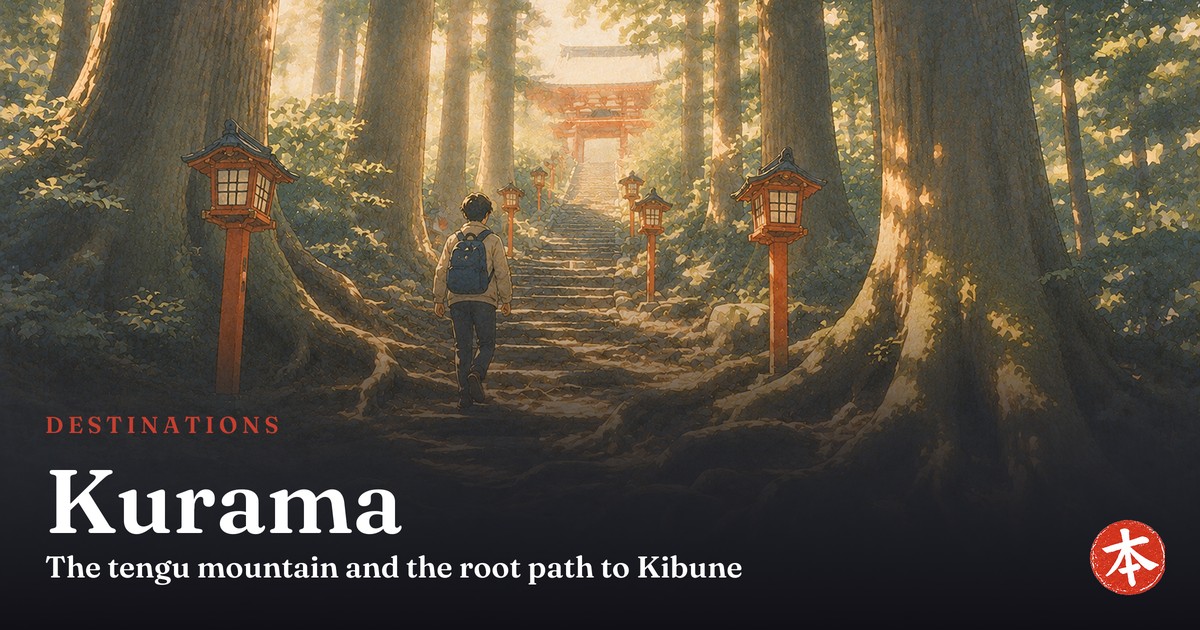
Kurama is the Kyoto day trip for people who think they've finished Kyoto: a 770 AD temple stacked up a cedar mountain where the tengu — the crow-faced mountain goblins — allegedly taught swordsmanship to Japan's most tragic hero, a root-laced ridge trail crossing to the water-shrine village of Kibune, and an onsen at the trailhead that has quietly returned from the dead. It costs ¥470 to reach and ¥500 to enter — both numbers newer than most guides — and it delivers the mountain-Buddhism Japan that city temples can only gesture at.
Kurama at a glance
| Item | Official answer (Aug 2026) |
|---|---|
| Getting there | Eizan Railway from Demachiyanagi · ¥470 · day pass ¥1,200 · Kirara panorama train via the maple tunnel |
| Kurama-dera | Mountain fee ¥500 (since Apr 2023) · main hall 9:00–16:15 · cable car by donation ¥200/¥100, last down 16:25 |
| Museum (Reihoden) | ¥200 · closed Tue · 🚨 closed Dec 12–end of Feb |
| Trail to Kibune | Root path over the ridge · no official duration · real hiking, gates close early |
| Kifune Shrine | 6:00–20:00 (May–Nov) · free · lanterns Jul 1–Aug 15, 2026 |
| Kurama Onsen | Open · day baths 10:00–21:00 · from ¥1,500 · official site: kurama-spa.com only |
The full crossing, temple to Kibune, on foot:
The temple: 770 AD, a white horse, and a ¥500 mountain
Should you ride the cable car or climb the main approach?
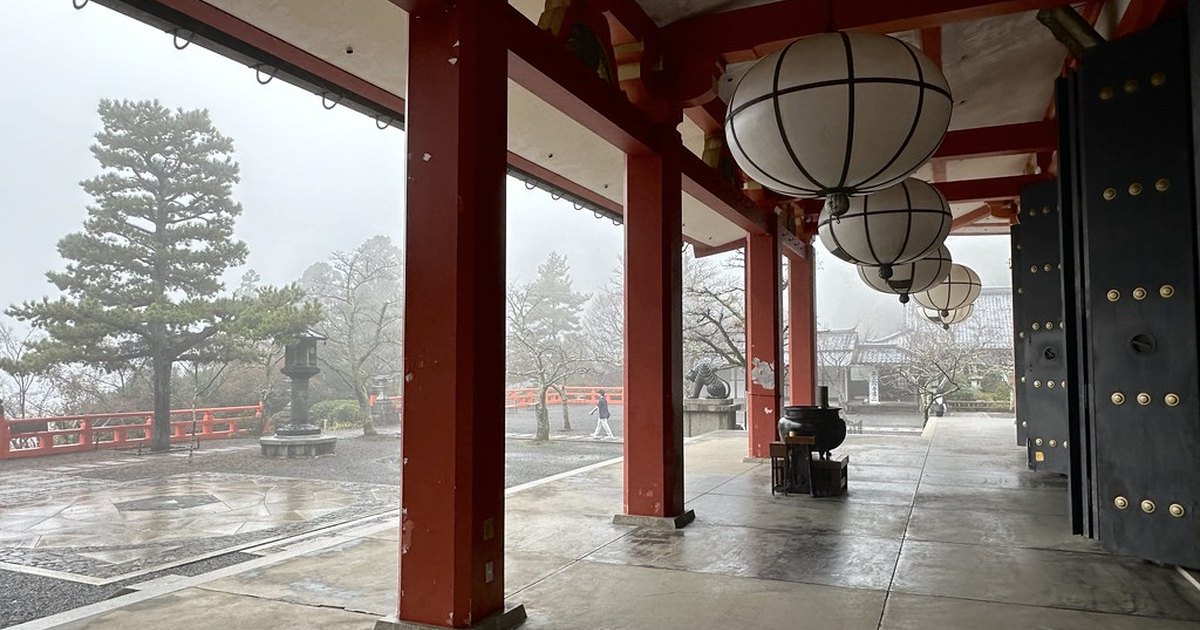
Climb up if your knees allow it — the lower approach passes Yuki Shrine's giant cedar and the winding lantern path that is the classic Kurama arrival — and save the two-minute cable car (donation, ¥200) as the descent or the rainy-day escape. Riders should note the schedule brackets: first car up 8:40, last down 16:25, with occasional inspection closures the temple posts in advance.
Why is the entry fee called a "mountain-loving fee"?
Kurama-dera's own history opens like a folktale: in 770, the monk Gantei followed a dream and a white horse up this mountain and enshrined Bishamonten here. Twelve centuries later the mountain still runs on temple logic rather than tourism logic — the entry charge is the aizan-hi, "mountain-loving fee" (¥500 since April 2023), spent on paths and forest, and the little cable car up the steepest stretch is officially not a fare but a thank-you ride for a donation (¥200 adults one-way), because Japan's shortest religious railway isn't allowed to be a business. Timings that shape your day: main hall 9:00–16:15, last cable car down 16:25, and the Reihoden museum — ¥200 for National Treasure Bishamonten statues — closed Tuesdays and all winter (December 12 to end of February). The mountain's other resident legend is Yoshitsune, deposited here as a boy, whose nightly fencing lessons from the tengu of Sojogatani the temple recounts without a wink. His spring, his height-stone and his shrine all mark the trail.
The crossing: root path to Kibune
What's actually on the trail?
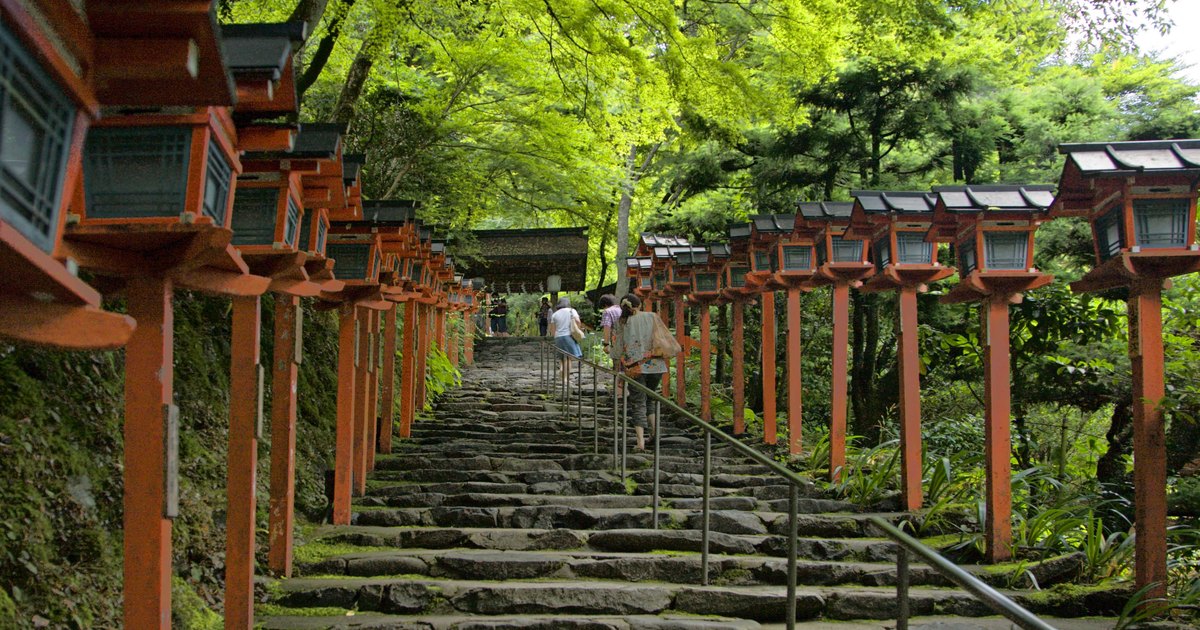
Behind the main hall the route climbs to the ridge and becomes the Kinone-michi — the root path — where cedar roots weave across bedrock too hard to penetrate, forming the staircase a thousand years of pilgrims have polished. The official sequence: treasure hall → Yoshitsune's drinking spring → the height-comparing stone → the root path → Osugi Gongen's great cedar → Yoshitsune's hall → Mao-den — the rock sanctuary of the "demon king" said to have descended here in prehistory — then down the western steps into Kibune. No official duration exists and we won't invent one; treat it as a genuine short mountain hike (shoes, water, daylight margin) rather than a garden stroll. It lands you in Kibune: a one-lane village of shrine lanterns and riverside dining platforms, where Kifune Shrine (free, 6:00–20:00 in the green months) sells its famous water fortunes — blank slips that reveal their text floated on the sacred stream. The 2026 lantern lighting runs July 1–August 15; winter hours and any autumn illumination were unposted at our reading, so verify before a December or late-November pilgrimage. Note also the shrine's posted notice of traffic restrictions in the Kibune valley this year — go by train and foot, not car.
The finish: an onsen resurrection and the ride home
What should you eat in Kibune before heading back?
In the warm months, the village's signature is kawadoko — dining platforms built over the river itself, where restaurants serve kaiseki courses inches above the water and the valley runs meaningfully cooler than the city below. It's a reservation-and-budget affair; the informal fallback is noodles or tea at the shops along the lane, then the walk or shuttle down to Kibuneguchi Station for the Eizan ride home.
Why do old articles say the hot spring is gone?
Because for a while it was. Kurama Onsen — the bathhouse at the village's north end whose outdoor tub faces the cedar slopes — went dark in the early 2020s, and its obituaries still rank in search. The current reality from its official site: day bathing 10:00–21:00, the full indoor-outdoor set at ¥2,600 weekdays / ¥2,700 weekends (towels and loungewear included), the open-air bath alone at ¥1,500/¥1,600, plus a 90-minute meditation package at ¥5,500 for the ambitious. One hard warning: the onsen's old web domain now belongs to an unrelated third party — old articles linking it are sending readers somewhere else entirely; the official site is kurama-spa.com. Soak, then ride the Eizan back — ideally timing the Kirara panorama car for the maple-tunnel stretch in fading light. Where Kurama fits a Kyoto itinerary — as the half-day antidote to shrine fatigue — our how-many-days guide does the planning math, Gion covers the city's opposite register, and dated changes like the fee revision live on the 2026 tracker.
FAQ
How do you get to Kurama from Kyoto?
How much does Kurama-dera cost now?
What’s the story with the tengu and the boy samurai?
What is the Kinone-michi — and how hard is the hike to Kibune?
What’s at Kibune on the other side?
Is Kurama Onsen open — I read it closed?
Can I see the temple’s treasures?
Which direction should you hike — Kurama to Kibune, or reverse?
When is the best season for Kurama?
Bottom line (2026) — Thirty scenic rail minutes north of Kyoto, Kurama stacks a 770 AD mountain temple (entry ¥500, not the ¥300 old guides quote), a cedar-root hiking path to the water-blessed shrine village of Kibune, and a hot spring that quietly reopened. A compact half- or full-day escape from central Kyoto.
Sources
Mountain fee and its revision date, cable-car donation system and times, main-hall hours, Reihoden prices and closures, trail order, founding legend, Yoshitsune history and the pet policy: kuramadera.or.jp official pages. Kifune Shrine hours, lantern dates, amulet office and traffic-restriction notice: kifunejinja.jp. Eizan fares, day pass and Kirara details: eizandensha.co.jp official pages and fare table. Kurama Onsen status, hours and prices: kurama-spa.com (its official price chart). Trail description cross-checked against Kyoto City's official tourism site. All read on August 19, 2026. Durations are not officially published and are not quoted; the onsen's former domain is compromised and deliberately unlinked. The embedded video is by its creator.
Tokyo to Osaka, Tokyo to Kyushu, Tokyo to Hokkaido — day by day — plus seven places most visitors never reach.
- 12 pages, 80 photographs, every stop linked to its guide
- Every price and opening hour read from the official page
- Re-issued monthly, so it does not go stale in your inbox
Free. One email a month, plus the rare change that matters. Unsubscribe with one click in any email. By subscribing you agree to our privacy policy.