Dotonbori is Osaka playing itself at full volume: a 1615 merchant canal walled with animated signage, a running man in neon since 1935, a mechanical crab the size of a car, and more takoyaki per meter than anywhere on earth. It photographs so well that the facts drift — the Glico sign's hours, the cruise price, and one beloved restaurant that closed years ago but still headlines English guides. Here's the district with its receipts: the history from the street association's own record, the prices from the operators, and the alley one block south that remembers what all this used to be.
Dotonbori at a glance
| Icon | Official facts (Aug 2026) |
|---|---|
| Glico sign | 6th generation (2014) · 20m × 10.38m · ~140,000 LEDs · lit sunset–24:00 |
| Tombori River Cruise | 20 min · ¥2,000 / ¥1,000 / ¥500 (revised Apr 2025) · every :00/:30, 11:00–21:00 · same-day tickets only |
| Kani Doraku honten | Crab-only since 1960 · 11:00–23:00 (entry to 22:00) · closed Dec 31 only |
| Kukuru honten | Takoyaki · wkdy 11:00–21:00, wknd from 10:00 · open (closure rumor is false) |
| Imai | Udon since 1946 · 11:30–21:30 · closed Wed + 4th Tue |
| Zuboraya | 🚨 Closed since 2020 — the pufferfish lantern is gone |
| Hozenji Yokocho | 80m stone alley · ~60 bars · temple grounds open 24h |
The strip end to end, canal level and street level:
The canal that built the district
Why is a food street named after a merchant?
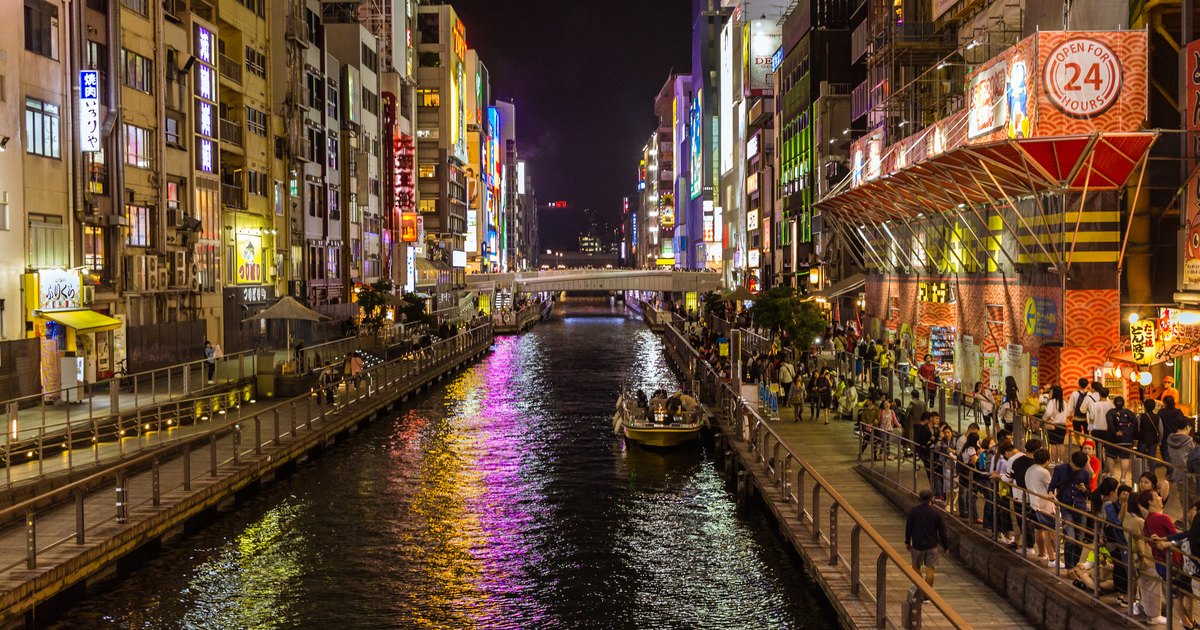
The official history is a better story than the neon suggests. In 1612, merchant Yasui Doton sank his private fortune into digging a canal through the marshland south of Osaka's core; he died before it finished (at the siege of Osaka Castle, on the losing side), his cousin completed the channel in 1615, and the city named it Doton's canal — Dotonbori — to keep the score honest. From 1626 the banks became Osaka's licensed theater quarter: five great houses staging kabuki and bunraku, where Chikamatsu Monzaemon — Japan's Shakespeare, roughly — premiered most of his plays. The theaters are gone, but read the district through that lens and it snaps into focus: the giant crab, the running man, the octopus — stagecraft that outlived its stages. The Tombori River Walk (2005) put promenades on both banks; the river cruise — ¥2,000 for 20 minutes, hourly at :00 and :30 from the Don Quijote pier — is the district seen as the theater it always was.
The signs and the survivors: eating the icons
Which legends are still real in 2026?
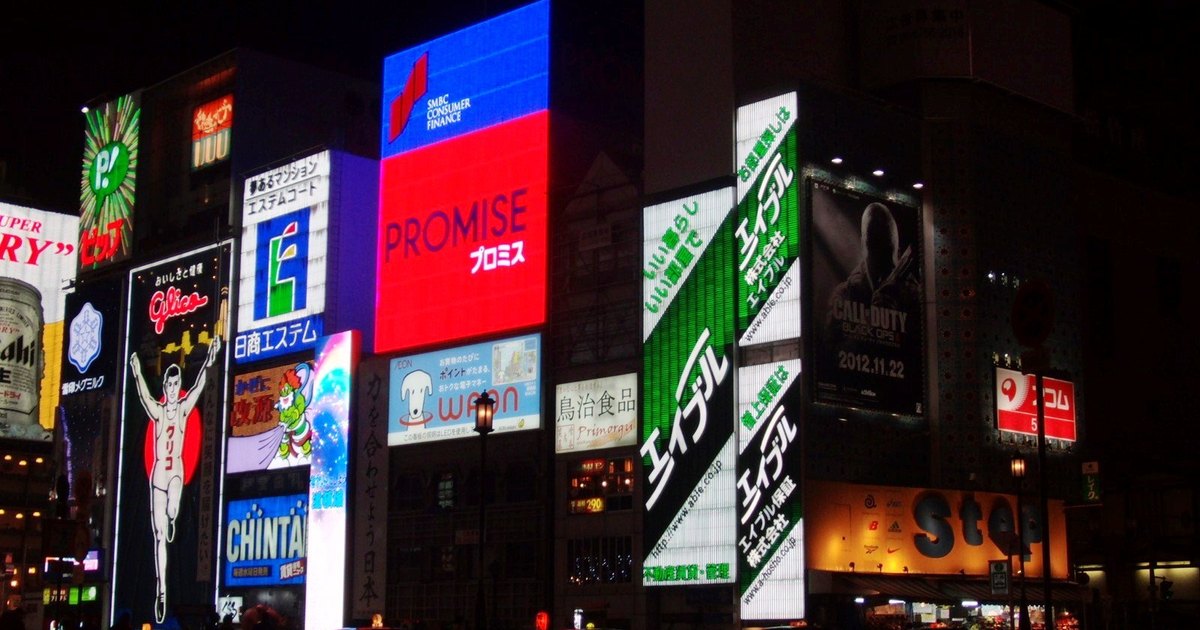
Status check, from the operators' own pages. Glico's runner: sixth body since 1935, lit sunset to midnight — the after-midnight pilgrimage photographs a dark billboard. Kani Doraku honten: the crab-only house at Ebisubashi's south end since 1960, open 11:00–23:00 with entry until 22:00, resting only on New Year's Eve (the famous animated crab above the door is real; its specs, contrary to internet lore, appear nowhere official). Kukuru: flipping octopus balls daily — and very much open, whatever a stray search snippet claims about a February closure (that was an unrelated Shin-Osaka branch). Imai: the 1946 udon house whose soft kitsune udon is the local's actual order on the strip. And the hard correction: Zuboraya, the pufferfish-lantern fugu palace, closed permanently in 2020 — guides still routing people there are recommending a memory. One block south, Hozenji Yokocho trades neon for stone paving: ~60 tiny establishments around a 1637 temple whose moss-covered Fudo statue you splash with water for luck, a custom the temple traces to a single postwar devotee. Dated changes like the Zuboraya closure live on our 2026 tracker.
Logistics: getting in, getting fed, getting out
How does Dotonbori fit an Osaka day?
Access is the easiest in Kansai, per the association's official directions: Namba Station exit 14 opens practically onto the strip (Midosuji, Yotsubashi and Sennichime lines plus Hanshin/Kintetsu), Nippombashi's exit 2 serves the quieter east end, Nankai Namba is seven minutes on foot, and the rapi:t from Kansai Airport makes Namba in about 35 minutes — Dotonbori is many visitors' first hour in Japan, which explains a lot about its energy. Day-plan logic: the Pokemon Cafe and Shinsaibashi's arcade sit ten minutes north for the afternoon, the strip peaks 19:00–21:00 (shoot from the quieter west bank), and USJ visitors land here for dinner by tradition — the train run is direct. For the castle-and-museum daytime city, our Osaka Castle guide covers the other Osaka; this one runs on sauce and wattage.
The photo you came for: where and when to shoot it
Why does everyone's Glico photo look the same — and how do you do better?
The default shot — running man from the middle of Ebisubashi — means elbowing forty people for the identical frame. The alternatives: shoot from the Tombori River Walk one level down, where the canal doubles the neon in reflection and the crowd thins to strollers; board the cruise's dusk departures for the water-level angle no bridge offers; or cross to the west side of Ebisubashi at full dark, where the sign, the crab and the canal stack into one frame. Remember the official clock — lights out at midnight — and that the sign photographs best in the blue-hour window just after sunset, when the sky still holds color behind the LEDs. Rainy nights are the secret weapon: wet pavement turns the whole street into a mirror and the crowds evaporate.
(Getting here from Tokyo: our Tokyo–Osaka shinkansen guide covers the fares, and why a paper ticket includes the ride on from Shin-Osaka.)
(One local quirk: the Dotonbori branch of Japan’s biggest sushi chain is its most expensive — our Sushiro guide has the branch-by-branch price bands.)
(Half an hour west, our Kobe map guide explains why the Rokko Cable is 800 yen rather than the 600 you will read elsewhere, and why Kobe Station is not the center of Kobe.)
(For the kushikatsu half of that circuit: our kushikatsu in Osaka guide notes that Daruma and Yokozuna ban double-dipping in the shared sauce, Kushikatsu Tanaka only recommends it, and Shiruhisa gives each diner a dish of their own.)
FAQ
What is Dotonbori, actually?
What time does the Glico sign light up?
How does the Tombori River Cruise work?
Is Zuboraya — the giant pufferfish lantern place — still there?
Where should you actually eat on the strip?
What is Hozenji Yokocho?
How do I get to Dotonbori?
When should you go — and how bad are the crowds?
Is Dotonbori worth it beyond one evening?
Bottom line (2026) — Osaka’s neon canal district runs on facts most guides get wrong: the Glico sign lights only until midnight, the river cruise went up to ¥2,000 in 2025, and the pufferfish-lantern institution Zuboraya closed for good. One block south, a 400-year-old temple alley hides in plain sight.
Sources
Canal history, theater-district heritage, Glico sign timeline and River Walk dates: the Dotonbori Store Association's official history and chronology pages. Glico sign generation, dimensions, LED count and lighting hours: Ezaki Glico's official sign page. Cruise fares, revision date, timetable, pier and same-day policy: Ipponmatsu Kaiun's official cruise pages and fare-revision notice. Restaurant details: Kani Doraku, Kukuru brand and Imai official pages. Hozenji history and hours: the temple's official site. Access: the association's official access page and Osaka Metro. All read on August 19, 2026. The Zuboraya closure is stated on the basis of its dead official presence; the crab sign's specifications are not officially published and not quoted. The embedded video is by its creator.
Some links on this page may be affiliate links, which means we may earn a commission if you book or buy through them — at no extra cost to you. See our affiliate disclosure.
Tokyo to Osaka, Tokyo to Kyushu, Tokyo to Hokkaido — day by day — plus seven places most visitors never reach.
- 12 pages, 80 photographs, every stop linked to its guide
- Every price and opening hour read from the official page
- Re-issued monthly, so it does not go stale in your inbox
Free. One email a month, plus the rare change that matters. Unsubscribe with one click in any email. By subscribing you agree to our privacy policy.