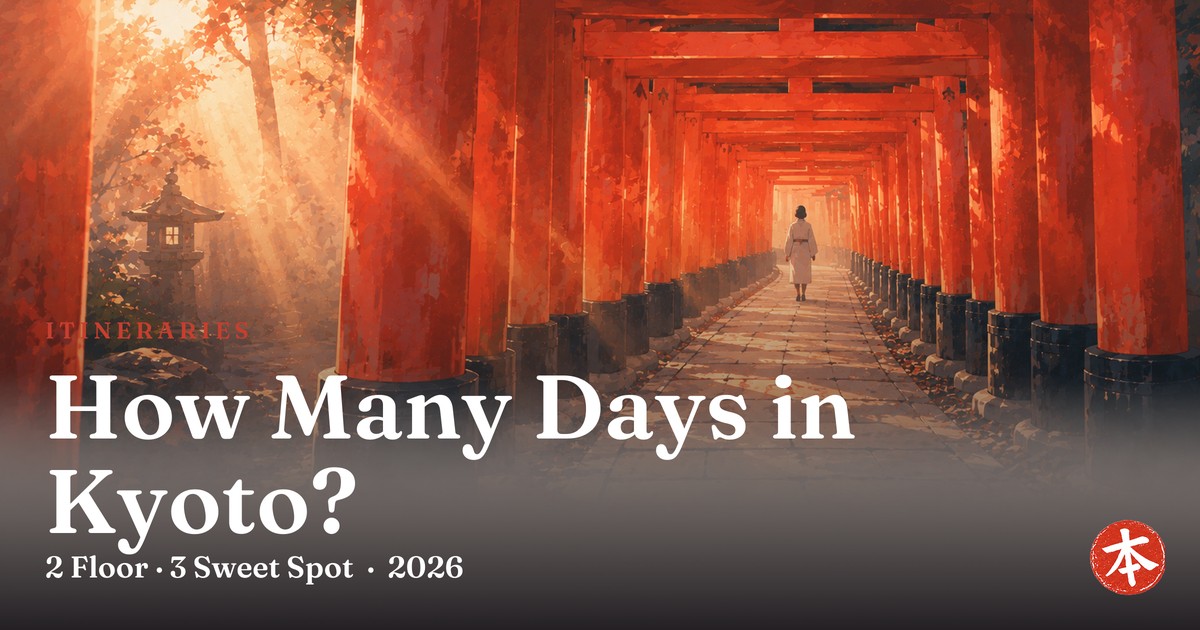
Short answer: two full days is the floor, three is the sweet spot, four or five turns Kyoto into the heart of your trip with Nara and slow mornings included. Kyoto has more than 1,600 temples — nobody "finishes" it — so the real question isn't how many days Kyoto needs. It's what each extra day buys you, and what cutting one quietly costs. That's this page.
The answer at a glance
| 1 day | A preview: Fushimi Inari at dawn → Higashiyama → Gion at dusk. Magnificent and merciless. |
|---|---|
| 2 days | The honest minimum. East day + south-west day. Icons covered, zero slack. |
| 3 days | The sweet spot. Icons + a slow day (kimono, tea, Nishiki, wandering). |
| 4 days | Adds Nara (half-day) and the quieter north. Kyoto stops feeling scheduled. |
| 5+ days | Base-camp mode: Uji, Kurama, repeat visits. For temple people, heaven. |
| The one rule | Go early. Every famous site is a different place before 8am. |
What each day actually looks like
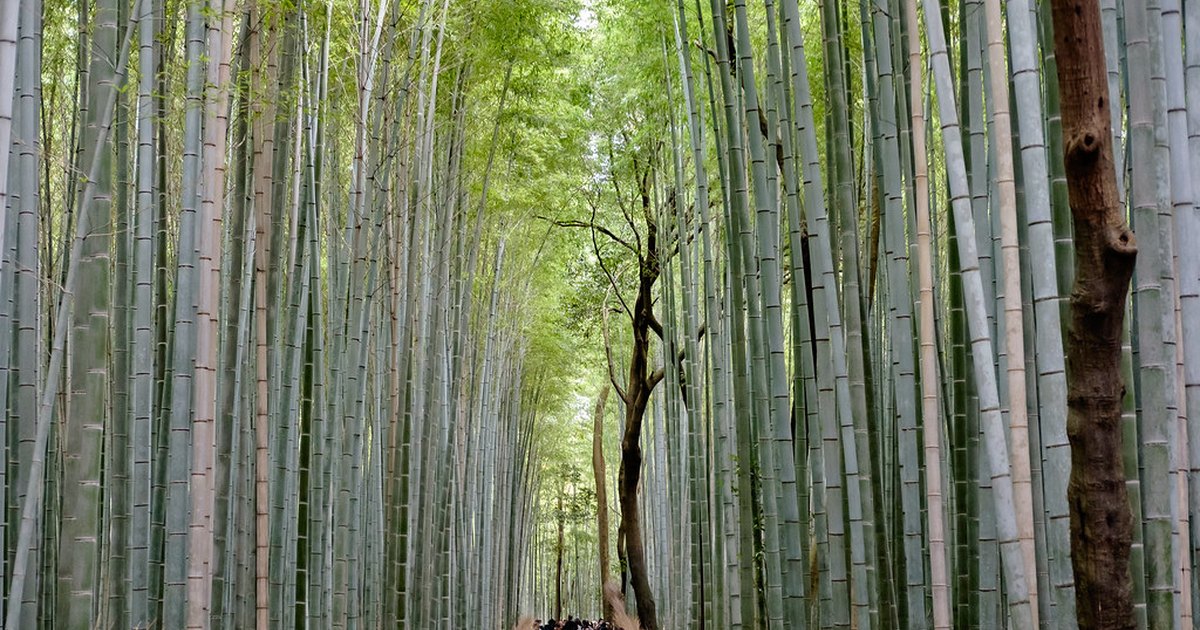
The east day — Kyoto's greatest hits in one arc: Kiyomizu-dera's hillside stage, down through the preserved lanes of Higashiyama, ending in Gion at dusk, when the lanterns come on and the day-trip crowds thin. The south-west day — Fushimi Inari at dawn (the torii tunnels with nobody in them justify the alarm clock all by themselves), then across town to Arashiyama's bamboo grove and river. Those two days are the non-negotiable core, and they're exactly what the Kyoto leg of our 7-day itinerary squeezes in.
The third day is where Kyoto happens to you instead of the other way around: a kimono morning, a real tea ceremony, Nishiki Market grazed politely (eat in front of the shop — it's the official rule there), the Philosopher's Path with no destination. Our 10-day route gives Kyoto three nights for exactly this reason, and the 2-week version stretches it to four.
Day four adds Nara — under an hour away, works as a half-day, and the bowing deer plus the Great Buddha genuinely deliver. Five or more and you're in base-camp territory: Uji's tea country, Kurama's mountain temple, and the luxury of going back to what you loved.
It is also worth having one indoor answer ready before you need it. The Kyoto Railway Museum is the strongest one in the city on reviews — and in a place where almost everything on the list is outdoors, a wet afternoon is the day a plan usually falls apart.
The mistakes that waste Kyoto days
- Arriving at 10am. The single biggest one. Kyoto's magic hours are dawn and dusk; its misery hours are 10–15 at the famous sites in any busy season. Flip your schedule and the same city doubles in quality.
- Cramming both icon days into one. Fushimi Inari, Kiyomizu AND Arashiyama in a day is a transit itinerary, not a visit.
- Day-tripping from Osaka and leaving before dark. Doable and budget-friendly — but keep at least one Gion evening; it's a different city after the buses leave.
- Treating a ryokan night as a Kyoto add-on. If a traditional inn is on your list, our ryokan guide makes the case for doing it in an onsen town instead, where the bath is the point — and letting Kyoto nights stay in the lanes.
So: how many days?
If your route is set and Kyoto gets what's left, protect two full days as the floor — below that you're previewing, not visiting. If you're still designing the trip, give it three and build outward: that's the shape of every itinerary we publish. And whichever count you land on, the dawn rule outranks the day count — two early days beat three late ones, every time. Season strategy lives in our month-by-month guide; the blossom-window specifics in the sakura spots guide.
(For the Gion piece of any Kyoto day — the layout, the stations and what the 2024 visitor rules actually say — see our Gion map guide.)
(The best half-day escape from temple fatigue: Kurama — the tengu mountain, the root path to Kibune and a hot spring back from the dead.)
(Getting there from the capital — fares, luggage rules and booking windows — lives in Tokyo to Kyoto.)
(Basing in Osaka instead? Three railways from ¥410 cover the hop, each landing in a different Kyoto.)
FAQ
Is one day in Kyoto enough?
Is 2 days enough for Kyoto?
What does a third day in Kyoto add?
Should I add a day for Nara?
Should I stay overnight in Kyoto or day-trip from Osaka?
When is Kyoto least crowded?
Bottom line (2026) — Two days is the floor for Kyoto’s icons at a sprint; three days is the answer that lets you actually feel the city; four days adds Nara and a slow morning. Temple admission fees and hours vary by site and season, so check each temple’s official page close to your visit.
Sources
Day-count logic and pacing are ours, consistent with our published 7-day, 10-day and 2-week Japan itineraries. Temple admission fees and opening hours vary by site and season and are deliberately not quoted — check each temple's official page close to your visit. As of July 2026.
Tokyo to Osaka, Tokyo to Kyushu, Tokyo to Hokkaido — day by day — plus seven places most visitors never reach.
- 12 pages, 80 photographs, every stop linked to its guide
- Every price and opening hour read from the official page
- Re-issued monthly, so it does not go stale in your inbox
Free. One email a month, plus the rare change that matters. Unsubscribe with one click in any email. By subscribing you agree to our privacy policy.