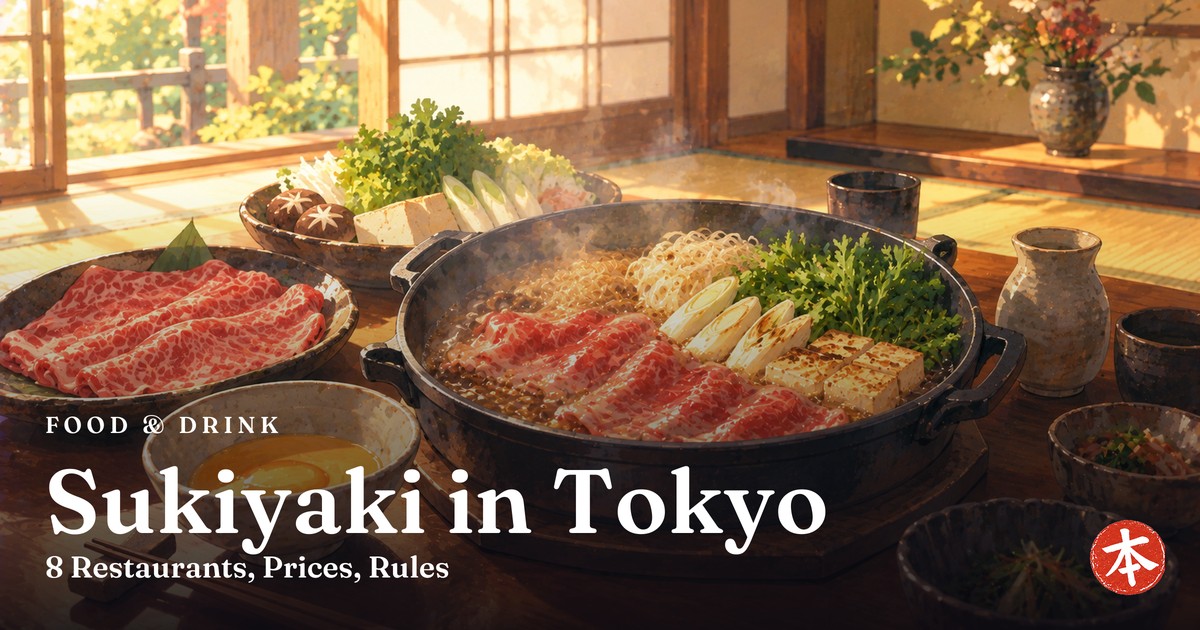
Sukiyaki is beef and vegetables simmered at the table in a sweet soy broth and dipped in raw egg, and Tokyo has restaurants that have been serving it since the 1800s. The price range is wide: from a 2,750 yen weekday lunch to a 26,000 yen Matsusaka beef course before service charge. So is the small print, which is where visitors get surprised: service charges from nothing to 12 percent, restaurants that take bookings by phone only, and one that does not accept children under 10.
This page covers eight sukiyaki restaurants and reports only what each one says on its own website: prices, who cooks, children, booking and cancellation. It is not a ranking. If you are after wagyu in other forms, our wagyu in Tokyo guide covers steak and yakiniku.
Sukiyaki in Tokyo at a glance
| Restaurant | Area | Cheapest sukiyaki | Extra charge | Booking |
|---|---|---|---|---|
| Ningyocho Imahan | Ningyocho | 5,940 yen lunch | 12% all day | TableCheck, phone |
| Asakusa Imahan | Asakusa | 3,300 yen lunch (20 a day) | 10% from 5,500 yen | Phone only |
| Chinya | Asakusa | 4,000 yen weekday lunch | 10% | TableCheck, phone |
| Hiyama | Ningyocho | 10,000 yen lunch | 10% | Web, LINE |
| Moritaya Marunouchi | Tokyo Station | 3,300 yen weekday lunch | 10% on courses | Web, phone |
| Ginza Rangetsu | Ginza | 3,000 yen lunch box | 10% at dinner | Ikyu, phone |
| Tsukitei | Shinjuku | 3,025 yen lunch | None at lunch | Phone, booking sites |
| MO-MO-PARADISE | Asakusa | 2,750 yen weekday lunch | 1,100 yen seat charge rule | Online |
How sukiyaki is served at a Tokyo restaurant
Who does the cooking?
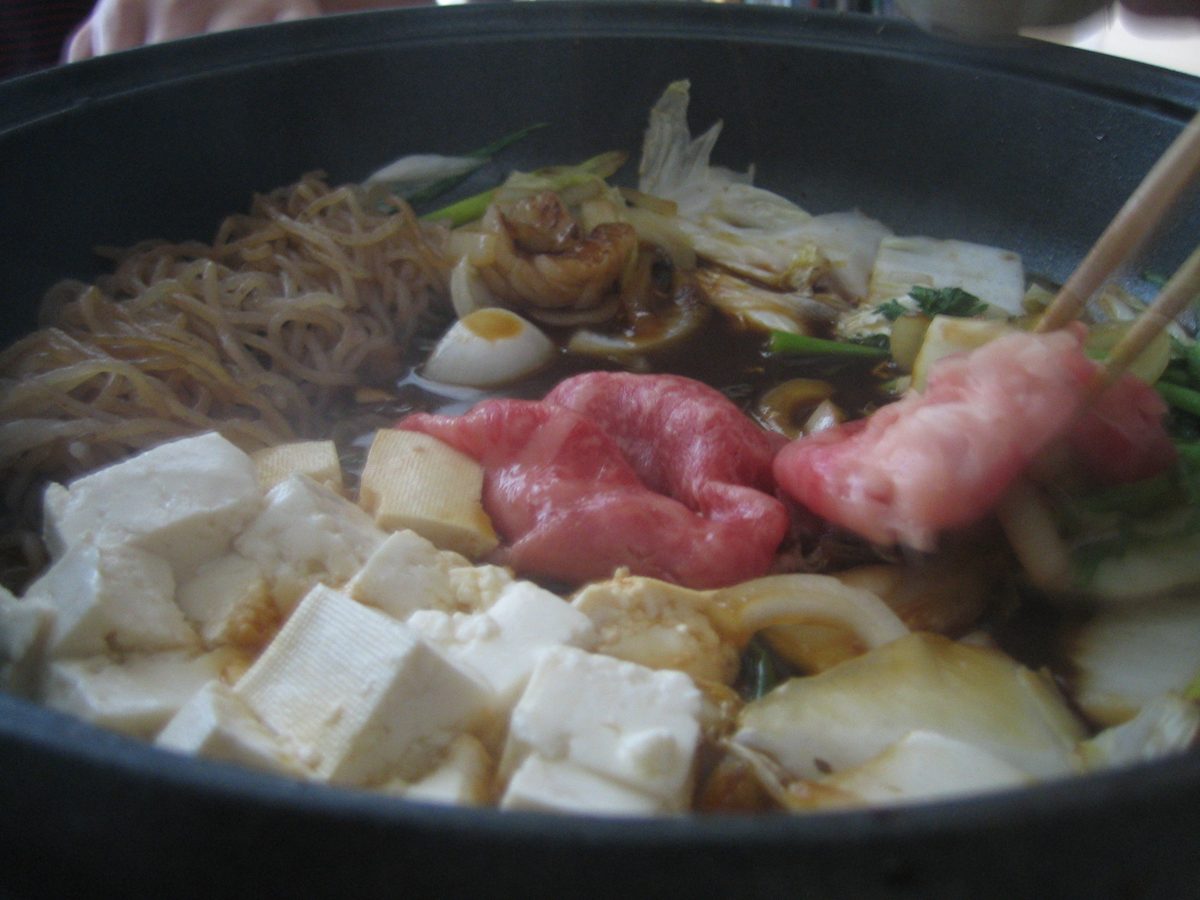
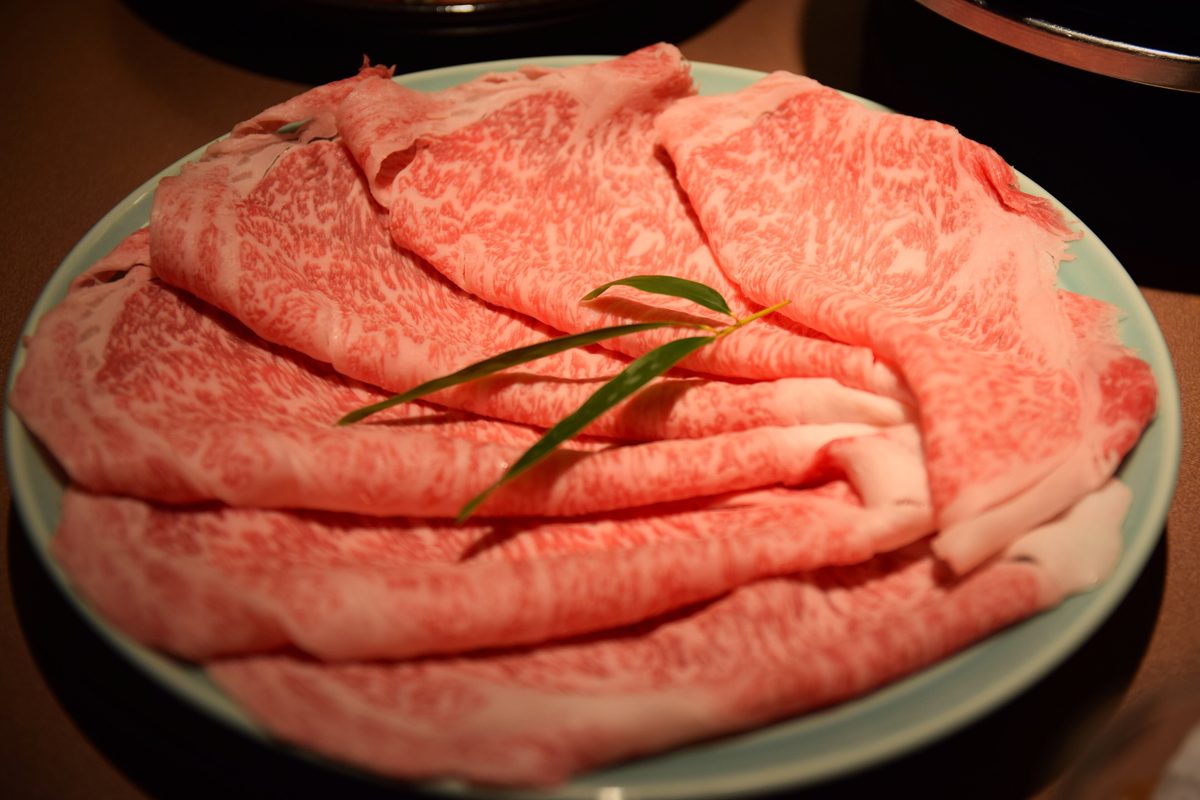
At the historic restaurants, usually not you. Ningyocho Imahan says trained staff cook the sukiyaki in front of you, judge when each piece is ready and serve it, though it notes some of its branches have guests cook for themselves. Ginza Rangetsu assigns a staff member to your table to serve it. At MO-MO-PARADISE, a hot pot chain, you cook it yourself and choose sukiyaki as one of four broths.
The raw egg
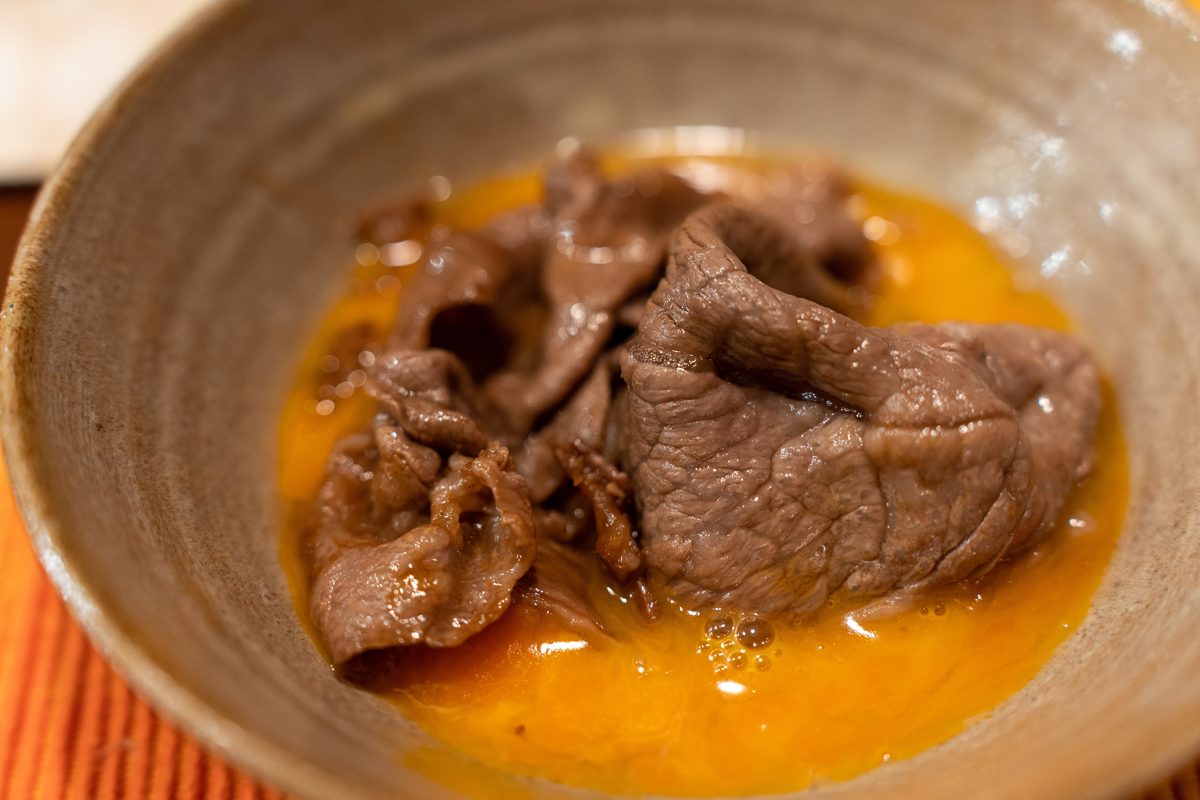
Each piece of cooked beef is dipped in beaten raw egg. Chinya publishes an English guide that walks you through it: the ingredients are heated in the pan at your table and you dip them in the egg. MO-MO-PARADISE names the egg it uses on its menu.
Kanto style and Kansai style
Chinya describes its own style as taking from both, starting with beef cooked with Senju leeks. Moritaya, which began in Kyoto in 1869, serves what its own site calls Kyoto-style sukiyaki.
The historic sukiyaki restaurants in Tokyo
Ningyocho Imahan: staff cook it for you, and a 12 percent charge
Founded in 1895 as a gyunabe beef hot pot restaurant, the Ningyocho main store is a minute from Ningyocho Station, exit A2. Dinner sukiyaki starts at 9,900 yen for the pot alone, rising to 15,290 yen, with sets from 13,530 yen. Lunch has a 5,940 yen minimum per adult. A 12 percent service charge and a private room fee apply all day, booked or not. The beef is mainly female Japanese Black wagyu, aged about 20 days. There is a children’s sukiyaki at 2,970 yen, the whole restaurant is non-smoking, and PayPay is accepted.
Asakusa Imahan: phone bookings only, and no lunch bookings
Also founded in 1895, next to Tsukuba Express Asakusa Station exit A2 and open every day. Lunch is the budget entry: a 2,200 yen beef bowl and a 3,300 yen Meiji sukiyaki bowl, each limited to 20 a day, and a 5,390 yen sukiyaki lunch set. Lunch cannot be booked. The main menu runs from 9,680 yen to 22,000 yen for Kobe beef; the restaurant uses female Japanese Black cattle only and is a designated Kobe beef restaurant. Service is 10 percent only if you spend 5,500 yen or more per person, and main-menu orders come with a beef tsukudani starter at 440 yen each. Reservations are by phone only.
Chinya: since 1880, reopened in 2022
Chinya opened in 1880, became a sukiyaki specialist in 1903, closed in August 2021 and reopened at a new Asakusa address on March 18, 2022. Weekday beef hot pot lunches start at 4,000 yen (4,400 yen with its service charge), and lunch sets run from 6,800 yen. At dinner, courses are 10,800 to 15,800 yen and a 120-gram pot from 3,800 yen, with 10 percent added to the total. It uses female Japanese Black cattle at marbling grade 4 and says it deliberately does not use grade 5. Private rooms cost 4,000 yen.
Hiyama: Matsusaka beef and a Michelin star
Hiyama began in 1912 and opened its sukiyaki restaurant in Ningyocho in 1935; it received one star in the Michelin Guide Tokyo 2011. Dinner courses are 13,000 to 17,000 yen for Japanese Black beef, 21,000 yen for Yonezawa and 26,000 yen for Matsusaka; lunch runs 10,000 to 23,000 yen. A 10 percent service charge is added. It is closed on Sundays, a 17:00 seating has a two-hour limit, and a same-day cancellation costs 100 percent of the course. Book online or by LINE, or by phone for five or more.
Sukiyaki with a view, or in Ginza
Moritaya Marunouchi: 35 floors up, no children under 10
Moritaya was founded in Kyoto in 1869. Its Tokyo branch is on the 35th floor of the Marunouchi Building, three minutes from Tokyo Station’s Marunouchi South exit, and the restaurant says Mount Fuji is visible on clear days. Dinner sukiyaki runs from 9,900 to 16,500 yen; a weekday wagyu hot pot lunch is 3,300 yen. Courses, lunch included, carry a 10 percent service charge, and a window table for four costs 2,200 yen extra. It does not accept children under 10.
Ginza Rangetsu: a 3,000 yen A5 lunch box
Founded in 1947 and now on the fifth floor of ZOE Ginza, Rangetsu uses A5 beef from female cattle that have never calved. The cheapest way in is the 3,000 yen A5 wagyu sukiyaki served over rice at lunch; lunch sukiyaki sets are 6,300 to 8,300 yen. At dinner a 130-gram pot starts at 10,000 yen, with a 10 percent service charge on the main menu. A staff member is assigned to serve you, and there is an English menu.
Cheap sukiyaki in Tokyo
Tsukitei: a 3,025 yen lunch in Shinjuku
Tsukitei, seven minutes from JR Shinjuku in Kabukicho, has been in Shinjuku for more than 30 years and is certified as a Hida beef restaurant. Its 3,025 yen sukiyaki lunch set is one of the cheapest proper sit-down sukiyaki meals we found, and Hida beef sukiyaki at lunch is 6,050 yen. There is no service charge at lunch. At dinner the courses are shabu-shabu, but you can switch to sukiyaki for 550 yen more, for two or more people, and 10 percent is added.
MO-MO-PARADISE: all-you-can-eat, and you cook
A hot pot chain that opened in Kabukicho in 1993. At the Asakusa Kaminarimon branch, three minutes from Asakusa Station, a weekday lunch set with a 100-minute buffet starts at 2,750 yen, and 100-minute all-you-can-eat dinners run from 4,950 to 9,680 yen. The whole table orders the same course, and anyone who orders no pot pays a 1,100 yen seat charge. Children are 550 yen for ages 4 to 6 and 2,200 yen for 7 to 12. It is the one place here that lists a vegetarian menu; for other meat-free options, see our vegetarian restaurants in Tokyo. The chain’s own site announces a “final event” at the Kabukicho flagship, so use another branch.
What sukiyaki costs in Tokyo, lunch and dinner
Lunch price ladders
| Restaurant | Lunch sukiyaki, as published |
|---|---|
| Ningyocho Imahan | 5,940 / 8,690 / 11,770 yen |
| Asakusa Imahan | Bowls 2,200 and 3,300 yen (20 a day each); set 5,390 yen; lunch kaiseki 8,250 yen; Asakusa Imahan set 11,000 yen |
| Chinya | Weekday hot pot 4,000 / 4,800 / 5,600 yen; sets 6,800 / 8,800 / 11,800 yen |
| Hiyama | 10,000 to 14,000 yen; Yonezawa 18,000; Matsusaka 23,000 yen |
| Moritaya | Weekday 3,300 yen; weekends and holidays 5,500 to 11,000 yen |
| Ginza Rangetsu | Rice box 3,000 yen; sets 6,300 / 7,300 / 8,300 yen; courses 9,000 to 11,000 yen |
| Tsukitei | 3,025 yen; Hida beef 6,050 yen |
| MO-MO-PARADISE | Weekday sets from 2,750 yen with a 100-minute buffet |
Dinner price ladders
At dinner the historic restaurants start around 9,000 to 10,000 yen for sukiyaki and climb with the beef grade: Ningyocho Imahan from 9,900 yen for the pot to 21,450 yen for its Kagetsu course; Asakusa Imahan from 9,680 yen to 22,000 yen for Kobe beef; Chinya’s courses at 10,800, 12,800 and 15,800 yen; Moritaya from 9,900 to 16,500 yen; Ginza Rangetsu from 10,000 yen for a pot to 23,000 yen for its top course; and Hiyama from 13,000 to 26,000 yen. MO-MO-PARADISE runs 100-minute all-you-can-eat dinners from 4,950 to 9,680 yen. Add the service charge to every figure except where a restaurant says otherwise.
Opening hours, where the restaurants publish them
Ningyocho Imahan opens 11:00 to 15:00 and 17:00 to 22:00 on weekdays and 11:00 to 22:00 at weekends, closing on December 31 and January 1. Asakusa Imahan is open every day from 11:30 to 21:30, but pauses seating between 14:30 and 16:00 for now and takes its last guests at 19:00. Chinya opens 11:00 to 15:00 and 16:30 to 21:30 on weekdays and all day at weekends, with last order at 20:00. Hiyama is closed on Sundays. Ginza Rangetsu serves lunch from 11:30 and dinner from 17:30 on weekdays. Check the official page on the day you plan to go.
Booking sukiyaki in Tokyo: children, cancellation and payment
How far ahead to book
Each restaurant publishes how it takes bookings: TableCheck at Ningyocho Imahan and Chinya, the website or LINE at Hiyama, Ikyu or phone at Ginza Rangetsu, an online booking service or phone at Moritaya. Asakusa Imahan is phone only, on 03-3841-1114, and does not take lunch bookings.
Children
Check before you go: Moritaya does not accept children under 10, and Asakusa Imahan seats groups with children under junior-high age only on its first floor. Ningyocho Imahan and Hiyama have children’s options, and Hiyama asks you to phone if you want its children’s menu.
Cancellation fees
Ningyocho Imahan charges 100 percent of the food price for a same-day cancellation, and 11,000 yen per person for a table-only booking. Hiyama charges 100 percent of the course on the day. MO-MO-PARADISE says it charges no cancellation fee as a rule. If you are booking for a group while traveling, those numbers add up fast.
Paying
Ningyocho Imahan accepts PayPay; MO-MO-PARADISE lists cards, PayPay, Alipay and WeChat Pay. For the others, ask at booking. If sukiyaki is one stop on a longer food day, our Tokyo food tour guide covers guided options, and our sushi restaurant guide covers the other dinner most visitors plan around.
Which sukiyaki restaurant in Tokyo suits you?
For the classic experience with staff cooking at the table, the two Imahan restaurants and Chinya are the historic names, and Chinya’s English guide helps first-timers. For the top of the range, Hiyama. For a view, Moritaya, as long as your children are 10 or older. On a budget, lunch is the answer almost everywhere: Tsukitei, Rangetsu’s rice box and Asakusa Imahan’s limited bowls, or MO-MO-PARADISE if you want to cook yourself. For the story of Japan’s most famous beef, see our Kobe beef guide.
(For another hot pot in Ginza: our chanko nabe in Tokyo guide covers Chanko Tamakairiki, one minute from exit 4 of Higashi-Ginza Station, which says each pot holds 17 ingredients.)
Frequently asked questions
How much does sukiyaki cost in Tokyo?
Do I cook sukiyaki myself at a Tokyo restaurant?
Do sukiyaki restaurants in Tokyo add a service charge?
Can I bring children to a sukiyaki restaurant in Tokyo?
Do I need to book?
What happens if I cancel?
Is there vegetarian sukiyaki in Tokyo?
What beef do Tokyo sukiyaki restaurants use?
Bottom line (2026): Sukiyaki in Tokyo runs from a 2,750 yen weekday lunch at MO-MO-PARADISE to a 26,000 yen Matsusaka course at Hiyama. The historic names, Ningyocho Imahan, Asakusa Imahan and Chinya, cook at your table. Check the service charge, which ranges from none at Tsukitei’s lunch to 12 percent at Ningyocho Imahan; Asakusa Imahan books by phone only; and Moritaya does not accept children under 10.
Sources
Every price and rule on this page is from the restaurants’ own websites and menus: Ningyocho Imahan, Ningyocho Imahan menu, Asakusa Imahan, Chinya, Hiyama, Moritaya, Ginza Rangetsu, Tsukitei, MO-MO-PARADISE, all read on September 24, 2026. Chinya and MO-MO-PARADISE publish their prices in PDF menus linked from those pages. Menus and prices change, so confirm on the official site before you go.
Some links on this page may be affiliate links, which means we may earn a commission if you book or buy through them — at no extra cost to you. See our affiliate disclosure.
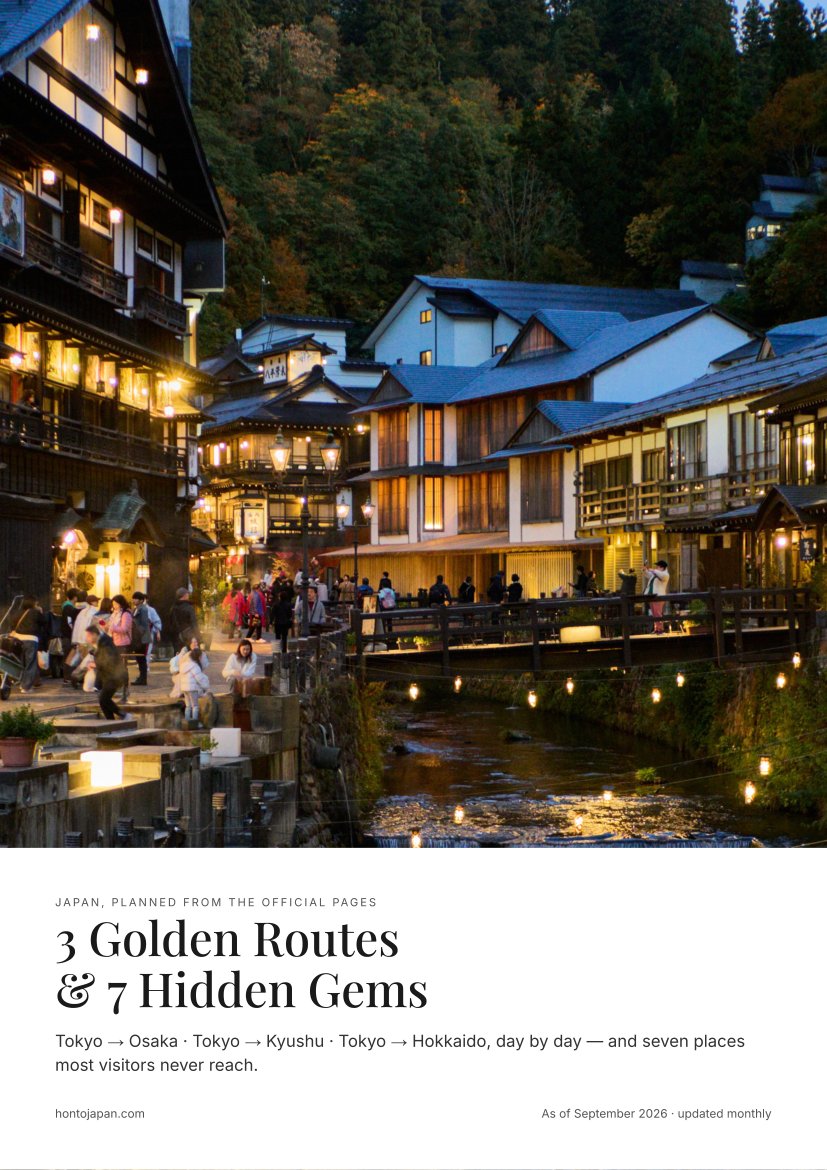
Tokyo to Osaka, Tokyo to Kyushu, Tokyo to Hokkaido — day by day — plus seven places most visitors never reach.
- 12 pages, 80 photographs, every stop linked to its guide
- Every price and opening hour read from the official page
- Re-issued monthly, so it does not go stale in your inbox
Free. One email a month, plus the rare change that matters. Unsubscribe with one click in any email. By subscribing you agree to our privacy policy.