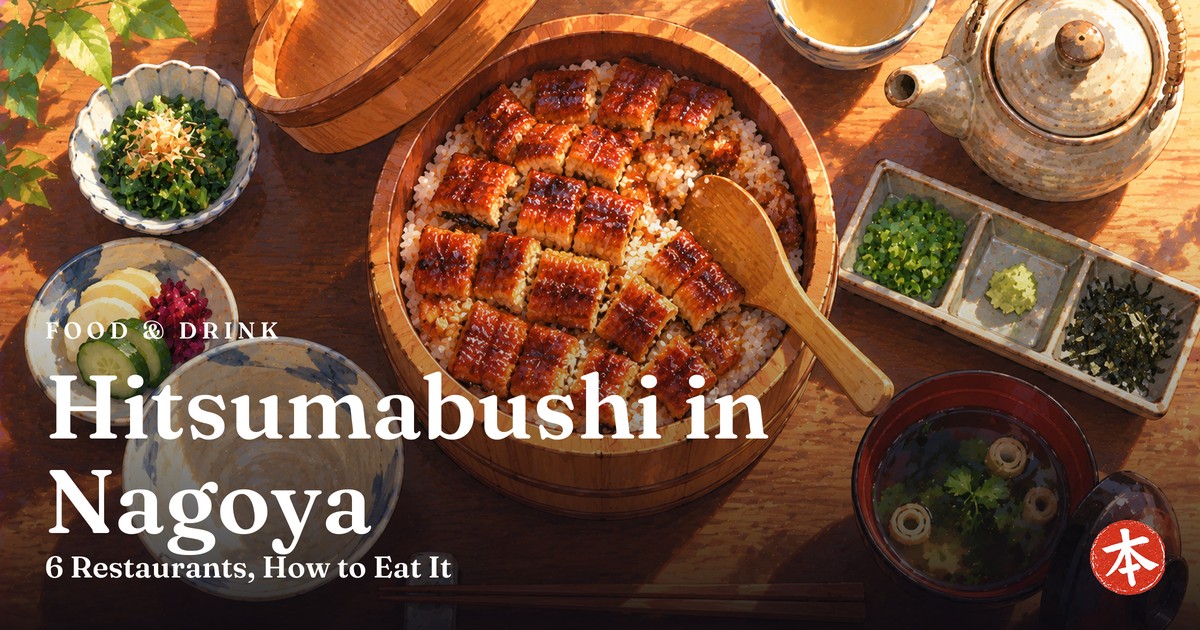
Hitsumabushi is Nagoya’s way of serving eel: grilled eel, cut into small pieces, on rice in a wooden tub, eaten in stages. You scoop it into a bowl and eat it plain, then with condiments, then with broth or tea poured over it. In Nagoya a regular serving costs from 3,100 yen to 5,640 yen at the six restaurants here, and the top grades go up to 11,050 yen.
This page covers six hitsumabushi restaurants and reports only what each says on its own website: prices, branches, hours, booking, queues, payment and English menus, plus how each tells you to eat it. It is not a ranking. The biggest difference is booking: at the restaurant that holds the hitsumabushi trademark, you cannot book for hitsumabushi at all.
Hitsumabushi in Nagoya at a glance
| Restaurant | Area | Regular hitsumabushi | Booking | Payment | English |
|---|---|---|---|---|---|
| Atsuta Horaiken | Atsuta, Sakae | 4,950 yen with tax | Phone only; not for hitsumabushi alone | Cards; no QR at 2 branches | English page is out of date |
| Ibasho (Nishiki 3-chome) | Sakae | 3,870 yen, as listed | 5 people or more | Cash, cards | English menu PDF |
| Unagi Shirakawa | 4 branches incl. Nagoya Station | 3,100 yen with tax | Phone, online, web waitlist | Cash, cards, IC, QR | English menu in store |
| Hitsumabushi Nagoya Bincho | Nagoya Station, Sakae, Nagoya Castle | 3,980 yen, as listed | Online, phone | Not listed | English site (older prices) |
| Maruya Honten | Nagoya Station (3 branches) | 4,550 yen, as listed | None at the JR branch | Cards incl. UnionPay | No official English menu found |
| Sumiyaki Unafuji | Showa-ku, Nagoya Station | 5,640 yen with tax (jo grade) | Online, 2 people or more | Cash, cards, e-money, QR | English menu at each branch |
Prices as of September 28, 2026. Portions are not the same from one restaurant to the next, so the table shows the cheapest regular serving at each, not a like-for-like comparison. Check the official site before you go.
What is hitsumabushi, and who invented it?
What exactly is hitsumabushi?
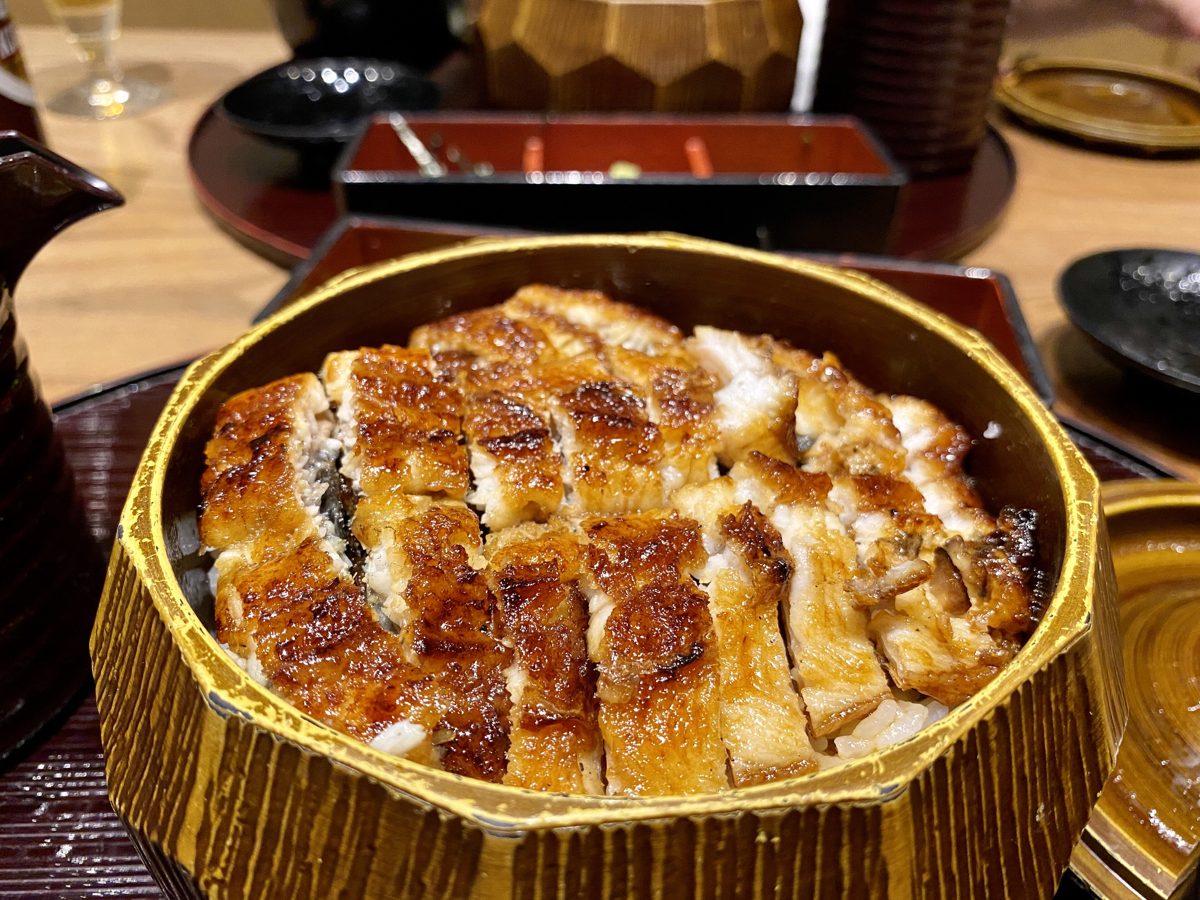
Atsuta Horaiken defines it as a dish of finely chopped grilled eel, cooked kabayaki style, mixed over rice. Ibasho describes its version layer by layer: rice with sauce on it, finely cut nori seaweed on top, and chopped grilled eel on top of that, all in the tub, with green onion, wasabi and pickles on the side. Hitsumabushi Nagoya Bincho grills its eel without steaming it first, a style called jiyaki, over a strong fire held at a distance, and notes that this is uncommon in the Kanto region around Tokyo.
Where does the name hitsumabushi come from?
Atsuta Horaiken explains it as mixing eel and rice together in a large ohitsu, a wooden rice tub, the mixing being mabusu. It adds that the tub is now a single serving for one person and that the meal has settled into a style that ends as ochazuke, rice with broth or tea poured over it.
Who invented hitsumabushi?
Two restaurants in this guide make claims, and we are not deciding between them. Atsuta Horaiken, founded as a ryotei restaurant in 1873, says the name hitsumabushi is its registered trademark. Ibasho, founded in 1909, says hitsumabushi began in Nagoya in the Taisho era and that Ibasho is considered one of the restaurants where it originated. Each is the restaurant’s own account.
How to eat hitsumabushi: three servings, sometimes four
How to eat hitsumabushi, step by step
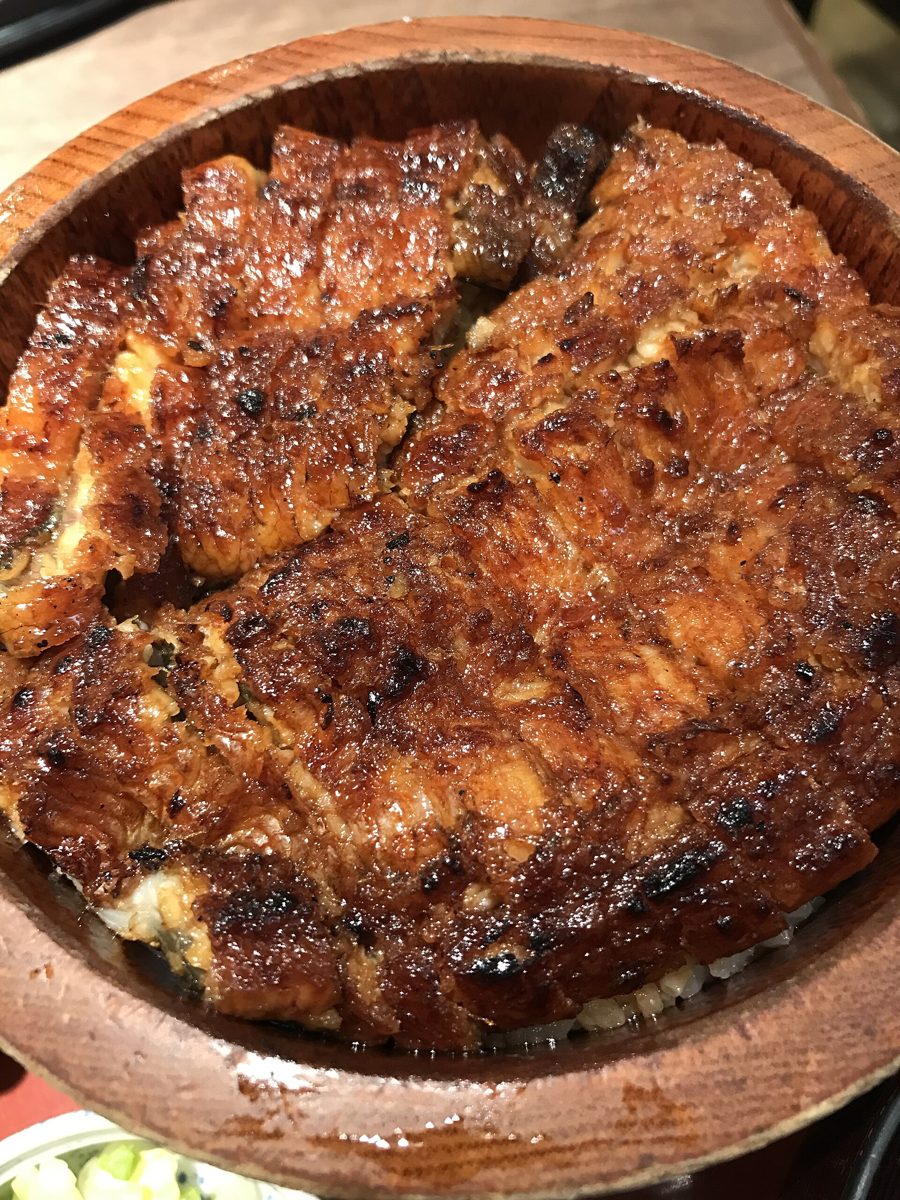
Every one of the six restaurants publishes the same basic order. Atsuta Horaiken puts it most simply: eat the first bowl as it is to taste the eel, add the condiments to the second, make the third into ochazuke, and eat the rest whichever way you liked best. Bincho draws it with numbered dishes: use the rice paddle to move hitsumabushi from the tub into your rice bowl, eat it plain, then with wasabi and rinsed green onion, then add those and chopped nori and pour the broth over it. Unagi Shirakawa says the order and how much you take each time are up to you.
Why does Unafuji say four servings?
Sumiyaki Unafuji divides the tub into quarters. Its English menu says to enjoy the first as it is, the second with spring onion and wasabi, and to pour the dashi broth over the third. The fourth is a repeat of your favorite way.
Broth or green tea for the last serving?
This is where the restaurants differ. Ibasho pours sencha, green tea, over its third serving, with a little green onion and wasabi, and says to add sauce if you want a stronger taste. Unagi Shirakawa uses what it calls suicha, which it says is not ordinary Japanese tea but a light dashi base with added aroma. Bincho, Unafuji and Maruya Honten all describe dashi broth, and Atsuta Horaiken serves its hitsumabushi with dashi.
What comes with hitsumabushi, and can I get more sauce?
At Atsuta Horaiken, hitsumabushi comes with a clear soup, pickles, condiments and dashi, and it says you can ask for more sauce. Maruya Honten lists every hitsumabushi with soup. Bincho lists its jo grade with eel liver soup and its tokujo with liver soup and pickles. At Ibasho, soup is 250 yen extra, with a choice of eel liver or shinjo dumpling. Maruya suggests condiments such as shiso leaf for its second bowl.
What if our group orders several servings?
At Ibasho, two or more servings of hitsumabushi come together in one large tub, one portion per person ordered. It says you can ask for individual tubs instead.
The historic hitsumabushi restaurants in Nagoya
Atsuta Horaiken: the hitsumabushi trademark, and no bookings for it
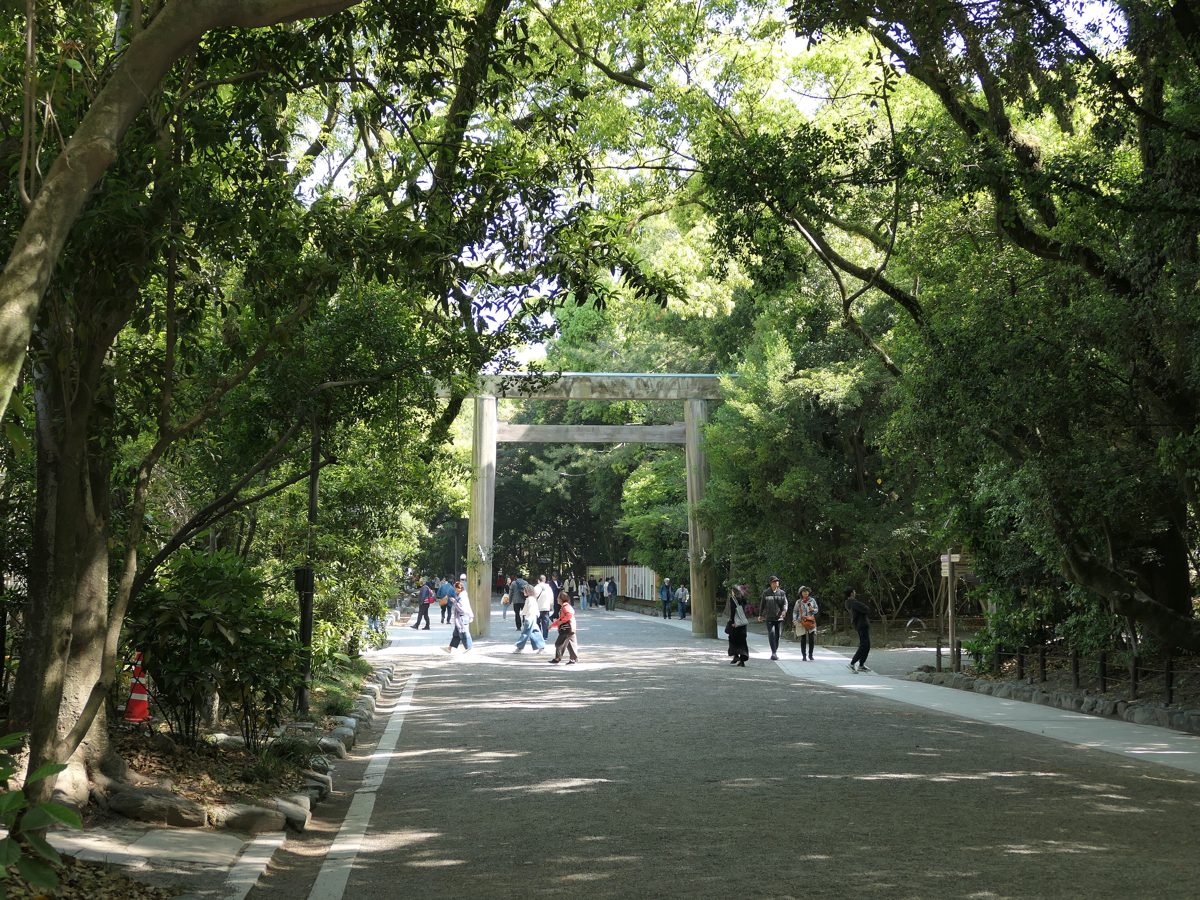
Atsuta Horaiken calls itself a long-established eel restaurant that opened as a ryotei in 1873. It has three restaurants where you can eat, all with the same price: hitsumabushi 4,950 yen and the ichihan, with 1.5 times the usual eel and rice, at 6,600 yen. It says all prices include tax. The main restaurant, Jinya, is in Atsuta-ku, seven minutes’ walk from Atsuta Jingu Temmacho Station, and the Jingu branch is three minutes from the same station. The Matsuzakaya branch is on the 10th floor of the Matsuzakaya Nagoya south building in Sakae, two minutes from Yabacho Station. A shop in the Matsuzakaya basement sells takeout only. Horaiken also serves kaiseki courses; our kaiseki guide explains that style of meal.
Hours, by last order: the main restaurant takes orders until 14:00 at lunch and 20:30 at dinner, from 11:30 and 16:30, and closes on Wednesdays and the second and fourth Thursdays. The Jingu branch runs 11:30 to 14:30 and 16:30 to 20:30, closing on Tuesdays and the second and fourth Mondays. Both open on national holidays and take a substitute day off. The Matsuzakaya branch runs 11:00 to 14:30 and 16:30 to 20:30 on weekdays and 11:00 to 20:30 at weekends, closing on Tuesdays. All three say they may stop accepting guests early when busy.
Booking is the hard part. Horaiken takes bookings by phone only, and it says it cannot book you in even if you have decided what to order; bookings are for kaiseki courses, three days ahead. The one exception is the Jingu branch, which takes a few seat-only bookings for weekday lunch and dinner and weekend and holiday dinner. There are no numbered tickets: staff at the door take your name and party size. At the Jingu branch, reception basically starts at 11:15 on weekdays and 10:15 at weekends. Kaiseki courses carry a 10 percent service charge.
The main and Jingu restaurants take Visa, AMEX, JCB, Diners and other cards and e-money, but not QR code payments. The Matsuzakaya branch does not take e-money and accepts some QR code payments. Horaiken’s site has an English page, but when we read it, it showed older hours in Japanese that differ from the Japanese branch list, so use the branch list.
Ibasho, Nishiki 3-chome: one restaurant since 1909
Ibasho says it has been a single restaurant in Nishiki 3-chome since 1909, with no sister restaurants. Its hitsumabushi is listed at 3,870 yen, as shown on the official site, which does not say whether tax is included; soup is 250 yen more. It revised its prices from March 31, 2025. It is at Nishiki 3-13-22, Naka-ku, three minutes from Sakae Station, exit 1. Last orders are 14:30 for lunch, from 11:00, and 20:00 for dinner, from 16:00. It closes on Sundays and the second and third Mondays, and posts unscheduled closures on Instagram.
It takes bookings only for five people or more, and not always in busy seasons, and says even booked guests may have to wait. It takes cash or credit cards and publishes menus in English, Chinese and Korean as PDFs; we could not read the prices in the English PDF, so go by the Japanese menu. One warning: there is a separate restaurant with a similar name, Ibasho Honten, at Sakae 3-8-121, with its own website. The Nishiki 3-chome Ibasho says people often confuse the two and asks visitors to check before coming. This guide covers only the Nishiki 3-chome restaurant.
Hitsumabushi at Nagoya Station
Maruya Honten: inside JR Nagoya Station, no bookings
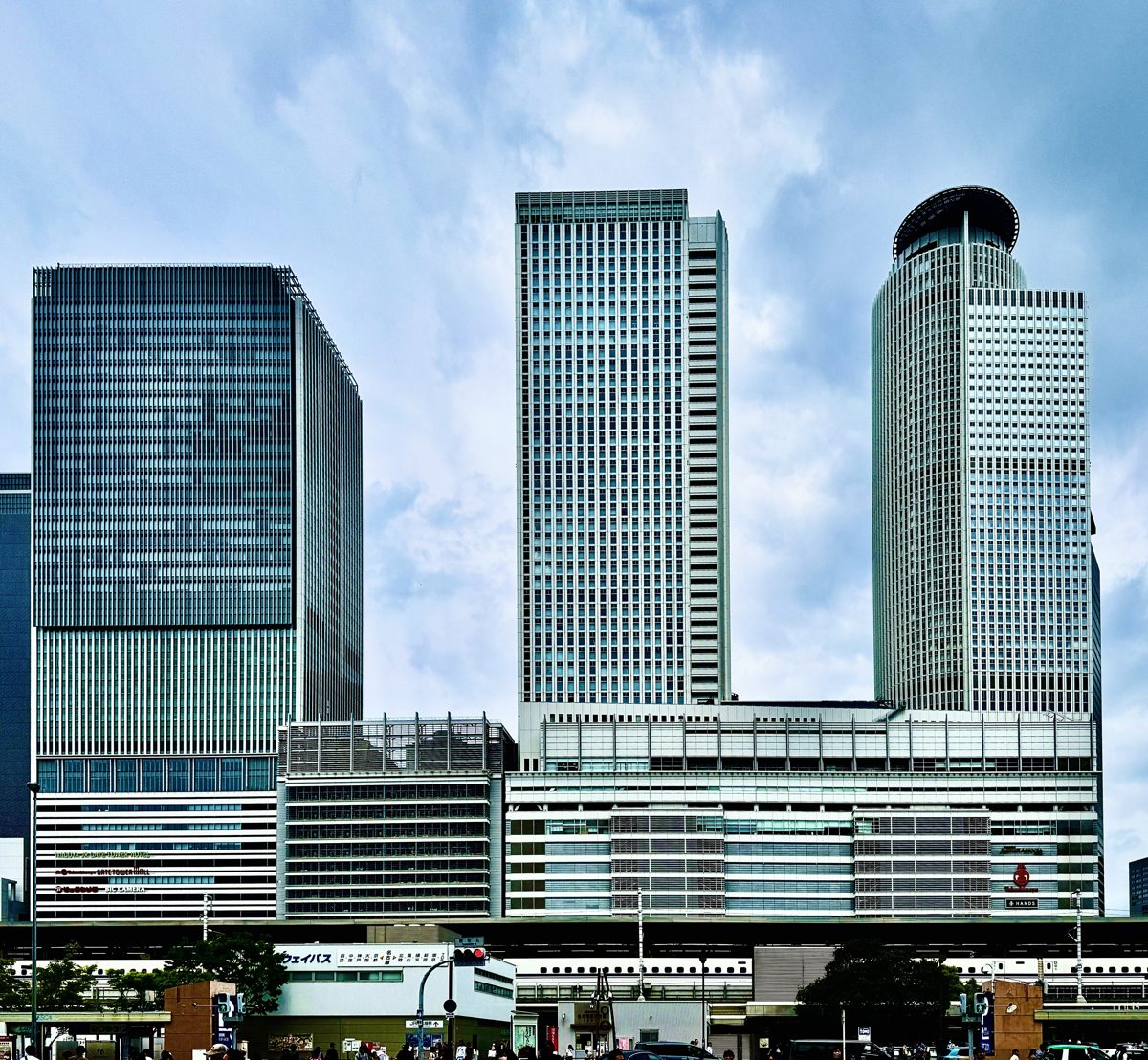
Maruya Honten has three branches at Nagoya Station with the same prices: maru hitsumabushi 4,550 yen, jo 5,250 yen, tokujo 7,650 yen and a mini at 3,350 yen, each with soup. The branch pages say product prices include tax, but that line sits right after a list of gift items, so it is not clear whether it covers the restaurant menu; read these as the prices listed. Prices differ by branch: its Tenpaku main restaurant lists the jo at 4,850 yen.
The JR Nagoya Station branch is inside the station, on Umaimon-dori on the Shinkansen side. It opens 11:00 to 22:00, last order 21:30, every day the facility is open, is non-smoking, and takes no bookings. The Meichika branch opened on September 4, 2026, one minute from the JR Sakura-dori side exit 8 and connected directly to the Higashiyama and Sakura-dori subway lines; it opens 10:00 to 22:00, last order 21:30, with no closing day, and its site listed a temporary phone number when we read it. The Meieki 3-chome branch is on the fifth floor of GEMS Meieki 3-chome, three minutes north of exit 10 of the Unimall underground mall, open 11:00 to 23:00, last order 22:00; its closing days are not listed, and its booking links go to third-party platforms.
Maruya’s JR and Meichika branch pages list Visa, Mastercard, UC, UFJ, Diners Club, American Express, JCB and UnionPay. Its branch pages link to an English page on a third-party site, and we could not find an official English menu.
Hitsumabushi Nagoya Bincho: next to the Shinkansen, and at Nagoya Castle
Bincho has four branches in Nagoya, all listing hitsumabushi at 3,980 yen. The Esca, Lachic and Dai Nagoya Building menus also list jo 5,100 yen with eel liver soup, tokujo 6,750 yen with liver soup and pickles, gokujo 8,850 yen and kyukyoku 11,050 yen, as listed on its Japanese pages. Those pages do not say whether tax is included. Its English site shows lower, older prices, so do not rely on them. At the Esca branch, a set for children aged 10 and under is 1,700 yen. Book online through the booking link for each branch, or by phone, where it says an AI takes bookings.
The Esca branch is in the Esca underground mall, one minute from the Shinkansen side of JR Nagoya Station, open 11:00 to 15:00 and 17:00 to 22:00, with last orders at 14:30 and 21:00, and closes when Esca does. The Dai Nagoya Building branch, on the third floor, connects directly to the subway’s Nagoya Station, keeps the same hours with dinner last order at 21:30, and has private rooms for 4 to 10. The Lachic branch is on the seventh floor of Lachic in Sakae, three minutes from Sakae Station on the Higashiyama Line, open 11:00 to 15:30 and 17:00 to 22:00. The Kinshachi Yokocho branch, ten minutes from exit 7 of Nagoya-jo Station, opens 10:30 to 17:30 on weekdays, last order 16:00, and 10:30 to 15:30 and 16:30 to 19:00 at weekends and holidays, and closes when Nagoya Castle does; our Nagoya Castle guide covers the castle itself. Bincho’s original restaurant is outside Nagoya city, so it is not included here.
Hitsumabushi you can book across Nagoya
Unagi Shirakawa: four branches, a web waitlist and the cheapest regular serving
Unagi Shirakawa has the lowest regular price here: hitsumabushi 3,100 yen with tax, with about three bowls of rice. The jo is 3,800 yen, the tokujo 5,600 yen with 1.5 times the eel of the jo, and a mini 2,160 yen with about two bowls of rice. It has five shops in Nagoya; you can eat at four, Joshin main restaurant, Imaike Gas Building, Sakae Gas Building and Meieki, and the JR Nagoya Takashimaya shop is takeout only. A few times a year it holds an eel festival with special prices, when it takes no seat bookings.
The Meieki branch is on the first floor of Across Cube Nagoya, about six minutes’ walk from Nagoya Station, open 11:00 to 14:30 on weekdays and 11:00 to 15:00 at weekends and holidays, and 17:00 to 21:30 every day, closed on Wednesdays. The Sakae Gas Building branch is on basement level 1, about five minutes from Sakae Station, closed on Thursdays. The Joshin main restaurant is right by Joshin Station on the Tsurumai Line and closes on Thursdays; the Imaike Gas Building branch connects to Imaike Station and closes on Wednesdays. Shirakawa closes on those days even when they fall on a national holiday.
Every branch takes bookings by phone, 10:00 to 20:00, or online. Without a booking, take a number from the ticket machine at the door or join the same-day web waitlist on the official site; at Joshin and Meieki, numbers start from 10:45 and 16:45. It also publishes a crowd-forecast calendar. It takes cash, Visa, Mastercard, JCB, AMEX, Diners, transit e-money, PayPay, d barai, au PAY and Rakuten Pay. Its site is in Japanese, English and Chinese, and it has English, Chinese and Korean menus in store that you can point at to order.
Sumiyaki Unafuji: premium grades only, and a four-step way to eat
Sumiyaki Unafuji starts at the jo grade. At its main restaurant, jo hitsumabushi is 5,640 yen, jo with eel liver 7,390 yen, tokujo 7,840 yen and tokujo with liver 9,590 yen, and it says prices include tax and were revised in April 2025. The English menu for the Meieki branch lists the same four prices. It has seven restaurants in Aichi and says menus differ by branch.
The main restaurant is in Shirogane, Showa-ku, eight minutes’ walk from Tsurumai Station on the Tsurumai Line, open 11:00 to 14:30 and 17:00 to 20:30, with last orders at 14:00 and 20:00. The Meieki branch is on basement level 1 of the Nagoya Mitsui Building North, five minutes from JR Nagoya Station and two from Kintetsu and Meitetsu Nagoya, open 11:00 to 21:00, last order 20:30. Both close irregularly.
Unafuji takes bookings from two people, online, and suggests phoning a branch during the day if you cannot find a table. The main restaurant charges 100 percent of the food for a same-day cancellation. At Meieki, a private room costs 1,500 yen for 90 minutes at lunch and 3,000 yen for 120 minutes at dinner; canceling from three days to the day before costs 50 percent of the room fee, and on the day, 100 percent of the food and room. It takes cash, cards, e-money and QR code payments, and every branch has an English menu. Photos of your own meal are fine, but not of other guests.
What hitsumabushi costs in Nagoya
Hitsumabushi price ladders, as published
| Restaurant | Hitsumabushi grades | Tax, per the site |
|---|---|---|
| Unagi Shirakawa | Mini 2,160 / regular 3,100 / jo 3,800 / tokujo 5,600 yen | With tax |
| Ibasho | 3,870 yen; soup +250 yen | Not stated |
| Bincho | 3,980 / jo 5,100 / tokujo 6,750 / gokujo 8,850 / kyukyoku 11,050 yen | Not stated on the Japanese pages |
| Maruya Honten (Nagoya Station) | Mini 3,350 / maru 4,550 / jo 5,250 / tokujo 7,650 yen | Unclear |
| Atsuta Horaiken | 4,950 / ichihan 6,600 yen | With tax |
| Sumiyaki Unafuji | Jo 5,640 / tokujo 7,840 yen; with liver 7,390 / 9,590 yen | With tax |
Why is it hard to compare hitsumabushi prices?
Because the portions are not the same. Shirakawa’s regular serving has about three bowls of rice and its mini about two; Horaiken’s ichihan has 1.5 times the usual eel and rice; Unafuji has no grade below jo; and what comes with it varies, from soup, pickles and dashi at Horaiken to soup at 250 yen extra at Ibasho.
Is tax included in hitsumabushi prices?
Atsuta Horaiken, Unagi Shirakawa and Unafuji say their prices include tax. Ibasho and Bincho do not say either way on the pages we read, and Maruya Honten’s tax line is placed where it may refer only to gifts.
Booking, queuing and paying for hitsumabushi in Nagoya
Can I book hitsumabushi online?
Yes at three of the six. Unagi Shirakawa takes bookings at every branch by phone or online, Bincho books online from each branch page or by phone, and Unafuji books online for two or more. Ibasho books only for five or more. Atsuta Horaiken takes phone bookings for kaiseki, not for hitsumabushi alone, apart from a few seat-only bookings at its Jingu branch. Maruya Honten’s JR Nagoya Station branch takes none.
Is there a numbered ticket or waitlist?
Unagi Shirakawa has both a ticket machine at the door and a same-day web waitlist. Atsuta Horaiken hands out no numbered tickets; staff at each restaurant take your name and party size at the door, and it may stop taking guests early when busy. None of the six publishes a waiting time.
Which hitsumabushi restaurants have an English menu?
Unagi Shirakawa has English, Chinese and Korean menus in store. Unafuji has English, Chinese and Korean menus at each branch. Ibasho publishes English, Chinese and Korean menu PDFs. Bincho has an English website with older prices. Atsuta Horaiken has an English page with older information, and does not say whether it has an English menu. Maruya Honten links only to a third-party English page.
Can I pay by card or QR code?
Cards are listed at Horaiken’s main and Jingu restaurants, Ibasho, Shirakawa, Unafuji and Maruya’s JR and Meichika branches. Bincho’s pages do not list payment methods, and Horaiken’s Matsuzakaya branch lists only its e-money and QR rules. Shirakawa and Unafuji take QR code payments; Horaiken’s main and Jingu restaurants do not.
Which hitsumabushi restaurant in Nagoya suits you?
If you have a Shinkansen to catch, Maruya Honten inside JR Nagoya Station or Bincho’s Esca branch one minute away; for the train itself, see our Green Car guide. If you want to book and avoid the door queue, Unagi Shirakawa, which also has the lowest regular price. For the restaurant that holds the hitsumabushi trademark, Atsuta Horaiken, if you can go without a booking. For a single restaurant open since 1909, with green tea for the last serving, Ibasho. For the jo grade and up with a four-step way to eat, Unafuji. To find your way between Nagoya Station, Sakae and Atsuta, use our Nagoya map guide, and if you are also eating eel in Tokyo, see our unagi in Tokyo guide.
Frequently asked questions
How much does hitsumabushi cost in Nagoya?
How do you eat hitsumabushi?
Who invented hitsumabushi?
Can I book a table for hitsumabushi in Nagoya?
Where can I eat hitsumabushi at Nagoya Station?
Is there an English menu?
Can I pay by card for hitsumabushi?
Can I bring children to eat hitsumabushi?
Bottom line (2026): A regular hitsumabushi in Nagoya costs from 3,100 yen with tax at Unagi Shirakawa to 5,640 yen at Unafuji, and Bincho’s top grade is 11,050 yen. Eat it plain, then with condiments, then with broth or tea poured over it. Atsuta Horaiken, which holds the trademark, books by phone only and not for hitsumabushi alone; Shirakawa has a same-day web waitlist.
Sources
Every price and rule on this page is from the restaurants’ own websites and the menu PDFs on them: Atsuta Horaiken, Atsuta Horaiken main restaurant menu, Atsuta Horaiken branches, Atsuta Horaiken history and how to eat, Atsuta Horaiken FAQ, Ibasho, Ibasho how to eat, Unagi Shirakawa, Unagi Shirakawa menu, Unagi Shirakawa FAQ, Hitsumabushi Nagoya Bincho, Bincho Esca, Bincho Dai Nagoya Building, Bincho Lachic, Bincho Kinshachi Yokocho, Bincho how to eat, Maruya Honten, Maruya JR Nagoya Station, Maruya Meichika, Maruya Meieki 3-chome, Sumiyaki Unafuji, Unafuji main restaurant, Unafuji Meieki, Unafuji for first-time guests, Unafuji booking, all read on September 28, 2026. Menus, prices and hours change, so confirm on the official site before you go.
Some links on this page may be affiliate links, which means we may earn a commission if you book or buy through them — at no extra cost to you. See our affiliate disclosure.
Tokyo to Osaka, Tokyo to Kyushu, Tokyo to Hokkaido — day by day — plus seven places most visitors never reach.
- 12 pages, 80 photographs, every stop linked to its guide
- Every price and opening hour read from the official page
- Re-issued monthly, so it does not go stale in your inbox
Free. One email a month, plus the rare change that matters. Unsubscribe with one click in any email. By subscribing you agree to our privacy policy.