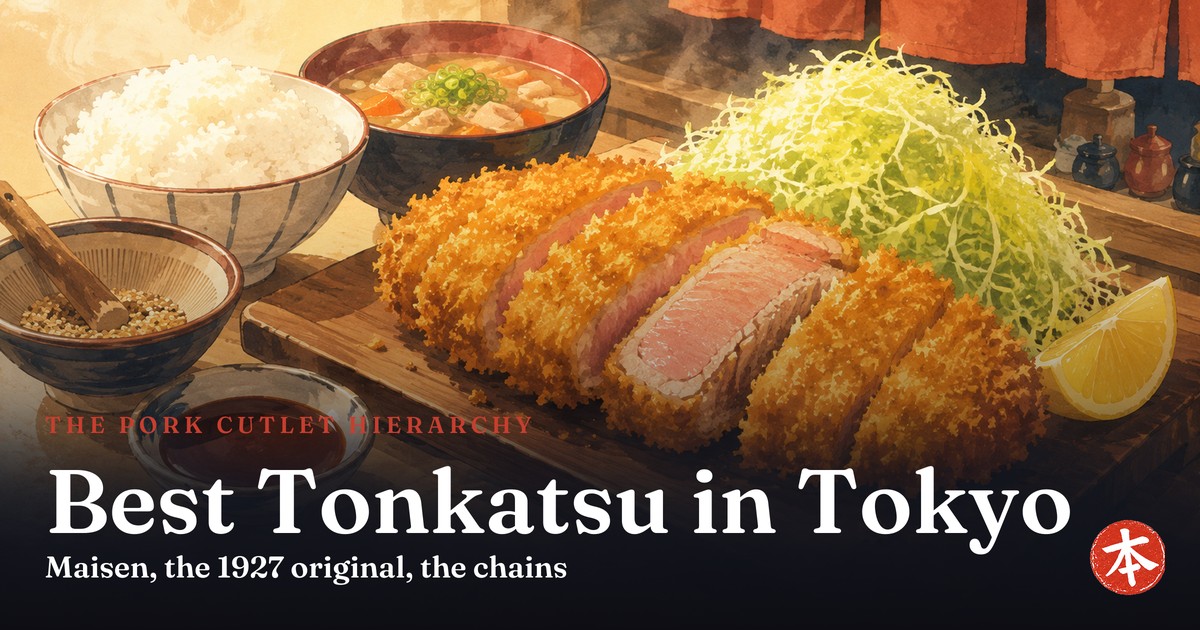
Tonkatsu — a thick pork cutlet in whisper-light panko, deep-fried and laid over shredded cabbage — is Tokyo comfort food at its most perfected, and the city's hierarchy runs from ¥1,500 chain sets to century-old Ginza basements. The problem with the English internet's "best tonkatsu" lists: half the operating details are folklore. This guide rebuilds the map from the restaurants' own official pages — including a domain trap, a just-announced closure, and the shops famous enough that they don't bother with websites at all.
Tokyo tonkatsu at a glance
| The classic | Maisen Aoyama Honten (est. 1965, ex-bathhouse) — 11:00–22:00, no closing days · sets ~¥2,000s–3,000s · 🚨 lunch menu suspended Aug 11–16, 2026 (official) |
|---|---|
| The original | Ginza Bairin (est. 1927 — "Ginza's first tonkatsu specialist," official) — hire ¥3,400 / rosu ¥3,600 / katsudon ¥1,400 · no reservations, officially |
| The chains | Wako ¥1,530–1,700 (71 Tokyo stores) · Saboten ¥1,760 gozen · Katsukura (Kyoto-style — 🚨 Shinjuku flagship closed Sep 2026–Mar 2027) |
| The cult tier | Marugo (Akihabara) · Narikura (Minami-Asagaya) — no official websites; verify by phone or line up |
| The takeaway icon | Maisen katsu sando — born from a Takarazuka actress's between-acts request (official origin story) · sold at Tokyo Station Gransta & depachika |
| Dietary reality | 🚨 Zero official halal/vegetarian accommodation across every shop in this guide |
A Japanese countdown of seven standout tonkatsu shops in Tokyo — useful for calibrating what the local ceiling looks like beyond the famous names:
Maisen: the bathhouse classic (and its sandwich legend)
What to know before the Aoyama pilgrimage
Maisen's Aoyama honten fills a converted pre-war bathhouse three minutes from Omotesando's A2 exit — high ceilings, unhurried service, and the official house creed since 1965: tonkatsu "tender enough to cut with chopsticks." The official practicals: 11:00–22:00 (last order 21:00), no regular closing days, weekend and holiday reservations accepted only for banquet courses — regular tables are first-come, so arrive at open or ride the mid-afternoon lull. Current official pricing sits in the ¥2,000s–3,000s for premium sets (the kurobuta-and-seafood summer set is officially ¥2,650). And a timely official notice: August 11–16, 2026, the cheaper lunch menu is suspended — grand menu only. If your Obon-week plan was a budget Maisen lunch, reroute or re-budget.
The Takarazuka sandwich
The katsu sando origin story is official Maisen lore: at the first shop in Hibiya, an actress from the neighboring Takarazuka theater asked for something she could eat between acts — the kitchen tucked hire-katsu between soft bread, cut it into three, and invented a national format. The modern official retail network puts it inside Tokyo Station (Gransta), the Ecute malls at Shinagawa, Ueno, Akihabara and beyond, and department basements in 15 prefectures — making it the definitive shinkansen meal. (Official pages list the where but not the price; check the counter.)
Ginza Bairin: 99 years, no reservations
Ginza Bairin opened in 1927 as — per its own official history — the first tonkatsu specialist in Ginza, and it still runs like a shop with nothing to prove: a basement room at Ginza 7-8-1, kurobuta pork, 11:30 open straight through to a 20:00 last order, closed only on New Year's Day. The official menu: hire teishoku ¥3,400, rosu ¥3,600 — and the institution's open secret, a ¥1,400 katsudon that delivers the century of technique at chain prices. Its reservation policy is stated bluntly in English on the official site: "We do not take reservations" — first-come, guided in order. Two footnotes from our reading: the official site's news box still shows 2024–25 notices (a low-update site, so re-confirm hours near holidays), and the brand's official outposts run from Haneda Terminal 1's food court to Waikiki and Seoul.
The chains: Wako vs Saboten vs Katsukura
Which chain fits which day?
Tokyo's reliable everyday tier, with official 2026 prices. Wako (est. 1958; official count 252 stores, 71 in Tokyo) is the department-store standard — rosu set ¥1,530, hire ¥1,700, with the official menu's own tasting notes (hire "low-fat and tender," rosu "pork's true umami"). Saboten (est. 1966 in Nishi-Shinjuku) runs slightly premium — the tender-hire gozen at ¥1,760 officially includes rice, miso soup, cabbage and pickles — with an official caveat that flagship city branches (Solamachi, Narita Airport, Shinjuku Keio) price differently. Katsukura imports the Kyoto style — grind-your-own sesame, yuzu dressing on the cabbage — but check the map before promising anyone the famous Shinjuku branch: the official August 10, 2026 notice closes Shinjuku Takashimaya for renewal from September 1, 2026 to mid-March 2027, leaving Kichijoji, Kita-Senju and Seijo as Tokyo's Katsukura options. One domain warning for link-followers: Saboten's official site is shinjuku-saboten.com — the intuitive .co.jp address belongs to an actual cactus nursery.
The bookable upscale tier — and the unbookable cult tier
Want a reserved seat and an English page? Katsukichi's Shin-Marunouchi branch runs an official TableCheck booking page, and Hirata Bokujo's KITTE Marunouchi restaurant (the famed Yamagata pork farm's own table; lunch 11:00–15:00, dinner 17:00–22:00 officially) links official booking portals — both minutes from Tokyo Station. At the other pole sit the cult names — Marugo in Akihabara, Narikura in Minami-Asagaya — shops so demand-saturated they maintain no official websites at all. We won't repeat the internet's hours and reservation claims for them, because there's no official source to check them against: treat them as phone-and-queue expeditions, and consider that half their charm.
Ordering like you've done this before
The set (teishoku) is the format: cutlet, mountain of shredded cabbage, rice, miso soup, pickles. Grind the sesame if a mortar arrives (the Kyoto style), mix in the thick sauce, dress the cutlet — and know that hot mustard, salt for the first bite, and cabbage refills are house-by-house customs, not universal rights (no chain in this guide officially promises refills, whatever blogs say). The katsu family tree extends everywhere from here: katsu curry in our curry guide, menchi-katsu street snacks in the street-food guide, and make-it-yourself versions in our cooking-class guide.
(For Japan's other great fry — batter-whisper instead of panko armor — our tempura guide runs the same honest ladder from ¥1,700 tendon lunches to the ¥30,000 counter.)
(Tonkatsu's gentler yoshoku sibling has its own temples — see omurice in Tokyo, including the ¥100 borscht tradition.)
(For another fried favorite, in Osaka: our kushikatsu in Osaka guide covers skewers from 154 yen with tax for beef at Daruma’s Shinsekai main shop to omakase skewers at Shiruhisa at 275 to 770 yen each, plus tax.)
FAQ
What’s the difference between rosu and hire tonkatsu?
Is Maisen worth the hype?
What’s the story behind the Maisen katsu sando?
What’s the oldest tonkatsu restaurant in Tokyo?
Which tonkatsu chain should I pick?
Do I need reservations for tonkatsu in Tokyo?
What about Marugo and Narikura — the famous ‘best tonkatsu’ names?
How much does good tonkatsu cost in Tokyo?
Is tonkatsu ever halal or vegetarian?
Bottom line (2026) — Tokyo’s tonkatsu hierarchy from the official pages: Maisen’s Aoyama honten (weekend reservations banquet-only, ¥2,650 summer set, katsu sando traced to Hibiya/Takarazuka), Ginza Bairin — the 1927 original that officially takes no reservations — and chains Wako, Saboten and Katsukura. No chain in the guide officially promises cabbage refills. Note Maisen’s official August 5, 2026 lunch-suspension notice.
Sources
Maisen: the official Aoyama honten page (hours, no-closing-days, banquet-only weekend reservations, the ¥2,650 summer set), the official katsu sando history page (the Hibiya/Takarazuka origin, quoted from the official telling), the official retail-store list (Gransta, Ecute, 15 prefectures) and the official August 5, 2026 lunch-suspension notice. Ginza Bairin: the official history ("Ginza's first tonkatsu specialist, 1927"), menu prices, hours and the no-reservations statement on both the Japanese and English official pages. Wako: official company profile (1958, store counts as of January 1, 2026) and menu. Saboten: the official Green House Foods site (founding, gozen pricing, the flagship-store price caveat). Katsukura: the official store list and the August 10, 2026 Shinjuku Takashimaya renewal-closure notice. Katsukichi and Hirata Bokujo: official restaurant pages and booking links. Marugo and Narikura: recorded as having no verifiable official web presence. All read August 10, 2026. The embedded video is by its creator.
Tokyo to Osaka, Tokyo to Kyushu, Tokyo to Hokkaido — day by day — plus seven places most visitors never reach.
- 12 pages, 80 photographs, every stop linked to its guide
- Every price and opening hour read from the official page
- Re-issued monthly, so it does not go stale in your inbox
Free. One email a month, plus the rare change that matters. Unsubscribe with one click in any email. By subscribing you agree to our privacy policy.