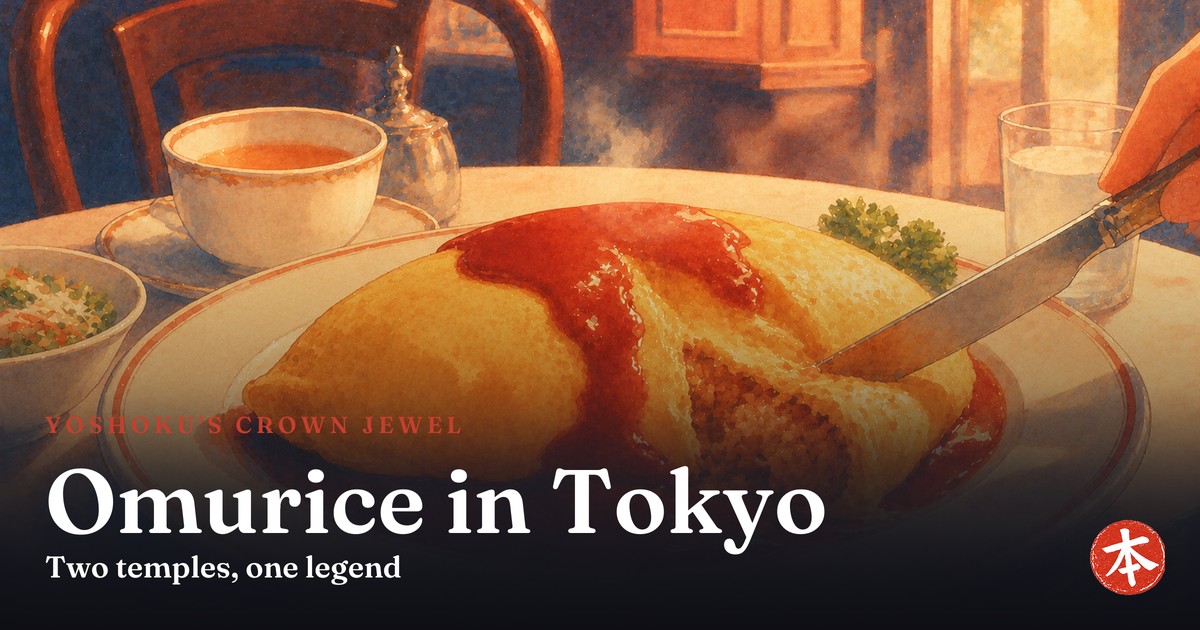
Omurice — omelet over ketchup rice — is Japanese comfort food's crown jewel, and Tokyo holds its two great temples. Taimeiken in Nihonbashi (tracing itself to 1931) serves the famous tampopo omurice, split open tableside, alongside a ¥100 borscht frozen in founding-era pricing. Shiseido Parlour in Ginza serves the dish that began as a customers'-request secret and got promoted to the grand menu. And the famous "birthplace of omurice" story? We went looking for the official source — and found a dead website. Here's what's verifiable, priced, and worth queueing for.
Tokyo omurice at a glance
| House | The dish | Official prices & hours |
|---|---|---|
| Taimeiken (Nihonbashi Muromachi 1-8-6) | Classic wrapped omurice · tampopo (Itami style), split tableside · ¥100 borscht & coleslaw | Omurice ¥2,100 · tampopo ¥2,400 · 1F Mon closed, wkdy 11:00–21:00 · 2F phone-only reservations |
| Shiseido Parlour (Ginza 8-8-3, 4–5F) | Ex-secret-menu omurice, fried parsley + tomato sauce | Price unpublished · 11:30–21:30 (LO 20:30) · Mon closed (hols open) · +10% service |
| Hokkyokusei (Osaka) | The other "original" claimant, per its own site | For the Kansai leg of the argument |
The tampopo split, performed at the source:
Taimeiken: the 1931 house and its ¥100 borscht
Which floor should you actually eat on?
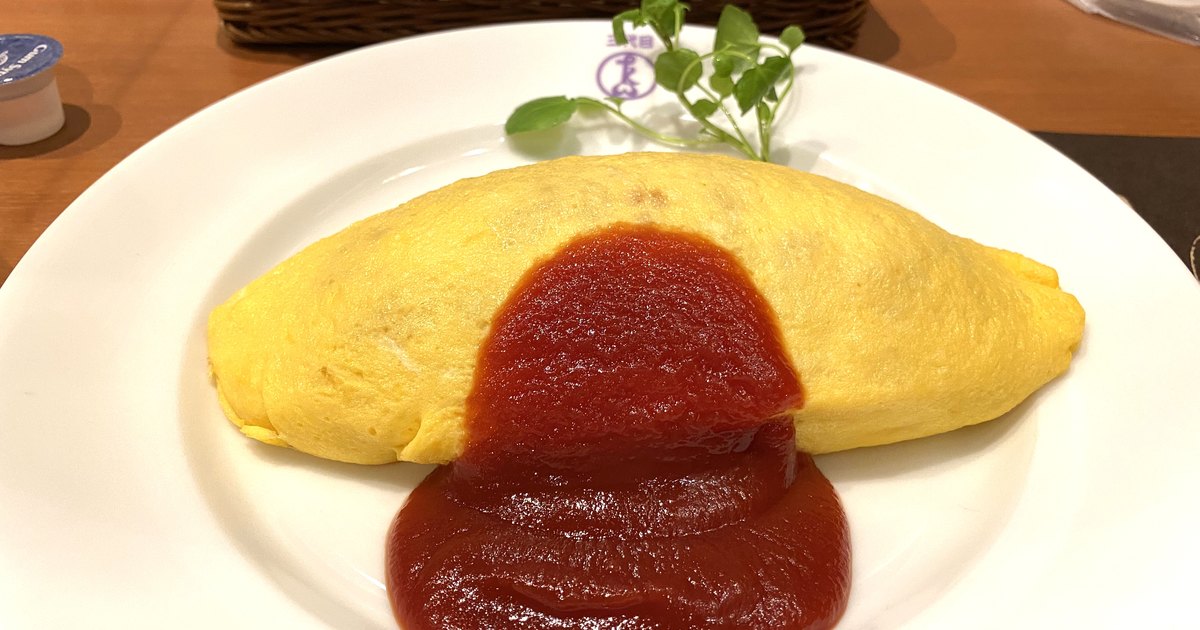
Taimeiken runs two restaurants in one building at Nihonbashi Muromachi 1-8-6 — it reopened there in April 2021, a fact older guides miss. The first floor is the institution most people want: casual, no reservations, weekdays 11:00–21:00 (last order 20:30), Sundays and holidays to 20:00, closed Mondays. Its official menu is the draw: classic omurice ¥2,100, the tampopo omurice (Itami Juzo style) ¥2,400 — created for the 1985 film Tampopo and split open at your table — up to the tampopo beef at ¥3,600, plus the founding-era sides: borscht ¥100, coleslaw ¥100. Order both; it's the house handshake. The second floor is the dressier dining room (lunch 11:30–15:00, dinner 17:00–21:00, closed Sun/Mon/holidays, cards accepted) and takes phone reservations only — with one honest caution: the official online booking page looks abandoned (its calendar stops years back and it still lists the old address), so trust the phone, not the form.
Shiseido Parlour: the secret menu that won
Why does a cosmetics company serve Tokyo's poshest omurice?
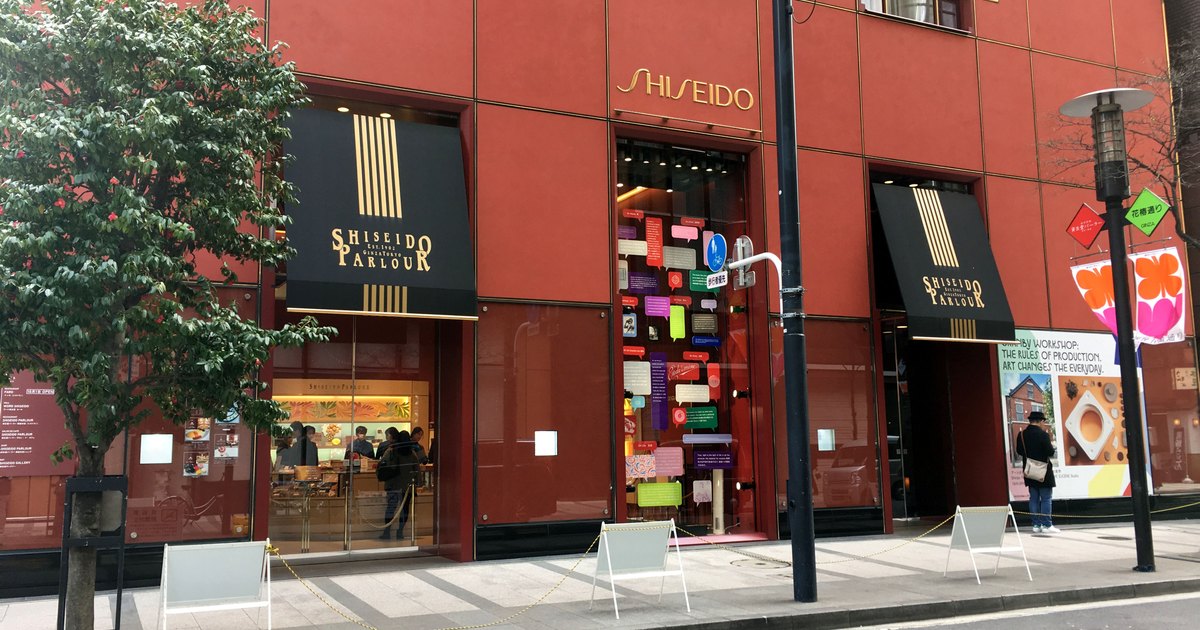
Because the restaurant came first: Shiseido Parlour opened in 1902 as Japan's pioneering soda fountain and grew into a full Western restaurant by 1928 — the cosmetics empire and the omurice share a founder city block in Ginza. The dish's official origin story is the menu's best read: an off-menu item cooked on customer request, promoted over the years to the grand menu, finished the house way with deep-fried parsley and tomato sauce, and treated internally as a chef's rite of passage. The restaurant occupies the 4th and 5th floors of the Ginza flagship (11:30–21:30, last order 20:30, closed Mondays except holidays), reserves via the official site's TableCheck link, and states its prices as tax-included plus a 10 percent service charge. The omurice's current price isn't published — treat it as a Ginza occasion, not a lunch hack.
The origin story: what we can't verify, and who claims it
Every English food blog repeats the same tale — a Ginza yoshoku house invented the dish around 1900 — and here's what happened when we chased the source: the restaurant's official website doesn't exist anymore. Every domain attributed to it is dead or parked, which means the founding claim, the date, even current opening hours have no primary source. Meanwhile in Osaka, Hokkyokusei's official site opens with "the original omurice restaurant" — a live, sourceable claim, if a self-made one. Our position: the invention is folklore with at least two claimants, and no guide quoting a confident origin has receipts. What's verifiable is better anyway — the food, priced and scheduled above. For the rest of the yoshoku family tree, our Japanese curry guide and tonkatsu guide cover the siblings, and the DIY food-tour route strings them into a day.
When should you queue — and how long will it take?
What's the least painful hour at Taimeiken?
The first floor takes no reservations, so timing is the whole strategy. The line peaks at noon sharp and again at 13:00 when the first wave turns over; arriving at 11:00 opening or after 14:00 on a weekday usually means minutes, not an hour. Sundays run shorter hours (last order 19:00), and Monday is a wall — the whole building rests. Shiseido Parlour inverts the logic: it takes reservations, so book the TableCheck slot and walk past whatever line exists. Both houses move faster solo; a party of four at Taimeiken's first floor waits for a table configuration, not just a seat.
Why omurice belongs on a Tokyo food itinerary
Yoshoku is the food story most visitors eat without noticing: Meiji-era Japan absorbing Western technique and re-engineering it into something entirely its own — the same current that produced tonkatsu, Japanese curry and hamburg steak. Omurice is that history in its gentlest form, and eating it at a house that has cooked it for nearly a century is the closest thing Japanese food offers to time travel with ketchup. Slot Taimeiken into a Nihonbashi-and-Tokyo-Station morning, or Shiseido Parlour after Ginza department-store rounds, and the pilgrimage adds zero transit to a normal sightseeing day.
FAQ
What is omurice, exactly?
What is tampopo omurice at Taimeiken?
What are Taimeiken’s hours and closing day?
Can I reserve at Taimeiken?
Why is there borscht for ¥100?
What’s special about Shiseido Parlour’s omurice?
Which restaurant invented omurice?
How much should I budget for omurice in Tokyo?
Is omurice worth a special trip for a visitor?
Bottom line (2026) — Tokyo’s omurice canon runs through two houses: 1931-founded Taimeiken, home of the knife-split tampopo omurice (¥2,400) and the ¥100 borscht, and Shiseido Parlour, where a secret-menu item became the grand menu. The often-repeated Ginza-1900 origin story cannot be verified – every domain attributed to the restaurant is dead or parked.
Sources
Taimeiken: address and 2021 reopening notice, floor-by-floor hours and closing days, menu prices (omurice, tampopo versions, borscht, coleslaw), founding history and reservation policy — all from taimeiken.co.jp official pages, including its menu and company-history pages. Shiseido Parlour: restaurant hours, closing day, address, reservation channels, the omurice origin story, 1902/1928 history and the tax-and-service-charge note — from parlour.shiseido.co.jp official pages and menu PDFs. Hokkyokusei's "original" claim: its official top page. All read on August 17, 2026. The often-cited Ginza originator has no reachable official site; nothing about it is asserted. The embedded video is by its creator.
Tokyo to Osaka, Tokyo to Kyushu, Tokyo to Hokkaido — day by day — plus seven places most visitors never reach.
- 12 pages, 80 photographs, every stop linked to its guide
- Every price and opening hour read from the official page
- Re-issued monthly, so it does not go stale in your inbox
Free. One email a month, plus the rare change that matters. Unsubscribe with one click in any email. By subscribing you agree to our privacy policy.