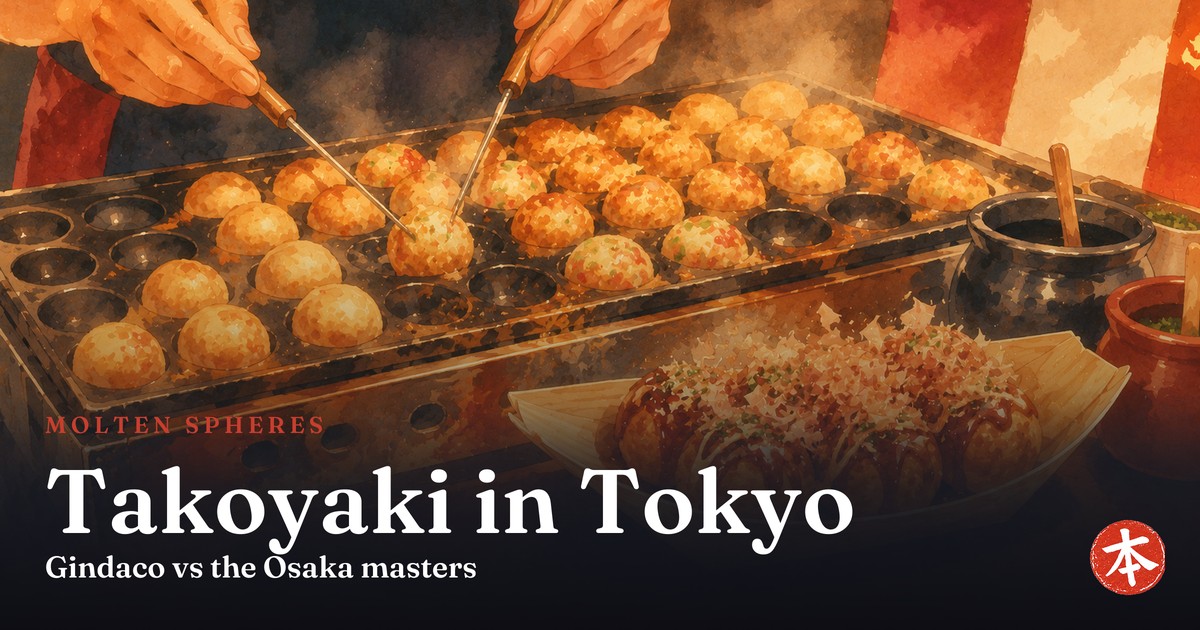
Takoyaki in Tokyo is a two-party system: Gindaco, the crisp-shelled chain with 102 branches in the capital and the genre's only officially published price (¥702 for eight), and the Odaiba Takoyaki Museum, one food-hall floor where five famous Osaka makers — including the 1933 shop that invented takoyaki and still serves it without sauce — compete pick to pick. This guide maps both, and corrects the error nearly every English guide repeats: the beloved "Wanaka Asakusa" officially does not exist.
Tokyo takoyaki at a glance
| Where | Style (official self-description) | Facts (Aug 2026) |
|---|---|---|
| Gindaco (everywhere) | "Crisp surface, molten center, bouncy octopus" | 8pc ¥702 takeout / ¥715 eat-in · 102 Tokyo stores |
| Odaiba Takoyaki Museum (Decks 4F) | 5 Osaka masters, one floor, 180 seats | Weekdays 11:00–20:00 / weekends –21:00 · pay per shop |
| Aiduya (in the museum) | The 1933 originator — dashi batter, no sauce | Hours follow facility (vary seasonally) |
| Kukuru (Shibuya ×2 · Solamachi · Odaiba · Asagaya) | "Fluffy outside, molten inside, plump big octopus" | Shibuya Food Show 10:00–21:00 · Solamachi 10:00–21:00 |
| Wanaka | Osaka copper-griddle legend | 🚨 No Tokyo stores — official statement |
The craft at full speed — a champion griddle hand at work:
The everyday answer: Gindaco's crisp empire
Why does the purist argument not matter here?
Gindaco's official identity is unapologetic: "surface crisp, center molten, octopus bouncy" — a shell engineered with oil on the griddle, which Osaka traditionalists regard roughly as New Yorkers regard deep-dish pizza. The numbers make the counterargument: 102 branches inside Tokyo on the official store locator, and the genre's only published price — the classic 8-piece at ¥650 plus tax: ¥702 to go, ¥715 eating in, with official caveats that some items vary by branch and stadium outlets price separately. Hours are per-location (mall stores follow the mall), so trust the official locator over any blog's. As the reliable, everywhere, station-adjacent version of the dish, it has no rival — the argument is only ever about whether crunch belongs.
The pilgrimage: five Osaka masters on one Odaiba floor
What's actually in the "museum"?
Food hall, not exhibits: the Odaiba Takoyaki Museum on the 4th floor of Decks Tokyo Beach gathers, in the facility's official words, five Osaka-approved famous shops around 180 shared seats — Dotonbori Kukuru (the big-octopus modern classic), Aiduya (the originator — below), Akaoni, Imotako and Yamachan (Abeno's dashi-batter specialist whose balls officially need nothing added). Official hours: 11:00–20:00 weekdays, 11:00–21:00 weekends, last orders 30 minutes before, with posted special hours for August 8–16, 2026. You pay shop by shop — no admission fee is listed, though the "free entry" phrasing in guides isn't an official claim. Strategy: two people, three shops, one boat each — the progressive tasting is the point of the place.
The history lesson: Aiduya, sauceless since the beginning
Why would anyone skip the sauce?
The official record is satisfyingly exact: Aiduya was founded in 1933 by Tomekichi Endo, and takoyaki was born two years later — making the shop in the Odaiba hall a direct line to the dish's invention. The style still argues its origin: officially, Aiduya's takoyaki is meant to be eaten plain — no sauce, no mayo — because the dashi-loaded batter carries the seasoning, a radicalism that reads as minimalism until you taste why. (One transparency note: Aiduya's own site lists longer hours than the facility's official schedule; we defer to the facility and note hours vary seasonally.) Try the originator first, sauce-laden modernity second — the contrast is the education. It also travels better in summer: sauceless takoyaki holds its dignity in Odaiba's August heat far longer than the mayo-drenched kind, a practical point the originator would surely claim was the plan all along.
The Asakusa myth, and where Kukuru actually is
Now the correction: Wanaka — the Sennichimae legend — has no Tokyo store. Its official store list covers Osaka, Fukuoka and Hokkaido, and the site states explicitly that no shops exist outside that list, licensed or franchised. The "Wanaka Asakusa" lingering in English guides and map pins is, by the company's own declaration, not theirs. What central Tokyo verifiably has is Kukuru: official counters at Shibuya's Tokyu Food Show (10:00–21:00) and Hikarie ShinQs (11:00–21:00), Tokyo Solamachi under the Skytree (10:00–21:00), the Odaiba hall, and a JR Asagaya station shop running to 22:00 — the "fluffy outside, molten inside" Dotonbori style, officially described, without the shinkansen ticket. For the wider grazing itinerary, our street-food guide places takoyaki among its peers, the udon guide covers the sit-down flour arts, and a food tour hands the sequencing to a local.
FAQ
What is takoyaki, exactly?
How much does takoyaki cost in Tokyo?
Is Gindaco actually good, or just everywhere?
What is the Odaiba Takoyaki Museum?
Who invented takoyaki?
Is there a Wanaka branch in Asakusa?
Where can I eat takoyaki in Shibuya or Asakusa then?
What’s the difference between Tokyo-style and Osaka-style takoyaki?
Any practical tips for the Odaiba museum run?
Is takoyaki a meal or a snack?
Bottom line (2026) — Tokyo does takoyaki two ways: 102 Gindaco branches pouring the crisp-shelled standard at ¥702 (¥650+tax), and a single Odaiba floor where five famous Osaka shops compete side by side — including Wanaka, whose official site states it has no other shops, and the 1933 originator that serves takoyaki sauceless. Prices and store lists come from each brand’s official pages.
Sources
Gindaco's prices (¥650+tax / ¥702 / ¥715), texture self-definition, 102-store Tokyo count and branch-variation caveats: its official menu and store-search pages. Wanaka's store list and its official no-other-shops statement: its official site. Kukuru's Tokyo locations and hours and its style tagline: its official shop pages (note the brand's site moved to its own domain from the old parent-company URL). The Odaiba Takoyaki Museum's five-shop lineup, 180 seats, official hours and the August 8–16 special-hours notice: Decks Tokyo Beach's official facility pages. Aiduya's 1933 founding, the invention timeline and the no-sauce philosophy: its official history and menu pages (its conflicting self-listed hours noted). Yamachan's Odaiba details and dashi-batter description: its official shop page. All read on August 12, 2026. The embedded video is by its creator.
Tokyo to Osaka, Tokyo to Kyushu, Tokyo to Hokkaido — day by day — plus seven places most visitors never reach.
- 12 pages, 80 photographs, every stop linked to its guide
- Every price and opening hour read from the official page
- Re-issued monthly, so it does not go stale in your inbox
Free. One email a month, plus the rare change that matters. Unsubscribe with one click in any email. By subscribing you agree to our privacy policy.