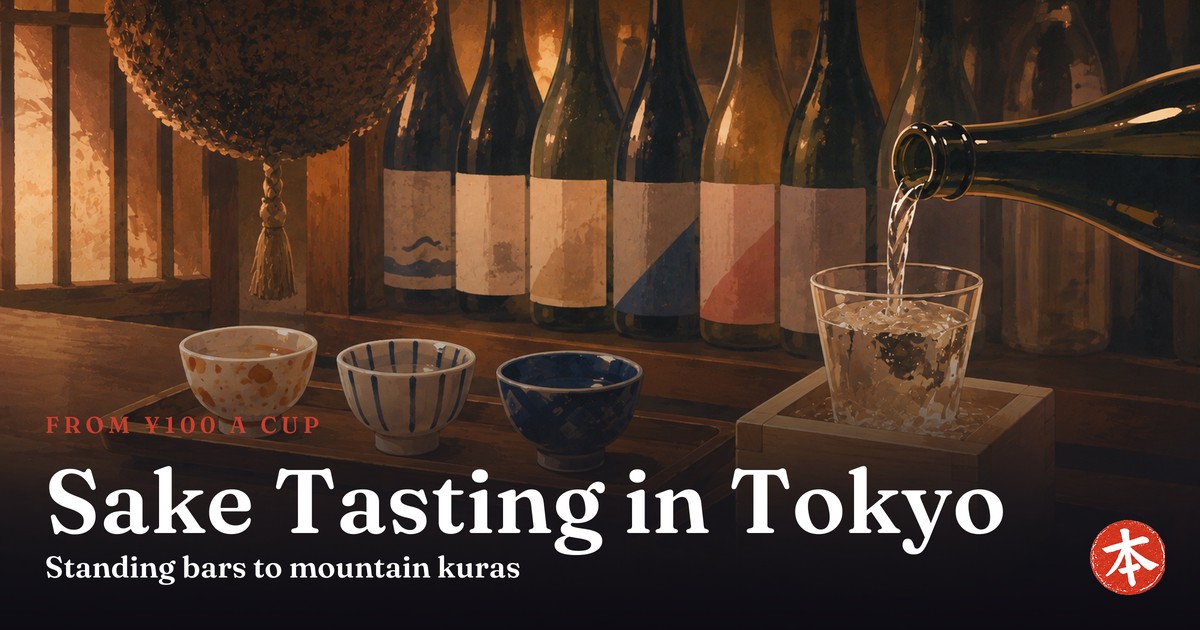
Sake tasting in Tokyo doesn't require a tour bus or a ¥15,000 pairing dinner. The industry's own association runs a tasting room in Toranomon where 50 bottles pour from ¥100 a cup; liquor shops from Tokyo Station to GINZA SIX hide standing bars behind the shelves; a working brewery from 1812 operates ten minutes from Tamachi; and the mountains west of the city hold kura tours at ¥700 with the tasting included. Here's the verified circuit — plus the new Yaesu tasting bar opening September 10, 2026.
Sake tasting in Tokyo at a glance
| Venue | Format | Official terms (Aug 2026) |
|---|---|---|
| Japan Sake & Shochu Info Center (Toranomon) | ~50 bottles, self-directed | Entry free · pours from ¥100 · weekdays only 10:00–18:00 |
| Hasegawa Saketen bars (Tokyo Sta. Gransta +3) | Standing bar in the shop | Gransta 7:00–22:00 (bar LO −40 min) · prices in-store |
| Tokyo Port Brewery / tpb Lounge (Mita) | City micro-kura's tasting lounge | Reservation via TableCheck · no public tours |
| Sawanoi (Ome mountains) | Brewery tour + tasting | ¥700 · ~40 min · reserved · closed Mon & Aug 31–Sep 2 |
| IMADEYA (GINZA SIX +2) | Kaku-uchi by the glass | 🆕 Yaesu bar opens Sep 10, 2026 (11:00–22:30 planned) |
| Ishikawa Brewery (Fussa) | Compound stroll / ¥500 tour | 🚨 Tours Japanese-only · closed Tue |
Inside the city brewery — how sake gets made ten minutes from a Yamanote-line spur:
Start here: the industry's own tasting room
What does ¥1,000 buy at the official center?
An education. The Japan Sake and Shochu Information Center — operated by the national brewers' association in Toranomon — is the rare institution whose incentive is teaching rather than selling one brand: officially free to enter, with around 50 sakes, shochus and awamoris poured as paid tastings from ¥100 a cup and multilingual tablets (English, Chinese, Korean) explaining what you're drinking. A thousand yen builds a six-cup flight across the whole style map. The single planning constraint is official and absolute: weekdays 10:00–18:00 only — weekend visitors must build their tasting day around the standing bars instead.
The standing-bar circuit: drinking in the shop
Where are the verified kaku-uchi counters?
The kaku-uchi — a tasting counter inside a liquor shop — is Tokyo's most efficient sake venue, and two operators run verified circuits. Hasegawa Saketen, the connoisseur's retailer, officially pours at four branches: Gransta Tokyo inside Tokyo Station (shop 7:00–22:00, Sundays to 21:00, bar last orders 40 minutes before close — the definitive pre-shinkansen stop), Nihonbashi, the Palace Hotel, and Kameido Clock (bar added October 2025). Two branches guides keep misreporting — Azabu-juban and Solamachi — officially have no bar, and the historic Kameido honten is on hiatus. IMADEYA answers from the department-store end: glass pours at GINZA SIX (bar 14:00–20:30, last order 19:30), Kinshicho Parco (to 22:00) and its Kiyosumi-shirakawa original (closed Wednesdays) — and its 2026 news is genuinely big: IMADEYA KAKU-UCHI TOKYO opens September 10 at the foot of the TOFROM YAESU tower by Tokyo Station — Japanese alcohol only, by the glass, planned hours 11:00–22:30 (officially subject to change). Neither operator publishes glass prices online; budget as you would an izakaya round.
The breweries: 1812 in the city, mountains in the west
City kura or mountain kura?
Both, ideally, because they answer different questions. Tokyo Port Brewery in Mita is the improbable one: a brewing house founded in 1812 as Wakamatsuya, revived in 2011 as a four-story, 22-tsubo vertical micro-kura in the middle of Minato ward. There are officially no public tours — the experience is the tpb Lounge on the 10th floor, pouring the full lineup plus sake cocktails, reservation-only via TableCheck (hours and menu live on its official channels — check before going). Sawanoi, by the Tama river gorge in Ome, is the classic excursion: reserved tours — weekdays 11:00 and 13:00, weekends 11:00/12:30/14:00 — running about 40 minutes at ¥700 tax included, tasting and a keepsake ochoko cup included, under-20s free (and dry). Closed Mondays, cash or PayPay at the door, and — 2026 diary note — closed August 31 to September 2. Further west in Fussa, Ishikawa Brewery (Tamajiman) offers a free self-guided compound stroll and a ¥500 three-tasting tour — with the official caveat that matters most to readers of this page: tours are Japanese-only, booked by phone. Its two on-site restaurants make it a lunch destination regardless.
The rules of the game
Japan's drinking age is 20 — the breweries admit younger visitors to tours but pour them nothing — and the drink-driving law is zero-tolerance, so the mountain kuras are train trips: Sawai Station for Sawanoi, Haijima-then-bus or a walk for Ishikawa. Pace matters more than it does with wine — tasting sake is 15–16% alcohol served generously — so eat first or alongside; the izakaya guide covers sake's natural food habitat, the yakitori guide its best grilled companion, and a guided food tour can fold a tasting into a longer eating evening if you'd rather not navigate solo.
FAQ
What’s the cheapest way to taste many sakes in Tokyo?
Can I visit an actual sake brewery from Tokyo?
What is a kaku-uchi standing bar?
What’s opening new in 2026?
Which Hasegawa Saketen branches actually have the tasting bar?
Is there an English-friendly brewery tour?
What’s the legal drinking age — and can minors join tours?
How should a beginner order at a tasting counter?
Why was KURAND left out of this guide?
Can I do a whole sake day without leaving central Tokyo?
Bottom line (2026) — You can taste your way through sake without leaving Tokyo, starting at the Japan Sake and Shochu Makers Association’s tasting center — free entry, roughly 50 bottles, pours from ¥100, weekday-only hours and multilingual tablets. The circuit adds Tokyo Station standing bars, Hasegawa Saketen branches — including the new Kameido Clock bar (October 2025) — and Tokyo Port Brewery in Minato.
Sources
The information center's free entry, ~50-bottle lineup, ¥100 pours, weekday-only hours, group rule and multilingual tablets: the Japan Sake and Shochu Makers Association's official center pages. Hasegawa Saketen's bar locations (and the two bar-less branches, the Kameido hiatus and the October 2025 Kameido Clock bar): its official store list. Tokyo Port Brewery's history, no-tour policy and tpb Lounge reservation route: its official site. Sawanoi's tour times, ¥700 fee, inclusions, closures and payment methods: Ozawa Shuzo's official tour pages. IMADEYA's store bars and the September 10, 2026 Yaesu opening with its planned hours: its official corporate and opening pages. Ishikawa Brewery's course tiers, fees, Japanese-only note and closures: its official tour page. All read on August 12, 2026. The embedded video is by its creator. Drink responsibly; the legal age in Japan is 20.
Some links on this page may be affiliate links, which means we may earn a commission if you book or buy through them — at no extra cost to you. See our affiliate disclosure.
Tokyo to Osaka, Tokyo to Kyushu, Tokyo to Hokkaido — day by day — plus seven places most visitors never reach.
- 12 pages, 80 photographs, every stop linked to its guide
- Every price and opening hour read from the official page
- Re-issued monthly, so it does not go stale in your inbox
Free. One email a month, plus the rare change that matters. Unsubscribe with one click in any email. By subscribing you agree to our privacy policy.