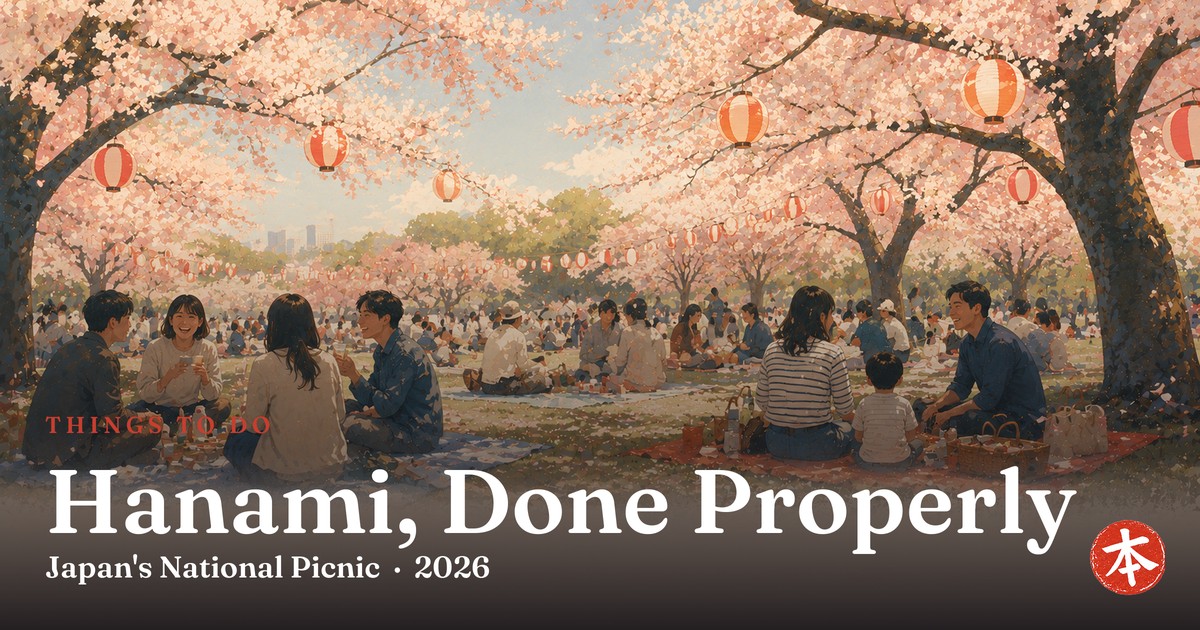
Here's what the postcards don't show: hanami is not a viewing activity, it's a party. When Japan's cherry trees bloom, the parks fill with tarps, bento, beer and several million people having their best afternoon of the year — a picnic tradition more than a thousand years old that's still the most democratic event in the country. And crucially for you: anyone can join. This guide covers how it actually works — the blue-sheet culture, the kit, the etiquette, the night version — so you can do hanami properly instead of photographing other people doing it.
Timing and locations get their own guides — when full bloom hits and how long it lasts and where to go — plus a Mt. Fuji × sakura spoke for the bucket-list shot. This page is the how.
Hanami at a glance
| What it is | A picnic party under blooming cherry trees — 1,000+ years of tradition |
|---|---|
| Who can join | Everyone. No invitation needed — just a sheet, food and manners |
| The kit | Picnic sheet (¥100 shop) · konbini/depachika food · rubbish bag · layers |
| The golden rules | Never damage the trees · shoes off the sheet · all rubbish goes home with you |
| Alcohol | Traditional yes — but park rules vary; obey the signs |
| Night version | Yozakura — illuminated blossoms after dark, quieter and romantic |
The blue-sheet culture, explained
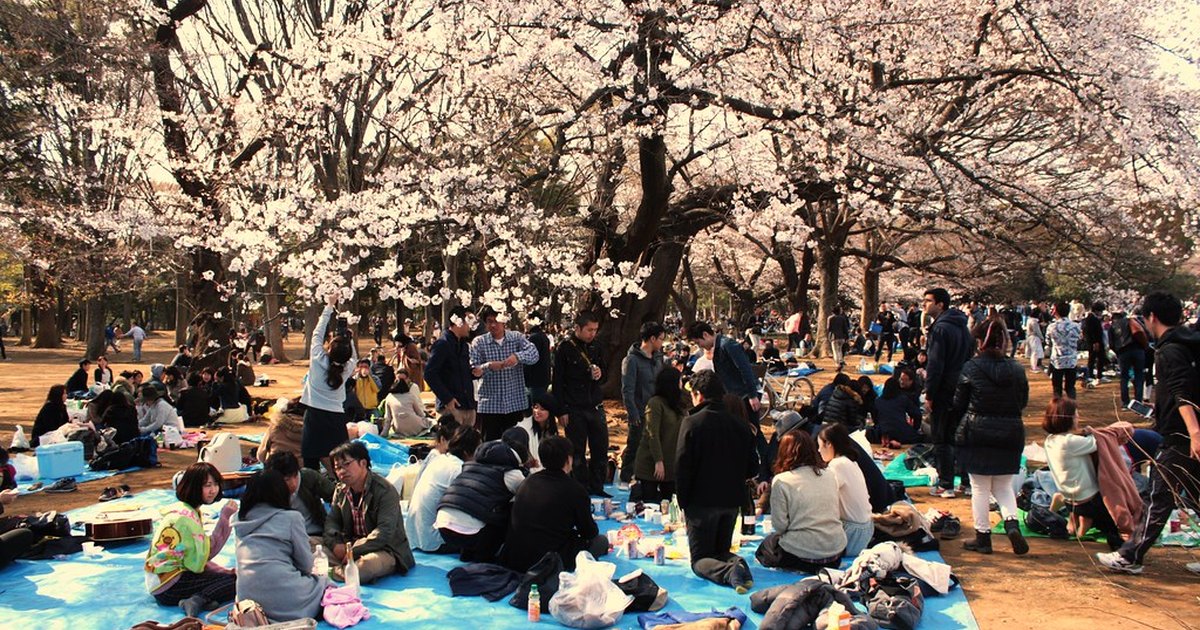
Arrive at a famous park in season and you'll see it: a patchwork of tarps claiming ground under the best trees, some occupied by one patient junior colleague holding the spot since morning — place-holding (basho-tori) is a real institution, historically a rite of passage for new employees before company hanami parties. As a visitor you don't need the 6am campaign: weekday afternoons, or any spot fifty meters from the most photographed tree, will find you room. The unwritten rules of the sheet: claim only what your group needs, shoes come off before stepping on (treat it as indoor space — you'll see neat rows of sneakers at every tarp's edge), and leave gaps for people to walk. A sheet with a bag on it means "taken"; don't move either.
Provisioning: the konbini masterclass
Hanami food has two schools. The konbini run is the accessible one: onigiri, karaage, snacks, and drinks — a full spread for two costs less than a café lunch, and in season many stores stock hanami-specific treats (sakura-flavored sweets, pink mochi, seasonal beers with blossom cans). The depachika upgrade — the department-store food halls — is the flex: beautiful seasonal bento built for exactly this occasion. Both beat hauling a homemade picnic across Tokyo. At the biggest spots, festival-style food stalls often appear too — the same yatai culture covered in our street food guide — so going empty-handed and grazing is a legitimate strategy.
The etiquette that actually matters
- The trees are sacred — literally never touch. No picking blossoms, no pulling branches down for photos, no shaking petals loose for the 'falling sakura' shot. This is the one rule whose violation genuinely angers people.
- All rubbish leaves with you. Bins are scarce or overflowing in season; the correct move is bagging everything and carrying it out. Groups that leave a spotless patch are doing hanami correctly.
- Volume: festive, not destructive. Daytime hanami is loud and joyful; residential-adjacent parks quiet down after dark. Read the room — it's a park-wide party, not your party.
- Alcohol: follow the signs. Drinking under the blossoms is traditional, but individual parks restrict zones or ban it in some years — the entrance signage is current law, and it's usually posted in English at major spots.
- Photos: shoot people's blossoms, not people. The tarps full of families are part of the scenery to you, but ask before close-ups.
Yozakura: the night shift
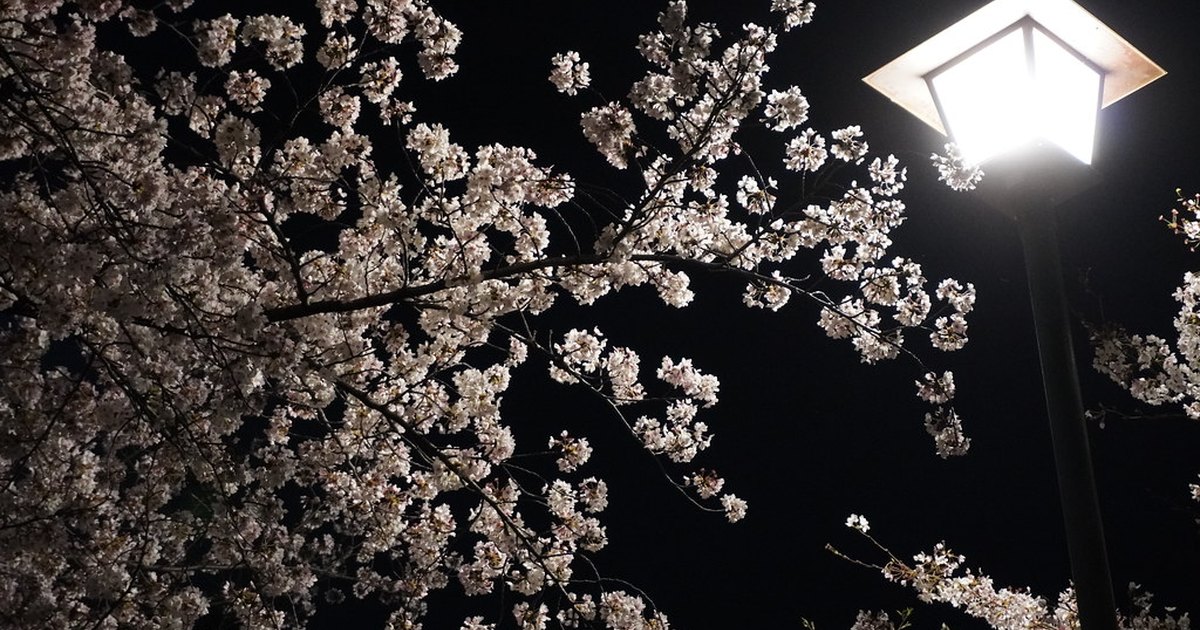
When the sun drops, many famous spots switch on illuminations and hanami becomes yozakura — lit blossoms glowing against the dark, the crowds calmer, the mood closer to a stroll than a party. For travelers it's often the practical choice: your daylight hours stay free for sightseeing, and early April evenings give the scene a crisp edge (bring layers — you'll want them). Schedules, zones and any entry fees vary by venue and year, so check each spot's official page during the season rather than trusting last year's details.
Fitting hanami into a trip
The honest strategy: don't build the whole trip on one park on one date. Full bloom is short and the forecast moves — our full-bloom guide covers how to track it — so plan your cities first, keep a flexible day, and strike when the forecast says go. Spot-picking is the spots guide's job, seasonal timing overall is in the month-by-month guide, and if you're building a first-trip route around the season, the 10-day itinerary flexes for it.
FAQ
What exactly is hanami?
Can tourists do hanami?
Can you drink alcohol at hanami?
What should I bring to hanami?
What is yozakura?
When and where should I do hanami?
Sources
Hanami customs and etiquette described here are the stable, widely documented core of the tradition as practiced across Japan. Park-specific regulations (alcohol policies, tarp rules, illumination schedules and fees) change by venue and by year and are deliberately not stated as fixed facts — on-site signage and each venue's official page are the live sources. As of July 2026.
Tokyo to Osaka, Tokyo to Kyushu, Tokyo to Hokkaido — day by day — plus seven places most visitors never reach.
- 12 pages, 80 photographs, every stop linked to its guide
- Every price and opening hour read from the official page
- Re-issued monthly, so it does not go stale in your inbox
Free. One email a month, plus the rare change that matters. Unsubscribe with one click in any email. By subscribing you agree to our privacy policy.