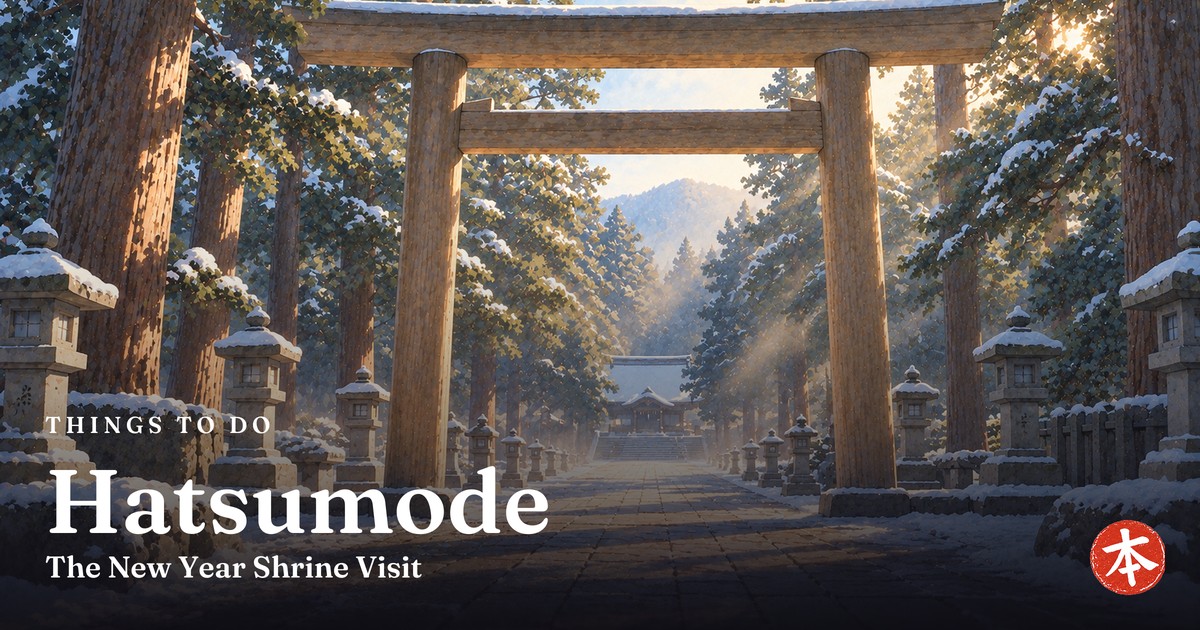
Hatsumode is the first shrine visit of the year, and it is not a niche custom. Jinja Honcho, the association of Shinto shrines, puts the figure at about 80 percent of Japan’s population visiting a shrine at New Year. The same body says every person in the country is regarded as a parishioner of a local shrine whether they are conscious of it or not, and that Shinto is something you do rather than something you join — which is why visitors are not just tolerated at hatsumode but expected.
This guide is built from what the shrines themselves publish: the exact bow-and-clap sequence on Meiji Jingu’s English site, its normal gate hours for December and January, Senso-ji’s hall hours, and the association’s own answers on photos, gates and charms. It also says plainly what has not been announced yet for the 2026–27 New Year, because that is the part most guides fill in from last year.
Hatsumode at a glance
| Item | What the official sources say |
|---|---|
| What it is | The first shrine (or temple) visit of the new year |
| Who does it | About 80 percent of the population, per Jinja Honcho |
| When | From midnight on January 1; the first three days are busiest. January 1 is a national holiday; Coming of Age Day is January 11, 2027 |
| Cost | Free. Meiji Jingu: open every day, free of charge |
| The sequence | Purify at the basin, offer coins, bow twice, clap twice, bow once |
| Normal hours (Meiji Jingu) | December 6:40 am–4:00 pm; January 6:40 am–4:20 pm. Special New Year hours announced each December |
| Normal hours (Senso-ji main hall) | 6:00–17:00; opens 6:30 from October to March |
| Photos | Grounds usually fine; not at the main sanctuary; never people without permission |
What hatsumode is, in the shrines’ own words
Is it religious, and can a visitor take part?
Jinja Honcho’s FAQ answers both. Shinto has no founder, no dogma and no scripture, and “is not the sort of thing that you convert to”; you are welcome to practice it by visiting shrines, and most people who do would describe themselves as having no religion or as Buddhist. Hatsumode is the largest single expression of that: the association says Japanese people go to shrines to pray or give thanks on no particular day, but that a large majority visit at the beginning of every year.
Shrine or temple?
Either, and many families do both. The association’s distinction is simple: a shrine is Shinto and has a torii at the entrance; a temple is Buddhist. The gate is the tell. Senso-ji in Asakusa is a temple, and its site says it draws 30 million worshippers a year; Meiji Jingu is a shrine. Our guides to Meiji Jingu and Senso-ji cover each on an ordinary day.
Why does the torii matter?
Because you are crossing a line. The association describes the torii as “the border between the secular and the sacred worlds”, with the outermost gate marking the precinct and further gates at some shrines marking spaces that are more sacred still. Passing through it is the first step of the visit, not a photo opportunity on the way to one.
The sequence Meiji Jingu publishes
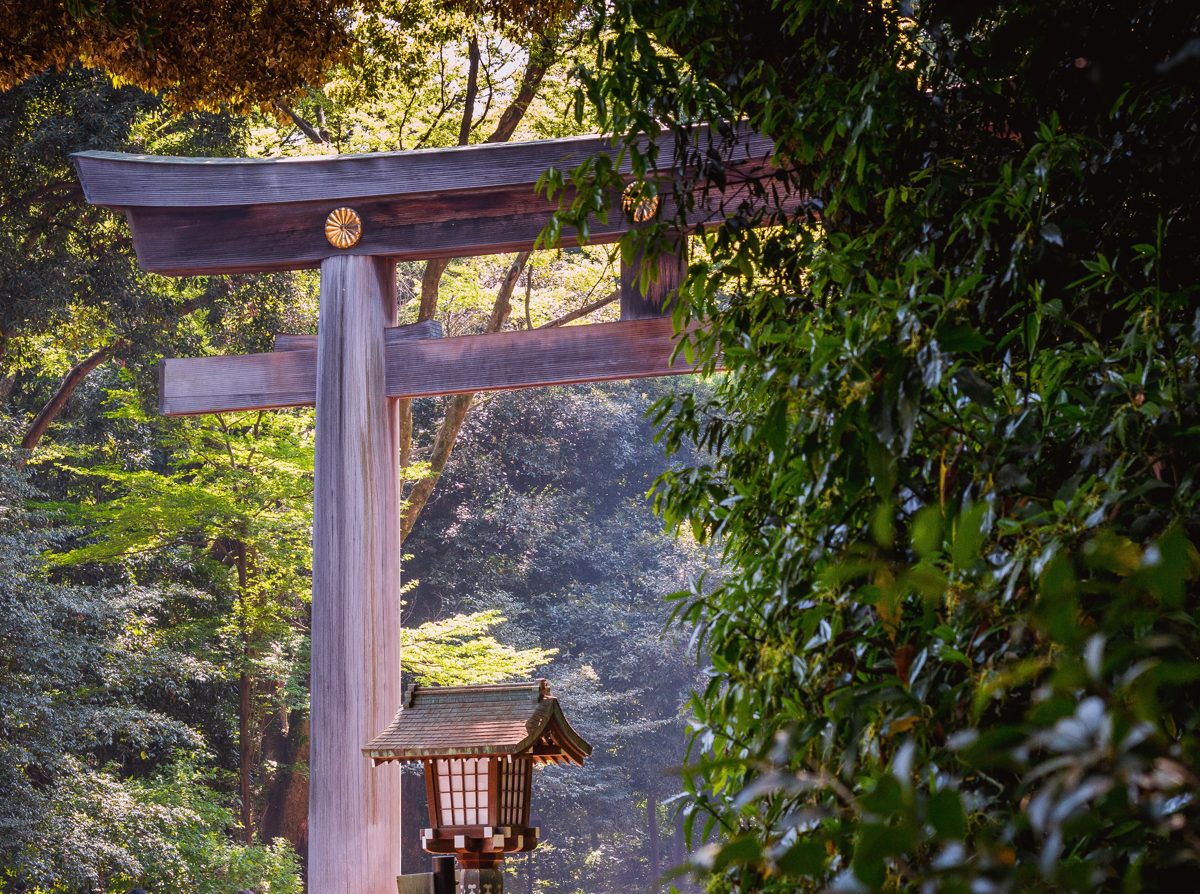
At the main hall. Put coins in the offertory box. Bow twice. Clap twice. Make a wish if you like. Bow once more. No photos or videos close to the main shrine buildings.
Does the order really matter?
It is the published order, and at hatsumode you will be doing it in a line of people who know it. The two things visitors most often get wrong are touching the dipper to the mouth and clapping before the bows. Neither causes offense; both mark you out. The shrine prints the steps in English precisely so that nobody has to guess.
How much should I put in the box?
The shrine says “you may put some coins” and leaves it there. You will read elsewhere that a particular coin is lucky. That claim appears on no shrine site we read, so we are not repeating it. Any coin is an offering.
What about at a temple?
The clapping is a Shinto gesture. At a Buddhist temple the usual form is a quiet bow with hands together. Senso-ji does not publish a step-by-step on its site, so follow the people in front of you and skip the claps.
Hours: what is known and what is not yet
| Place | Normal hours (official) | New Year 2026–27 |
|---|---|---|
| Meiji Jingu | Opens with sunrise, closes with sunset. December 6:40 am–4:00 pm; January 6:40 am–4:20 pm. Some facilities inside 9:00–4:00 | Not yet published as of mid-September; announced each December |
| Senso-ji main hall | 6:00–17:00; 6:30 opening October–March | Not yet published |
| Fushimi Inari | Could not read: official site under maintenance | — |
Will Meiji Jingu be open at midnight on New Year’s Eve?
Its normal December hours end at 4:00 pm. Whether and how the gates stay open through the night for hatsumode is exactly the kind of thing the shrine announces each December, and it had not done so for 2026–27 when we read the site. We will not print last year’s arrangement as if it were this year’s. Check the shrine’s site in the last two weeks of December.
Do trains run all night?
The railways publish New Year overnight schedules in December, and they change year to year. We have not seen the 2026–27 announcements and are not going to guess. Plan the midnight visit only once the operators have posted.
What is the weather like?
Cold, dry and clear in Tokyo on the January normals — the December guide has the numbers — and the wait outside a major shrine at midnight is a standing wait. Sapporo and the Sea of Japan coast are a different climate entirely.
Charms, fortunes and what to do with last year’s
What are omamori and ofuda?
The association describes them as common items that “express the power of kami and are kept close for protection”, received at shrines with a small offering. Omamori are the cloth amulets; ofuda are the paper or wooden tablets for the home. Hatsumode is when most people replace them.
Who are the people in red and white?
Miko, the shrine’s female assistants, who offer amulets and perform sacred dance at larger shrines. The association notes that many shrines recruit temporary miko for the busy season over New Year, which is why the amulet counters at hatsumode are fully staffed in a way they are not in March.
Is there an etiquette for the grounds?
Meiji Jingu’s posted rules: eat, drink and smoke only in designated areas; no running or sports; no drones; do not leave the paths in the forest or take anything from it; no promotional photography without permission. At hatsumode the practical version is: move with the crowd, and do not stop in the approach to take pictures.
Where to go
In Tokyo
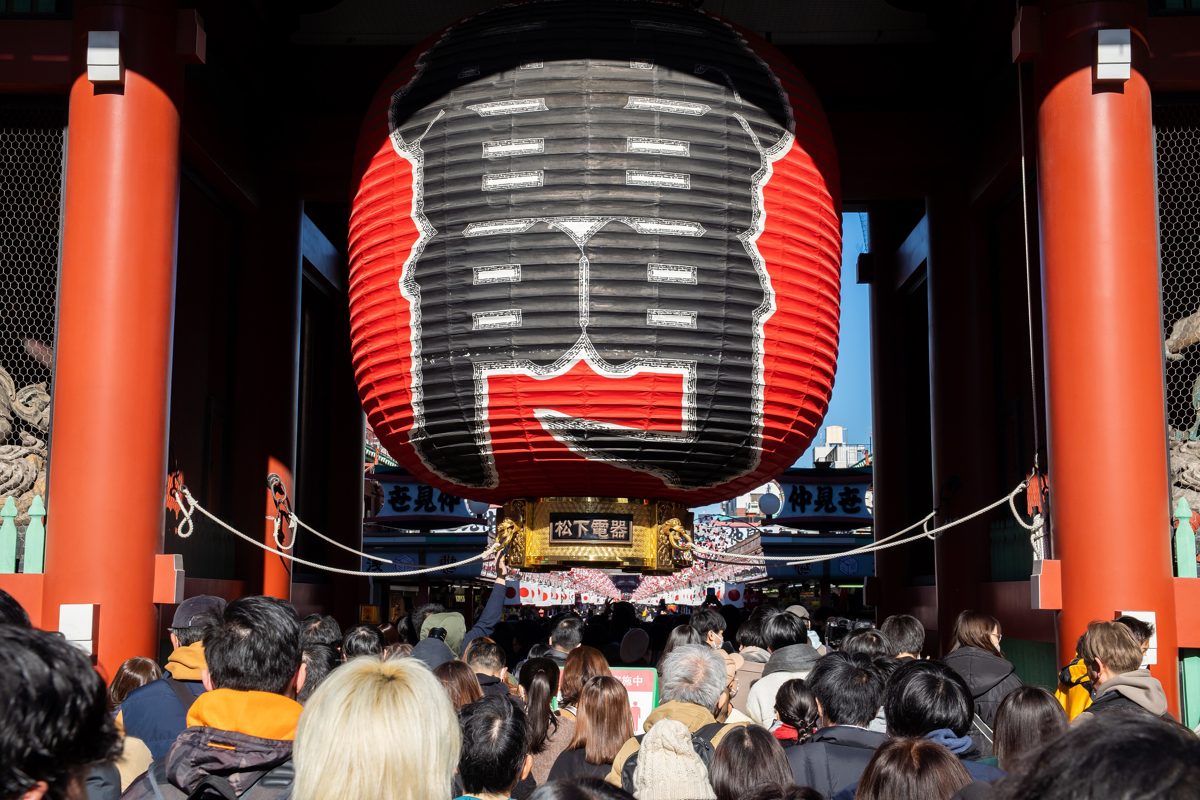
Meiji Jingu at 1-1 Yoyogi Kamizono-cho, Shibuya, by Harajuku Station, is the shrine most visitors choose and the one with the clearest English guidance. Senso-ji in Asakusa is the temple most choose. Both will be dense on January 1; both are still doing hatsumode on January 5.
Elsewhere
Ise Jingu, which the association calls the most sacred site of Shinto, and Izumo Taisha are the two great shrines outside the capital; our Ise and Izumo guides cover getting there. Every neighborhood shrine does hatsumode too, and the association’s point about local parishioners means the small one near your hotel is not a lesser version.
When is the quiet version?
After the first three days. The custom does not expire; the crowds do. The holiday calendar shows January 1 as the only fixed holiday in the period and Coming of Age Day on January 11, 2027, so the week between is the calm one.
Three things visitors get wrong about hatsumode
“It has to be at midnight”
It does not. Midnight on January 1 is the moment the biggest crowds choose, and it is a memorable one, but the custom is the first visit of the year, and the association describes the majority going “at the beginning of every year” rather than at a fixed hour. A visit on the afternoon of January 2, or on the quiet weekday after the holiday, is the same custom with a shorter line and, in Tokyo, a normal gate schedule you can actually read on the shrine’s site.
“I need to know the prayer”
There is no prayer to know. Meiji Jingu’s printed sequence ends with “you may make a wish if you like”, and the association’s description of visiting a shrine is to pay respects, give thanks or make a request. The form is the bows and the claps; the content is yours, and silent. Nobody around you will know or care what you thought about between the second clap and the last bow.
“Photos are banned”
They are restricted, not banned. The association’s position is that photographing buildings and grounds is usually permitted, with exceptions signed on site; Meiji Jingu draws the line at the main sanctuary and the area close to the main buildings, where people are praying. The rule that applies everywhere is the one about people: do not photograph them without permission. At hatsumode, with a crowd in every frame, that rule does most of the work.
Hatsumode FAQ
What is hatsumode?
When does hatsumode happen?
Do I need a ticket or is there a fee?
What are the opening hours over New Year?
How do I pray at a shrine?
Can I take photos?
Is a temple the same as a shrine for hatsumode?
What does the torii gate mean?
Bottom line (2026-27). Hatsumode is the New Year shrine visit that about 80 percent of Japan makes, and visitors are welcome. It is free. The sequence is purify, offer coins, bow twice, clap twice, bow once, with no photos at the main sanctuary. Meiji Jingu’s normal hours are 6:40 am to 4:00 pm in December and to 4:20 pm in January; special New Year hours and overnight trains are announced in December and were not yet published when we checked.
Sources
The participation figure, the parishioner statement, the definition of the torii, the shrine-versus-temple distinction, the photo guidance, the temporary miko note and the description of amulets come from Jinja Honcho’s official English site. The purification and prayer sequence, the free admission, the monthly opening hours, the sanctuary photo rule and the grounds rules come from Meiji Jingu’s official English site. The main-hall hours and the annual visitor figure come from Senso-ji’s official site. Holiday dates are from the Cabinet Office. All read on September 14, 2026. Fushimi Inari’s site returned a maintenance page on the same day.
Some links on this page may be affiliate links, which means we may earn a commission if you book or buy through them — at no extra cost to you. See our affiliate disclosure.
Tokyo to Osaka, Tokyo to Kyushu, Tokyo to Hokkaido — day by day — plus seven places most visitors never reach.
- 12 pages, 80 photographs, every stop linked to its guide
- Every price and opening hour read from the official page
- Re-issued monthly, so it does not go stale in your inbox
Free. One email a month, plus the rare change that matters. Unsubscribe with one click in any email. By subscribing you agree to our privacy policy.