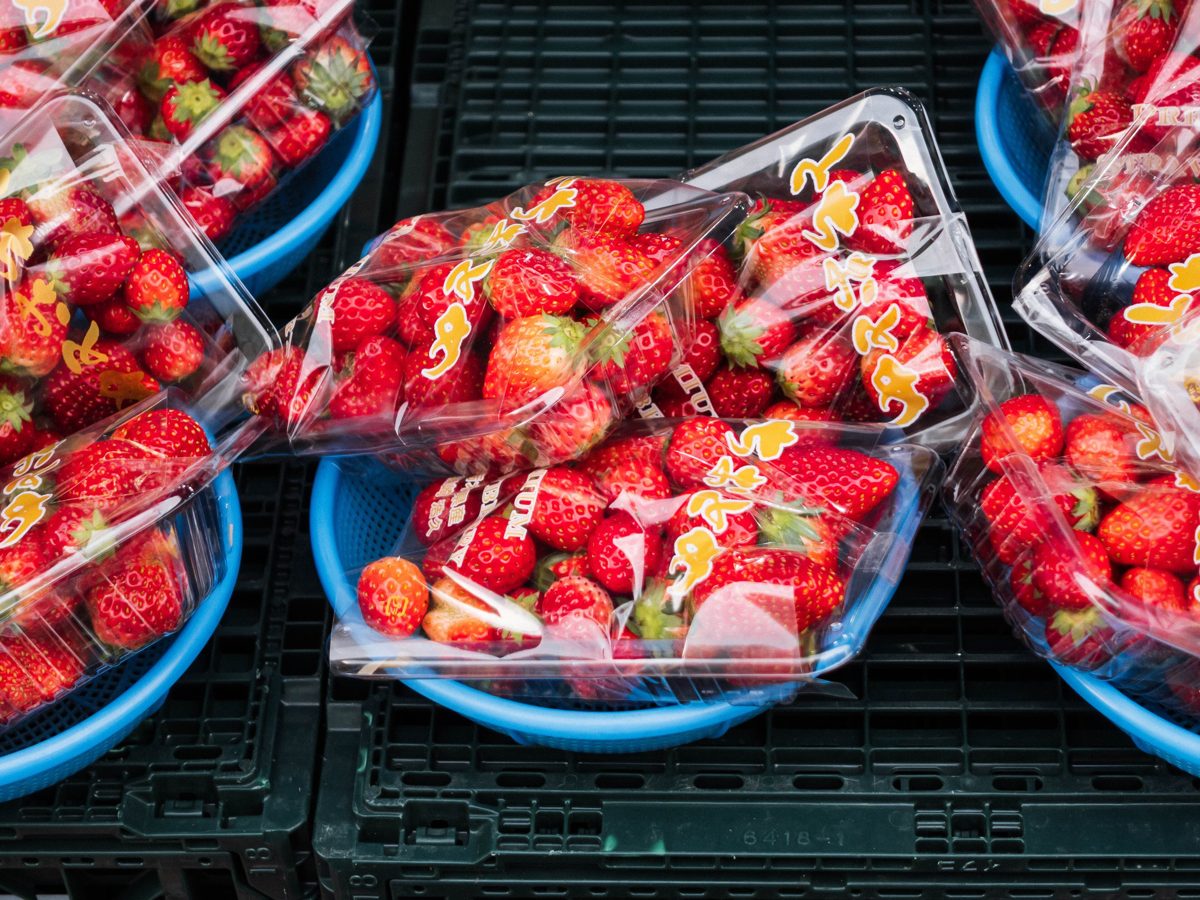
Strawberry picking (ichigo-gari) in Japan means paying an entry fee to eat as many strawberries as you can in a greenhouse, within a time limit. The season runs from about December to May. Before you plan, know four things: the time limit varies from 30 minutes to none; several farms are booking-only; many take cash only on the day; and in October 2026 only one farm in this guide has posted next season’s prices.
Below are nine farms with official pages: six reachable on a day trip from Tokyo and three near Kyoto. For more ideas, see our day trips from Tokyo.
The 9 strawberry farms in Japan at a glance
| Farm | Area | Adult price | Time limit | Booking |
|---|---|---|---|---|
| Kawatsura | Chiba | 2,500–1,500 yen (2026) | Until berries run out | Not needed |
| Ichigo no Sato | Tochigi (Oyama) | 2,640–2,750 yen (2025-26) | 40 min | Required |
| Yoshimura | Tochigi (Mashiko) | 2,500 yen (2024-25 listing) | No limit | Not needed |
| Ema | Shizuoka (Izu) | 2,500–2,000 yen (2026-27) | 30 min | Not needed |
| Tokinosumika | Shizuoka (Gotemba) | 2,860–2,090 yen (2025-26) | 30 min | Phone or online |
| Uehara | Kanagawa (Kawasaki) | 3,000 yen (2026) | 30 min | Required |
| Osazen Kyoto Farm | Kyoto (Yawata) | 3,200–2,500 yen | 45 min | Required |
| Osazen Biwako Farm | Shiga (Moriyama) | Same as Kyoto Farm | 45 min | Required |
| Berry Farm Uji | Kyoto (Uji) | 2,800–2,400 yen | 30 min | Required |
From each farm’s official site, read October 7, 2026. Prices fall later in the season; the year in brackets is the season the farm’s price list is for.
When is strawberry picking season in Japan?
Which months are the peak?
The Kanagawa tourism association puts the peak at January to March, with some farms open from December to around May. Prices follow the season: every farm here charges most early in the season and less from April. If you are traveling in spring, our Japan in March guide covers the rest of the month.
When do farms open for 2026-27?
| Farm | 2026-27 opening (official) |
|---|---|
| Ema (Izu) | December 19, 2026 to May 5, 2027 |
| Tokinosumika (Gotemba) | December 2026 (date not yet given) |
| Kawatsura (Chiba) | Around January 5, 2027 (English page); around January 10 in its usual Japanese wording |
| Uehara (Kawasaki) | Mid-January to end of May (planned), Wednesdays and weekends |
| Osazen (Kyoto and Shiga) | November to mid-June each year; 2026-27 date not yet given |
| Ichigo no Sato, Yoshimura, Berry Farm Uji | Not yet given |
Official sites, read October 7, 2026.
Should I avoid weekends and holidays?
Several farms charge more on weekends, and berries can run out early on busy days at farms that close when the ripe fruit is gone. Our Japan holiday and crowd calendar shows which dates are national holidays.
Strawberry farms near Tokyo
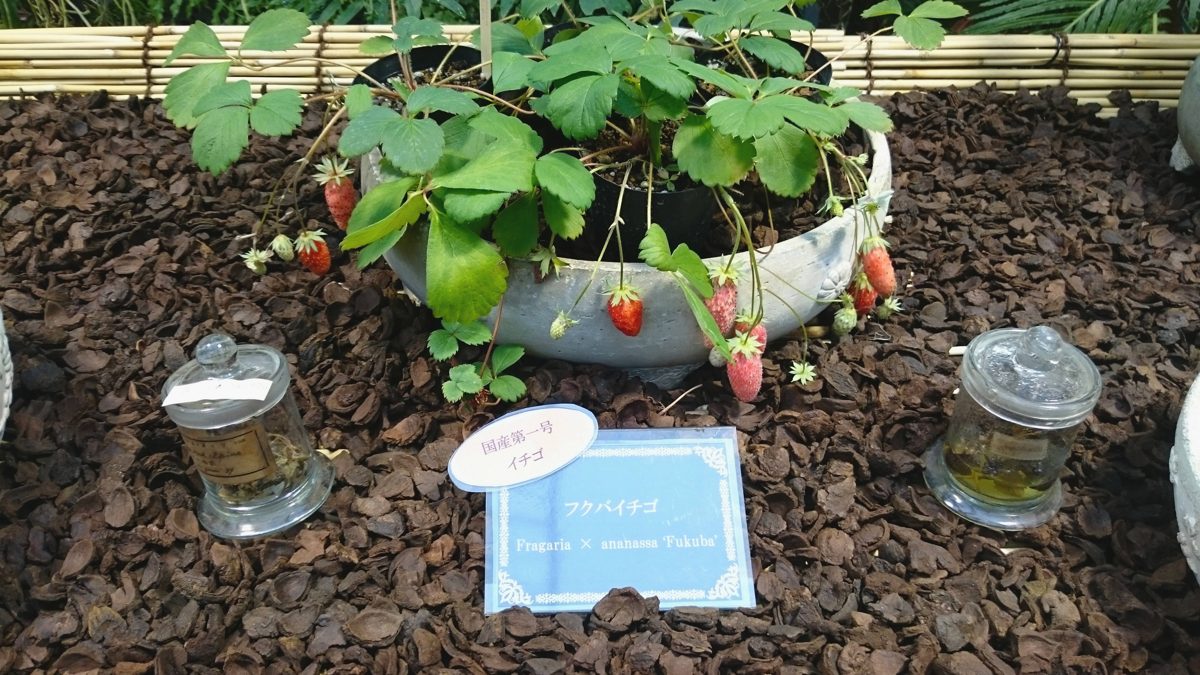
Kawatsura Strawberry Farm (Chiba): no booking, ends when berries run out
In Sammu, Chiba, about 10 minutes by taxi from JR Naruto Station, with an English page. It opens at 10 a.m. and closes at 2:30 p.m. through February and 3:30 p.m. from March, or earlier when the day’s ripe berries are gone. There is no stated time limit. The local Naruto strawberry association notes that some farms in the area take walk-ins in arrival order and some also use bookings. Individuals do not need to book; groups of 20 or more book by email. Under the 2026 price list in Japanese, adults paid 2,500 yen until March 22, 2,000 yen to April 5 and 1,500 yen after; elementary children and seniors 65 and over paid 2,200, 1,700 and 1,200 yen.
Condensed milk is no longer free; it is sold at the desk, 5 portions for 100 yen. Berries may not leave the greenhouse, high heels are not allowed, and children cannot enter without an adult.
Ichigo no Sato (Tochigi): booking-only, 40 minutes
A large farm park in Oyama, Tochigi, about 35 minutes by community bus from Oyama Station. Picking is booking-only, online or by phone, with 40 minutes of all-you-can-eat on the Tochiaika and Skyberry plan, or 60 minutes on the five-variety Deluxe plan. Its 2025-26 prices were 2,640 yen on weekdays and 2,750 yen at weekends for elementary age and up, in cash, to April 5, or 2,380 and 2,480 yen if you prepay online by card. On the day, it takes cash only. Strollers and wheelchairs stop at the greenhouse door because the paths are narrow; the strawberries are grown in soil rather than on raised beds. A free seasonal shuttle bus ran last season and ended on March 29, 2026. It has not given its 2026-27 dates yet.
Yoshimura Strawberry Park (Tochigi): no time limit, English site
In Mashiko, Tochigi, a 4 to 5 minute walk from Kitayama Station on the Moka Railway, with an English website. It says there is no time limit and no booking needed: you can just show up during opening hours. Its site still shows the 2024-25 season, at 2,500 yen for ages 12 and over and 1,500 yen for ages 3 to 11, and says prices may change slightly each year. On the day it takes cash only. The farm says it is barrier-free, with room for strollers and wheelchairs. Mashiko is on the way to Nikko; see our things to do in Nikko.
Ema Strawberry Picking Center (Izu): 2026-27 prices out, 30 minutes
In Izunokuni, near Izu-Nagaoka Onsen. It is the only farm here with 2026-27 prices: open December 19, 2026 to May 5, 2027, every day, 10 a.m. to 3 p.m. on weekdays and from 9 a.m. at weekends and holidays. You get 30 minutes of Akihime or Beni Hoppe, with condensed milk and a cup included. Adults (junior high and up) pay 2,500 yen to March 31 and 2,000 yen from April 1; children aged 3 to 12 pay 2,200 and 1,700 yen; under 3 is free. Individuals need no booking; online booking, planned from December, costs 100 yen more and guarantees entry, card payment only. You cannot ask for a particular greenhouse, and strollers are not allowed inside. You can ask for more condensed milk, and you may bring your own.
Tokinosumika (Gotemba): free shuttle, 30 minutes
On the Tokinosumika resort grounds in Gotemba, reached by the resort’s free shuttle bus from Gotemba Station or Mishima Station’s north exit, with no booking needed for the bus. Picking runs 10 a.m. to 4 p.m. (last entry 3 p.m.) with 30 minutes of all-you-can-eat, condensed milk included. Its 2025 season prices for adults fell from 2,860 yen in December to 2,090 yen in late May, tax included. Book by phone or online; the next season starts in December 2026. Strollers and manual wheelchairs can go in, but there is no multipurpose toilet. For the area, see our things to do in Hakone.
Uehara Strawberry Farm (Kawasaki): near Tokyo, booking-only
The closest farm to central Tokyo in this guide: about 6 minutes on foot from Inadazutsumi Station on the JR Nambu Line. It opens from mid-January to the end of May (planned), on Wednesdays, Saturdays and Sundays only, with 30 minutes of picking. The 2026 prices were 3,000 yen for adults, 2,500 yen for elementary children and 1,500 yen for ages 3 to preschool, plus 500 yen for an adult who comes along without picking. It is booking-only, opened month by month on its calendar, and cash only. There is no parking. Our Tokyo to Yokohama guide covers the same side of the city.
Strawberry farms near Kyoto and Osaka
Osazen Kyoto Farm and Biwako Farm: 45 minutes, booking-only
Osazen runs two farms with the same prices and rules: the Kyoto Farm in Yawata, reached by Keihan bus from Yawatashi Station and a 5-minute walk, and the Biwako Farm in Moriyama, Shiga, which grows Shiga’s own Mioshizuku variety. Both open from November to mid-June each year, 10 a.m. to 3 p.m. (last entry 2 p.m.), with 45 minutes of picking.
| Osazen price | Opening to Apr 10 | Apr 11 to May 10 | May 11 to close |
|---|---|---|---|
| Adult (junior high +) | 3,200 yen | 3,000 yen | 2,500 yen |
| Child (3 to elementary) | 2,300 yen | 2,100 yen | 1,600 yen |
| Age 1–2 | 600 yen | 600 yen | 600 yen |
Official Osazen price page, read October 7, 2026; the page does not state a season year.
Picking is booking-only, opened about a month ahead once the farm has checked the berries. Canceling the day before costs 50 percent and on the day or a no-show 100 percent. It takes cash or card, but not e-money or QR payments. The paths are about 80 cm wide, so strollers and wheelchairs fit, though there is no wheelchair toilet. Our Osaka to Kyoto guide covers the Keihan line.
Berry Farm Uji: booking-only, 30 minutes
In Uji, south of Kyoto. Picking is booking-only, up to two days ahead and up to 10 people per booking, with 30 minutes of all-you-can-eat. Its price chart, tax included but without a season year, lists 2,800 yen for adults to April 10, 2,600 yen to May 10 and 2,400 yen to the end of the season. Bags may not be taken into the greenhouse, and the only topping you may bring is condensed milk. Last season it opened late, saying the summer heat had weakened its plants; it has not yet given 2026-27 dates. If you come by car, the booking form asks you to enter the number of cars.
Which strawberry farm in Japan should I choose?
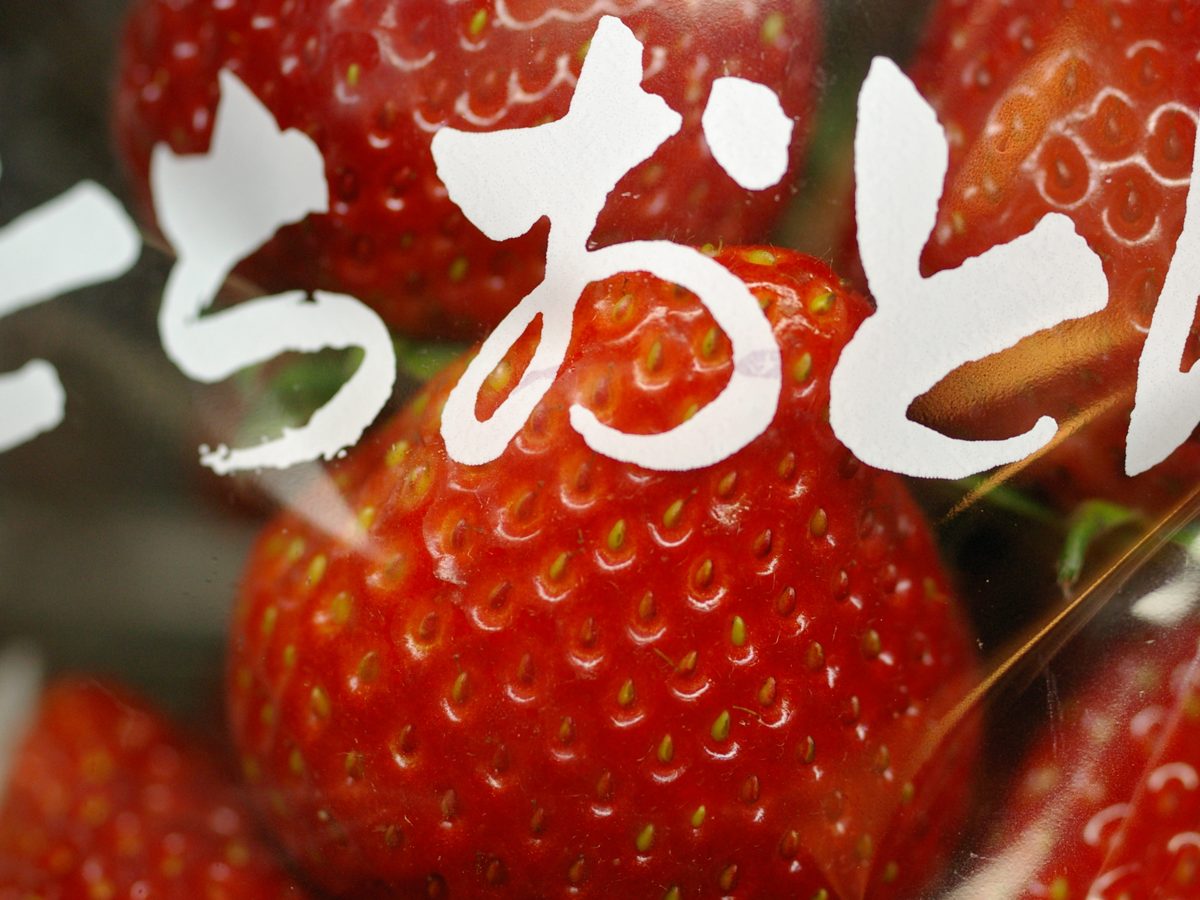
Which farm fits my plans?
| If you want | Farms |
|---|---|
| To turn up without booking | Kawatsura, Yoshimura, Ema |
| The shortest trip from central Tokyo | Uehara (Kawasaki) |
| An English website | Kawatsura, Yoshimura, Tokinosumika |
| A free shuttle from the station | Tokinosumika |
| No time limit | Yoshimura; Kawatsura until the berries run out |
| To pay by card on the day | Osazen |
| A farm near Kyoto | Osazen Kyoto Farm, Berry Farm Uji, Osazen Biwako Farm |
From each farm’s official site, read October 7, 2026.
The Kanagawa tourism association adds that some farms take bookings only and some need a parking reservation, so check before you set out. Yoshimura’s English site notes that the season can start a few weeks to a month earlier in the west and south of Japan.
Which strawberry varieties will I taste?
| Farm | Varieties named on its site |
|---|---|
| Kawatsura | 5 to 8 a year, including Fusanoka and Akihime |
| Ichigo no Sato | Tochiaika and Skyberry; Deluxe adds Tochiotome, Tochihime and Milky Berry |
| Yoshimura | Tochiotome, Skyberry, Kaorino, Benihoppe, Akihime, Moikko |
| Ema | Akihime or Beni Hoppe (one per visit) |
| Tokinosumika | Beni Hoppe, Akihime |
| Uehara | Yotsuboshi, Beni Hoppe (can change by year) |
| Osazen | Akihime and Beni Hoppe; Biwako Farm also grows Mioshizuku |
From each farm’s official site, read October 7, 2026. Farms rotate varieties by season.
Tochigi farms grow the prefecture’s own varieties, such as Tochiotome, Tochiaika and Skyberry, while the Shizuoka and Kyoto farms here lean on Akihime and Beni Hoppe. At Ema you pick from one of the two on the day, not both.
How strawberry picking works in Japan
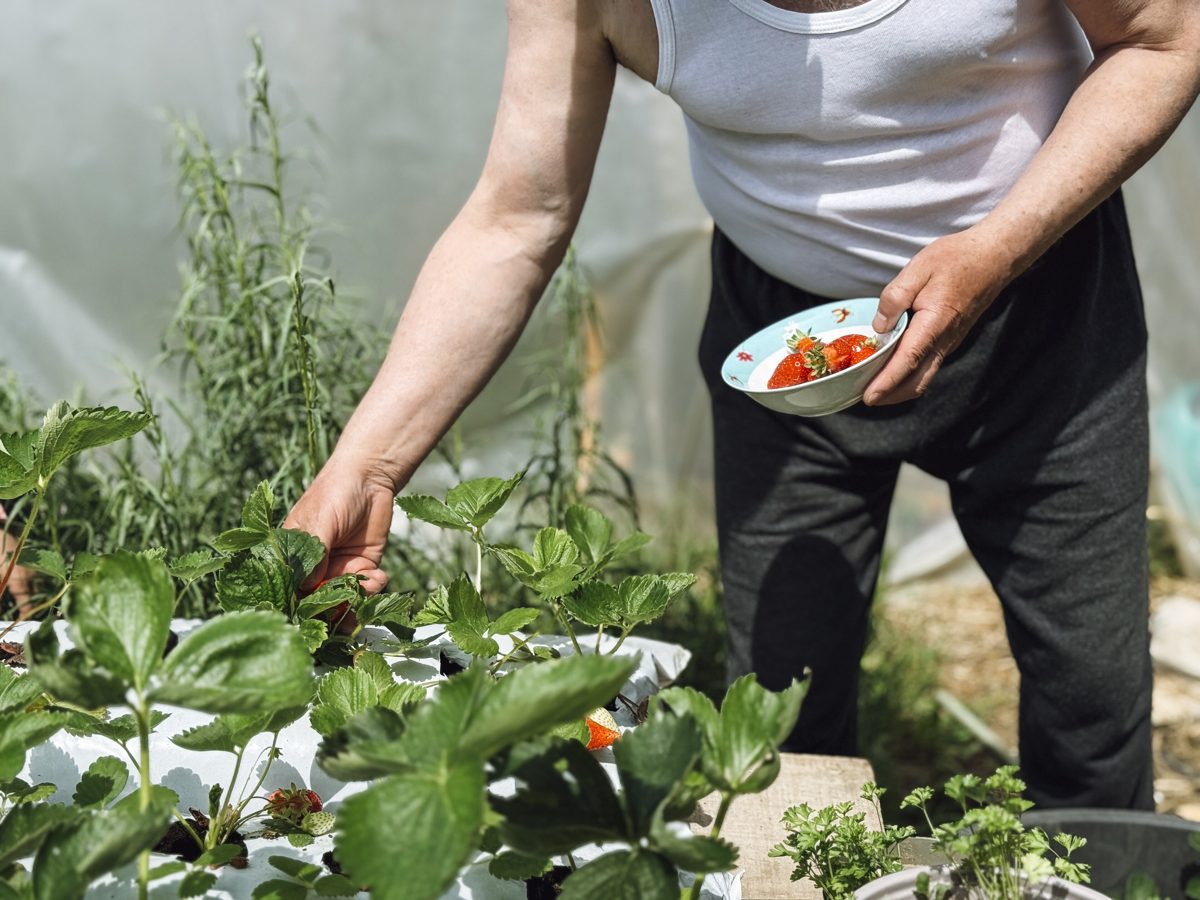
What is included in the price?
An entry fee that covers eating as many strawberries as you like in the greenhouse for the time allowed. Some farms include condensed milk and a cup, as Ema and Tokinosumika do; others sell it, as Kawatsura does, or let you bring your own, as Ichigo no Sato and Osazen do.
Can I take strawberries home?
Not from the greenhouse at the farms that state a rule here: Kawatsura, Ichigo no Sato, Ema, Tokinosumika, Osazen and Berry Farm Uji all say picked berries stay inside. Ichigo no Sato points visitors to its shop to buy boxes.
Do I need cash?
Bring yen. Yoshimura, Uehara and Ichigo no Sato take cash only on the day; Ichigo no Sato accepts cards only for online prepayment, and Ema only for online booking. Osazen takes cards but not e-money or QR codes.
Can I go with children or a stroller?
Children are welcome, with child prices at every farm, but Kawatsura and Tokinosumika do not admit children without an adult. Strollers can go in at Yoshimura, Tokinosumika and Osazen, but not at Ema or inside the greenhouses at Ichigo no Sato.
Frequently asked questions
When is strawberry picking season in Japan?
How much does strawberry picking cost in Japan?
Is strawberry picking all-you-can-eat?
Do I need to book strawberry picking?
Can I take strawberries home?
Can I pay by card at strawberry farms in Japan?
Which strawberry farms are near Kyoto?
Are strawberry farms stroller or wheelchair friendly?
Bottom line (2026-27): Strawberry picking in Japan runs from about December to May, peaking January to March. Adults pay roughly 1,500 to 3,200 yen, time limits run from 30 minutes to none, and several farms are booking-only and cash-only. Ema in Izu opens December 19, 2026.
Sources
Every fact on this page is from the farms’ own pages: Kawatsura Strawberry Farm (Japanese prices), Ichigo no Sato (FAQ), Yoshimura Strawberry Park, Ema Strawberry Picking Center (prices), Tokinosumika (Japanese), Uehara Strawberry Farm, Osazen (FAQ, Biwako Farm) and Berry Farm Uji; and the Kanagawa tourism association for the season. All were read on October 7, 2026. Farms change prices each season; confirm on the farm’s site before you go.
Some links on this page may be affiliate links, which means we may earn a commission if you book or buy through them — at no extra cost to you. See our affiliate disclosure.
Tokyo to Osaka, Tokyo to Kyushu, Tokyo to Hokkaido — day by day — plus seven places most visitors never reach.
- 12 pages, 80 photographs, every stop linked to its guide
- Every price and opening hour read from the official page
- Re-issued monthly, so it does not go stale in your inbox
Free. One email a month, plus the rare change that matters. Unsubscribe with one click in any email. By subscribing you agree to our privacy policy.