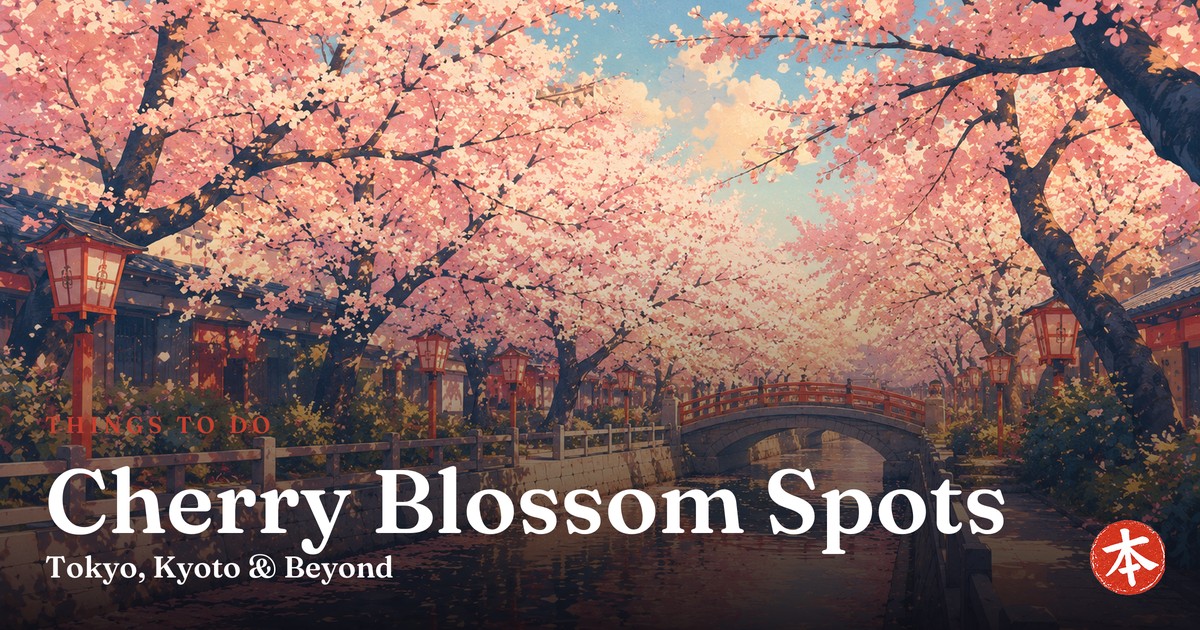
Quick answer: Japan has spectacular cherry blossoms almost everywhere, and the "best" spot depends mostly on when and where you'll be — the bloom sweeps south to north over about two months. In Tokyo, aim for Ueno Park, the Meguro River, Chidorigafuchi or Shinjuku Gyoen; in Kyoto, the Philosopher's Path and Maruyama Park; and for a trip built around blossoms, Mount Yoshino, Hirosaki, the Chureito Pagoda and Himeji Castle.
(Once you've picked your spot, our hanami guide explains how the picnic culture actually works — and the Chureito Pagoda guide covers the Fuji-and-blossoms bucket shot.)
Below is what makes each one worth it, what's free and what costs, roughly when it peaks — and a few 2026 changes that can trip you up. For the timing itself — how long full bloom lasts and how to track the forecast — see our companion guide to sakura full bloom.
When do the blossoms bloom?
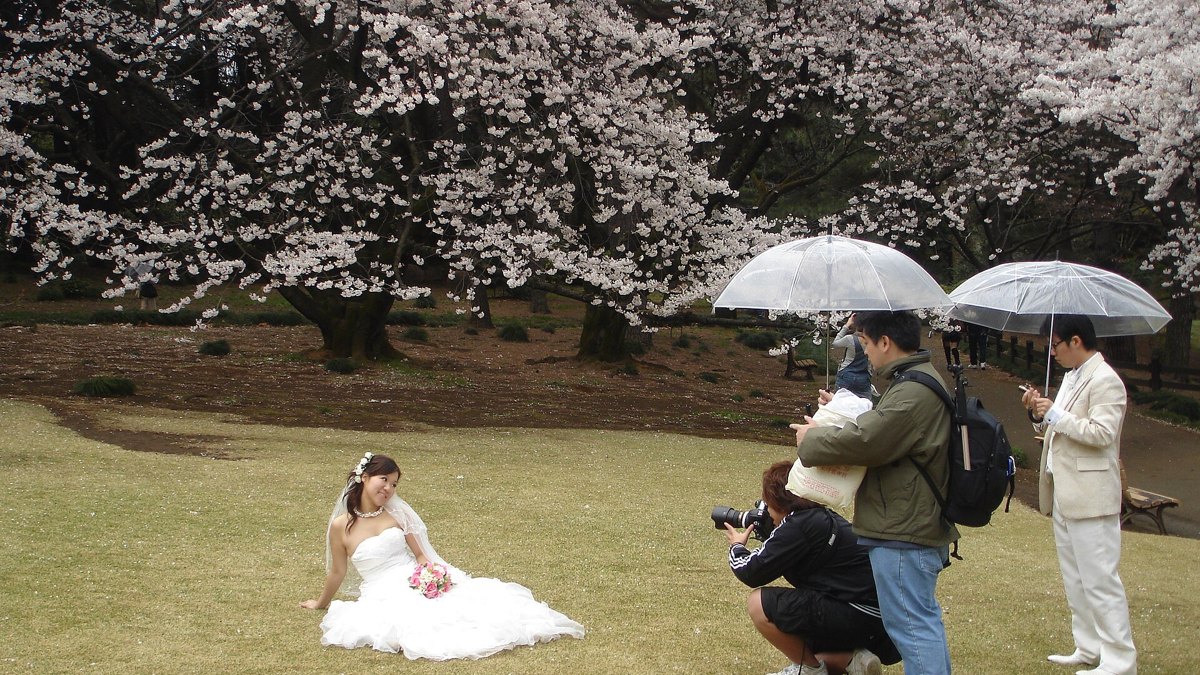
Japan's cherry season rolls up the country over roughly two months. Treat these as typical, year-varying ranges — the standard Somei-Yoshino variety, on which Japan's weather agency bases its "flowering" (5–6 blossoms open on a sample tree) and "full bloom" (about 80% open) calls:
| Area | Typical peak |
|---|---|
| Okinawa (a different, earlier species) | Late January – February |
| Tokyo & Kyoto | Late March – early April |
| Tohoku (e.g. Hirosaki) | Mid – late April / early May |
| Hokkaido | Around May |
Because it moves, missing the peak in one city often means catching it in another further north — our guide to regional JR passes covers the cheapest way to chase the bloom front by rail.
Tokyo’s best cherry blossom spots
Ueno Park
The classic Tokyo hanami park: around 800 Somei-Yoshino along the central path, hundreds of paper lanterns strung overhead in the evenings, and a lively, tarp-and-picnic atmosphere. It's always open and free, and just a two-minute walk from JR Ueno Station — the easiest big blossom hit in the city, typically peaking late March to early April.
Meguro River
Arguably Tokyo's most photogenic: roughly 800 cherry trees along about 3.8km of canal in Naka-Meguro, their branches meeting over the water. In the evenings during blossom season the banks are lit by bonbori paper lanterns (around 5–8pm), and the whole strip is free public path. It gets very crowded — go early or on a weekday if you can.
Chidorigafuchi
The moat on the northwest side of the Imperial Palace, where cherry branches lean over the water and you can see them from a rowboat. Boats are hand-rowed only, seat up to three people, and run ¥12,000 per hour per boat (as of 2026); the moat and boats are illuminated from around sunset to about 9pm during the season. It's one of the most romantic spots in the city — and one of the busiest, so expect a wait for a boat.
Shinjuku Gyoen
A calmer, garden-style alternative: around 900 cherry trees across some 70 varieties, from early to late bloomers, which stretches the viewing season here longer than most spots. Entry is ¥500 (¥250 for students and over-65s, free for junior-high and under), it's closed on Mondays, and — unlike Ueno — alcohol is not allowed, so it's a relaxed stroll rather than a picnic party.
Kyoto’s cherry blossoms
The Philosopher’s Path
A roughly 2km canal-side walk lined with about 400 cherry trees forming a tunnel of blossom, typically peaking in early April. It's free, and links several of Kyoto's eastern temples, so it doubles as a sightseeing route. Reach it by city bus toward Ginkaku-ji or Nanzen-ji.
Maruyama Park
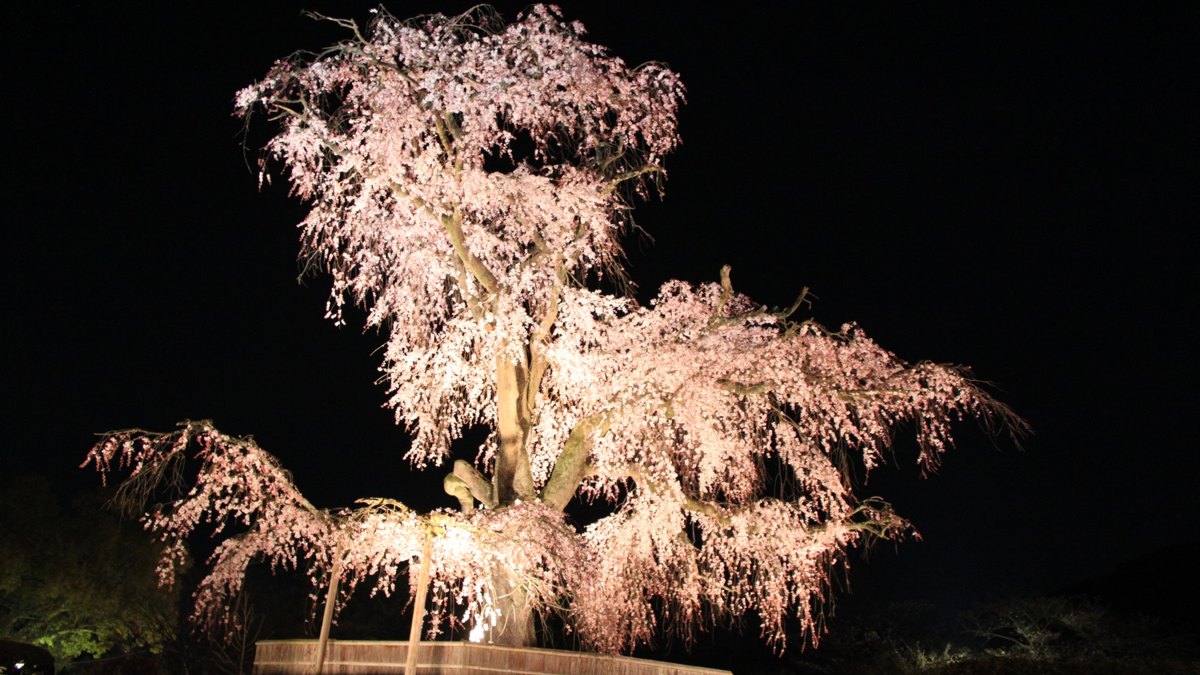
Kyoto's most famous single tree lives here: a giant weeping cherry known as the "Gion night sakura," lit up in the evenings during the season. The park is free and sits right by Yasaka Shrine, typically peaking late March to early April. Illumination dates are set each year, so check the current schedule before an evening visit.
The destinations worth a trip
Mount Yoshino (Nara)
Japan's most storied cherry destination: around 30,000 trees across about 200 varieties (mostly mountain cherry, a different type from the city Somei-Yoshino) planted up the mountain in four areas that bloom in sequence from the base upward, stretching the display over roughly a month (early to late April). The famous view is "hitome senbon" — a thousand trees at a single glance — and there's evening illumination too. Reach the slopes by ropeway from Kintetsu Yoshino Station.
Hirosaki Park (Aomori)
The best reason to go north: about 2,600 trees across 52 varieties around a castle and its moats, blooming late April to early May — perfect if you missed the peak further south. Hirosaki's signature is the hanaikada, a "petal raft" that carpets the moat pink as the blossoms fall. The park is free; the inner castle areas and botanical garden charge a small fee (from ¥320), and it's lit until 10pm during the festival.
Chureito Pagoda (Yamanashi)
Himeji Castle (Hyogo)
Cherry blossoms against a brilliant-white World Heritage castle. The key thing to know: seeing the blossoms from the Sannomaru grounds is free — you only pay to enter the castle keep itself, which is ¥2,500 for non-resident adults (18+) as of 2026, free for under-18s. For the blossom photo everyone wants, you don't need a ticket at all.
Tips for seeing the blossoms
- Most spots are free — Ueno, Meguro River, the Philosopher's Path and Maruyama cost nothing. Budget only for gardens (Shinjuku Gyoen ¥500), the Himeji keep, boats and some illuminations.
- Go early or on weekdays. The famous Tokyo spots are genuinely packed at peak — mornings are calmer and better for photos.
- Night viewing (yozakura) is a whole separate experience: Meguro River lanterns, Chidorigafuchi's lit moat, Maruyama's weeping cherry. Confirm this year's illumination dates on the official site.
- Mind the rules and the crowds: take your rubbish home, don't break branches, and remember alcohol is banned in some gardens (Shinjuku Gyoen).
- Timing is everything — full bloom is short. Our sakura full-bloom guide covers how to read the forecast so you land in the right week.
FAQ
Where are the best places to see cherry blossoms in Japan?
When do cherry blossoms bloom in Japan?
Do you have to pay to see cherry blossoms in Japan?
Which Tokyo cherry blossom spot is best at night?
Is Mount Yoshino worth the trip for cherry blossoms?
Can I have a hanami picnic under the blossoms?
Sources
Checked July 28, 2026: official pages for each spot — Tokyo's GO TOKYO and park authorities (Ueno, Meguro River, Chidorigafuchi via Chiyoda City), the Ministry of the Environment (Shinjuku Gyoen), Kyoto City Tourism (Philosopher's Path, Maruyama), Yoshino tourism, Hirosaki Park, Fujiyoshida (Arakurayama / Chureito) and Himeji Castle — plus JNTO and the Japan Meteorological Agency for bloom definitions. Prices, festival dates and illumination periods change every year; the official site for each spot is the live source.
Deciding which season to travel? See our best time to visit Tokyo guide.
Tokyo to Osaka, Tokyo to Kyushu, Tokyo to Hokkaido — day by day — plus seven places most visitors never reach.
- 12 pages, 80 photographs, every stop linked to its guide
- Every price and opening hour read from the official page
- Re-issued monthly, so it does not go stale in your inbox
Free. One email a month, plus the rare change that matters. Unsubscribe with one click in any email. By subscribing you agree to our privacy policy.