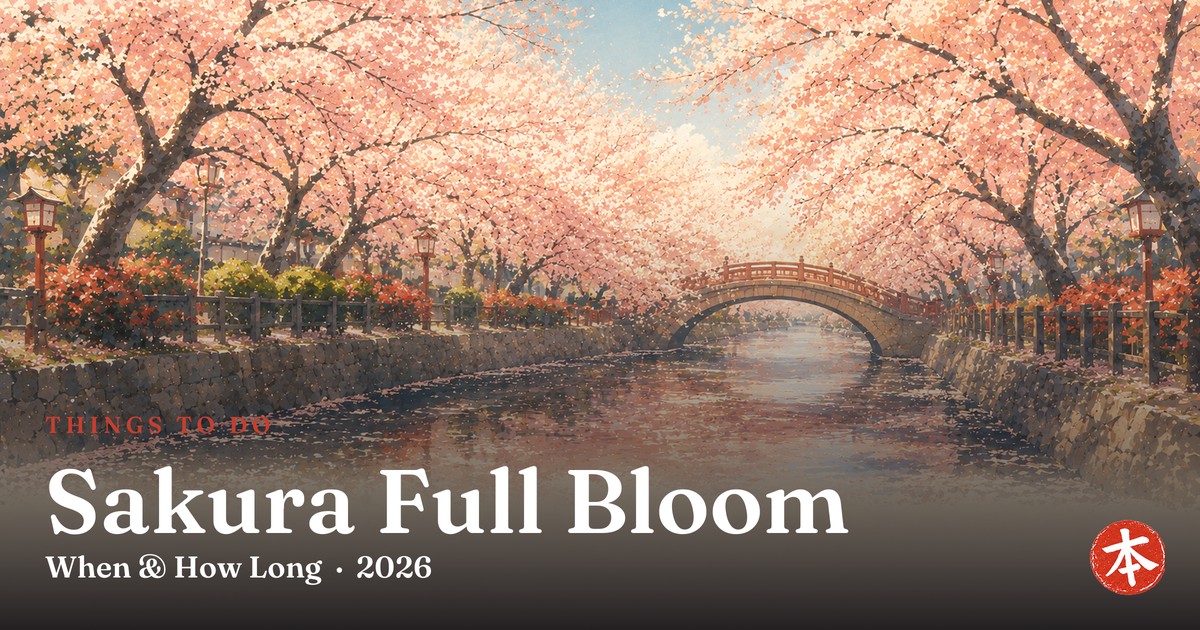
Quick answer: full bloom — mankai in Japanese — is the peak of the cherry blossom season, and it's short. A spot generally reaches full bloom about a week after flowering begins, and the petals usually start falling around a week after that. Count the build-up and the fall, and the good viewing window is roughly 10 days to two weeks — but it swings with region and weather every single year.
(Timing is half the game — the other half is knowing how the party itself works: our hanami guide covers the picnic culture, and the Mt. Fuji sakura guide covers the late-blooming rescue plan if you miss Tokyo's window.)
That short, moving target is why cherry blossom trips go wrong. This guide covers what full bloom officially means, how long you realistically have, the rough regional timing, and how to track the forecasts so you don't book for the wrong week.
What “full bloom” actually means
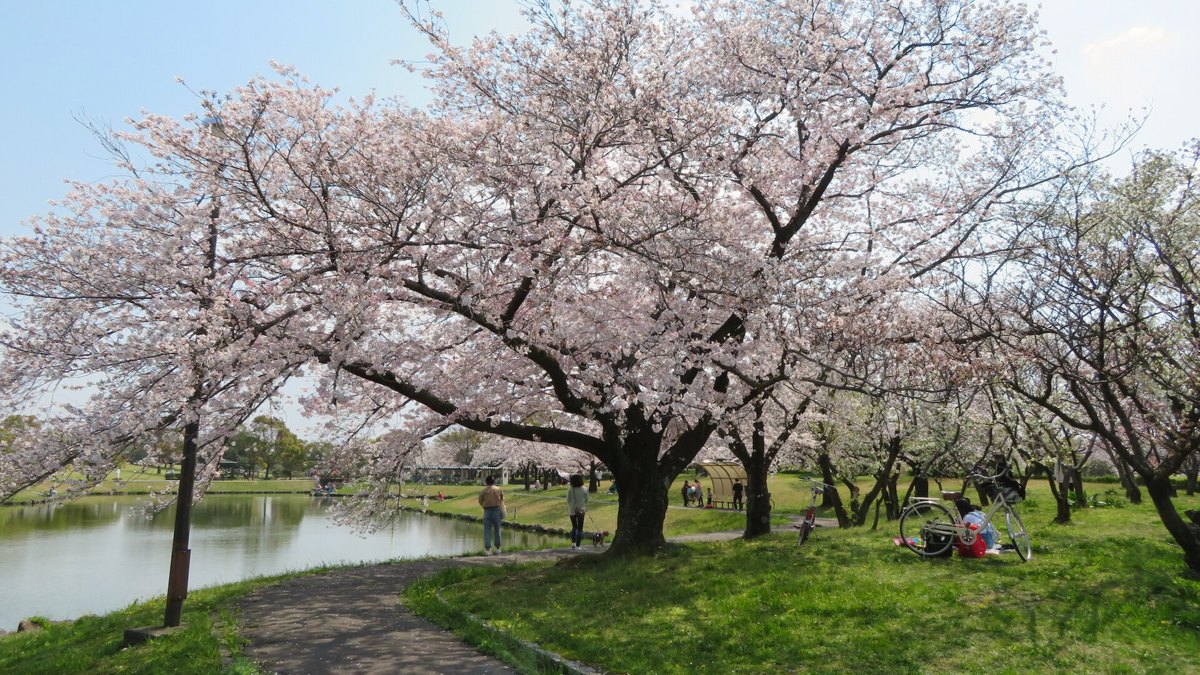
In Japan, full bloom isn't a feeling — it's a measured observation. For each location the weather agency watches a designated sample tree (hyohonboku) and declares "flowering" (kaika) when five or six blossoms have opened, then "full bloom" (mankai) when about 80% or more of the buds are open. The trees observed are mainly Somei-Yoshino, the pale-pink variety planted almost everywhere from Kyushu up to Hokkaido's Ishikari plain. It's worth knowing the standard is one specific tree per area — your favorite park down the road may be a day or two ahead of or behind the official call.
How long you actually have
Here is the honest timeline, and why you should plan loosely:
- Flowering → full bloom: generally about a week — roughly 1 to 10 days depending on variety and weather.
- Full bloom → petals falling: a spot usually holds full bloom and then begins to scatter about a week later.
- Whole viewing window: around 10 days to two weeks end to end, and genuinely variable by region and year.
So "full bloom" is really a few peak days inside a short window, not a fixed date you can pin months ahead. Aim for the forecast peak, but give yourself a buffer of a few days on each side.
Rough regional timing (it moves south to north)
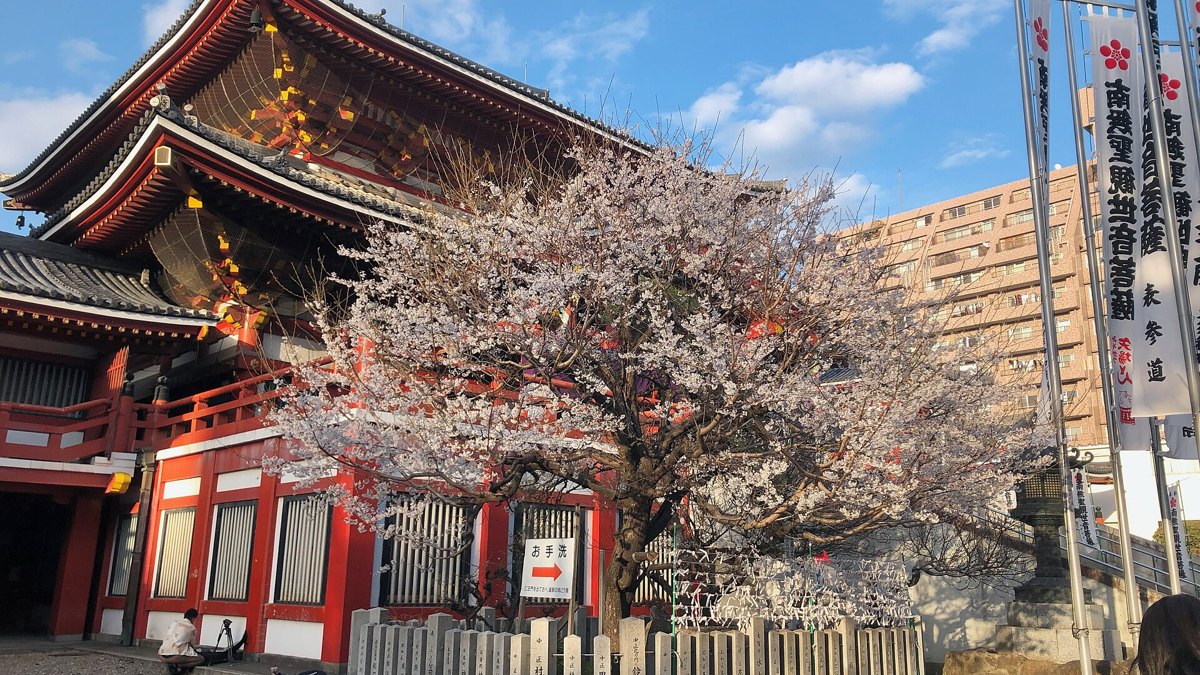
Cherry blossom season rolls up the country over about two months. Treat the following as typical, year-varying ranges for Somei-Yoshino — not promises for any given spring:
| Region | Typical full-bloom window |
|---|---|
| Okinawa / Amami (Hikanzakura — a different, earlier species) | Late January – early February |
| Kyushu, Shikoku, Kanto (incl. Tokyo) | Late March – early April |
| Hokuriku & southern Tohoku | Mid – late April |
| Northern Tohoku | Late April |
| Hokkaido | Around mid-May |
That south-to-north march is also a travel strategy: if you miss the peak in Tokyo, it may be just starting a few hundred kilometers north. Chasing the bloom front by rail is very doable — our guide to regional JR passes covers the area passes that make hopping between regions affordable.
How to track the forecast (and who actually makes it)
The two big ones are the Japan Meteorological Corporation (n-kishou.com), which models bloom timing from accumulated temperature and each tree's condition across roughly a thousand sites, and Weathernews (weathernews.com), which combines temperature trends with real-time bud observations from its long-running, crowd-sourced "Sakura Project." Both refresh frequently as the season nears, with daily updates in the final couple of weeks. The move that works: pick your region, watch its forecast full-bloom window, and check again right before you travel — the estimate tightens the closer you get.
(For the month around the bloom, our Japan in March guide puts the JMA’s March 25 flowering line and March 31 full-bloom line against the weather in eight cities.)
FAQ
What does ‘full bloom’ (mankai) actually mean?
How long does full bloom last?
When is cherry blossom full bloom in Japan?
Who forecasts the cherry blossoms — is it the government?
How do I track full bloom for my trip dates?
What can ruin full bloom once it arrives?
Bottom line (2026) — Full bloom (mankai) is the peak of Japan’s cherry blossom season and it is short. Timing shifts by region, so plan against the forecasts rather than a fixed date to avoid missing the window.
Sources
Checked July 27, 2026: the Japan Meteorological Agency's cherry-blossom observation material (definitions of flowering and full bloom, sample-tree method and the note that JMA stopped issuing forecasts in 2010), viewing-period notes published by a major blossom park, and the forecast pages of the Japan Meteorological Corporation and Weathernews. Bloom dates change every year — the forecast providers are the live source for any given spring.
Chasing the blossoms across the country? See where to go in our best cherry blossom spots in Japan guide, and when to travel in our best time to visit Tokyo guide.
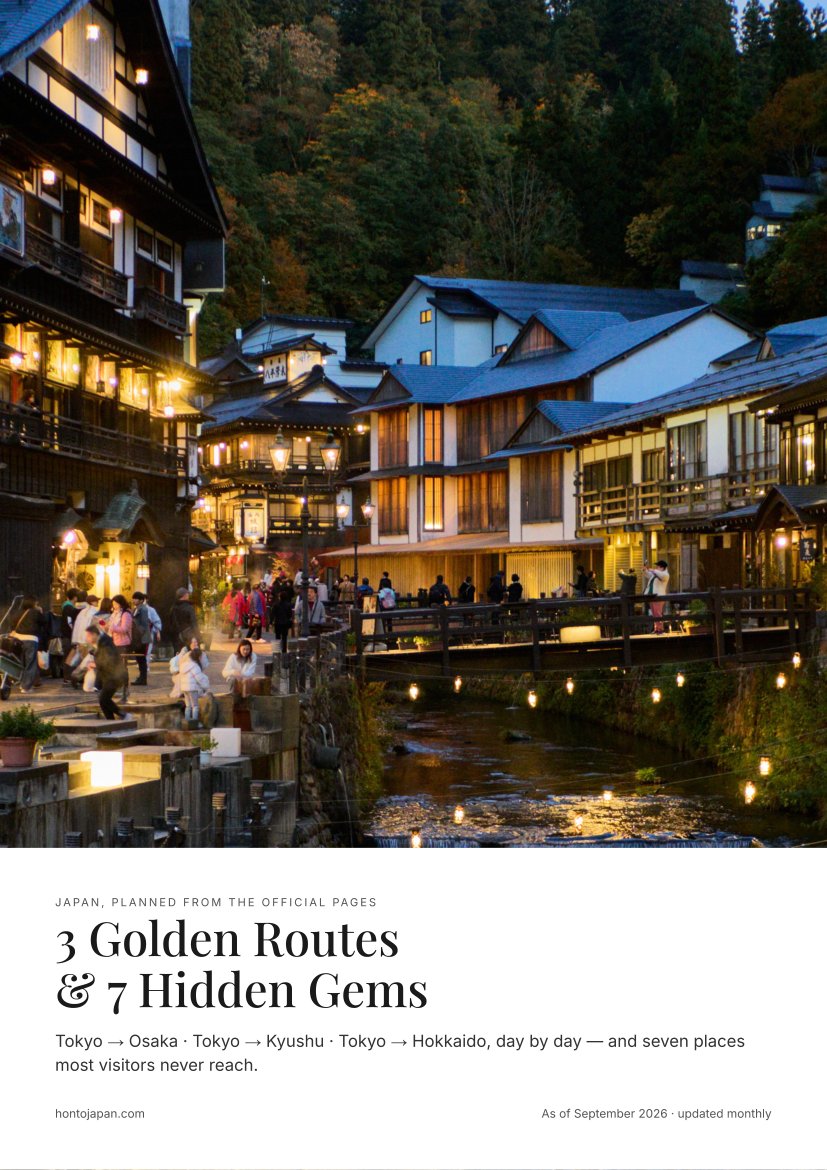
Tokyo to Osaka, Tokyo to Kyushu, Tokyo to Hokkaido — day by day — plus seven places most visitors never reach.
- 12 pages, 80 photographs, every stop linked to its guide
- Every price and opening hour read from the official page
- Re-issued monthly, so it does not go stale in your inbox
Free. One email a month, plus the rare change that matters. Unsubscribe with one click in any email. By subscribing you agree to our privacy policy.