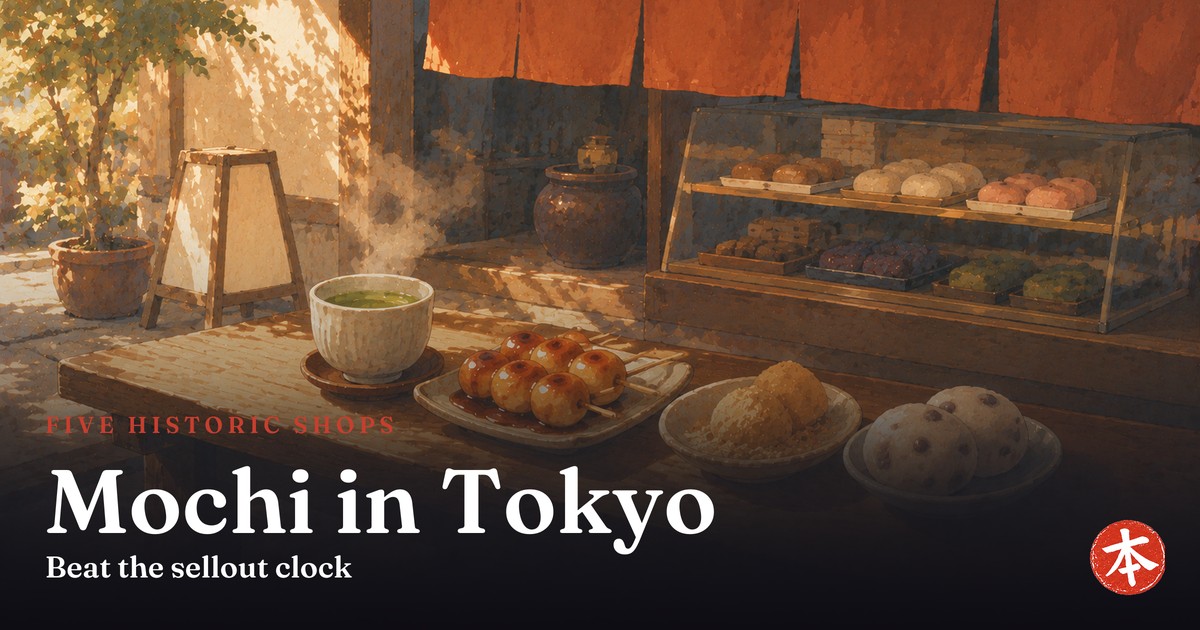
Tokyo's mochi masters are among the oldest businesses in the city — an 1819 dango house in Nippori, an 1854 dessert room beside Sensoji, an 1899 gift-mochi maker in Akasaka — and they share an operating philosophy that defeats itinerary apps: make today's batch, sell it, close when it's gone. Several say so on their own websites; most won't publish prices at all. This guide maps five shops with real official information, tells you honestly where the record goes quiet, and passes along the one piece of mochi advice issued by the Japanese government itself.
Tokyo mochi shops at a glance
| Shop | Founded (own claim) | Official hours | Published price |
|---|---|---|---|
| Oiwake Dango (Shinjuku) | — | 10:30–19:00 · tearoom from 12:00 (wknd 11:30) · closed Jan 1–2 | Mitarashi ¥237 (tax in) |
| Habutae Dango (Nippori) | 1819 | Wkdy 9:30–11:00 & 12:00–16:30 🚨midday break · wknd 10:00–16:30 | Not published |
| Kototoi Dango (Mukojima) | — | Not published · closes early on sellout (official) | Not published |
| Jiman Kusamochi (Higashi-Mukojima) | Not on official site | 9:00 until sold out (official pages list 16:00–17:00 close) · Wed closed | Not published |
| Asakusa Umezono | 1854 | Corporate site omits — verify before visiting | Second-tier: zenzai ~¥930 |
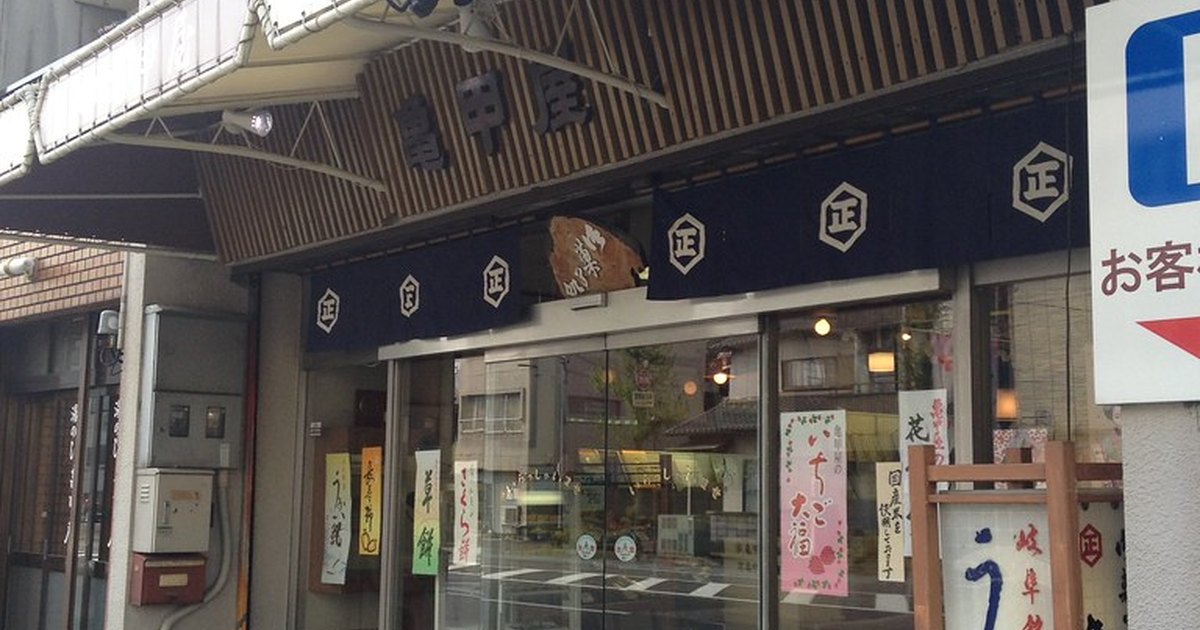
| Akasaka Aono | 1899 | Wkdy 9:00–18:00 · Sat –17:00 · Sun/hol closed | Akasaka-mochi from ¥810/3 pcs (as listed) |
Inside a neighborhood mochi shop's working day:
The sellout clock: why morning is the only strategy
What do the shops themselves say about running out?
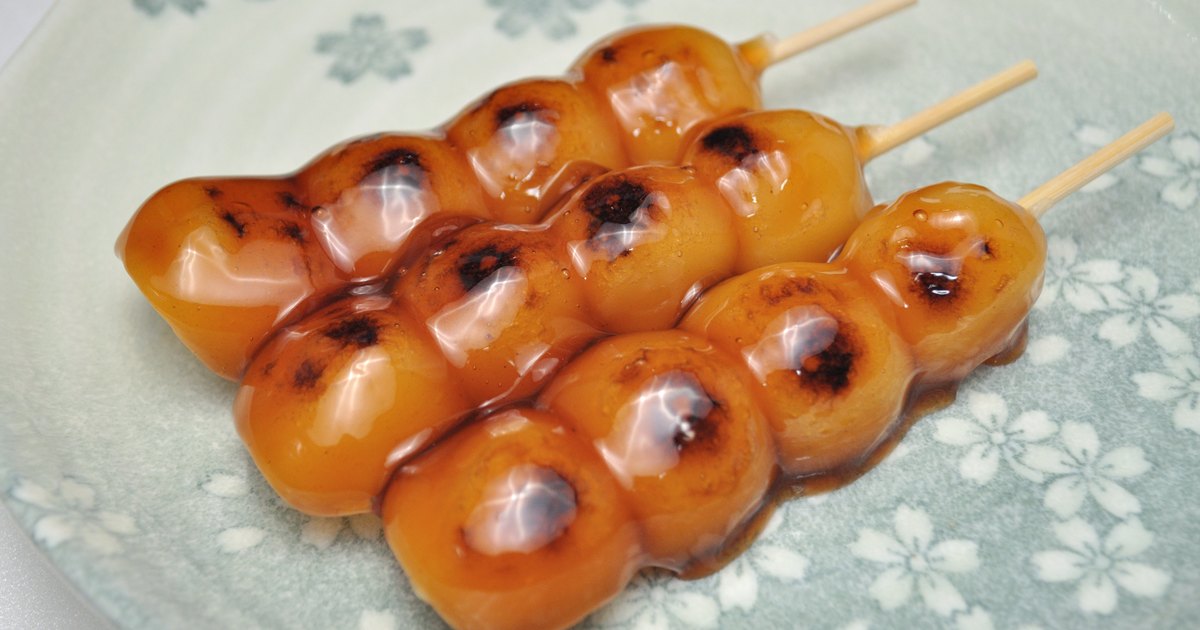
This genre's defining rule is printed by the shops, not invented by guides. Kototoi Dango's site warns it may close before the official end of the day when the dango run out; Jiman Kusamochi's posted hours are literally "9:00–17:00 (from 16:00, until sold out)" — and its own pages disagree by an hour on the close, which tells you how relevant closing time is when the trays empty; Oiwake prints the same sellout caveat under its Shinjuku hours; and Habutae's outdoor grilled-dango stand runs 11:00–16:30 "while supplies last." Add Habutae's weekday midday break (the shop goes dark 11:00–12:00) and the strategy writes itself: arrive in the morning, treat 15:00 as closing time city-wide, and never make a dango shop your day's finale. The eastern pair — Kototoi and Jiman — sit twelve minutes' walk apart near the Sumida, making a natural Skytree-morning double with Asakusa across the river on our DIY food-tour route.
The five shops, one century at a time
Which one fits which day?
Shinjuku day: Oiwake — the ¥237 mitarashi and a tearoom, embedded in the city's busiest district, open latest of the group. Yanaka/Nippori day: Habutae — two perfect dango since 1819, best eaten in the old shop calm before the weekday break. Skytree/Mukojima morning: Kototoi's three-color trio and Jiman's mugwort masterpiece, both on the sellout clock. Asakusa afternoon: Umezono's awa-zenzai — millet mochi drowned honorably in hot bean paste, in the 1854 dessert room a minute off Nakamise (details via its pages before you commit; the corporate site is charmingly reticent). Gift run: Akasaka Aono's furoshiki-wrapped Akasaka-mochi, from ¥810 for three and officially good for 12 days — the only mochi here designed to survive a flight. The wagashi world's drinkable partner is covered in our Tokyo matcha guide, and the street-snack cousins in the street-food guide.
When is mochi season — and what changes through the year?
Is there a best month for this pilgrimage?
Mochi has no off-season, but it has moods. Spring brings sakura-mochi and the mugwort harvest that makes kusamochi taste greenest; early summer is strawberry-daifuku's last stand; autumn pairs dango with moon-viewing (tsukimi dango stacks appear in September); and New Year is the form's high holiday, when the whole country eats it — and when the shops here run their only real holidays (Oiwake rests January 1–2, Habutae's branch and others follow suit). The practical seasons: visit in cool months for the hot zenzai at Umezono, warm months for chilled anmitsu at Oiwake's tearoom, and any morning at all for the skewers.
The safety note Japan issues about its own favorite food
What does the official advice actually say?
Every January, mochi makes Japanese news for the wrong reason, and the Consumer Affairs Agency publishes standing advice aimed at elderly eaters that's sensible for anyone: cut mochi into small pieces; drink tea or soup first so your throat is moist; chew thoroughly and mix well with saliva before swallowing. The chew is the point of mochi — give it the time it demands, especially with kids and grandparents at the table. It's the rare food whose government-issued instructions genuinely improve the experience: slow down, and the flavor arrives with the safety.
(For wagashi beyond dango and mochi: our wagashi in Tokyo guide covers eight other shops, from a 150 yen monaka at Usagiya in Ueno to Toraya’s 638 yen monthly fresh sweet in Akasaka.)
FAQ
What’s the difference between mochi, dango and daifuku?
Where’s the best cheap introduction?
What’s special about Habutae Dango in Nippori?
Is the Mukojima kusamochi shop worth the detour?
Which shop has a proper sit-down dessert room?
What about mochi as a gift to take home?
Why do these shops keep selling out by afternoon?
Is there really government safety advice about eating mochi?
What happened to Ginza’s famous monaka shop Kuya?
Bottom line (2026) — Tokyo’s great mochi comes from shops older than the city’s modern name – an 1819 dango house in Nippori (Habutae), a riverside kusamochi maker, and Shinjuku’s ¥237 mitarashi at Umezono. Almost all of them run on one rule: when the day’s mochi sells out, the shutters close. Kototoi Dango’s official page carries the same sellout warning.
Sources
Habutae Dango founding claim, hours, midday break and stand times: habutae.jp. Kototoi Dango products, access and sellout warning: kototoidango.co.jp. Jiman Kusamochi hours, closing day and address: jimankusamoti.com (its own pages carry the conflicting close times noted). Umezono founding claim and address: asakusa-umezono.co.jp (hours and prices via its hosted menu page, flagged as second-tier). Akasaka Aono founding claim, hours and Akasaka-mochi listing: akasaka-aono.com. Oiwake hours, tearoom times, sellout note and mitarashi price: oiwakedango.co.jp. Mochi safety guidance: the Consumer Affairs Agency's official page. All read on August 18, 2026. Prices the shops don't publish are not quoted. The embedded video is by its creator.
Tokyo to Osaka, Tokyo to Kyushu, Tokyo to Hokkaido — day by day — plus seven places most visitors never reach.
- 12 pages, 80 photographs, every stop linked to its guide
- Every price and opening hour read from the official page
- Re-issued monthly, so it does not go stale in your inbox
Free. One email a month, plus the rare change that matters. Unsubscribe with one click in any email. By subscribing you agree to our privacy policy.