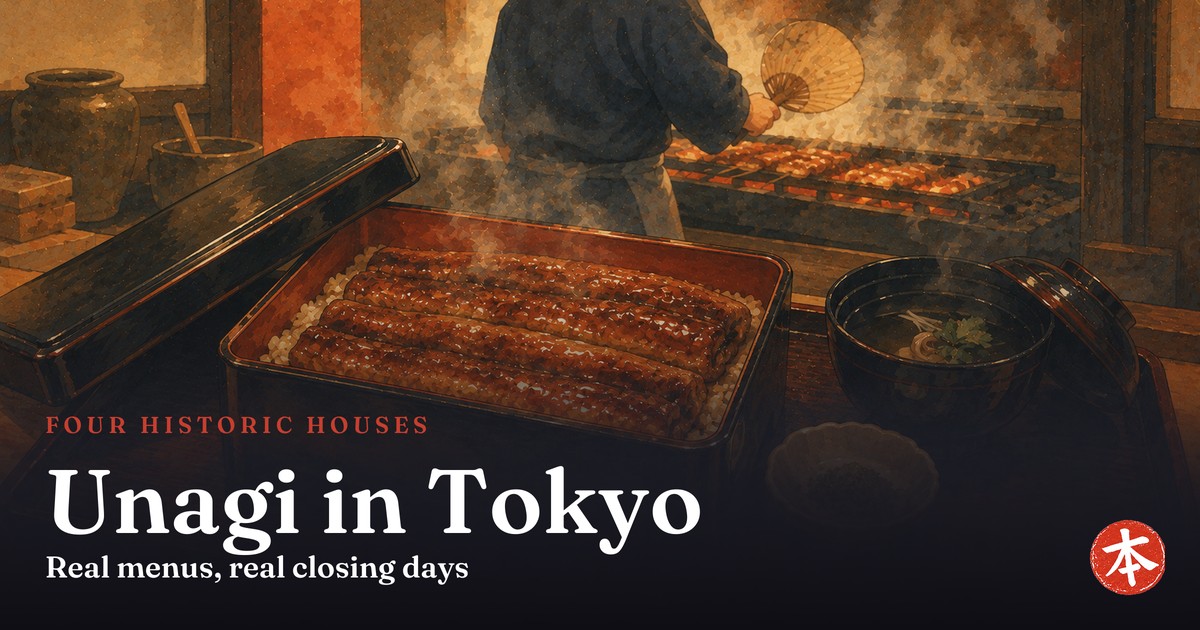
Unagi is Tokyo's most ceremonial everyday food — eel grilled, steamed, lacquered with tare and laid over rice in a box — and its great houses are old enough to predate the word "Tokyo." They also publish real information, which almost no English guide bothers to read: Nodaiwa lists its prices and its startling closing day (the national eel holiday itself), Izuei's menu quietly inverts the grade names everyone assumes, and Miyagawa Honten rests on Saturdays of all days. Four houses, official menus, one honest omission — here's eel in Tokyo done properly.
Tokyo's eel houses at a glance
| House | Official una-ju range | Closed | Note |
|---|---|---|---|
| Nodaiwa (Higashi-Azabu · Ginza) | ¥3,900–¥8,500 +10% service | Sun · doyo-no-ushi | Wild eel ~late Apr–late Nov · phone reservations |
| Izuei (Ueno) | ¥3,960–¥6,160 (matsu = cheapest!) | Never | 11:00–21:00 · +15% in private rooms |
| Miyagawa Honten (Tsukiji) | ¥4,070–¥5,390 (grades i–ni) | Saturdays | Ikada from ¥10,000, reserve · site dated, call to confirm |
| Unagi Toku (Ginza · Shibuya) | ¥3,630–¥9,680 tax in | Ginza: none listed | Hamamatsu house, Ginza since 2016 · takeout |
The craft itself — split, skewer, grill, steam, glaze — at a Tokyo eel counter:
Nodaiwa: the 200-year house that skips eel day
What does the official menu actually say?
The Azabu flagship — a dark-timbered house tracing itself, by its own account, to the Kansei era two centuries back — publishes everything that matters. Una-ju in five grades: Kikyo ¥3,900, Hagi ¥4,600, Yamabuki ¥5,500, Katsura ¥6,900, Tamate ¥8,500, tax included, plus a 10 percent service charge — the line English menus love to omit. Shira-yaki (sauceless, wasabi-and-salt) at ¥3,500 for the purist table. Wild eel runs roughly late April to late November, priced by the day's catch. Hours: lunch 11:00–14:30 (weekday last order 13:30), dinner 17:00–21:00, sold out means closed early. And the famous quirk, straight from the official closing-days line: Sundays and doyo-no-ushi — the summer eel day itself. The Ginza branch (Tsukamoto Sozan Building B1, directly at Ginza Station's C6 exit) keeps similar rhythm with Sunday rest. Phone ahead: the site urges early reservations and — candidly — shows its age, so a call doubles as confirmation.
Izuei: open every day, grades in reverse
Why is "matsu" the cheapest box here?
Ueno's eel fixture — by its own telling, born in the shogun Yoshimune era by Shinobazu Pond — is the reliability play: officially no closing days, 11:00–21:00 with last order 20:15, phone reservations accepted, multi-floor seating that swallows families. The menu is the educational one: una-ju matsu ¥3,960, take ¥5,060, ume ¥6,160 — pine, bamboo, plum, priced upward, the reverse of the matsu-on-top convention most guides assume — plus shira-yaki at ¥6,380 and kaiseki courses to ¥22,000. Small print from the official pages: weekday afternoons 15:00–16:30 the kitchen serves una-ju and kabayaki only, and private rooms carry a 15 percent service charge. One more official note for map-app users: the Nagatacho branch closed permanently in January 2022 — navigate to Ueno.
Miyagawa and Toku: old Tsukiji, new Ginza
Which one fits a weekend?
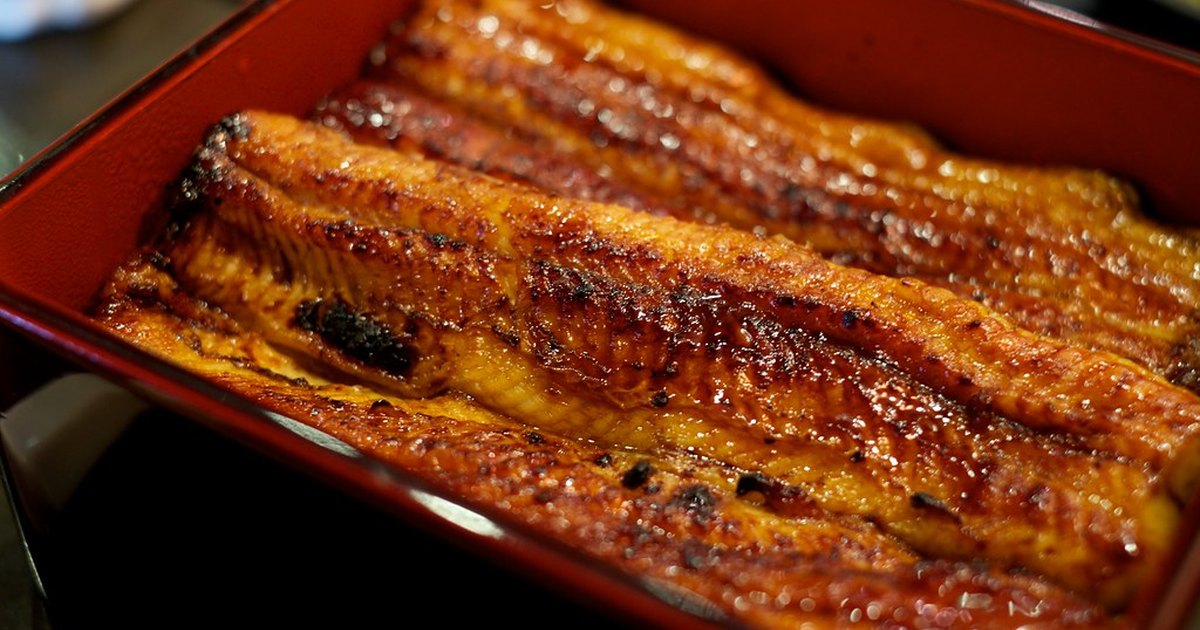
Not Miyagawa Honten — and that's the point to plan around: the Tsukiji original (tracing itself to 1893 and a six-rin eel bowl) officially rests every Saturday, serving 11:30–14:00 and 17:00–20:00 otherwise. Grades run katakana-style — i ¥4,070, ro ¥4,510, ha ¥4,950, ni ¥5,390, the nakairi-don with eel hidden mid-rice at ¥8,690, and the celebratory ikada from ¥10,000, reservation required (the kitchen asks an hour). Its website wears a 2012 copyright, so confirm prices by phone for anything ceremonial. Unagi Toku is the opposite energy: a Hamamatsu company (founded, by its own history, in 1909) that landed on Ginza's GinzaNovo 11th floor in 2016 — una-ju ¥3,630 to ¥9,680 tax included, the ohitsu eel chazuke at ¥3,960, lunch and dinner service, takeout available, plus a Shibuya Hikarie branch running straight through the day. Tourist-smooth, honestly good, and the official pages describe the full Kanto method: split the back, grill, steam well, grill again. For the rest of Tokyo's top-end food canon, our wagyu, tempura and sushi guides run the same official-menus-only method, and the DIY food-tour route strings the districts together.
How to order like you've done this before
What's the rhythm of an unagi lunch?
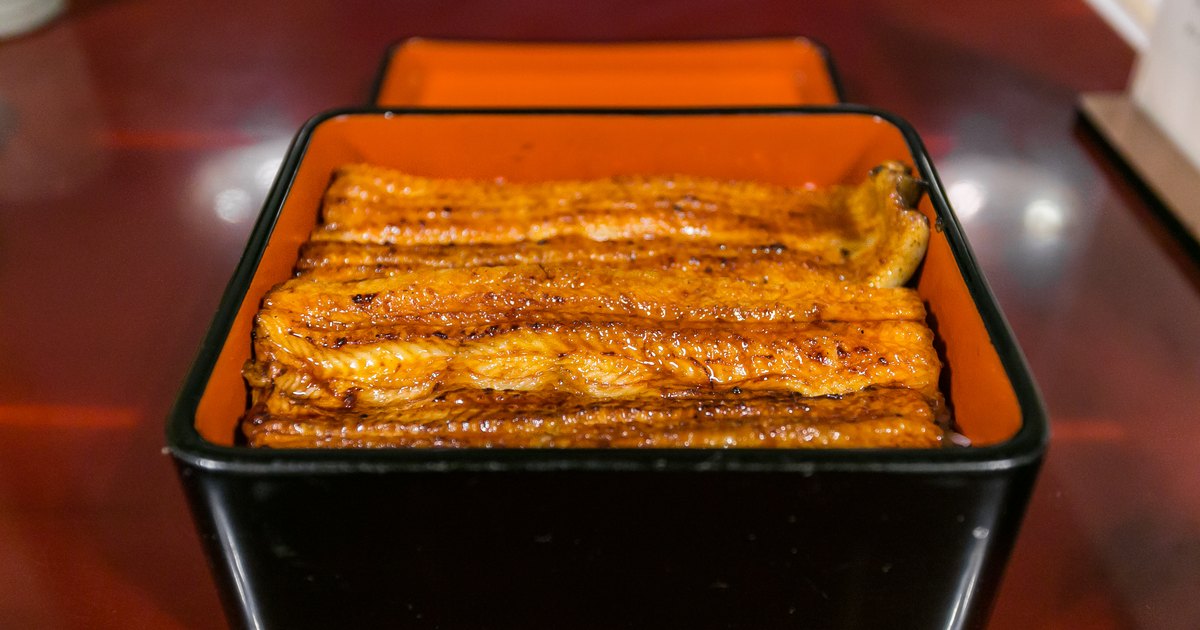
Eel counters run on patience by design: the Kanto process — grill, steam, glaze-grill — starts in earnest when you order, so 20 to 40 minutes to the box is normal and a good sign, not slow service. Order the middle grade on a first visit (the difference between grades is portion and cut, not quality of eel), add kimo-sui — the clear liver soup most houses pair with una-ju — and resist the urge to drown the box in extra tare before tasting it as glazed. Lunch is the value window at every house here: same kitchen, gentler total, easier seats. And go hungry — a proper una-ju eats richer than its size suggests, which is exactly the point of a dish that has survived two centuries of Tokyo appetites.
(If your trip continues to Nagoya: our hitsumabushi guide explains the city’s way of eating eel in three servings, first plain, then with condiments, then with broth, at six restaurants.)
FAQ
What makes Tokyo-style unagi different?
How much does good unagi cost in Tokyo?
Why is Nodaiwa closed on the big eel day?
What’s the deal with natural (wild) eel at Nodaiwa?
Is ‘matsu’ always the premium grade?
Which unagi house is open when the others aren’t?
Do I need reservations — and do they take cards?
What about Obana — isn’t it the best?
Is unagi ethical to eat, given eel stocks?
Which house fits which trip?
Bottom line (2026) — Tokyo’s historic eel houses publish real menus: Nodaiwa from ¥3,900 (plus 10% service), closed Sundays and on doyo-no-ushi – the eel day itself. At Izuei in Ueno, ‘matsu’ is the cheapest grade, not the top, and Tsukiji’s Miyagawa Honten is closed Saturdays. Nodaiwa’s own pages carry the price-change disclaimer and wild-eel season note.
Sources
Nodaiwa: prices, service charge, price-change disclaimer, wild-eel season, hours, closing days (Sundays and doyo-no-ushi), branch details and history — nodaiwa.co.jp official pages. Izuei: hours, no-closing-days policy, menu prices, afternoon menu limitation, private-room service charge, Nagatacho closure notice and history — izuei.co.jp official pages. Miyagawa Honten: hours, Saturday closing, menu grades and ikada policy — the Miyagawa norenkai official site. Unagi Toku: prices, hours, takeout and company history — unagiya.co.jp official pages. All read on August 17, 2026. Obana publishes no official information and none is quoted; no house publishes payment methods and none are claimed. The embedded video is by its creator.
Tokyo to Osaka, Tokyo to Kyushu, Tokyo to Hokkaido — day by day — plus seven places most visitors never reach.
- 12 pages, 80 photographs, every stop linked to its guide
- Every price and opening hour read from the official page
- Re-issued monthly, so it does not go stale in your inbox
Free. One email a month, plus the rare change that matters. Unsubscribe with one click in any email. By subscribing you agree to our privacy policy.