Tokyo's observation decks have become a serious line item — reserved tickets, surge windows, ¥2,000–3,000 a head. So here's the city's best-kept open secret, hiding in plain sight inside its own city hall: the Tokyo Metropolitan Government Building (Tocho) in Shinjuku runs twin 45th-floor observation decks at 202 meters — completely free, no reservation possible or necessary, open into the night. This guide covers the slightly odd two-tower schedule, the closure-day trap, and an honest comparison with the paid decks.
Tocho observation decks at a glance
| Price | Free — no reservations taken or needed |
|---|---|
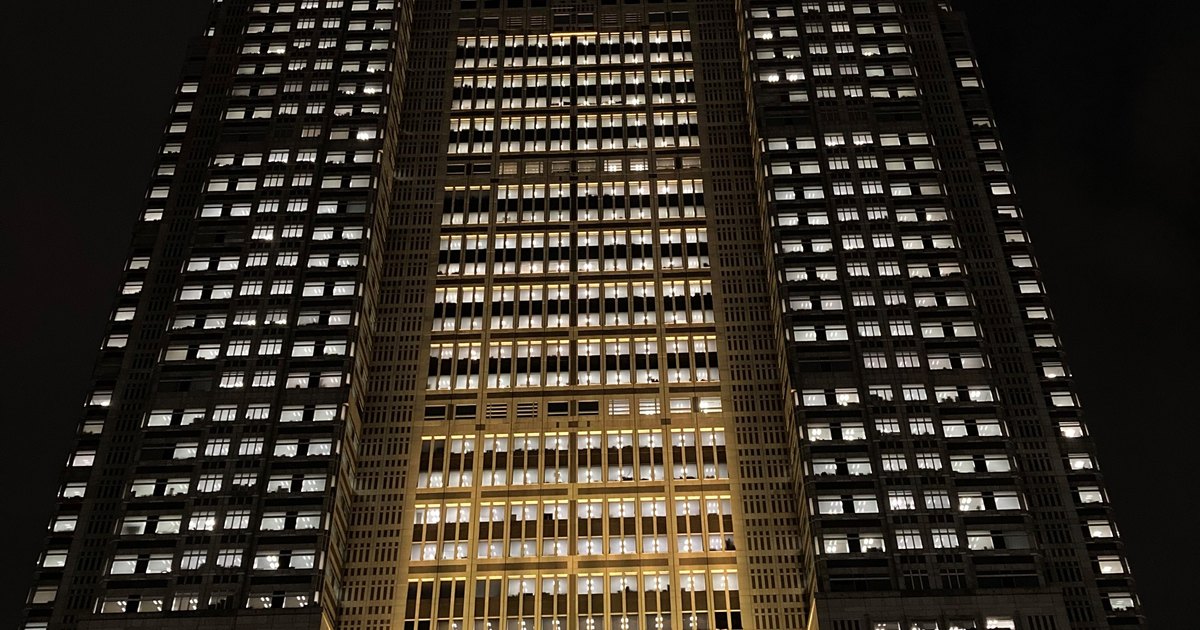
| Height | 202 m — 45th floor of Main Building No. 1, West Shinjuku |
| South deck | 9:30–22:30 (last entry 22:00) · closed 1st & 3rd Tuesdays |
| North deck | 9:30–17:00 (to 22:00 when South is closed) · closed 2nd & 4th Mondays |
| Year-round closures | Dec 29–31 · Jan 2–3 · inspection days — check the official calendar |
| Extras | Café & shop (North, to 17:30) · gift shop (South, to 22:00) |
| Access | ~10 min walk from Shinjuku Station west side · above Tochomae Station (Oedo line) |
How the two-tower system works
The building's distinctive twin towers (Kenzo Tange's 1991 cathedral-of-bureaucracy design) each carry a deck, and they run on staggered schedules so that one is almost always open: as of the current official page, the South deck is the long-hours workhorse (9:30–22:30) resting on 1st/3rd Tuesdays, while the North deck covers days and steps up to 22:00 whenever the South rests, taking 2nd/4th Mondays off. The practical translation: on almost any evening, one tower shows you Tokyo at night for free — you just might not get to choose which. The views are near-identical twins anyway.
What you actually see
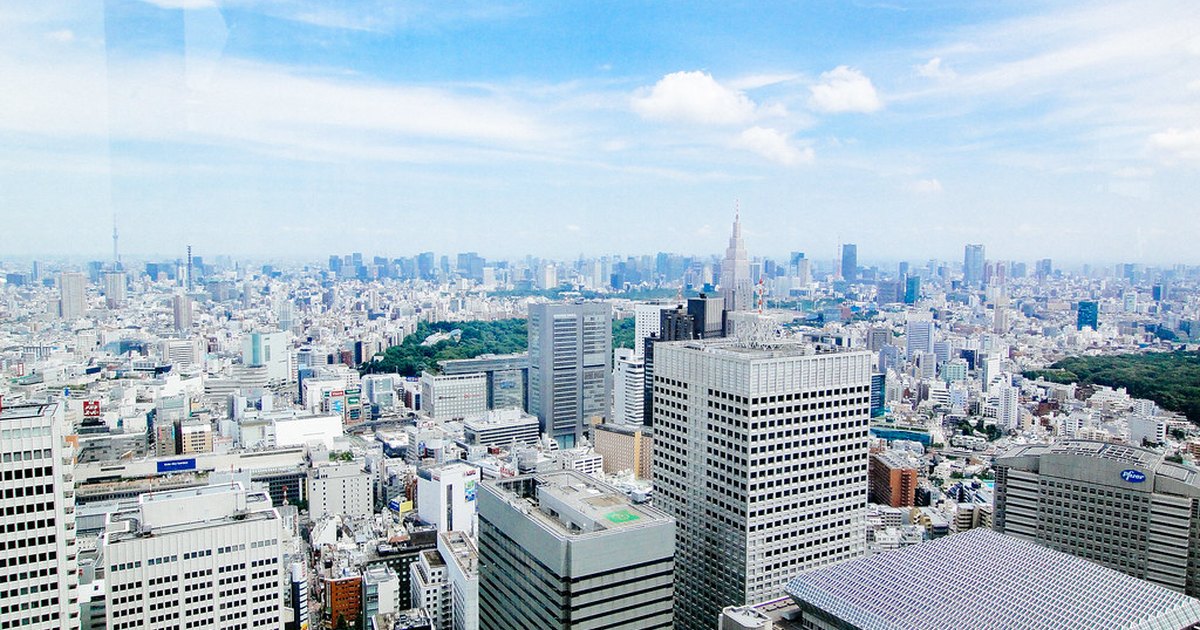
The 45th floor puts you eye-level with Shinjuku's skyscraper canyon and above nearly everything else: the endless carpet of the world's biggest city running to the horizon in every direction, Tokyo Tower and Skytree pinned like markers, and on clear days — best on crisp winter mornings — Mt. Fuji floating to the west. Dusk is the money slot: arrive 30–40 minutes before sunset, watch the city light itself, stay for full night mode. That sequence at the paid decks costs serious yen and often a timed ticket; here it costs patience for an elevator.
Free vs paid: the honest comparison
Making an evening of it
The deck anchors a tidy West Shinjuku evening: the skyscraper district's architecture at golden hour, the view at dusk, then dinner back toward the station's neon side — the exact "modern west day" rhythm our 7-day itinerary builds in. Staying nearby? Shinjuku's case as a base is covered in the district guide, and seasonal visibility (that winter-Fuji trick included) folds into the month-by-month guide.
(Paying for a view instead? The Mori Art Museum and Tokyo City View share an entrance in Roppongi — and are sold as two different tickets.)
FAQ
Is the Tokyo Metropolitan Government Building observation deck really free?
What are the observation deck’s opening hours?
Which is better — the North or South observatory?
Can you see Mt. Fuji from the Tokyo Government Building?
How does the free deck compare to Shibuya Sky and Tokyo Skytree?
How do I get to the observation decks?
Bottom line (2026) — Tokyo’s best-value view is free: the Metropolitan Government Building’s 45th-floor decks at 202 m, in Kenzo Tange’s twin-tower 1991 design. Each tower carries a deck on its own schedule, so check the current hours, last-entry time and per-deck closure day before you go — the extended-hours arrangement and on-site café/shop are all listed on the official Bureau of Finance pages.
Sources
Tokyo Metropolitan Government Bureau of Finance official observatory pages — admission (free), hours and last entry, closure days for each deck, the extended-hours arrangement, and the café/shop listings — checked July 31, 2026, alongside the official opening calendar and past reopening notices (which document the towers' role swaps during renovations). Deck assignments can change; the official calendar is the live source for any specific date.
Tokyo to Osaka, Tokyo to Kyushu, Tokyo to Hokkaido — day by day — plus seven places most visitors never reach.
- 12 pages, 80 photographs, every stop linked to its guide
- Every price and opening hour read from the official page
- Re-issued monthly, so it does not go stale in your inbox
Free. One email a month, plus the rare change that matters. Unsubscribe with one click in any email. By subscribing you agree to our privacy policy.