Food at Tokyo Disney Resort is a system before it's a menu, and the system is not the American one. Tokyo still runs Priority Seating — retired in the US, current here — with booking windows of one month for park restaurants and three months for hotel dining, same-day slots reopening at 9:00 each morning, and a house rule that outside meals belong at the Picnic Area outside the gates. Every one of those details contradicts something a US-park veteran assumes. Here's the dining rulebook as the resort's official FAQ actually writes it — and an honest list of what its bot-protected pages wouldn't let us verify.
Tokyo Disney dining at a glance
| System | Official rule |
|---|---|
| Priority Seating | Seated with priority as seats open — not a guaranteed time · full party present · late = possible cancellation |
| Park restaurants | Book from 1 month before, 10:00 JST until 20:59 the day before |
| Hotel restaurants | From 3 months before, 10:00 JST (Chef Mickey: 1 month) until 60 min before |
| Same-day seats | Online from 9:00 · at the restaurant from 10:00 (cancellations only) |
| Outside food | Meals → Picnic Area outside the gates · candy, gum, kids' snacks, water/PET drinks OK inside |
What the food side of a park day actually looks like:
Priority Seating: the system Americans think is dead
Why is a "reservation" not a guaranteed table?
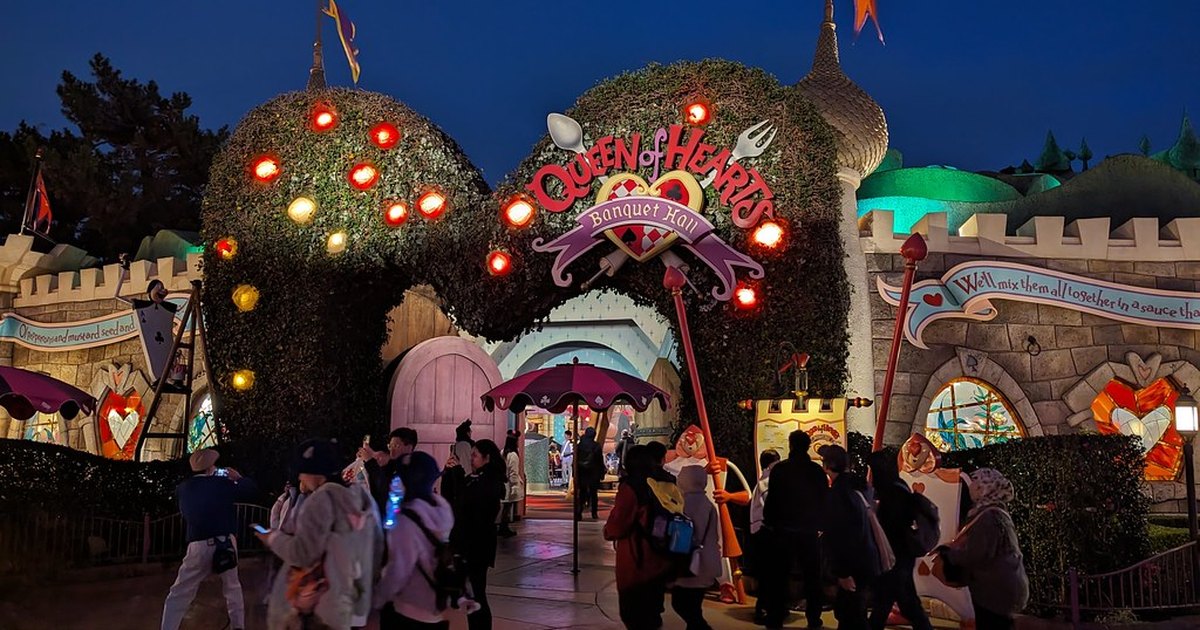
Tokyo's official definition is careful, and worth reading as written: with Priority Seating you arrive at your chosen time and are guided to a table as seats become available. It's a queue-skip with a timestamp. The FAQ's attached conditions are where trips wobble: the entire party must be assembled before seating, blowing past your slot risks cancellation, and groups of five-plus may be split. In practice it works beautifully — waits are minutes, not hours — as long as you treat the time as a check-in, not a curtain call. The name itself is the tell that you're in a different resort culture: the US parks retired the term decades ago, so English articles calling it "the old system" have it backwards — in Tokyo, this is the system.
The booking windows: one month, three months, and one exception
For a first-hand account, Chris and Jennifer Wada’s Thoughts on Tokyo DisneySea on food.wada.travel describes staff merging two bookings into adjacent tables at Magellan’s, and that no one was seated until the whole party had arrived.
What should you set alarms for?
Three dates run the show, all in Japan Standard Time. Park restaurants open one month before the visit date at 10:00 and close bookings at 20:59 the night before. Disney-hotel restaurants open three months out at 10:00 — the character-dining and lounge seats evaporate near window-open — with Chef Mickey as the official exception at one month. Then the daily second chance: same-day slots from 9:00 online (10:00 at the restaurant door), fed by cancellations. Anyone planning meals around park tickets should sync the windows with our ticket-price guide and the park-hours explainer — the 9:00 refresh is easiest to work from a hotel breakfast table before rope drop.
The picnic-area rule: Tokyo's outside-food logic
What can you actually carry in?
The rule reads strict and lives reasonable. Full meals from outside can't be eaten inside the parks — the official FAQ sends bento-carriers to the Picnic Area beyond the gates, with same-day re-entry handled by cast members. Inside, the explicitly permitted list: candy, gum, snacks for small children, water bottles and plastic-bottled non-alcoholic drinks. The carve-out that matters: guests with food allergies or medical dietary needs may bring their own food into park restaurants, provided companions order from that restaurant's menu — pair it with the FAQ's instruction to tell a cast member on arrival. It's a different philosophy from the US parks' anything-under-a-sandwich tolerance: Tokyo assumes you'll eat the park's food, and prices the assumption into the day.
What we couldn't verify — and where to look instead
Honesty section: the resort's menu pages, popcorn flavor maps and low-allergen menu details all sit behind bot protection, so this guide quotes none of them — no prices, no flavor lists, no allergen tables. The current versions live in the official Tokyo Disney Resort app, which shows live popcorn-wagon flavors and restaurant menus, and that's the source to trust on the day. For everything else around a visit — hotels, tickets, the two-park strategy — start from our complete Tokyo Disney Resort guide, and watch the resort's dated changes (ticket structures, the national tax-free switch this November) on the 2026 tracker.
🚨 Traveling after October 2026? Japan's tax-free system changes on November 1, 2026. Instead of the tax being taken off at the register, you will pay the full price in store and claim the consumption tax back at customs when you leave, within 90 days of purchase — the retailer refunds it after that check. Until October 31, 2026 the system described here still applies. Our tax-free shopping guide has the detail.
A food-day strategy that respects the queues
Reserve one table-service meal per park day and let counter service carry the rest — that's the rhythm the system rewards. Eat counter-service lunch at 11:00 or after 14:00, never at noon, when every queue in the park doubles; the parade windows are the other quiet stretch, since half the park is sitting on a curb. Book the table-service dinner for the hour your feet will give out — for most people that's 18:00 — and treat the reservation as the day's anchor. Snack wagons run continuously and rarely queue long outside of the newest-flavor frenzy. And if the 9:00 same-day refresh hands you a seat you didn't plan for, take it: a guaranteed sit-down hour in an air-conditioned room is the most underrated attraction in either park.
(Dining bookings live in the app too — our Tokyo Disney app guide covers setup, cards and the pass systems.)
FAQ
What is Priority Seating at Tokyo Disney Resort?
When can I reserve park restaurants?
When can I book Disney hotel restaurants?
Can I get a same-day reservation?
Can I bring my own food into the parks?
What if someone in my party has a food allergy?
Where do I find the popcorn flavors?
Does Tokyo Disney have a Dining Plan or Mobile Order?
What’s the deal with the Tick Tock Diner?
Is eating at Tokyo Disney expensive?
Sources
Priority Seating definition and conditions, park and hotel booking windows, the Chef Mickey exception, same-day booking times, the picnic-area rule, the permitted-items list, allergy instructions and the Tick Tock Diner variant: Tokyo Disney Resort's official FAQ, Japanese and English editions, read on August 17, 2026. The resort's main site and reservation pages block automated reading; nothing from them is quoted, and no menu prices or popcorn flavors appear in this article for that reason. The embedded video is by its creator.
Some links on this page may be affiliate links, which means we may earn a commission if you book or buy through them — at no extra cost to you. See our affiliate disclosure.
Tokyo to Osaka, Tokyo to Kyushu, Tokyo to Hokkaido — day by day — plus seven places most visitors never reach.
- 12 pages, 80 photographs, every stop linked to its guide
- Every price and opening hour read from the official page
- Re-issued monthly, so it does not go stale in your inbox
Free. One email a month, plus the rare change that matters. Unsubscribe with one click in any email. By subscribing you agree to our privacy policy.