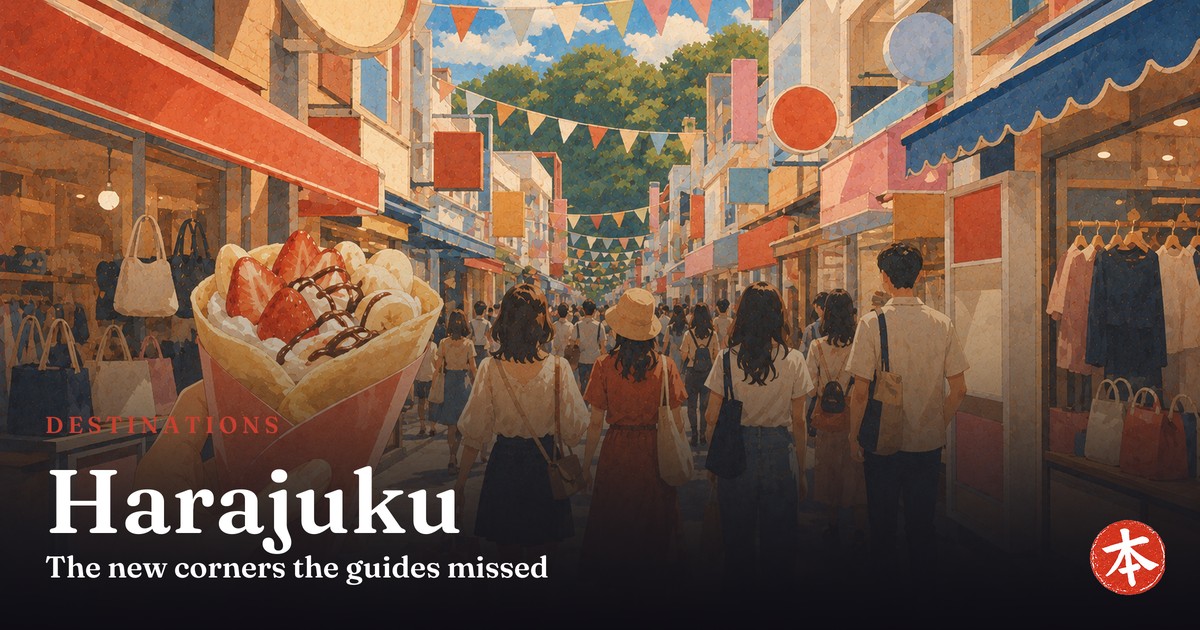
Harajuku rebuilt half of itself while English guidebooks were reprinting the 2019 edition. Since then: Harakado opened at the crossing with a working ¥550 public bath in its basement, the Tokyu Plaza opposite renamed itself Omokado (and landed a Google Store this month), the beloved wooden station was demolished — its replica doesn't open until winter 2026 — and Shibuya ward started actually collecting ¥2,000 littering fines. Here is the district as it exists in August 2026, from official sources.
Harajuku at a glance
| Item | Official answer (Aug 2026) |
|---|---|
| Station | New building since Mar 2020 · Takeshita exit west, Omotesando/Meiji Jingu exits · 🚨 wooden-station replica under construction to Dec 2026 |
| Takeshita Street | Pedestrian-only 11:00–18:00 · keep left · touts are banned — ignore them · shop hours vary |
| Harakado (2024) | ~75 shops · retail 11:00–21:00, food floors to 23:00 · Kosugiyu sento B1: 7:00–23:00, closed Thu, ¥550 |
| Omokado (renamed 2024) | Ex-"Tokyu Plaza Omotesando Harajuku" · rooftop Omohara Forest · Google Store since Aug 13, 2026 |
| Laforet / Omotesando Hills | 11:00–20:00 · Hills restaurants to 22:30 (Fri–Sat 23:00) · Ando's 2006 spiral mall |
| Rules & events | Littering fine ¥2,000 (enforced since Jun 2026) · Super Yosakoi Aug 29–30, 2026 |
Takeshita Street to Omotesando on foot:
The crossing's new twin towers: Harakado and Omokado
How do you do the sento as a first-timer?
Kosugiyu runs on standard sento etiquette, novice-friendly: pay at the machine (¥550), rent a towel set if you packed nothing, wash seated at a spigot station before entering any tub, and keep towels out of the water. Tattoos are the perennial question at Japanese baths — policies vary and change, so check at the desk rather than assuming either way. Thirty minutes covers the full milk-bath-and-cold-plunge circuit.
Why is a bathhouse the district's best new attraction?
Because it's real. When Tokyu opened Harakado (April 17, 2024) as a "creative hub" of roughly 75 shops, it gave the basement to Kosugiyu Harajuku — the second bathhouse of a Koenji institution operating since 1933 — and the result is an actual working sento inside a fashion complex: 7:00–23:00, closed Thursdays, ¥550, with the signature 41°C milk bath and hot-cold alternating routine, towels rentable at the desk. Soaking at 8:00 before the district wakes is the single best new Harajuku experience, full stop. Across the crossing, the mirror-tunneled building everyone photographs was renamed Omokado the same day — retire "Tokyu Plaza Omotesando Harajuku" from your notes — and keeps its rooftop Omohara Forest (treehouse Starbucks included) while adding the headline tenant of the moment: a three-floor Google Store, opened August 13, 2026. The two "corners" have quietly recentered the whole district on the Jingumae crossing.
Takeshita Street, played by the actual rules
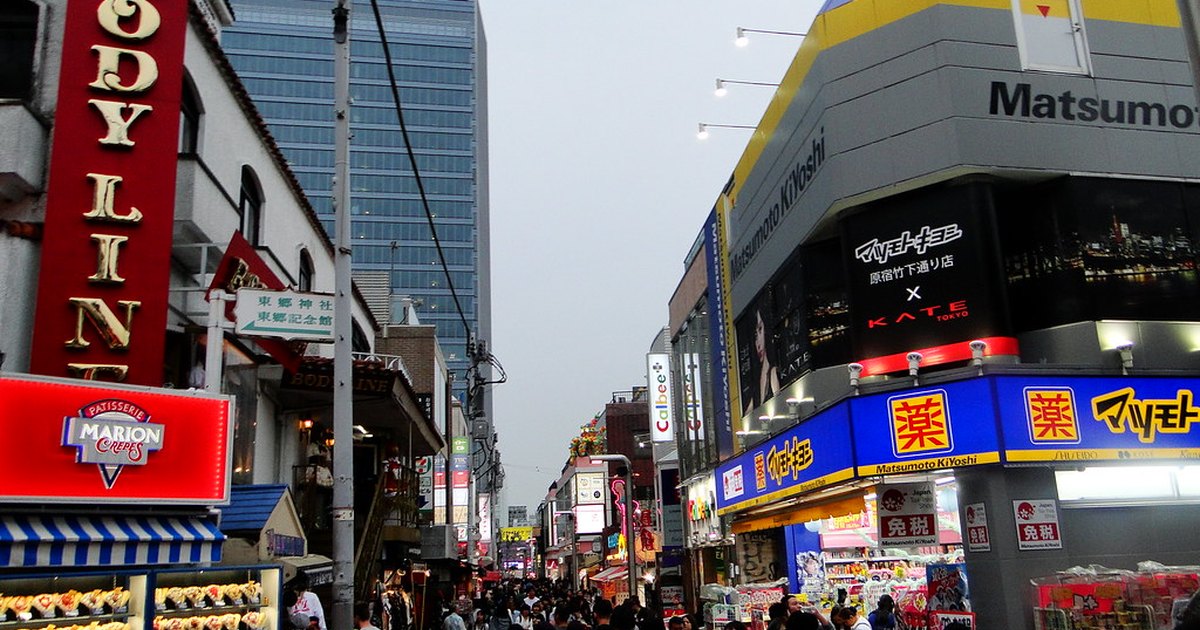
What does the street association want you to know?
Three things, straight from its official pages: the street is car-free 11:00–18:00 (rising bollards enforce it), keep left when the crush builds, and street touts are banned — the association's own advice is to ignore anyone soliciting and involve police if they persist. What it pointedly doesn't publish: a length or a shop count, so treat every "350 meters of 100 shops" online as folklore. The eating protocol matters more since June 2026, when Shibuya ward began collecting its ¥2,000 littering fine in earnest (hundreds issued in the first weeks): crepes and candy floss are the street's religion, but eat them beside the stand and give the wrapper back. Sequence tip — the street photographs empty and shuttered before 10:00, peaks absurdly 13:00–17:00 weekends, and the quieter parallel lanes (Brahms Path, Harajuku Street) carry the same energy at strolling density.
Beyond the crush: Omotesando, Cat Street, and the shrine next door
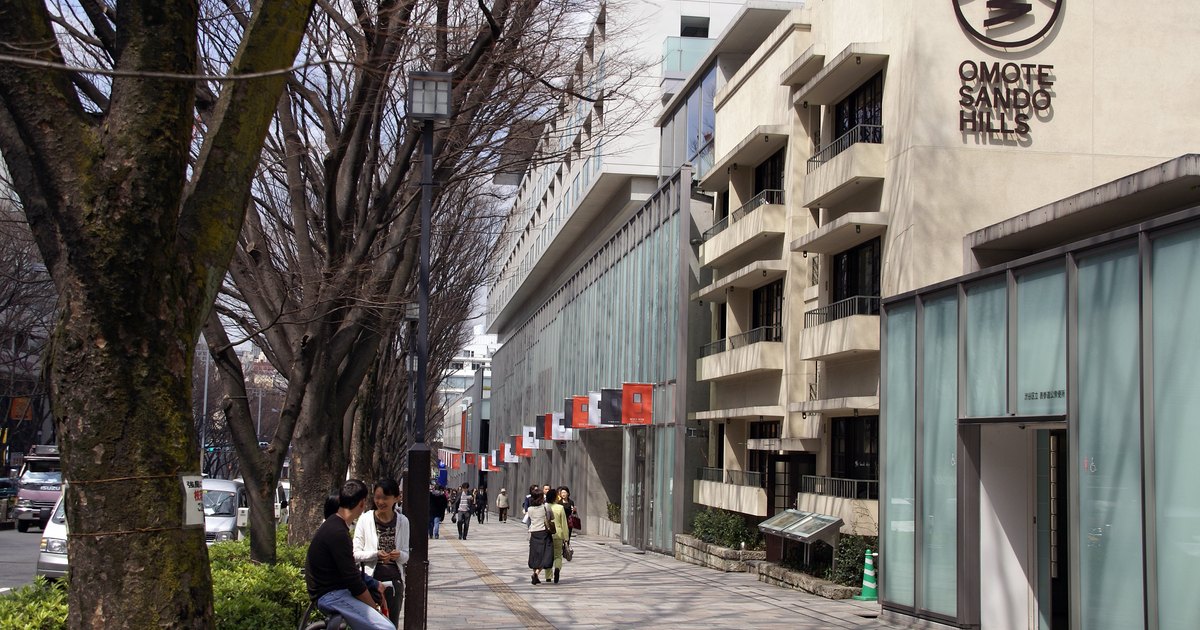
Where do you escape when Takeshita overwhelms?
Two blocks in any direction. Brahms Path and the Harajuku Street lane run parallel with a tenth of the bodies; Cat Street absorbs the fashion crowd at strolling pace; and the ultimate reset sits across the tracks — Meiji Jingu's forest, where the crowd noise dies within a hundred meters of the torii. The district's genius is that its loudest hundred meters and its quietest hundred hectares share one train station.
How do you build the full Harajuku day?
Start where the district is oldest: Meiji Jingu opens with the sunrise, and its forest exit puts you back at the station just as Takeshita's shutters rise. Work the street, then cross to the twin plazas, then let Omotesando slow the pace — the zelkova avenue is Tokyo's open-air architecture museum, anchored by Laforet (the subculture incubator, 11:00–20:00) and Tadao Ando's Omotesando Hills (2006), whose interior spiral ramp mirrors the avenue's slope and whose far wing preserves a piece of the prewar Dojunkai apartments it replaced. Drift home via Cat Street — the vintage-shop lane running along the covered Shibuya River toward the scramble — and you've walked the whole spectrum, shrine forest to streetwear resale, in one arc that ends at Shibuya Sky for dusk. Food-first visitors can splice in the crepe-and-konbini economics from our Tokyo food tour guide. One dated warning: the wooden station replica is a construction site until winter 2026 — don't promise your group the famous spire yet.
(The Sanrio shop on Takeshita-dori runs on entry tickets that expire ten minutes after your slot: our Hello Kitty stores guide has the rule and the quieter alternatives in Shibuya and Odaiba.)
(For fluffy pancakes nearby: our souffle pancakes in Tokyo guide covers A Happy Pancake in Omotesando, 2 minutes from exit A2 of Omotesando Station, which takes bookings online only.)
FAQ
What happened to Harajuku’s famous wooden station?
What are Takeshita Street’s actual rules and hours?
What is Harakado — and does it really have a public bath?
What’s Omokado then?
Is eating while walking banned in Harajuku?
How do Harajuku and Meiji Jingu fit together?
What is Cat Street?
Are Laforet and Omotesando Hills still worth entering?
When should you come — and is there a big event soon?
Bottom line (2026) — Harajuku rebuilt itself while the guidebooks slept. Harakado opened in 2024 with a working sento in its basement (¥550); the Tokyu Plaza across the crossing renamed itself Omokado — Google’s new store landed there this month — and the beloved wooden station is a construction site. A littering fine is now real — don’t eat while walking.
Sources
Station history, demolition and the replica building's construction period and planned opening: JR East's official press releases (2019, 2020 and April 2024). Takeshita Street's pedestrian hours, left-walking request and anti-touting rule: the street association's official site. Harakado's opening date, scale and hours, and the Omokado renaming: Tokyu Fudosan's official news release and both buildings' official pages (which also carry the Google Store and rooftop details). Kosugiyu Harajuku hours and prices: its official site. Laforet and Omotesando Hills hours and history: their official pages. The littering fine and its enforcement figures: Shibuya ward's official ordinance page. Super Yosakoi dates: the festival's official site. All read on August 20, 2026. The embedded video is by its creator.
Tokyo to Osaka, Tokyo to Kyushu, Tokyo to Hokkaido — day by day — plus seven places most visitors never reach.
- 12 pages, 80 photographs, every stop linked to its guide
- Every price and opening hour read from the official page
- Re-issued monthly, so it does not go stale in your inbox
Free. One email a month, plus the rare change that matters. Unsubscribe with one click in any email. By subscribing you agree to our privacy policy.