Two listings for the same aquarium give it two different prices. On its own page it showed US$11.25. On the LEGOLAND Japan page it appears as an add-on for an additional JPY 800. Which door you come through is the main decision here.
| Bought on its own | Listed at US$11.25 |
|---|---|
| Added to a LEGOLAND ticket | Listed as an additional JPY 800 |
| Scale | 11 themed sea areas — compact, attached to the theme park |
| Sample size | 46 reviews against 3,000+ bookings. A small sample |
| The concept | See, touch and learn, surrounded by LEGO bricks |
| Highlights | 360-degree circular tank, rocking rockpools, a spider crab |
| How long | 1–3 hours, per the listing |
| Hours | Not shown on the listing. We are not guessing |
The same aquarium, two prices, two doors
This is the sort of thing that only shows up if you read more than one listing, and it is worth reading before you buy anything.
| How you buy it | What the listing showed |
|---|---|
| SEA LIFE Nagoya on its own page | US$11.25 |
| Added on the LEGOLAND Japan page | An additional JPY 800 |
Why this happens
The aquarium sits beside the theme park and shares its theming. Its job in the operator’s business is partly to make a park ticket more attractive, which is why it is priced as an incentive when bundled and at a normal rate when bought alone. Neither price is a trick. They are two different products: a standalone visit, and an extra hour inside a day you had already committed to.
What we did not verify
Whether the add-on price applies to every LEGOLAND ticket tier, or only to some. That is exactly the kind of condition that lives in the small print of a booking page and we are not going to assert it either way. If the combo is your plan, confirm the add-on is offered on the tier you are buying before you build the day around it.
The decision, plainly
If you are going to LEGOLAND Japan, look at the combo first. If you are not, this listing is how you get in, and the question becomes whether a compact themed aquarium out at the port is worth the trip on its own — which is a real question rather than a rhetorical one.
Check SEA LIFE Nagoya tickets → Affiliate link — affiliate disclosure.
Forty-six reviews, and what a small sample is worth
We flag this because the number is unusual and because most guides quietly present a rating without the sample behind it.
The number in context
This listing showed a 4.4 rating across 46 reviews, with 3,000+ bookings. The big city aquariums in the same series carry review counts in the thousands: Sunshine Aquarium at 1,800, Aqua Park Shinagawa at 2,800. Forty-six is a different order of magnitude, and it reflects an attraction that is smaller and less visited by the international audience.
What it does not mean
It does not mean the aquarium is bad. A 4.4 is a decent score and 3,000 bookings is not nothing. What it means is that the rating is a weak signal here — a handful of opinions moves a small sample a long way in either direction, and you should not treat the number as precise.
What to judge it on instead
The description, which is concrete. Eleven themed areas, touch pools, a circular tank and LEGO theming tell you exactly what kind of visit this is. That is a much better basis for deciding than a decimal point derived from forty-six people.
What is actually inside
The listing names three things specifically, and the framing around them tells you the rest.
The LEGO framing is not incidental
The listing describes an aquarium where you see, touch and learn, surrounded by LEGO bricks. This is a themed attraction rather than a natural history institution, built to hold the attention of children who are already having a LEGO day. Going in expecting a research aquarium is a category error; going in expecting a well-made children’s attraction is accurate.
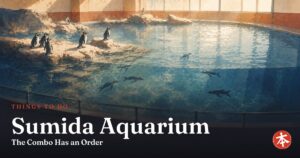
The 360-degree circular tank
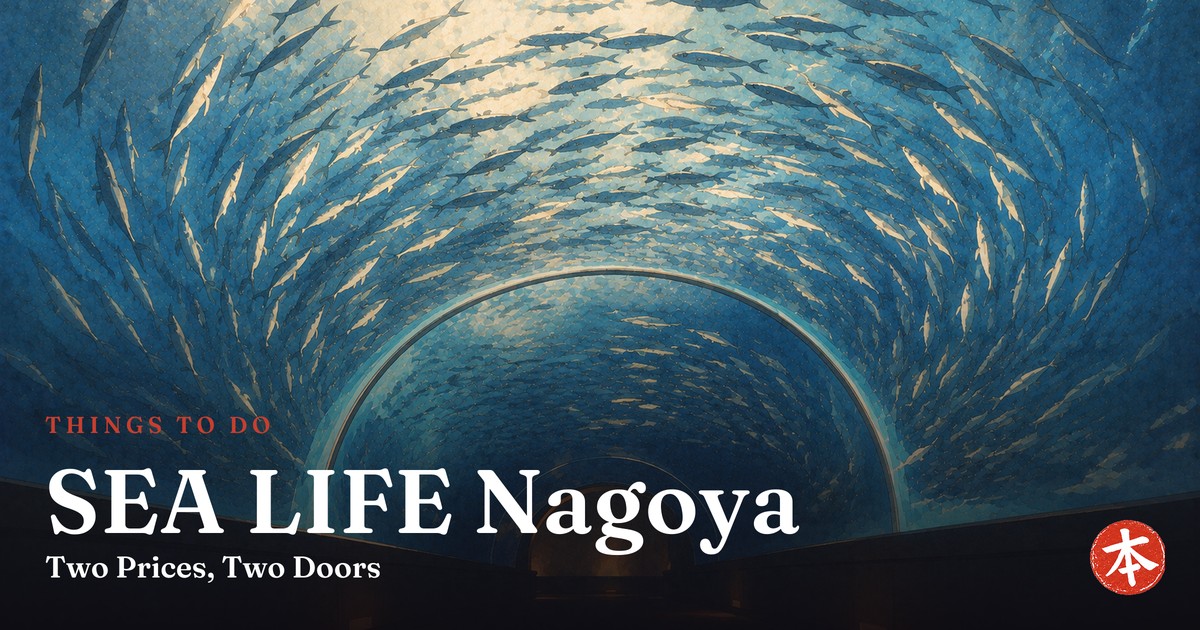
A ring you stand inside, with yellow tail fusiliers circling around you. Schooling fish in a circular tank is one of the more effective aquarium formats because the movement never resolves — and the listing calls it a relaxing experience, which for a parent partway through a theme park day is not a small selling point.
Rockpools and the spider crab
The rocking rockpools let you stroke a starfish and touch a sea anemone. The under-the-dock area has a spider crab coming up from the deep sea. Those two are the poles of the visit: the smallest, gentlest interaction and the single strangest animal in the building. Japanese spider crabs are worth seeing at any age.
See ticket options → Affiliate link — affiliate disclosure.
One to three hours, and who that range is for
That is a wide suggestion for a compact aquarium, and the width is the useful part.
The low end is a walk-through
Eleven themed areas can be covered in an hour if you are moving. If this is the tail end of a five-to-seven hour theme park day and everyone is tired, plan for the hour and treat it as a cool, quiet finish rather than a second attraction.
The high end assumes the touch pools
Three hours only happens if children are allowed to stay at the rockpools as long as they want. That is a legitimate way to spend an afternoon and it is worth knowing in advance, because it is the difference between an add-on and a destination.
As part of a LEGOLAND day
The pairing works because the aquarium is indoors and calm. A theme park day has a slump in it, and having somewhere air-conditioned and quiet to absorb an hour is a practical piece of scheduling rather than an indulgence. That is the strongest argument for the combo.
If the weather has broken
This is the scenario where the add-on stops being optional. A theme park in rain with small children is a difficult afternoon, and an indoor attraction on the same site that you have already paid a small amount to access changes the whole day. If your forecast looks unreliable and you are booking the park anyway, the aquarium is worth adding as insurance rather than as an attraction — and at the add-on price that is a cheap policy. Booking it on the day, from inside the park in the rain, is a worse position to be making the decision from.
Check availability → Affiliate link — affiliate disclosure.
Fitting it into a Nagoya day
Location does most of the work in this decision, as it does with the theme park next door.
If you want a bigger aquarium
Japan has several, and they are not out here. Sunshine Aquarium in Tokyo holds 37,000 fish on a rooftop; Aqua Park Shinagawa is the design-led one by the station. Both are a different scale of visit and both are in a city you are more likely to be staying in.
If Nagoya is a stopover
Nagoya Castle is the attraction that fits a gap between trains — central, historic and quick. The port cluster is not that. Our guide to shinkansen prices covers the leg if you are deciding whether to stop at all.
When to skip it
If you are not going to the theme park, if your children are past the touch-pool age, or if you have an aquarium already booked elsewhere in the trip. This attraction knows what it is and it is good at it — but it is designed to be the second thing you do that day, not the first.
Deliberately not stated here
| What we are not saying | Why |
|---|---|
| Opening and closing hours | The field was blank on the listing |
| The yen standalone price | Not verified. US$11.25 is the reseller listing’s figure, labeled as such |
| Whether the JPY 800 add-on applies to every ticket tier | Not stated. It appears on the LEGOLAND listing without tier conditions we could confirm |
| The names of all 11 areas | The listing names three highlights. We are not filling in eight |
| How the touch pools are supervised | Not stated. We will not guess at animal handling arrangements |
| Tank volumes or species counts | Not given, and this is a small aquarium where an invented figure would be obvious |
SEA LIFE Nagoya FAQ
Is SEA LIFE Nagoya cheaper with a LEGOLAND ticket?
How big is it?
What does 4.4 out of 46 reviews actually tell you?
What is the LEGO connection?
What are the highlights inside?
How long should I allow?
Is it worth visiting without going to LEGOLAND?
Are the touch pools supervised?
Check SEA LIFE Nagoya tickets → Affiliate link — affiliate disclosure.
Bottom line (2026) — SEA LIFE Nagoya showed US$11.25 on its own listing and appears on the LEGOLAND Japan listing as an additional JPY 800, so check both pages before buying either. It is a compact attraction: 11 themed sea areas, a see-touch-and-learn concept surrounded by LEGO bricks, a 360-degree circular tank of yellow tail fusiliers, rocking rockpools where you can stroke a starfish, and a spider crab under the dock. The listing suggests one to three hours and carried only 46 reviews, so treat the 4.4 rating as a weak signal and judge it on the description instead. No opening hours were shown.
Sources
Written on September 2, 2026 from two Klook listings. From the SEA LIFE Nagoya Aquarium ticket page: the 11 differently themed sea areas; the see, touch and learn concept surrounded by LEGO bricks; the 360-degree circular tank with yellow tail fusiliers, described as a relaxing experience; the rocking rockpools where visitors can stroke a starfish and tickle a sea anemone; the under-the-dock area with the spider crab from the deep sea; the suggested duration of one to three hours; and the listed price of US$11.25 with a 4.4/5 rating across 46 reviews and 3,000+ bookings. From the LEGOLAND Japan ticket page: the offer to add SEA LIFE Nagoya for an additional JPY 800. The opening hours field was empty on the aquarium listing, which is why no hours appear here. More on how we work: how we research.
Combo pricing is the kind of term operators revise, and an add-on offered on one ticket tier is not always offered on another. This reflects what those sources said on September 2, 2026, and the booking pages carry the current terms for your dates.
in English
Every week we read the Japanese sources English-language media never touches — new openings, price changes, limited releases, rule changes, the seasonal things that come and go in three weeks — and send you a three-minute read of what actually matters. Hit reply with a question about your trip and a human answers.
Free. Unsubscribe anytime. We never share your address.