Akihabara is one square kilometer that behaves like three different cities: an electronics bazaar that wakes at 9:30, an anime-and-collectibles district that sleeps until 11 or noon, and — on Sunday afternoons only — a car-free boulevard. Add three train operators whose exits surface blocks apart and a tax-free system that changes completely on November 1, 2026, and a map is less a convenience than survival gear. Here's the district by its official sources: the exits, the real hours, the police-listed pedestrian paradise, and the shopping rules as the government actually wrote them.
Akihabara at a glance
| Spot | Official hours | From Electric Town Exit |
|---|---|---|
| Yodobashi Akiba | 9:30–22:00 (restaurants 11:00–23:00) | East side — use TX exit A3 side |
| Radio Kaikan | 10:00–20:00 (B1F dining differs) | ~1 min |
| Gachapon Kaikan | Weekdays 11:00–20:00 · Sun/hol 11:00–19:00 | ~7 min (2 min from Suehirocho) |
| AKB48 Theater | Performance schedule only (Don Quijote 8F) | ~5 min |
| Kanda Myojin | Walking routes published; no hours listed | ~7 min |
| Pedestrian paradise | Sundays 13:00–18:00 (Apr–Sep) · 13:00–17:00 (Oct–Mar) | Chuo-dori, ~570 m |
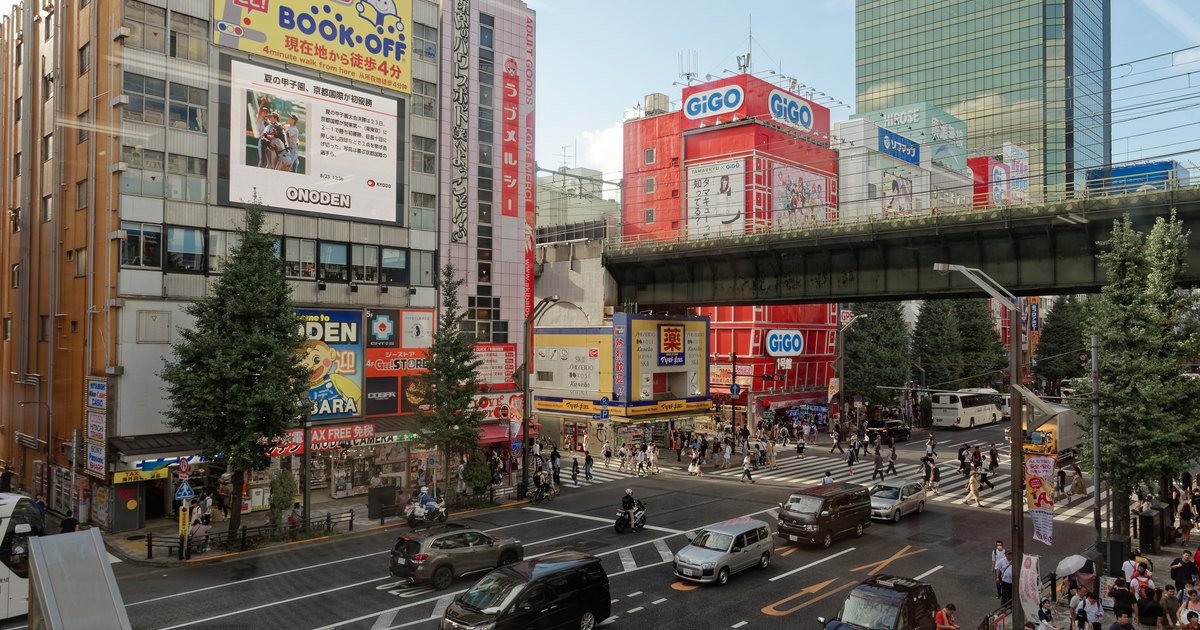
The district at street level — Chuo-dori, the side lanes and the under-track arcades:
How do the stations and exits actually work?
Why do people get lost the moment they arrive?
Because "Akihabara Station" is three stations. JR sits at the center; its Electric Town Exit — the name used by every major venue's official access page — faces the anime-and-electronics core, while the Central Gate side faces away from it. The Tsukuba Express station (TX01) hides underground at Kanda-Sakumacho 1-6-10, and its lettered exits are the official cheat sheet: A1 toward JR and Radio Kaikan, A2 toward the east plaza and Crossfield, A3 toward Kanda Myojin-dori and Yodobashi. The Hibiya Line station (H16) surfaces on the east side — handy for Yodobashi, a block short of everything else. Rule of thumb: whatever you rode in on, orient to Chuo-dori first and navigate from there.
What's where: the five landmarks that anchor the map
Which block does what?
West of the JR tracks along Chuo-dori is the classic core: Radio Kaikan (10 floors plus basement of figures, trading cards and hobby shops, 10:00–20:00) one minute from the Electric Town Exit, with Radio Center's parts stalls burrowed under the tracks beside it — no unified hours, gloriously unrenovated. North along Chuo-dori: Don Quijote with the AKB48 Theater on its 8th floor, then the Gachapon Kaikan at Soto-Kanda 3-15-5. East of the tracks, Yodobashi Akiba is its own gravity well — officially 9:30–22:00 with a restaurant floor running to 23:00. And on the hill northwest, Kanda Myojin guards the district as it has guarded Edo, seven minutes from the Electric Town Exit. For what's inside the secondhand towers, our Mandarake guide covers the eight-floor labyrinth (noon opening — morning visitors hit locked doors), the anime-shopping circuit maps the wider crawl, and the arcade guide explains the game-center floors, including the age-and-curfew rules most visitors have never heard of.
The Sunday pedestrian paradise: exact times from the police
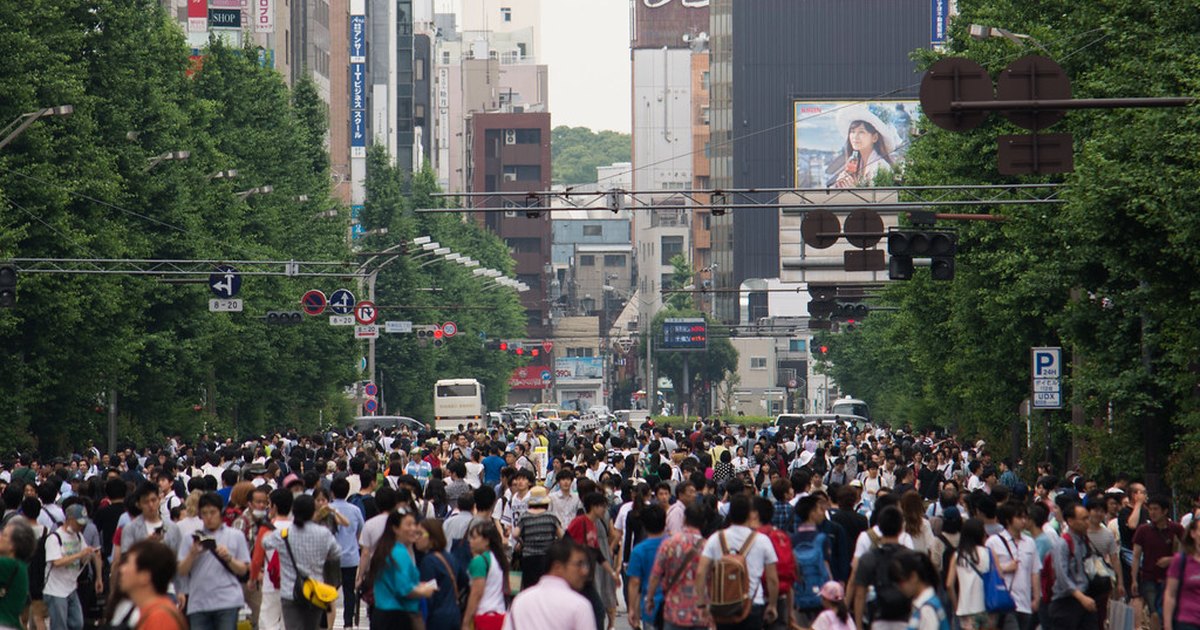
The Metropolitan Police's official listing leaves no room for blog drift: Chuo-dori closes to cars from the Soto-Kanda 5-chome crossing to the Manseibashi crossing — about 570 meters — on Sundays only, 13:00–18:00 from April through September and 13:00–17:00 from October through March, and it can be scrapped at short notice (rain, events). Two corrections to internet lore: it starts at 1 p.m. — the noon start you'll see quoted is Ginza's different scheme — and it is not a street festival; it's simply the road, opened. Which is exactly why it's the best hour to photograph the canyon of signage from the middle of the asphalt.
Tax-free in Akihabara: the current rules — and the November 2026 flip
What should you do differently after November 1?
Today's system (valid for purchases through October 31, 2026): non-residents spending ¥5,000-plus per store per day on general goods pay no consumption tax at the register; consumables (¥5,000–¥500,000) leave the store in sealed bags that must exit Japan unopened; the mail-home option died in March 2025. From November 1, 2026 — confirmed by both the Japan Tourism Agency and the National Tax Agency — Japan flips to a refund model: every store charges the tax-included price, and you claim the consumption tax back at customs on your way out, within 90 days of purchase, refunded by bank transfer, card, app or cash at the port. For a late-2026 Akihabara haul that means carrying the full sticker price up front and treating the airport refund counter as part of the itinerary. We track this and every other dated rule change on our 2026 changes tracker.
A half-day route that respects the opening hours
11:00: Radio Kaikan floors, top down. 12:00: Mandarake as its shutters open, then lunch — the maid-cafe experience if it's on your list (house rules apply: no photographing staff without the paid option). 14:00: gachapon and the under-track stalls of Radio Center. 15:00 on a Sunday: walk the car-free Chuo-dori while it lasts. 16:00: Kanda Myojin for the IT-safety charm, then Yodobashi's floors until dinner on its 8th. Weekday version: same order, minus the middle of the road.
(For a hotel on a route through Akihabara: our Hotel Niwa Tokyo guide notes the hotel’s route from Haneda, the Tokyo Monorail to Hamamatsucho, JR to Akihabara and JR to Suidobashi, at about 18, 10 and 4 minutes per leg, and that canceling a booking made on the hotel’s site costs 20 percent from midnight three days before.)
FAQ
Which exit should I take at Akihabara Station?
When does Akihabara actually open?
What is the pedestrian paradise, and when does it run?
How does tax-free shopping work in Akihabara right now?
What changes on November 1, 2026?
Where is the gachapon capital?
Is the AKB48 Theater open to tourists?
What is Radio Center — and is it still worth visiting?
Does Akihabara have a shrine worth seeing?
Bottom line (2026) — Akihabara spans three train operators with exits that dump you blocks apart and shops that open at 10, 11 or noon; the pedestrian paradise runs only on Sunday afternoons. The big 2026 change is the November 1, 2026 switch to refund-style tax-free, so plan Yodobashi Akiba, Radio Kaikan, Radio Center, Gachapon Kaikan and the AKB48 Theater around it.
Sources
Tsukuba Express station address and exit guide: the operator's official station page. Hibiya Line station facts: Tokyo Metro's official page. Yodobashi Akiba, Radio Kaikan, Radio Center, Gachapon Kaikan and AKB48 Theater details: each venue's official site. Kanda Myojin address and walking routes: the shrine's official access page. Pedestrian-paradise section, days and times: the Tokyo Metropolitan Police's official pedestrian-road listing. Current tax-free rules and the November 1, 2026 refund-model start: the Japan Tourism Agency's tax-free portal and the National Tax Agency's guidance — the date was verified against both. All read on August 17, 2026. JR East's own station page blocks automated reading and is not cited. The embedded video is by its creator.
Some links on this page may be affiliate links, which means we may earn a commission if you book or buy through them — at no extra cost to you. See our affiliate disclosure.
Tokyo to Osaka, Tokyo to Kyushu, Tokyo to Hokkaido — day by day — plus seven places most visitors never reach.
- 12 pages, 80 photographs, every stop linked to its guide
- Every price and opening hour read from the official page
- Re-issued monthly, so it does not go stale in your inbox
Free. One email a month, plus the rare change that matters. Unsubscribe with one click in any email. By subscribing you agree to our privacy policy.