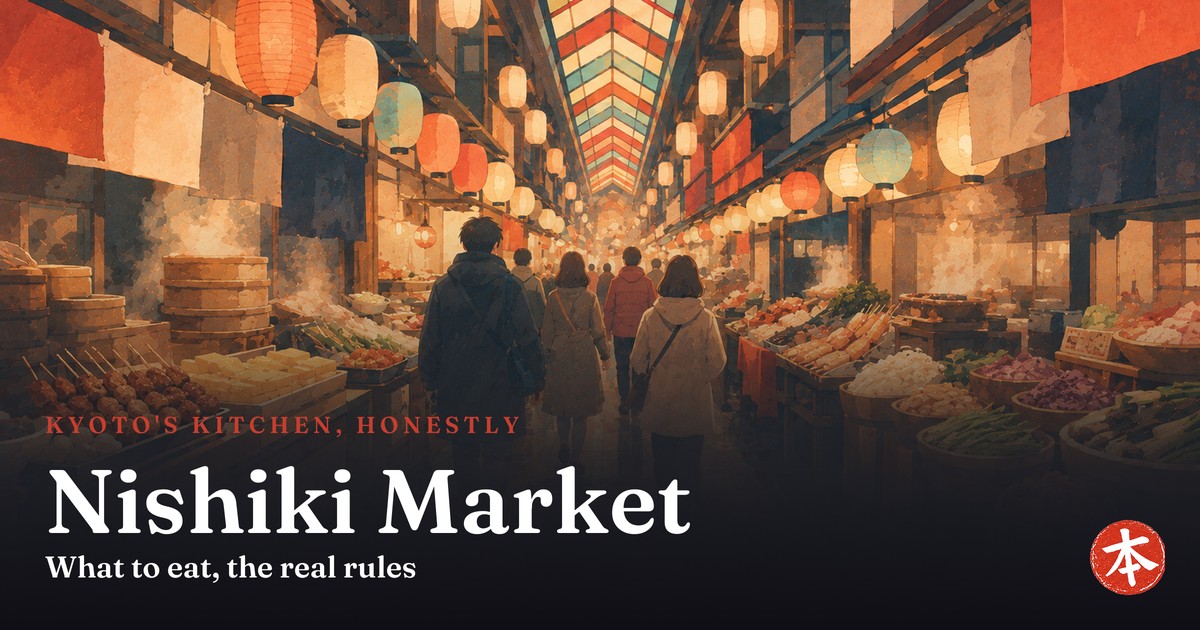
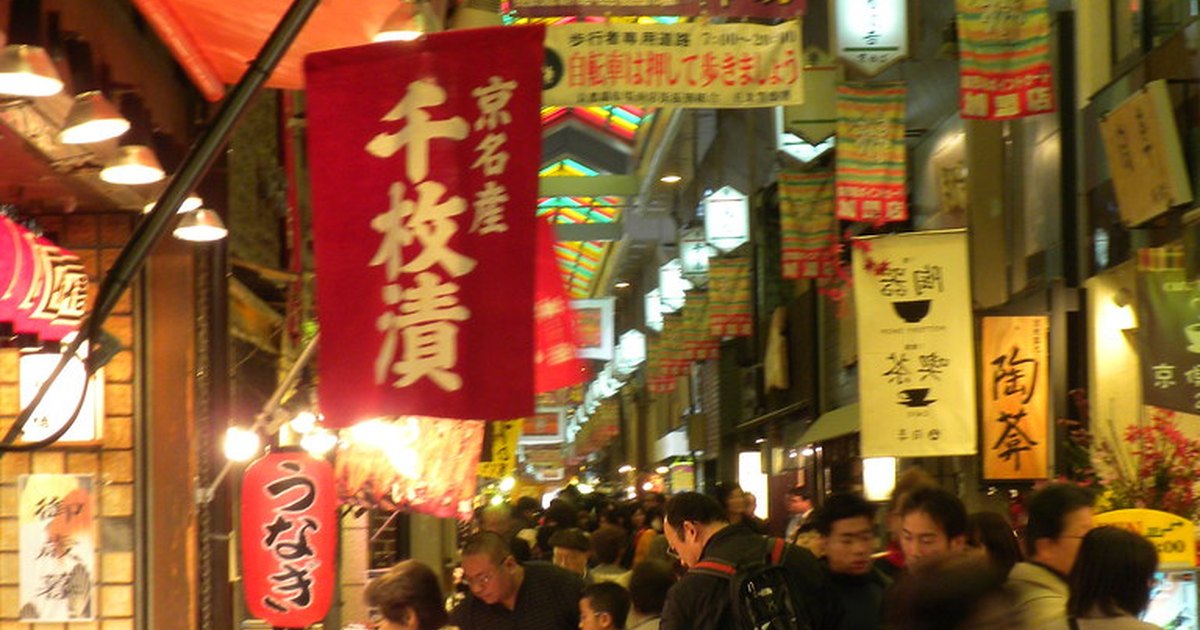
Nishiki calls itself Kyoto's kitchen, and the official numbers explain the crush: 131 shops along a covered lane 390 meters long and as little as 3.3 meters wide, in the food business for roughly 400 years. It's the best grazing hour in the city — dashimaki omelet rolled to order, pickles by the barrel, soy-milk donuts by the ten-thousand — and it runs on two rules most English guides get wrong: there are no market-wide opening hours, and eating while walking is against the rules, not a gray area. Here's the market as its own association describes it.
Nishiki Market at a glance
| Fact | Official answer |
|---|---|
| Size | 390 m long · 3.3–5 m wide · 131 member shops (association figures) |
| Hours | None market-wide — each shop decides · many rest Wednesdays · most close Jan 1–3 |
| Eating rule | No eating while walking — eat at the shop you bought from (official manner page) |
| Access | Subway Shijo 3 min · Hankyu Karasuma 3 min · Kyoto-kawaramachi 4 min · bus 5 to Shijo-Takakura 2 min · Keihan Gion-shijo ~10 min |
| Luggage | No lockers on official pages · no consolidated shipping (courier offices nearby) |
What the lane looks like in full graze — and how the stand-and-eat rhythm works:
What should you eat — and in what order?
Why does everyone line up for an omelet?
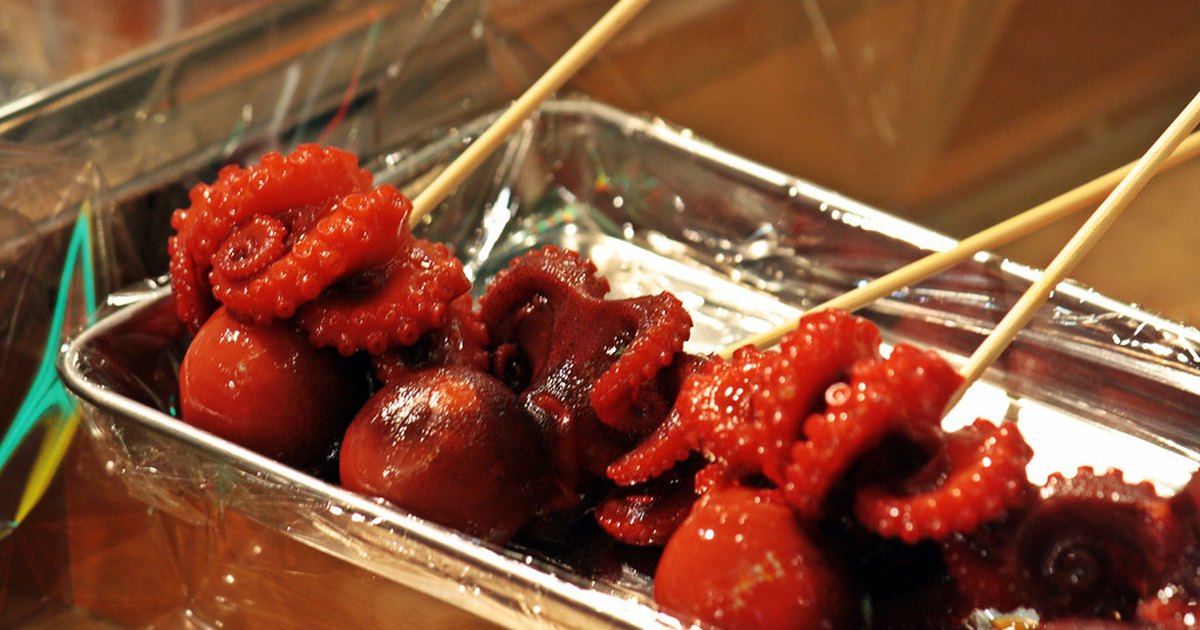
The market's official shop directory reads like a menu: egg specialists, Kyoto-pickle houses, yuba and tofu makers, tsukudani and kamaboko stalls, tea and sweets, and sit-down counters for tempura, sushi, unagi and obanzai; the city's tourism site singles out rolled omelets, hamo tempura, namafu and takoyaki. Start with dashimaki — the broth-heavy rolled omelet is the market's signature — from one of the two neighboring specialists: Miki Keiran (9:00–17:00, officially no closing days outside New Year) publishes real prices, ¥690 for a small roll up to ¥1,950 for top grade, with the unagi-stuffed u-maki at ¥2,050. Then the soy-milk donut stand run by tofu maker Fujino — up to 10,000 donuts a day by its own count, sold here for 20-plus years, price officially unposted — then pickles at Uchida (9:30–18:00), where 50-plus varieties sit out in barrels. Finish with a skewer of grilled seafood and you've had the greatest-hits run for roughly the price of a lunch set. A proper matcha session afterward is the classic chaser.
The rules: what's official and what's myth?
Why is eating while walking actually banned?
The association's manner page spells out the reason: the lane is packed, and food-in-motion ends up on other visitors' clothes. The rule as written: don't eat while walking — eat in front of the shop you bought from, or inside it. Kyoto City's English FAQ states it harder ("prohibited"), calls stand-and-eat one of the market's cardinal rules, and shops print it on their own menus, pointing customers to designated eating spots. So the viral framing — "technically allowed but frowned upon" — is wrong on both halves. The other persistent myths, against the official record: the market is 390 meters, not 400 (even the city's tourism site rounds up); there is no all-market Wednesday closure, only a tendency; and there are no lockers and no consolidated shipping service — the FAQ says so outright and lists nearby courier depots instead. For the running list of officially confirmed changes like these across Japan, see our 2026 tracker.
Getting there — and pairing it with Gion
Which entrance should you start from?
Nishiki runs east–west one block north of Shijo-dori, between Teramachi and Takakura. From Kyoto Station, the official route is the Karasuma Line subway four minutes to Shijo, then five minutes on foot east to Daimaru and one block north — simpler than any bus in Shijo traffic. Hankyu riders surface at Karasuma (3 minutes) or Kyoto-kawaramachi (4 minutes); bus 5 from Kyoto Station stops at Shijo-Takakura two minutes away; and from Keihan's Gion-shijo Station it's about ten minutes — which is the play: walk Gion's preserved lanes in the early morning, cross the river, and hit Nishiki as the stalls open at nine. Drivers get exactly one official option — the association's 14-car Amicale Nishiki lot (10:00–17:00, no exits after 17:00, first hour ¥500) — which is to say: don't drive. Where the market fits in a bigger Kyoto plan is covered in our how-many-days guide.
Practical answers the official FAQ actually gives
The association's FAQ is unusually candid, so let it work for you: the office toilet is open 10:00–17:00 (closed January 1–4) with a public-toilet map for the rest; wheelchairs and pets face no restriction because the lane is a public road — paired with the honest warning that it is neither barrier-free nor uncrowded; card acceptance is officially a per-shop question; and the year-end rhythm is late-December bustle followed by a January 1–3 shutdown at most stalls. The directory pages carry one more disclaimer worth respecting: hours and closing days change, so the stall's own posted schedule is the final word.
FAQ
What are Nishiki Market’s opening hours?
Is Nishiki Market closed on Wednesdays?
Can you eat while walking through Nishiki Market?
What should you actually eat at Nishiki?
How much does it cost to graze through the market?
How do you get to Nishiki Market from Kyoto Station?
Are there lockers or luggage storage at Nishiki Market?
Do Nishiki Market shops take credit cards?
Is Nishiki Market wheelchair accessible — and can I bring a dog?
How long should you budget for Nishiki — and what pairs with it?
Sources
Market length, width, shop count, the no-market-wide-hours and Wednesday-tendency answers, New Year pattern, eating-manner rule, access walking times, parking (Amicale Nishiki), toilets, shipping and cashless answers: the Kyoto Nishiki Market Shopping District Promotion Association's official site and FAQ. The "prohibited" phrasing and eat-in note: the Kyoto City Tourism Association's official English FAQ. The cardinal-rule phrasing, Kyoto Station route and famous-foods shortlist: kyoto.travel, the city's official tourism site. Dashimaki prices and hours: Miki Keiran's official site. Soy-milk donut facts and the shop-level eating rule: Kyoto Tofu Fujino's official pages. All read on August 17, 2026. Prices not published officially are not quoted. The embedded video is by its creator.
Some links on this page may be affiliate links, which means we may earn a commission if you book or buy through them — at no extra cost to you. See our affiliate disclosure.
in English
Every week we read the Japanese sources English-language media never touches — new openings, price changes, limited releases, rule changes, the seasonal things that come and go in three weeks — and send you a three-minute read of what actually matters. Hit reply with a question about your trip and a human answers.
Free. Unsubscribe anytime. We never share your address.