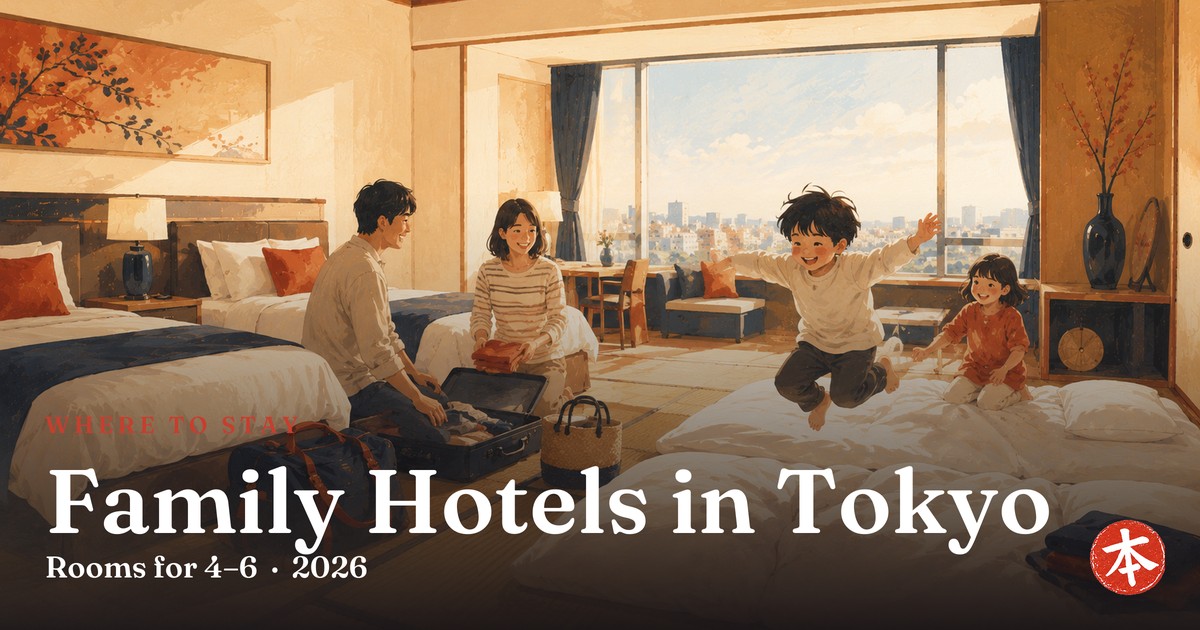
Tokyo has a structural secret that ruins family bookings: this is a city of one- and two-person rooms. Search "family room Tokyo" on a booking site and you'll drown in doubles with a cot squeezed in. But real solutions exist — genuine quads, tatami rooms sleeping six, connecting rooms with two bathrooms — you just have to know the three formats and which hotels actually stock them. We've spent the past weeks fact-checking Tokyo hotels against their official sites; this is the family-shaped summary.
The three formats that fit a family
| 1. True quads | Rooms officially sleeping 4–5 in real beds — e.g. Karaksa's 29.2 m² Family Quadruples (Tokyo Station) and JAL City Haneda West Wing's two-queen Quad Style |
|---|---|
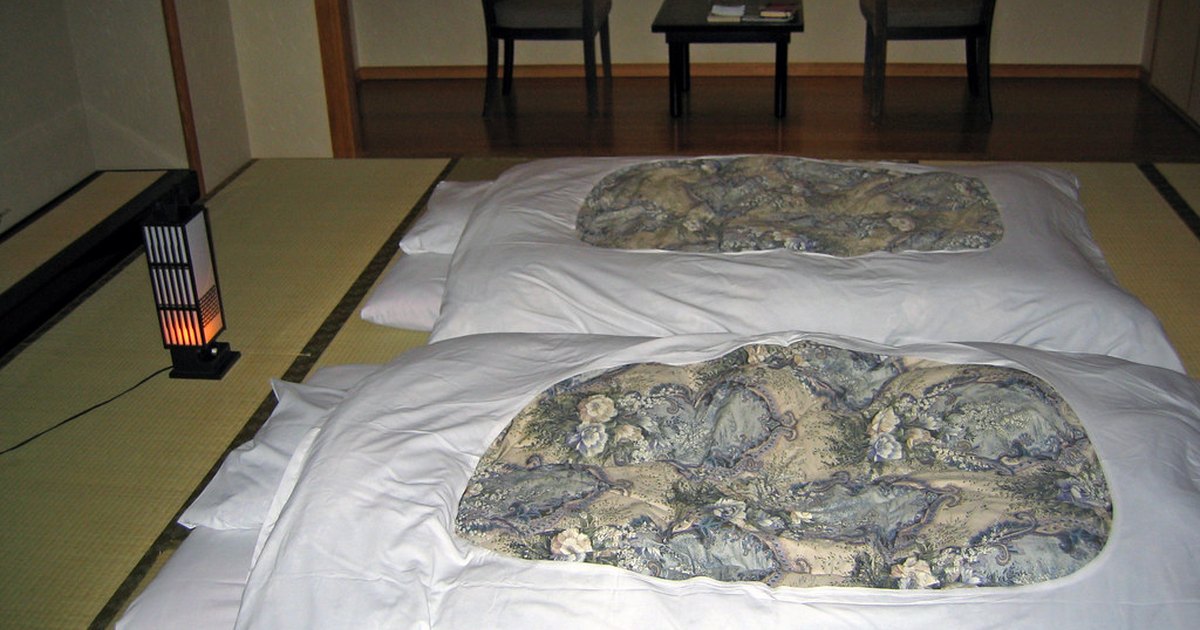
| 2. Tatami rooms | Futon on tatami = capacity scales with floor, not beds — up to 6 at Metropolitan Ikebukuro (45–50 m² suite), Toshi Center (22nd floor) and Karaksa |
| 3. Connecting rooms | Two rooms, internal door, two bathrooms — Karaksa's connecting pairs sleep up to 6 without splitting the family across a corridor |
The fact-checked family list
- Karaksa Hotel Tokyo Station — the family specialist: five 29.2 m² quads (4–5 people), three tatami family rooms (up to 6), connecting rooms with two bathrooms, video-call interpreters, and free co-sleeping to age 12 when booked direct. Five minutes from the shinkansen. The default answer.
- Hotel Metropolitan Tokyo Ikebukuro — big-hotel comfort with a 45–50 m² tatami suite sleeping six, kids' breakfast pricing (¥1,900, ages 4–12), and the airport limousine bus stopping at the door — the single best feature a jet-lagged family can buy.
- Toshi Center Hotel — 22nd-floor tatami rooms for up to six in the silent government district: high-floor views, early bedtimes undisturbed, unbeatable calm-per-yen.
- Hotel JAL City Haneda (West Wing) — the Quad Style room (two 160 cm queens, sleeps 4) plus a 4:00 a.m. airport shuttle and 5:00 breakfast: the first-night/last-night family solution.
- Tmark City Omori — value triples and free co-sleeping including breakfast for preschoolers, 20 minutes from Haneda.
- The Disney resort hotels — purpose-built family rooms at resort pricing; our comparison guide sorts the six.
Co-sleeping (soine): the rule that changes your bill
A Japanese explainer on how children's co-sleeping bookings get priced and where families quietly overpay. Fair warning: it is a talking-head video drawing its examples from international chains rather than touring Tokyo rooms — but it is solid evidence that soine is a real line item worth checking before you book.
Picking the district (quickly)
With kids, logistics outrank atmosphere: a short walk to rail, then the room that fits. The patterns that work: Tokyo Station area for shinkansen day-trip families (that's Karaksa's home turf), Ikebukuro for airport-bus simplicity and full-service backup, the government district for silence and early bedtimes, and Maihama-side for Disney-first trips. The full trade-offs live in the district guide, and if you're building the whole route, the 10-day itinerary flags the family-relevant choices as it goes.
(The apartment-hotel answer for families of four-plus — full kitchens, rooms to 10 guests, Pokemon rooms — is in our MIMARU guide.)
(Our Dormy Inn guide has the child rates the chain publishes: ages 0 to 2 free, 3 to elementary school 3,000 yen to share a bed, and junior high and up at the adult rate.)
(Our Tokyu Stay guide covers the chain with in-room washer-dryers, where one preschool child per adult shares a bed free and cancellation runs 50 percent two days before and 80 the day before.)
FAQ
Do Tokyo hotels have rooms for a family of 4 or 5?
What is a Japanese-style tatami room, and why is it the family cheat code?
How does co-sleeping (soine) work in Japanese hotels?
Which Tokyo area is best for families?
Are there family rooms near Tokyo Disneyland?
What should families check before booking a Tokyo hotel?
Bottom line (2026) — Tokyo family hotels come in three formats: true quads with real beds (e.g. Karaksa Tokyo Station 29.2m² for 4–5 people), tatami rooms where futon on the floor scales capacity with area (up to 6 in a 45–50m² suite at Hotel Metropolitan Ikebukuro), and connecting rooms. The hidden lever is soine (co-sleeping): kids sharing a bed with an adult can be free (Karaksa: up to age 12 booked direct) or add ¥3,000–5,000/night — always check before you book. Family rooms are officially rare (3–10 per hotel), so book early.
Sources
All hotel specifics referenced here — room sizes, capacities, child and co-sleeping policies, breakfast pricing — are drawn from our individual fact-checked reviews, each verified against the property's official site on the date noted in that review. Nightly rates vary and are never quoted. Family-format room counts are officially small (often 3–10 rooms per hotel), which is why early booking is the single most repeated advice on this page. As of August 3, 2026.
Some links on this page may be affiliate links, which means we may earn a commission if you book or buy through them — at no extra cost to you. See our affiliate disclosure.
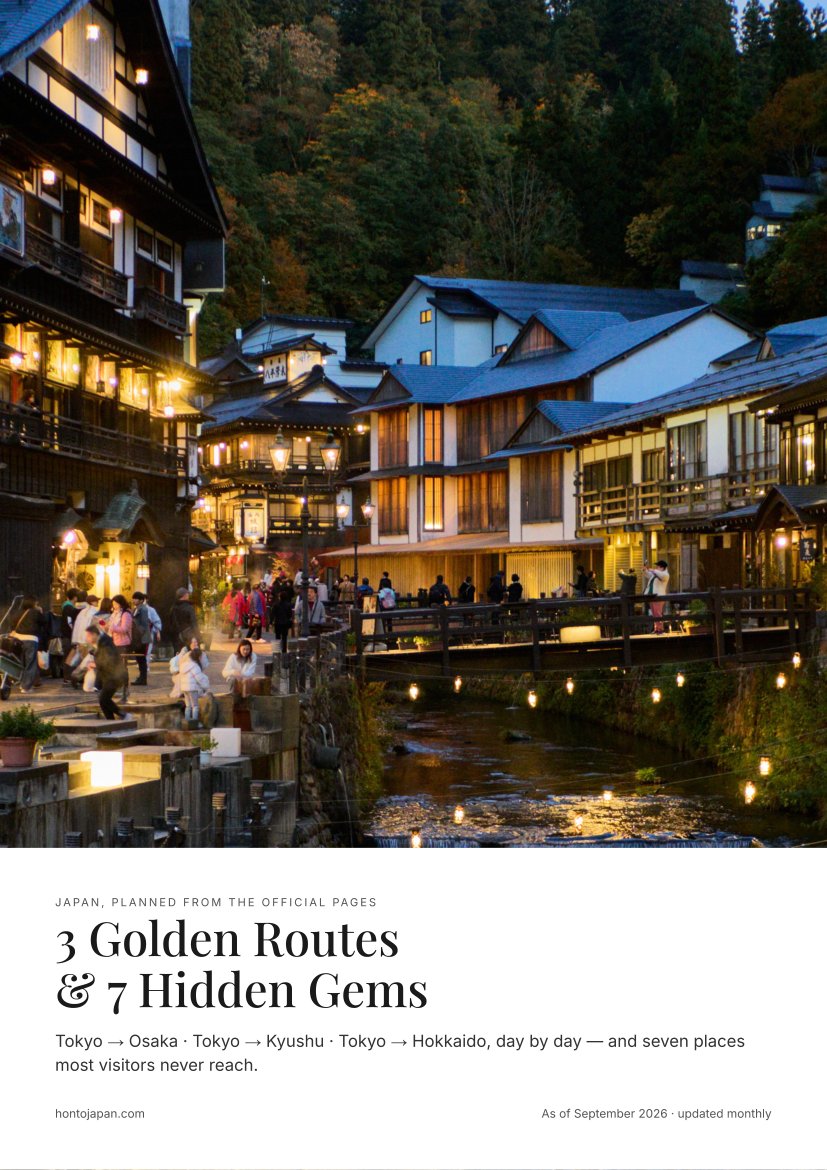
Tokyo to Osaka, Tokyo to Kyushu, Tokyo to Hokkaido — day by day — plus seven places most visitors never reach.
- 12 pages, 80 photographs, every stop linked to its guide
- Every price and opening hour read from the official page
- Re-issued monthly, so it does not go stale in your inbox
Free. One email a month, plus the rare change that matters. Unsubscribe with one click in any email. By subscribing you agree to our privacy policy.