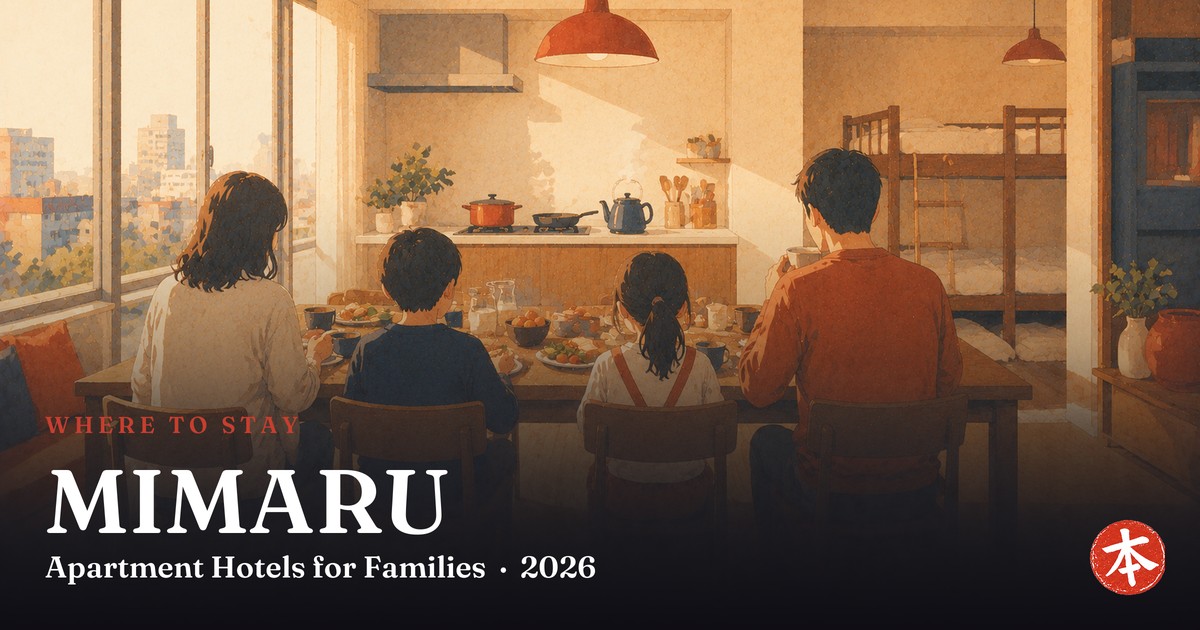
Japanese hotels have one structural cruelty for families: rooms built for two. MIMARU is the chain built to fix it — 29 apartment-hotels across Tokyo, Kyoto and Osaka where every room is a real apartment: 38–100 square meters, a full kitchen, a dining table, and capacity up to 10 guests behind one door. Ten of them hide official Pokemon Rooms. Add a 10%-off membership with a catch worth knowing and an 11:00 checkout, and it's the family answer most guides still haven't caught. From official pages.
MIMARU at a glance
| Item | Official answer (Aug 2026) |
|---|---|
| What it is | Apartment hotel for medium-to-long stays · every room = living + kitchen + dining · 38–100m² · up to 10 guests |
| Where | 29 properties: Tokyo 15 · Kyoto 7 · Osaka 7 (2 opening Sep–Oct 2026) · avg 3 min from stations |
| Pokemon Rooms | 🚨 10 properties only (Tokyo 5 · Kyoto 4 · Osaka 1) · 38–60m² · 4–6 guests · book as a room category |
| Times | In 15:00 · out 11:00 · after-22:00 arrival OK with notice · late-out ¥3,000/h |
| Meals | No breakfast/restaurant — full kitchen instead · rice cooker, toaster, halal cookware lendable |
| Membership | Free · 10% off Best Rate Plan (that plan only) + 1,000 pts/night · best-rate guarantee · OTA excluded |
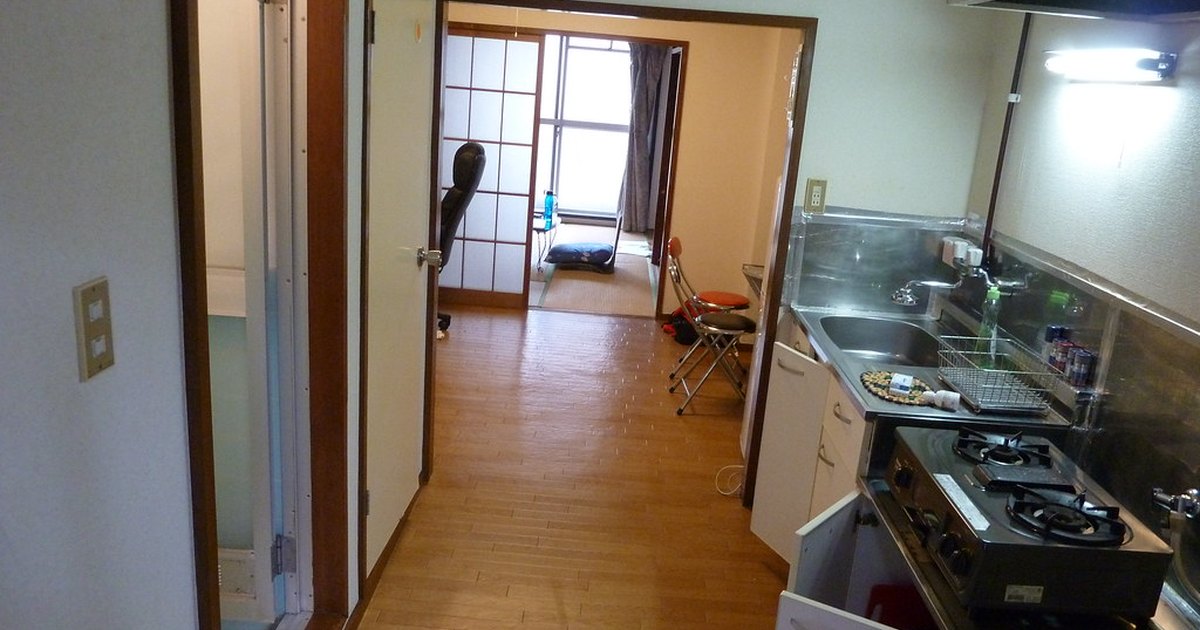
Inside a standard apartment, kitchen to bunks:
The apartment logic: why the kitchen changes the whole trip
What does a family actually do differently at MIMARU?
Eat breakfast at a table, together, in pajamas — which sounds small until you've herded jet-lagged children through a hotel buffet. The official kitchen kit is genuinely complete (induction stove, microwave, fridge, pots, pans, knives, full tableware, soap and sponges included; rice cookers and toasters on request), and the brand's own framing — "dish up takeout food or cook your own meal" — describes the realistic pattern: depachika and supermarket dinners assembled at home, one restaurant outing a day instead of three. The apartment sizes make the other half of the case: 38–100 square meters in cities where 18m² is a normal double, with bunk-bed family layouts, tatami-and-futon rooms, connecting options and suites officially sleeping up to 10. Cleaning follows apartment rhythm (from day three, then every other day) — the space-for-turndown trade that defines the category. Kids' math: 6-and-unders co-sleep free (two per room), cribs free under 2.
The Pokemon Rooms, demystified
When should you book for peak dates?
The moment flights are real. Apartment inventory is structurally scarce — a property might hold 40–100 apartments against a city of ten-thousand hotel rooms — and the family calendar compounds it: spring break, Golden Week, summer holidays and the cherry-blossom fortnight sell the big configurations out months ahead, with the Pokemon Rooms going first of all. Off-peak, weeks-out booking is usually fine; peak, treat it like reserving a popular restaurant, not a hotel.
How do you actually book one?
As a room category, not a request: the official Pokemon Room pages list exactly ten properties — Tokyo's Ikebukuro, Kinshicho, Ueno East, Ginza East and Hatchobori; four Kyoto locations; Osaka's Namba North — each with one or more themed apartments of 38–60m² sleeping 4–6, dressed with a hundred Pokemon, bunk or loft beds, and an official four-item novelty set per stay. Two official caveats before you promise the kids: the specific design can't be chosen, and these rooms sell out furthest ahead of anything else the brand offers — book the moment dates firm up. The obvious pairing is a day at the Pokemon centers and cafes, walkable from several of the themed properties. Families weighing MIMARU against conventional options should read it beside our family hotels guide — the honest comparison is one MIMARU apartment versus two connected hotel rooms, and the apartment usually wins on both price and sanity.
Booking mechanics: the 10% that isn't what it sounds like
MIMARU or MIMARU SUITES — which sub-brand fits?
Standard MIMARU apartments are large open-plan rooms — everyone shares one space, bunks and beds arranged around the living area — which suits families with younger kids and groups that treat togetherness as the point. MIMARU SUITES adds real walls: two or more separate bedrooms per apartment, the configuration three-generation trips and two-couple foursomes actually need for sane evenings. Both share the kitchen-and-table DNA; the SUITES premium buys doors.
Where do people misread the membership?
The free membership's 10% discount applies to the Best Rate Plan only — not across every plan on the site — plus 1,000 points per night (arriving three days after checkout, two-year validity), with OTA bookings excluded from all of it. Layered on top is an official best-rate guarantee: same room, same conditions, cheaper elsewhere — email the screenshot within 24 hours of booking. Practical logistics from the official pages: 15:00 in / 11:00 out (that extra hour matters with children), ¥3,000-per-hour late checkout to 18:00 when rooms allow, free luggage storage 7:00–22:00 on check-in and checkout days (outside those hours or on other days, ¥500 per bag per day, and bags shipped ahead that arrive before your check-in date may incur storage fees), and after-22:00 arrivals with advance notice. Muslim travelers get an officially unusual perk — halal cooking sets and prayer mats on the lending list. Where MIMARU sits in the bigger picture — against business hotels, capsules and luxury — lives in our where-to-stay hub.
(Our hotel luggage storage comparison of 34 hotels and chains lists MIMARU among the 9 that set a same-day deadline, storing bags free until 22:00.)
FAQ
What is MIMARU?
How many people can actually stay in one room?
What’s in the kitchen?
What are the Pokemon Rooms?
Does MIMARU serve breakfast?
What are check-in and check-out times — is there a curfew?
Is there a membership discount?
How does housekeeping work?
Who is MIMARU actually best for?
Bottom line (2026) — MIMARU is the apartment-hotel brand that puts a whole family in one room. Every unit has a real kitchen and dining table, sizes run 38–100m² for up to 10 guests, and 10 of its 29 Tokyo/Kyoto/Osaka properties hide Pokemon-themed rooms. Membership gets you 10% off — worth it for longer family stays.
Sources
Concept, sizes, capacity and city counts (including the September and October 2026 Osaka openings): MIMARU's official about pages. Kitchen and lending-item lists, cleaning cycle, luggage and arrival rules, late checkout fees and the no-breakfast policy: official hotel and FAQ pages. Pokemon Room locations, sizes, capacities and the novelty set: the official Pokemon Room pages. Membership terms and the best-rate guarantee: the official membership pages. Staff-nationality figure: official about page (as of January 2025). All read on August 20, 2026. The embedded video is by its creator.
Some links on this page may be affiliate links, which means we may earn a commission if you book or buy through them — at no extra cost to you. See our affiliate disclosure.
Tokyo to Osaka, Tokyo to Kyushu, Tokyo to Hokkaido — day by day — plus seven places most visitors never reach.
- 12 pages, 80 photographs, every stop linked to its guide
- Every price and opening hour read from the official page
- Re-issued monthly, so it does not go stale in your inbox
Free. One email a month, plus the rare change that matters. Unsubscribe with one click in any email. By subscribing you agree to our privacy policy.