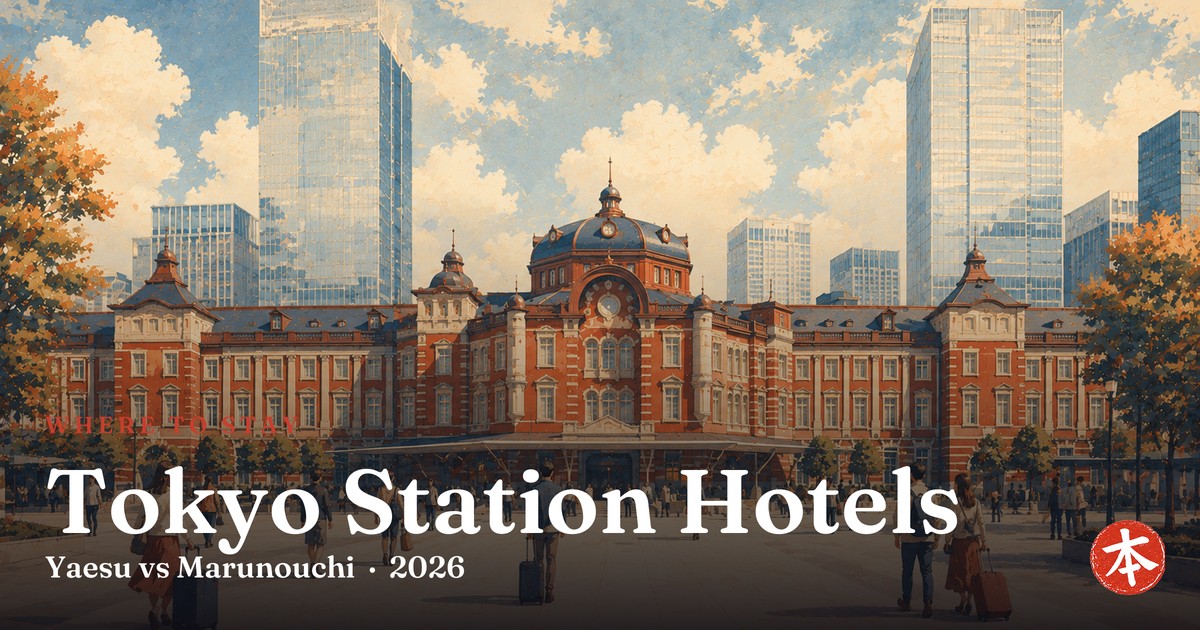
Nobody dreams of sleeping at a train station — until they understand what Tokyo Station actually is: every shinkansen line, the airport express and two subway networks under one roof, wrapped in a century-old red-brick landmark with a luxury hotel literally inside it. Booking here isn't a compromise, it's a strategy — for specific nights. This guide covers which side of the station to book (they're surprisingly different), the tiers available, and — just as honestly — the nights you shouldn't stay here at all.
(Zooming out to the whole city first? Our Tokyo district guide compares every major area before you commit to the station.)
Tokyo Station hotels at a glance
| Best for | First night · last night · shinkansen-heavy stretches |
|---|---|
| Yaesu side (east) | Practical: shinkansen gates, mid-range density, Ramen Street below |
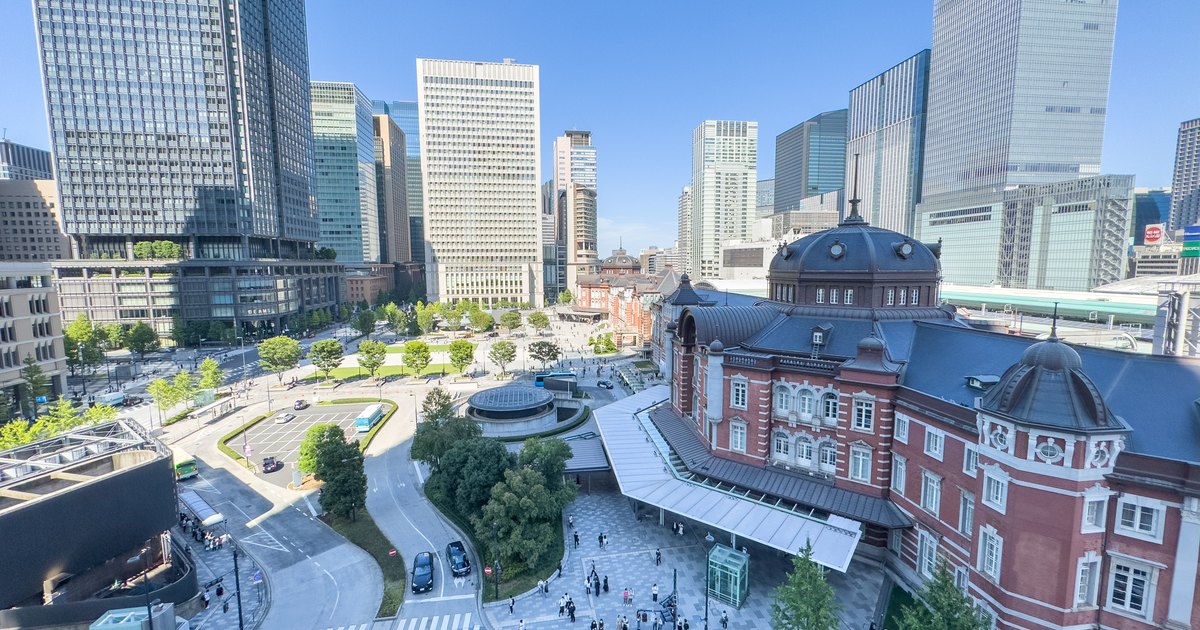
| Marunouchi side (west) | Stately: red-brick station building, Imperial Palace, luxury tier |
| Inside the station | The Tokyo Station Hotel — in the 1914–15 landmark building itself |
| Walkable extras | Nihombashi, Kyobashi, Ginza (~15 min), Imperial Palace East Gardens |
| Not the place for | Nightlife and izakaya-alley energy — that's Shinjuku/Shibuya's job |
When staying at the station is the smart play
- Night one: land, ride the Narita Express (or Haneda's Monorail + one JR hop) straight here, sleep. No transfers with jet-lagged luggage.
- The night before a shinkansen: an 8am departure from your hotel's own station is a different life from dragging suitcases across town at 7. Our shinkansen guide covers the trains themselves.
- Day-trip bases: a couple of nights here turns Nikko, Karuizawa or even Sendai into easy out-and-backs — the day-trip radius by bullet train is absurd.
- The last night: buy the souvenirs in the station, eat a farewell bowl on Ramen Street, roll out to the airport train after breakfast.
Slotting it into a route: our 10-day itinerary uses exactly this pattern — Tokyo Station-area night before the Kyoto leg, saving the morning for the trip instead of the transfer.
Yaesu vs Marunouchi: two different stays
Not a hotel tour — this is a Japanese walkthrough of Tokyo Station itself, tracing the Marunouchi-to-Yaesu crossing at both street and basement level. Watch it to see how far apart the two sides really are before you commit to sleeping on one of them.
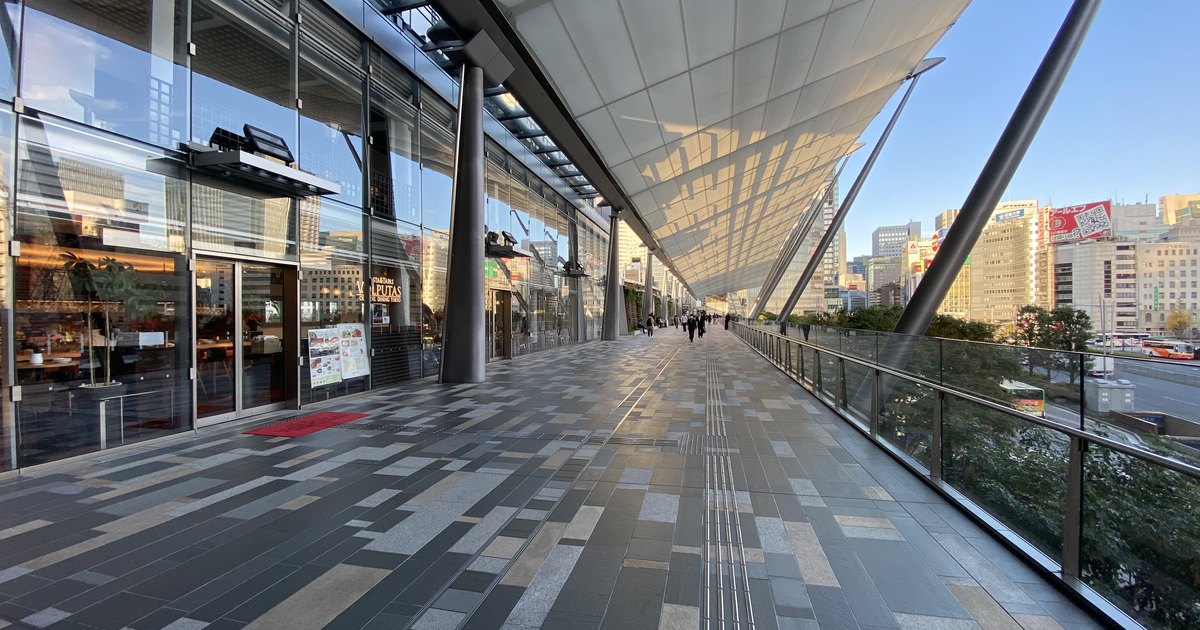
Yaesu (east side) is where the shinkansen gates open, and its streets — plus neighbouring Kyobashi and Nihombashi — hold the practical hotel stock: modern mid-range and business hotels within a short walk, restaurant floors everywhere, and the station's basement food city (including the ten-shop Ramen Street) as your kitchen. Rooms in this district trend compact — check the square meters, not just the price. The Karaksa Tokyo Station sits in this tier, and the big business chains (MyStays and friends) fill it out. The side also gained a genuine luxury flag when Bulgari Hotel Tokyo opened in the Yaesu redevelopment towers in 2023. Shangri-La Tokyo is on this side too, 1 minute from the Nihombashi Exit and 2 from the Yaesu North Exit, despite its Marunouchi address.
Marunouchi (west side) faces the Imperial Palace across a boulevard of plane trees and flagship offices — quiet, polished, and home to the area's classic luxury: The Tokyo Station Hotel inside the restored red-brick station building (opened with the station in 1914–15, now an Important Cultural Property — some rooms overlook the domed concourses), with Four Seasons within a couple of blocks. If this tier is the trip, our Tokyo luxury hotels guide compares it with the rest of the city's five-star set.
When you should stay somewhere else
(One of them meets you on the platform — see our Four Seasons Tokyo guide for Marunouchi's post-renovation arrival and which property has the pool.)
(A little further south, our Conrad Tokyo guide covers the Shiodome tower — including why the gym is closed to non-guests despite what guides say.)
(Three minutes from Hibiya rather than Tokyo Station, our Imperial Hotel guide covers the rebuilding timeline as the company currently states it.)
(On the Yaesu side of Tokyo Station, our Yaesu Terminal Hotel guide covers the bus-terminal access, the check-in flow, and how the entrance differs from the Marunouchi-side options.)
(On the Marunouchi side: our Palace Hotel Tokyo guide covers a hotel about 8 to 10 minutes on foot from the Marunouchi North Exit, with an underground passage to Exit C13b of Otemachi Station.)
FAQ
Is Tokyo Station a good area to stay?
Should I stay on the Yaesu side or the Marunouchi side?
Can you actually stay inside Tokyo Station?
Are there budget or mid-range hotels near Tokyo Station?
Is it cheaper to stay near Tokyo Station or in Shinjuku/Shibuya?
What’s within walking distance of Tokyo Station hotels?
Bottom line (2026) — Staying at Tokyo Station is a strategy for the right nights, not a default: Marunouchi (the 1914–15 station building, an Important Cultural Property) and Yaesu (the 2023 redevelopment) are two different stays, and a hotel sits inside the station itself. Great for shinkansen or Narita Express turnarounds — otherwise sleep somewhere else and use the station as a hub.
Sources
Area layout and station facts are stable public record — the Marunouchi station building's 1914–15 opening and Important Cultural Property designation, the shinkansen and Narita Express services, and the 2023 Yaesu redevelopment — checked against official station, hotel and operator pages as of July 2026. Nightly rates are deliberately not quoted; individual hotels' specs live on their own fact-checked review pages.
Some links on this page may be affiliate links, which means we may earn a commission if you book or buy through them — at no extra cost to you. See our affiliate disclosure.
Tokyo to Osaka, Tokyo to Kyushu, Tokyo to Hokkaido — day by day — plus seven places most visitors never reach.
- 12 pages, 80 photographs, every stop linked to its guide
- Every price and opening hour read from the official page
- Re-issued monthly, so it does not go stale in your inbox
Free. One email a month, plus the rare change that matters. Unsubscribe with one click in any email. By subscribing you agree to our privacy policy.