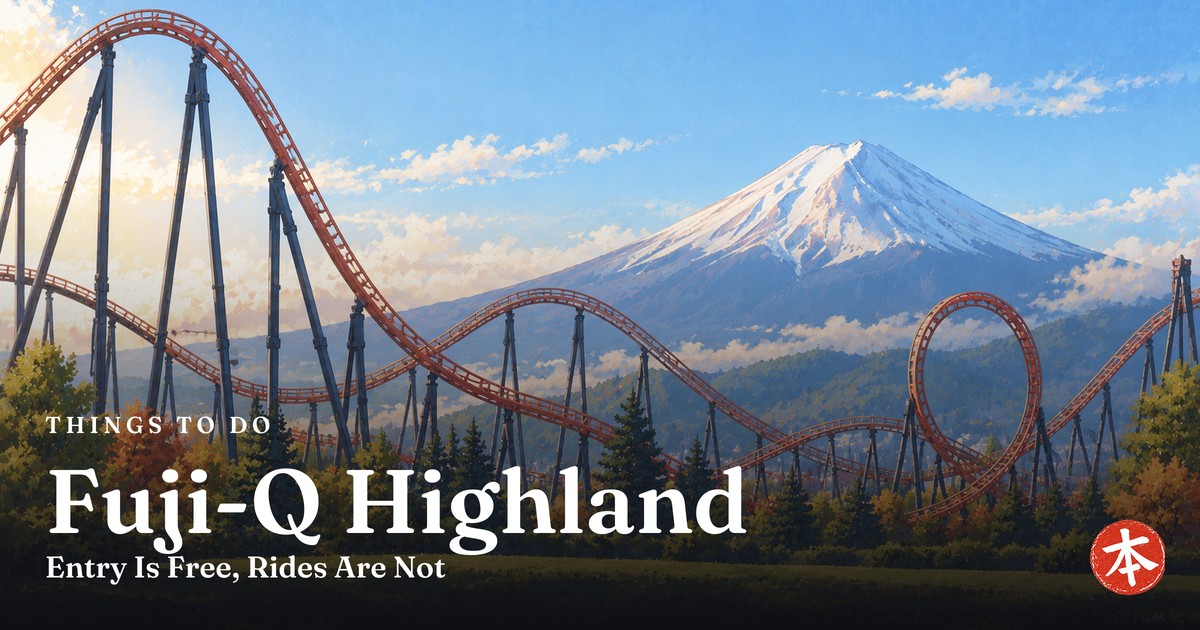
You do not have to pay to get into Fuji-Q Highland. The park says so on its own ticket page, in one short line that most English guides skip past: entrance is free. You request a free admission ticket at the window or online, walk in, and pay only for what you ride.
That single fact changes the shape of a visit. Fuji-Q is a park you can go to for the view of Mount Fuji, the food and one coaster, and walk out having spent 2,000 yen. Or you can buy a day pass at somewhere between 6,000 and 7,900 yen — the price is a range because the park charges by date — and ride everything.
And there is one rule here that almost no visitor from outside Japan expects. Two of the four headline coasters have a maximum age. Not a minimum. A maximum. Takabisha and Eejanaika turn you away at 55.
Fuji-Q Highland tickets at a glance (2026)
| Ticket | Price | Notes |
|---|---|---|
| Park entry | Free | Request a free admission ticket at the window or online |
| 1-Day Pass, adult (18–64) | 6,000–7,900 yen | Price depends on the date of use |
| 1-Day Pass, junior and senior high | 5,500–7,400 yen | |
| 1-Day Pass, elementary | 4,400–5,100 yen | |
| 1-Day Pass, toddler (1+) and senior (65+) | 2,100–2,600 yen | Same band for both |
| Afternoon Pass, adult (from 1pm) | 4,100–6,000 yen | Some attractions cannot be used with it |
| Thomas Land Pass, adult | 3,000–3,500 yen | |
| Single ride, big four coasters | 2,000 yen | Bought at ticket machines inside the park |
| Single ride, Nagashimasuka | 1,500 yen | Water coaster |
| Annual Pass, adult | 26,300 yen | 23,000 junior/senior high, 16,600 elementary, 8,300 toddler and senior |
The number to hold on to is 2,000 yen per big ride, because that is what turns the day pass from an obvious purchase into an actual decision.
Entry is free. So what are you actually paying for?
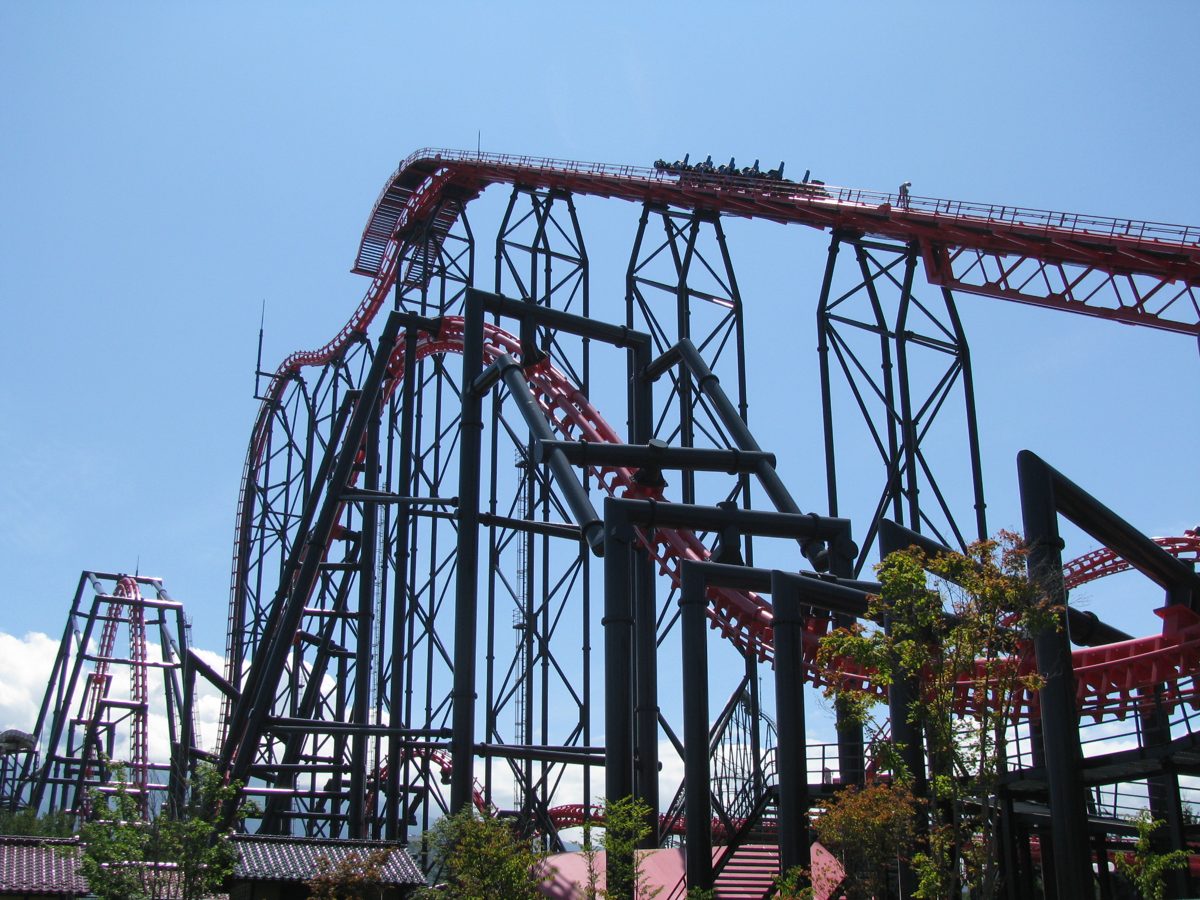
The official ticket page carries the line “Fuji-Q Highland Free entrance”, followed by two instructions: request the free admission ticket at the ticket window or online, and buy ride tickets at the ticket machines in the park for the attractions themselves.
What can you do without paying anything?
Walk the park, eat, shop, and look at Mount Fuji from ground level. The mountain is the backdrop to the whole site, and on a clear day that is not a small thing. What you cannot do is ride, and the observation tower and the walk-through experiences attached to it are also paid.
Why does this matter more here than at other parks?
Because Fuji-Q sits in a place you may already be going. If you are staying around Lake Kawaguchiko, the park is on the same railway line, and a free walk-in for an hour is a genuine option rather than a wasted admission fee. Most parks in Japan charge you at the gate whether you ride or not.
The age limits nobody warns you about
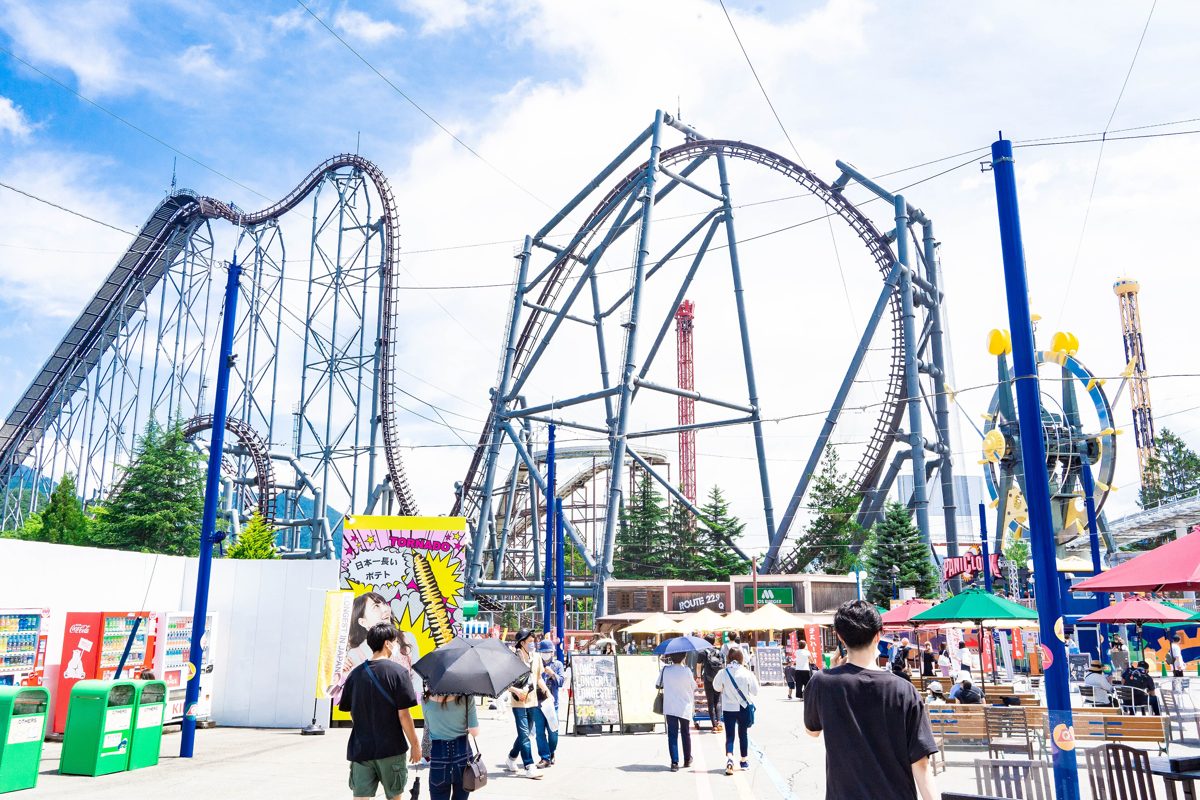
What are the height limits?
| Attraction | Single ride | Height | Age | Claim to fame |
|---|---|---|---|---|
| FUJIYAMA | 2,000 yen | 110cm and up | up to 64 | Certified for four world records |
| Takabisha | 2,000 yen | 125cm and up | up to 54 | Maximum drop angle of 121 degrees, a world record |
| ZOKKON | 2,000 yen | 120–195cm | up to 64 | Four linear launches, tunnels, and a backward run |
| Eejanaika | 2,000 yen | 125–200cm | up to 54 | World record for total rotations |
| Attack on Titan THE RIDE | 2,000 yen | Flight simulator | CG world | |
| Nagashimasuka | 1,500 yen | Water coaster reaching 18 meters | ||
| FUJIYAMA Tower | Observation deck at 55 meters | Walk and slide experiences are separate | ||
Do ZOKKON and Eejanaika really have a maximum height?
Yes. ZOKKON is listed as 120 to 195 centimeters and Eejanaika as 125 to 200. Upper height limits are a restraint-geometry question rather than a safety-theater one, and they are unusual enough that tall visitors should read the numbers before queuing rather than at the front of the line.
Pass or single tickets? The arithmetic
At 2,000 yen a ride and a day pass starting at 6,000, the break-even is three big coasters on the cheapest day and four on the most expensive. That is a much lower bar than it sounds — but it is a real bar, and it is the reason to be honest with yourself about the queues.
When do single tickets actually win?
When you are here for one or two specific things. A visitor who wants FUJIYAMA and the tower, or who is traveling with someone who cannot ride, comes out ahead. It also wins on a short visit: the park entry is free, so a two-hour stop costs exactly what you ride and nothing more.
When does the pass clearly win?
When you have a full day, when you are with children who will ride the smaller attractions repeatedly, or when you want the option to re-ride. Passes cover unlimited rides on attractions, so the second lap on FUJIYAMA is free where a single ticket would be another 2,000 yen.
Priority admission, priority tickets, and what each one buys
What is the Premium Pass?
A day pass with priority admission attached. The park states two things about it that matter: it is sold online only, and it lets you enter the park before opening time. You cannot decide to want it once you are standing at the gate.
What is the priority ticket?
A separate product. The park describes it as a ticket that lets you enjoy its popular attractions with almost no waiting time, and sets a limit of ten per purchase — buy more than ten and you have to run the purchase again. The four headline coasters are all listed as priority-ticket eligible. We did not find a price on the page we read, so treat that as something to check at the point of sale.
Which one should I buy?
They solve different problems. The Premium Pass moves you to the front of the park; the priority ticket moves you to the front of a ride. On a crowded day the first gets you one good early lap before the queues form, and the second is what you buy when the queues have already formed and there is a specific coaster you refuse to leave without.
The rules that bite: date pricing, no changes, and the weather
Why is the price a range?
Because the park charges by date. Its own wording is that prices vary depending on the date of use, and it publishes a separate table for each month rather than one headline number. The adult swing from 6,000 to 7,900 yen is close to a third of the price, so “how much is a ticket” genuinely has no single answer until you name a day.
What if I am pregnant, or traveling with a toddler?
Both are handled off the standard online flow. The park states that pregnant visitors must buy at the admission counter on the day of the visit, and that infants from one year old to preschool age need a QR ticket or a ticket bought at the ticket booth. Neither is a refusal — it is a different counter.
What are the opening hours?
Variable, and the park publishes today’s hours on its own front page rather than a fixed schedule. On the day we checked it read 9:00 to 19:00. There is a dedicated park hours page; open it the week you travel. Seasonal closing times move a lot in Japan, which is also true of the wider travel calendar.
Getting there, and what the official page does not tell you
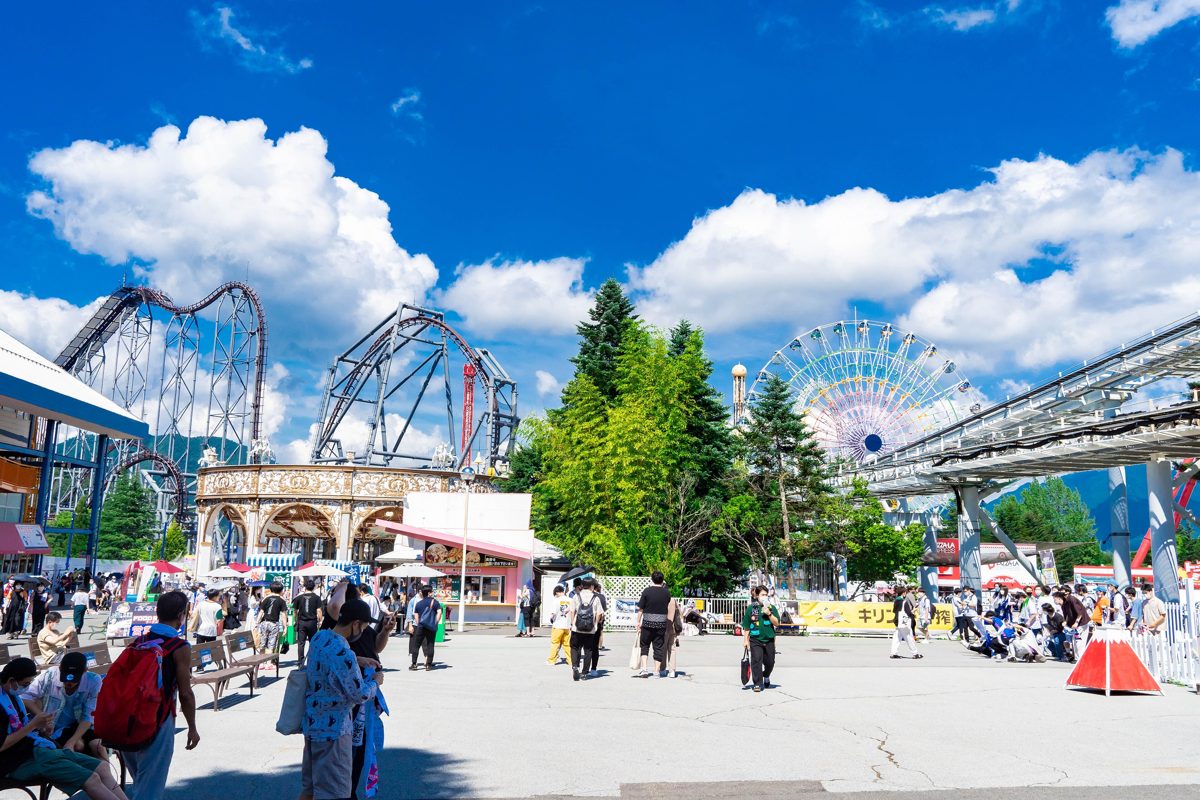
The nearest station is Fujikyu-Highland, on the Fujikyuko Line. The official access page routes you via JR Otsuki Station, where you change onto that line. Highway buses arrive at the bus terminal in the Highland Resort Hotel and Spa parking lot, which is next to the park rather than a walk away.
What the page does not give is journey times or fares. It links out to combination products — limited express plus one-day pass from Shinjuku, railway plus pass from Otsuki, rental car plus pass — without stating the underlying numbers. We are not going to fill those in from memory. Check them on the operator’s site for your date.
Should I combine it with Kawaguchiko or Hakone?
Kawaguchiko, yes; it is on the same line and the same side of the mountain, and the lake fills an afternoon well. Hakone is a different trip with a different transport spine — see the Hakone map for why the two do not fold neatly into one day. If the mountain itself is the point, the cherry blossom window is when the view does the most work.
Fuji-Q Highland FAQ
Is Fuji-Q Highland free to enter?
How much is the day pass at Fuji-Q Highland?
Is there a maximum age for the roller coasters?
Is the day pass worth it, or should I buy single ride tickets?
What is the Premium Pass?
What is the priority ticket, and how many can I buy?
Can I change the date after buying a ticket?
What are the opening hours?
Bottom line. Entry is free, so the real question is never whether to go — it is whether to buy the pass. Three big coasters at 2,000 yen each is where the 6,000 to 7,900 yen day pass starts paying for itself. Before you buy anything, check two numbers on the official site: the price table for your specific date, and the age limit on the ride you came for. Takabisha and Eejanaika stop at 54.
Sources
Everything above was read off the official Fuji-Q Highland website on September 9, 2026: the English ticket page for pass prices, age bands, the Premium Pass, the priority ticket limit and the no-change rule; the English attraction page for single-ride prices, heights, age caps and the world records; the English front page for that day’s opening hours; and the English access page for the station and bus terminal. Prices and hours move, and this park changes its prices by the day — confirm on the official site before you travel.
Some links on this page may be affiliate links, which means we may earn a commission if you book or buy through them — at no extra cost to you. See our affiliate disclosure.
Tokyo to Osaka, Tokyo to Kyushu, Tokyo to Hokkaido — day by day — plus seven places most visitors never reach.
- 12 pages, 80 photographs, every stop linked to its guide
- Every price and opening hour read from the official page
- Re-issued monthly, so it does not go stale in your inbox
Free. One email a month, plus the rare change that matters. Unsubscribe with one click in any email. By subscribing you agree to our privacy policy.