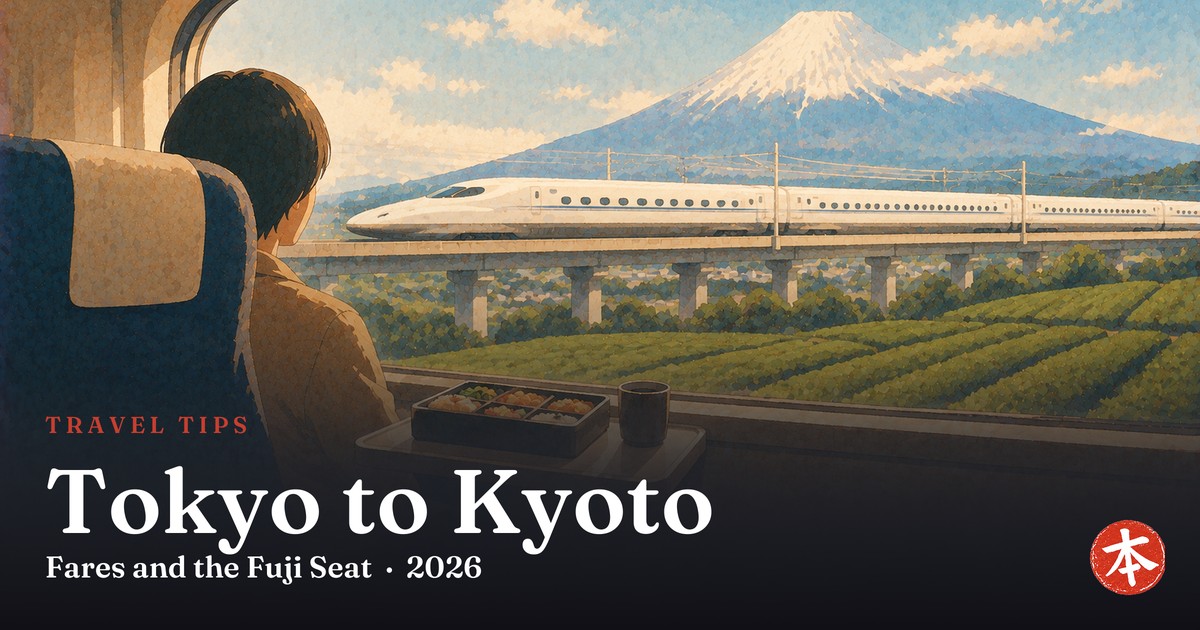
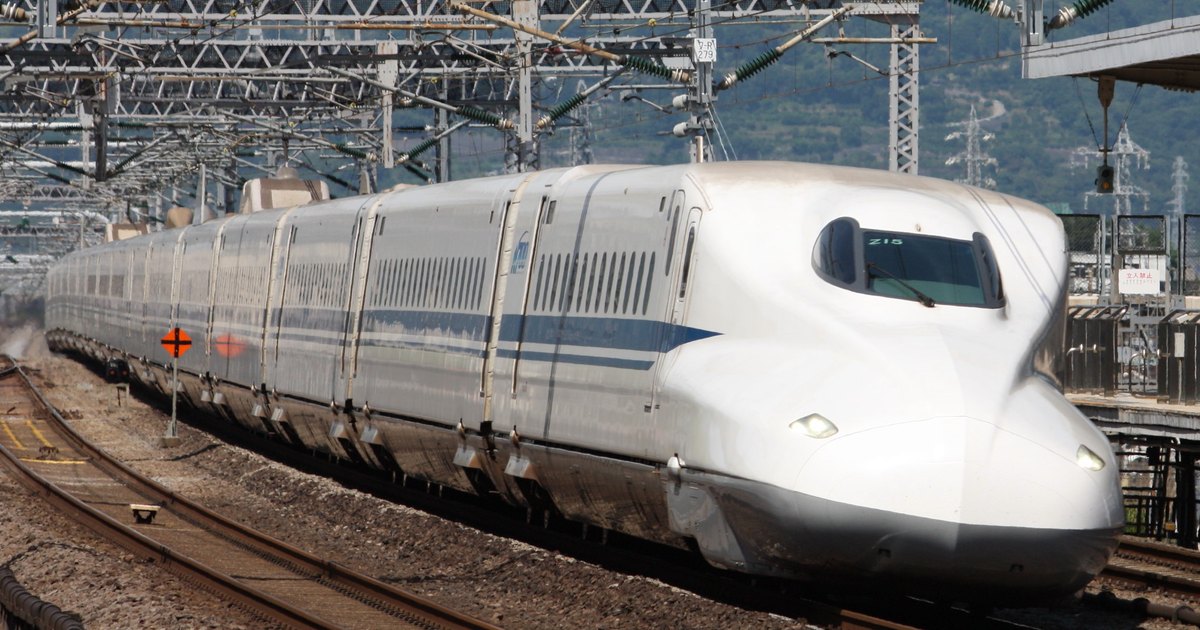
Tokyo to Kyoto is the most traveled intercity hop in Japanese tourism, and the internet's version of it is a museum of expired facts. The current reality, from JR Central's own tables: about 2 hours 15 minutes, up to 12 Nozomi an hour, ¥13,970 reserved via smartEX — or ¥12,430 booked 21 days out — with an officially answered window-seat question (Seat E for Fuji, says JR Central itself), a luggage rule with a ¥1,000 sting, and JR Pass arithmetic that says what most guides won't. All of it sourced and dated.
Tokyo → Kyoto at a glance
| Option | Official answer (Aug 2026) |
|---|---|
| Nozomi (fastest) | ~2h15m · up to 12/hour · smartEX reserved ¥13,970 (regular season) · non-reserved ¥13,320 |
| EX Hayatoku 21 | ¥12,430 reserved Nozomi, booked 21+ days ahead (excl. peak periods, no changes) |
| Hikari / Kodama | ~2h40m / ~3h40m · reserved ¥13,650 · the JR Pass trains |
| Green Car | ¥18,840 (Nozomi, regular season) · Fuji side = Seat D (Standard: Seat E) |
| Luggage | 160–250cm total: free but mandatory oversized-area seat reservation · unreserved carriage of it = ¥1,000 fee |
| JR Pass math | Round trip ≈ ¥27,300 (Hikari) vs 7-day pass ¥50,000 (→¥53,000 from Oct 1, 2026) · Nozomi needs +¥4,960/ride ticket |
The full ride, ticket machine to Kyoto Station:
Booking it: smartEX is the whole game now
What's the optimal booking sequence from abroad?
Three weeks out, if you can manage it. smartEX — JR Central's official system — takes foreign cards (3-D Secure mandatory; if your card fails registration, that's why), books from anywhere, and boards you by QR, IC-card link or machine pickup. The 21-day trigger is EX Hayatoku 21: ¥12,430 for a reserved Nozomi seat — a ¥1,540 saving with two catches (peak-period blackouts; no changes after purchase). Missed the window? The standard smartEX reserved fare (¥13,970) still undercuts paper ticketing and keeps free unlimited changes until departure — the feature that matters when Kyoto's weather forecast moves your temple day. App-store availability is limited to seven countries (US, Canada, Australia, Singapore, Hong Kong, Malaysia, Thailand); everyone else books identically in the browser. Seat strategy while you're in there: E seat for Fuji — JR Central's own page says so — and the oversized-baggage rows if your suitcase sums past 160cm (free with the reservation, ¥1,000 penalty without).
The JR Pass question, answered with arithmetic
What changed about seasons and pricing tiers?
Reserved fares now breathe with a four-season calendar — off-peak shaves ¥200 from the regular-season figures quoted here, busy seasons add ¥200 and the busiest ¥400 — so the same seat prices four different ways across a year. Non-reserved fares don't season-swing, which is part of their appeal on flexible off-peak days. Every figure in this guide is the regular-season smartEX price unless labeled otherwise.
When does the pass beat point-to-point tickets?
Almost never for this corridor alone — the numbers are blunt. A Tokyo–Kyoto round trip on Hikari via smartEX totals about ¥27,300; the 7-day nationwide pass costs ¥50,000 today and ¥53,000 from October 1, 2026 — and the pass excludes Nozomi anyway, unless you add the pass-holder Nozomi/Mizuho ticket at ¥4,960 per ride (introduced 2023; sold only at Japanese stations, never online). The pass transforms only when the week includes serious extra distance — Hiroshima, Kanazawa, Tohoku legs — or the Kansai local hops stack up beside it. Two calendar warnings from official pages while planning: peak periods run all-reserved Nozomi (no unreserved cars during Golden Week, Obon, New Year), and fare-system changes like the pass increase land on our 2026 tracker as they're announced.
Riding it well: the 135 minutes themselves
Nozomi, Hikari or Kodama — is the fastest always right?
Not always. The Nozomi premium over Hikari is officially just ¥320 and 25 minutes — trivially worth it for ticket-buyers, which is why 12 an hour exist. But two travelers should default to Hikari: JR Pass holders (it's covered; Nozomi isn't without the ¥4,960 add-on) and anyone chasing quieter cars on peak days. Kodama is the connoisseur's slow boat — nearly empty mid-day, every station stop a platform-bento opportunity, and the same tracks at a third less urgency for the unhurried.
How do you turn a transfer into the day's highlight?
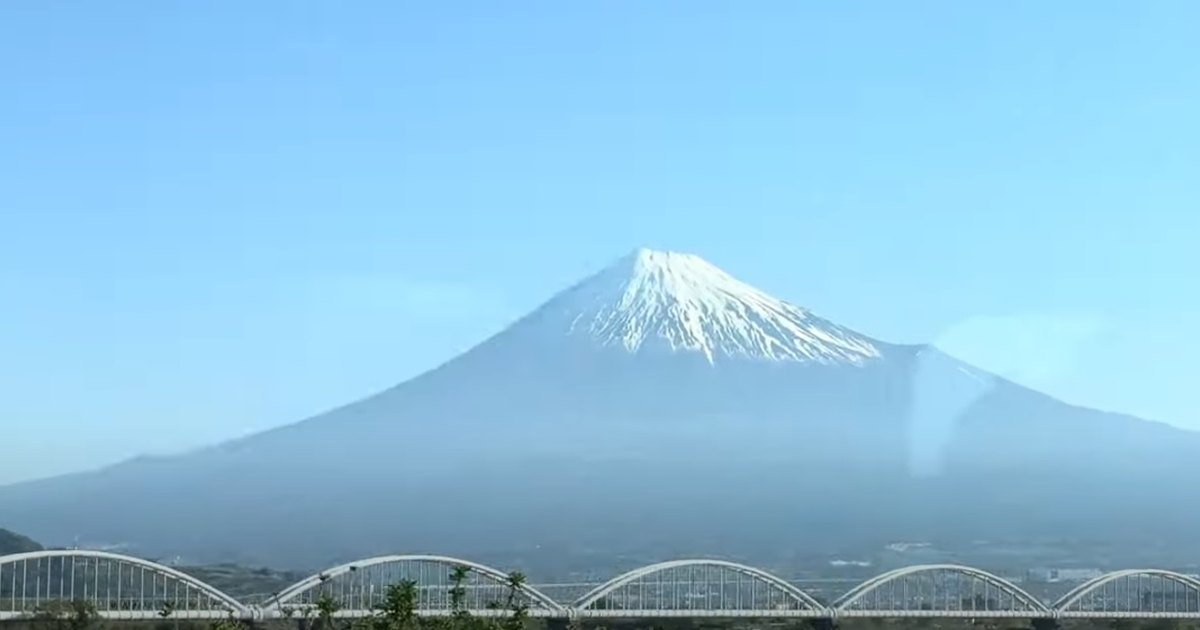
Provision like a local: the ekiben ritual is mandatory now, not optional — Tokaido trains have no food cart anymore (Green Car mobile ordering is the lone onboard service), so the 150-variety hall in Tokyo Station is your galley; our ekiben guide ranks the boxes. Sit E-side with the bento unopened until Shin-Yokohama clears, watch for Fuji around minutes 40–50, and be packed by Nagoya — Kyoto arrives fast after, and the train pauses under two minutes. Arrival intelligence: Kyoto Station sits south of the sights, so budget the bus/subway hop your hotel district needs, and if the whole trip is Kyoto-bound, our how-many-days guide does the itinerary math the fare tables can't.
(Nozomi's unreserved section is now cars 1 and 2, and eight date blocks make it fully reserved — the details are in our shinkansen map guide.)
(Continuing to Osaka? Our Tokyo–Osaka guide explains why a paper ticket already covers your local trains at both ends, and Smart EX does not.)
(Going further west? Our Himeji Castle guide has the new admission price and the 16:10 deadline for getting inside the keep.)
(For the fastest through-service, our Nozomi ticket guide covers the reservation channels, the non-reserved cars, and the surcharge that applies on the pass.)
(For picking a seat rather than a train, our shinkansen reservation guide covers the booking sites, the release windows, and where the ticket machine at the station is still the fastest option.)
(The general pricing rules behind this route are in our Shinkansen price guide, including the sections where the Shinkansen now undercuts the local train.)
FAQ
How long does Tokyo to Kyoto take by shinkansen?
How much does the shinkansen cost in 2026?
What is smartEX and can foreigners use it?
Which side of the train sees Mt. Fuji?
What are the luggage rules — will my suitcase be a problem?
Does the Japan Rail Pass cover this train?
Are there always unreserved cars?
Is the bus or plane worth considering?
What’s the ideal boarding routine at Tokyo Station?
Bottom line (2026) — The bullet train covers Tokyo–Kyoto in about 2 hours 15 minutes, up to 12 Nozomi an hour — ¥13,970 reserved via smartEX, or ¥12,430 if you book 21 days out. JR Central itself says sit in Seat E for Fuji. Watch the oversized-bag rules — a ¥1,000 penalty — and peak periods with no unreserved cars.
Sources
Fares: smartEX official fare PDFs (non-reserved, reserved and Green, April 2025 tables; Hayatoku 21 table as of March 13, 2026). Times and frequency: JR Central's travel pages ("about 2h15m" Nozomi), global site ("about 130 minutes") and the official fact sheet (the 12-Nozomi schedule). Seat E/D guidance: JR Central's Golden Route page, quoted verbatim. Baggage rules and penalty: JR Central's oversized-baggage pages. smartEX terms, card requirements and app countries: official smartEX FAQ and pages. JR Pass prices, the October 2026 increase, Nozomi exclusion and the ¥4,960 ticket: japanrailpass.net and JR Central's official pages. All read on August 20, 2026. The embedded video is by its creator.
Some links on this page may be affiliate links, which means we may earn a commission if you book or buy through them — at no extra cost to you. See our affiliate disclosure.
Tokyo to Osaka, Tokyo to Kyushu, Tokyo to Hokkaido — day by day — plus seven places most visitors never reach.
- 12 pages, 80 photographs, every stop linked to its guide
- Every price and opening hour read from the official page
- Re-issued monthly, so it does not go stale in your inbox
Free. One email a month, plus the rare change that matters. Unsubscribe with one click in any email. By subscribing you agree to our privacy policy.