Kamakura is small, and that is exactly why people get it wrong. Everything looks walkable on a map, so visitors arrive at Kamakura Station and start walking — and discover that the temples they came for are on a different railway line, and the little coastal train everyone wants to ride does not go there.
The organizing fact is this: Kamakura sits on two railways that barely overlap. The JR line runs north through the temple valleys. The Enoden runs southwest along the coast. Kita-Kamakura, where the great Zen temples are, has no Enoden station at all.
Below is which station serves what, what each leg costs, why the day pass usually loses you money — and the truth about the rule you have probably read about eating in the street, which the city itself denies in writing.
Kamakura at a glance
| The structure | Two railways. JR north to the Zen temples · Enoden southwest along the coast |
|---|---|
| 🚨 The trap | Kita-Kamakura is JR only. The Enoden does not stop there |
| Enoden fares | Only four bands: ¥200 / ¥220 / ¥260 / ¥310. End to end is 37 minutes |
| 🚨 Day pass | ¥800 — often more than you would spend. Two rides can never beat it |
| 🚨 JR + Enoden pass | Does not exist. Discontinued March 31, 2020 |
| Temple admission | Mostly ¥300–¥500 each · the bamboo temple is ¥400, not ¥300 |
| 🚨 Eating while walking | Not banned. No fine, no penalty clause — the city says so itself |
| Best time | Before 10:00. Crowds peak 14:00–15:00; congestion runs 10:00 to evening on holidays |
🚨 The rule everyone gets wrong: eating while walking
"It does not prohibit or regulate certain acts, including eating while walking, or sports; rather it defines nuisance acts, and aims to raise awareness by appealing for good manners, so that Kamakura can be a place where everyone can spend time comfortably."
The ordinance — correctly named the ordinance on improving manners in public places, not one on preventing nuisance — took effect on April 1, 2019. It has six articles. There is no penalty article, no fine, and no designated zone. The duties on visitors are phrased as efforts, not obligations.
What is listed is eating while walking in a narrow or crowded place, in a way liable to soil another person's clothing. The city's own FAQ explains where that came from: people complained about ice cream on their clothes and being poked by dango skewers.
So the practical rule is simply good sense: buy the food, step out of the flow, stand still and eat it. Nobody will fine you. The city even concedes it cannot measure the ordinance's effect, because — in its own words — it is hard to judge compared with an ordinance that has penalties.
The map: which station for what
| You want | Station | Line | From Kamakura |
|---|---|---|---|
| The great Zen temples | Kita-Kamakura | 🚨 JR only | One stop north |
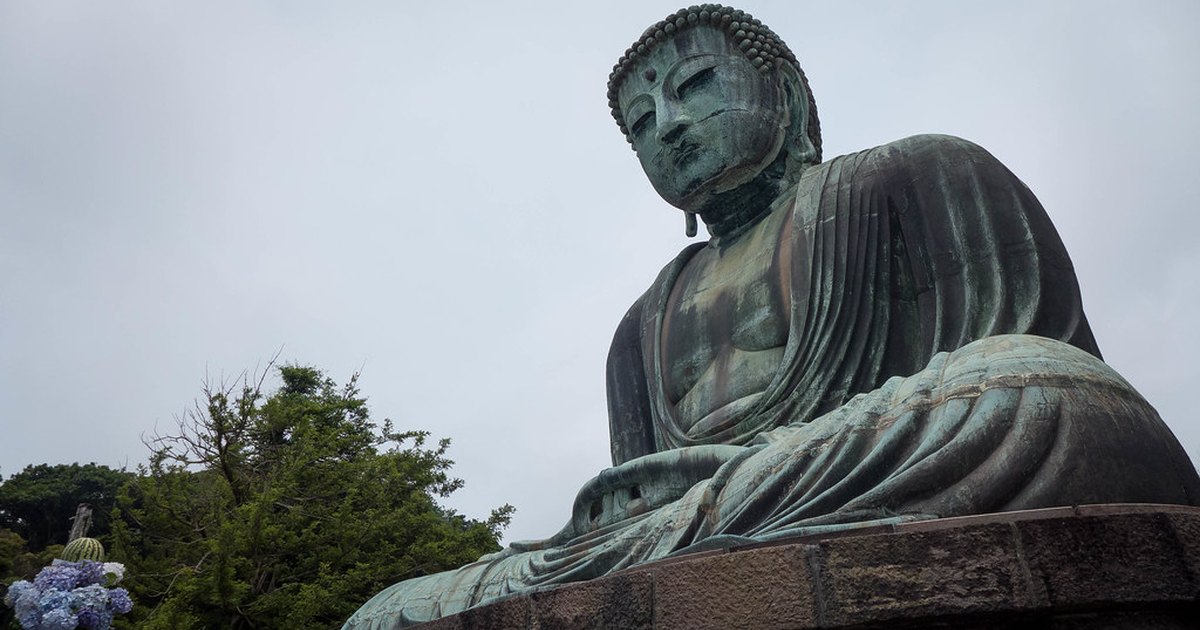
| The Great Buddha | Hase | Enoden | 4 min · ¥200, then 7 min walk |
| The hillside temple & sea view | Hase | Enoden | 4 min · ¥200, then 5 min walk |
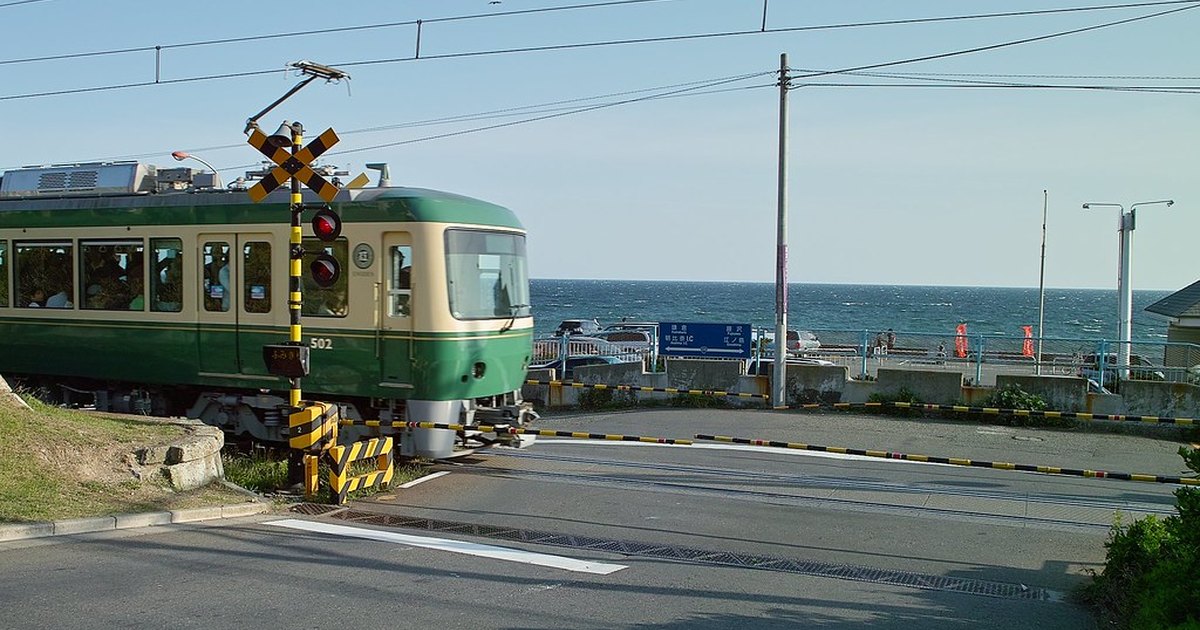
| The famous level crossing | Kamakurakokomae | Enoden | 19 min · ¥260 |
| Enoshima island | Enoshima | Enoden | 24 min · ¥260 |
| The bamboo grove temple | No station | Bus, east exit stand 4 | Then 3 min walk |
| The main shrine | Kamakura | JR / Enoden | 10 min walk from the east exit |
| Money-washing shrine | No station | Walk | About 30 min from the Great Buddha |
The tourism association divides the city into eight areas and — usefully — names Ofuna, not Kamakura, as the gateway station, about an hour from Tokyo and thirty minutes from Yokohama. Walking distances between the northern temples are genuinely short: the first Zen temple is one minute from Kita-Kamakura station, the nunnery four, and another eight. The big one is about fifteen minutes on foot from Kita-Kamakura, or thirty from Kamakura.
🚨 The day pass usually loses money
The entire line has only four fare bands — ¥200, ¥220, ¥260 and ¥310. The longest possible journey is ¥310. So two rides can never beat the pass, no matter which two.
A completely ordinary tourist day — Fujisawa to Hase (¥310), Hase to Kamakura (¥200), Kamakura out to the level crossing (¥260) — comes to ¥770. The pass would cost you ¥30 more.
It starts winning from about the fourth ride, or if you genuinely intend to hop on and off along the coast. Otherwise, tap a card and pay as you go.
| Ticket | Price | Covers | Verdict |
|---|---|---|---|
| Enoden day pass | ¥800 / ¥400 | The whole Enoden line, plus perks at 54 shops | Only from ~4 rides |
| Kamakura Free Kankyo Tegata | ¥900 / ¥450 | Enoden only Kamakura–Hase, plus five bus corridors | Good for a bus day |
| Shonan Monorail day pass | ¥750 / ¥380 | Ofuna to Enoshima, 8 stations, ~14 min | 🚨 Raised from ¥610 in March 2026 |
| JR + Enoden combined | — | — | 🚨 Discontinued March 31, 2020 |
The ¥900 area pass is misunderstood in a specific way. Its Enoden portion covers only Kamakura to Hase — worth ¥400 return, no more. All its value is in the buses: five corridors from Kamakura Station's east exit, reaching Kita-Kamakura, the bamboo-temple area, the Great Buddha and two others, plus discounts at around seventy temples and shops. So it suits a temple-and-bus day, not a coastal Enoden day. Buy it at the Enoden stations at Kamakura or Hase, 07:00 to 17:00.
And a caution about sources: the tourism association's own page listing passes carries stale prices — it shows the monorail day pass at ¥610 when the operator raised it to ¥750 on March 14, 2026, and a bus pass at ¥600 that the operator prices at ¥800. When the tourism body and the operator disagree, the operator wins.
Riding the Enoden: two things that catch foreign visitors
- 🚨 At every station except Fujisawa, Enoshima, Hase and Kamakura, you must tap a free-standing validator — not a gate. The operator's own warning is that these are upright units that are easy to miss: tap the green one boarding and the yellow one alighting. Miss it and your journey is not recorded.
- Contactless credit cards work at every station — Visa, Mastercard, JCB, Amex, Diners, Discover and UnionPay. But one card cannot cover several people, and 🚨 there is no child fare on contactless — children need a paper ticket or a transit IC card.
- There is a direct connecting gate to JR at Kamakura Station, but contactless and QR tickets cannot use it.
On photography from the trains and platforms, the operator asks you to stay behind the yellow line, use no flash, no tripods and no stepladders — and adds a request rarely seen in English: do not take photographs when other passengers or local residents would be in frame.
The famous level crossing, and what the city is actually doing there
The crossing at Kamakurakokomae is the single most photographed spot in the city, and the city has been escalating its response for three years. This is worth knowing before you go, because it is more assertive than "there are some cameras".
- Paid marshals direct visitors from 10:00 to 18:00, five to seven of them, and the city's own results report confirms the deployment continues this fiscal year — even though its main page still shows the contract ending in March.
- Twelve AI cameras were installed over the winter, with eight continuing now. 🚨 The city states that number plates of repeat-offending vehicles are read and passed to the police. One vehicle was caught 19 times.
- Warning signs went up on January 20, 2026, and the share of people standing in the roadway fell from 17.7% to 14.6%.
- 🚨 Loitering peaks between 14:00 and 15:00 at all four monitored crossings. Go early.
- The city's designated alternative is a purpose-built photo area in the adjacent park — nearly 9,500 people used it over four days in a trial.
The behavior the city names as the problem is specific: loitering on the pavement, leaning or stepping into the roadway to shoot, entering private land, and littering. Multilingual notices exist in English, Chinese and Korean. None of this stops you photographing the crossing — it stops you standing in the road to do it.
Temples: admission, and the ones whose rules have changed
| Site | Adult | Opens | Note |
|---|---|---|---|
| Great Buddha (Hase) | ¥300 | 08:00 | Inside the statue is +¥50 · 🚨 no eating on the grounds |
| Hase temple | ¥400 | 08:00 | Its museum is a separate ¥500 |
| Zen temple, Kita-Kamakura (large) | ¥500 | 08:30 | 🚨 Cash only · hikers entering from the trail must pay too |
| Zen temple, Kita-Kamakura (second) | ¥500 | 08:30 | 🚨 Opening moved from 08:00 in September 2023 · no tripods, no sketching |
| Nunnery, Kita-Kamakura | Free | 09:00 | 🚨 All photography banned since June 2022 |
| Small Zen temple, Kita-Kamakura | ¥300 | 09:00 | Multilingual audio guide ¥500 |
| Hydrangea temple, Kita-Kamakura | ¥500 | 09:00 | Rear garden a further ¥500, seasonal only |
| Bamboo grove temple | ¥400 | 09:00 | 🚨 Not ¥300 · matcha +¥600 · tickets stop at 15:30 |
| Main shrine | Free | 06:00 | Treasure hall ¥200 · 🚨 dogs now prohibited |
1. The bamboo grove temple is ¥400, not ¥300. Its Japanese page, its FAQ and its own English page all agree on ¥400. With the matcha in the grove at ¥600 on top, budget ¥1,000. The matcha tickets stop selling at 15:30, and can be suspended entirely when crowded. It takes no reservations at all, including for groups.
2. The nunnery charges nothing — and bans all photography. Since June 7, 2022, cameras and smartphones alike, for every ordinary visitor, throughout the precinct. English pages still list an admission fee and still publish photos taken inside.
3. The big Zen temple opens at 08:30, not 08:00. It changed in September 2023. Guides telling you to arrive at eight are half an hour early. Note also the separate hard exit times — 17:00 in summer, 16:30 in winter.
4. The hillside temple famous for hydrangeas gave its hydrangeas away. In June 2016 it sent 262 plants from its stepped approach to a town in the tsunami-hit northeast and replanted the slope with bush clover. By its own 2024 count, about 70 remain. It is no longer a hydrangea destination, whatever the photographs suggest.
One more worth correcting because it sends people chasing a ticket that does not exist: the large temple at Hase has no timed-entry or numbered-ticket system for its hydrangea path. We verified that as a negative against the temple's own site across three years. Crowding there is managed by a live congestion feed linked from its homepage instead.
Walking between the areas: which trails are open
The tourism association publishes exactly three official hiking courses, which is worth knowing because guides describe others as though they were maintained and signposted.
- Kita-Kamakura to the Great Buddha — open. About 3 km, 1 hour 30 minutes, officially rated for beginners. It links the northern temples to Hase, which makes it the one that actually solves the two-railway problem.
- The ridge trail — open. About 5.5 km. It was closed by a fallen tree in March 2026 and reopened at 16:00 on March 10, 2026. Note that one entrance passes through a temple precinct, so the ¥500 admission applies.
- The third course — open, reopened April 2023 after typhoon damage, with rockfall still reported near one point.
- 🚨 The old pass cutting is still closed, and you cannot even approach the tunnel. The city's page, updated July 17, 2026, states the slope beside the access road still carries collapse risk. Reopening is targeted for fiscal 2026. English guides routinely list it as walkable.
- 🚨 One popular "trail" is not an official course at all, so no open-or-closed status exists for it — and its approach touches the closed cutting.
On signage: the city's adopted plan commits to marking danger spots and adding pictograms. It does not promise English trail signs. Plan accordingly.
Frequently asked questions
Is eating while walking banned in Kamakura?
Which station do I get off at?
Is the Enoden day pass worth it?
Is there a pass covering JR and the Enoden together?
What does it cost to see the main temples?
Are there places I cannot take photos?
Do I need cash at the temples?
When is it least crowded?
Bottom line (2026) — Kamakura’s sights sit on two different railways, and one doesn’t stop at the temples everyone photographs — so the day pass usually loses money. The city’s manner ordinance does not ban eating while walking, per the city’s own denial. At the Kamakurakokomae crossing, the city has been escalating its response for three years.
Sources & what we deliberately did not state
Fares and riding rules come from the railway operators' own fare data and guidance; admission, hours and photography rules from each temple's and shrine's own site; the ordinance text, its official commentary, the crossing measures and the congestion statements from Kamakura City; the trail status from the city and, for one route, Zushi City. All read on August 5, 2026.
Deliberately not stated: any JR fare or journey time — that operator returns an access block to every automated request, and we would rather omit a number than print an unverified one. Also not stated: the accommodation tax rate, because only the start year is published; one shrine garden's price and hours, because they appear nowhere official; and the payment methods at fourteen of the seventeen temples and shrines we checked, because they genuinely publish nothing — "bring cash" is our advice, not a sourced fact. Two sites here have no website of their own, so their figures come from the city tourism association and we have said so rather than dressing them up. Where the tourism association and an operator disagreed on a price, we used the operator. Prices and rules change; check before you go.
Some links on this page may be affiliate links, which means we may earn a commission if you book or buy through them — at no extra cost to you. See our affiliate disclosure.
More day trips from Tokyo: Yokohama is half an hour away and on the same side of the city, Hakone is the mountain and hot-spring option, and our 7-day itinerary shows where a Kamakura day fits. See also when to visit.
(Kamakura is the easiest of the classics — the day-trips hub shows where it sits among the ten.)
(The map is half the story — what to actually do in Kamakura covers the Buddha, the bamboo and the current official prices.)
(Hase's giant has a dedicated guide — the Great Buddha: real prices, goshuin deadlines and photography rules.)
(Getting down from the capital — new JR fares, the Odakyu pass and the dead ¥700 ticket — is covered in Tokyo to Kamakura.)
Tokyo to Osaka, Tokyo to Kyushu, Tokyo to Hokkaido — day by day — plus seven places most visitors never reach.
- 12 pages, 80 photographs, every stop linked to its guide
- Every price and opening hour read from the official page
- Re-issued monthly, so it does not go stale in your inbox
Free. One email a month, plus the rare change that matters. Unsubscribe with one click in any email. By subscribing you agree to our privacy policy.