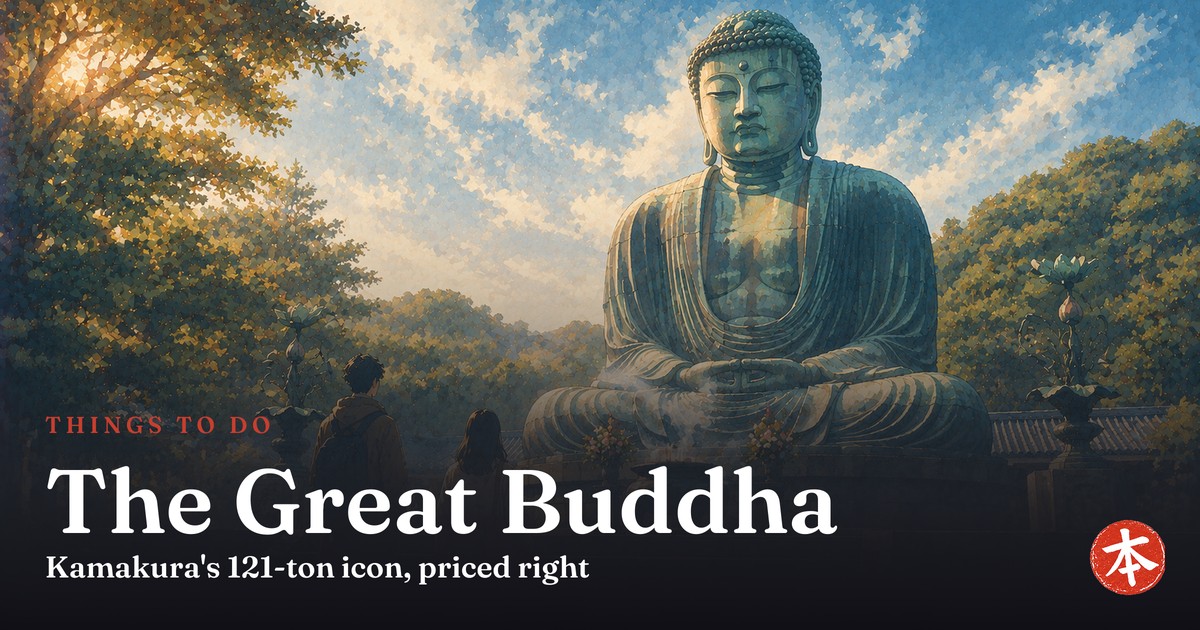
The Great Buddha of Kamakura has sat in the open air for five hundred years, gathering legends the way bronze gathers patina — and the internet has embellished most of them. The real, temple-published version: entry is ¥300 (the ¥200 of old guides is gone), stepping inside the statue costs ¥50, the lost Buddha hall fell to storms and a 1498 earthquake — the temple never says tsunami — and one longtime "highlight" of the grounds physically left for Korea in 2025. Here is Japan's most serene National Treasure, priced and timed from Kotoku-in's own pages.
The Great Buddha at a glance
| Item | Official answer (Aug 2026) |
|---|---|
| Admission | ¥300 adults · ¥150 ages 6–12 (through high school) · under 6 free · 🚨 the ¥200 in old guides is outdated |
| Inside the statue | +¥50 · 8:00–16:30 year-round · no selfie sticks · 🚨 summer heat-alert days: afternoons canceled |
| Hours | Apr–Sep 8:00–17:30 · Oct–Mar 8:00–17:00 · entry until 15 min before close |
| The statue | ~11.3m, ~121 tons, cast from 1252 · National Treasure (designated Feb 8, 1958) · 13.35m is with pedestal |
| Goshuin | Printed ¥300 (8:00–16:30) · handwritten ¥500, desk closes 15:00 |
| Access | Enoden Hase Station ~7 min walk · no parking · Hasedera 5 min from same station |
The Buddha, the grounds and the Hase neighborhood on foot:
The statue: 121 tons of medieval engineering
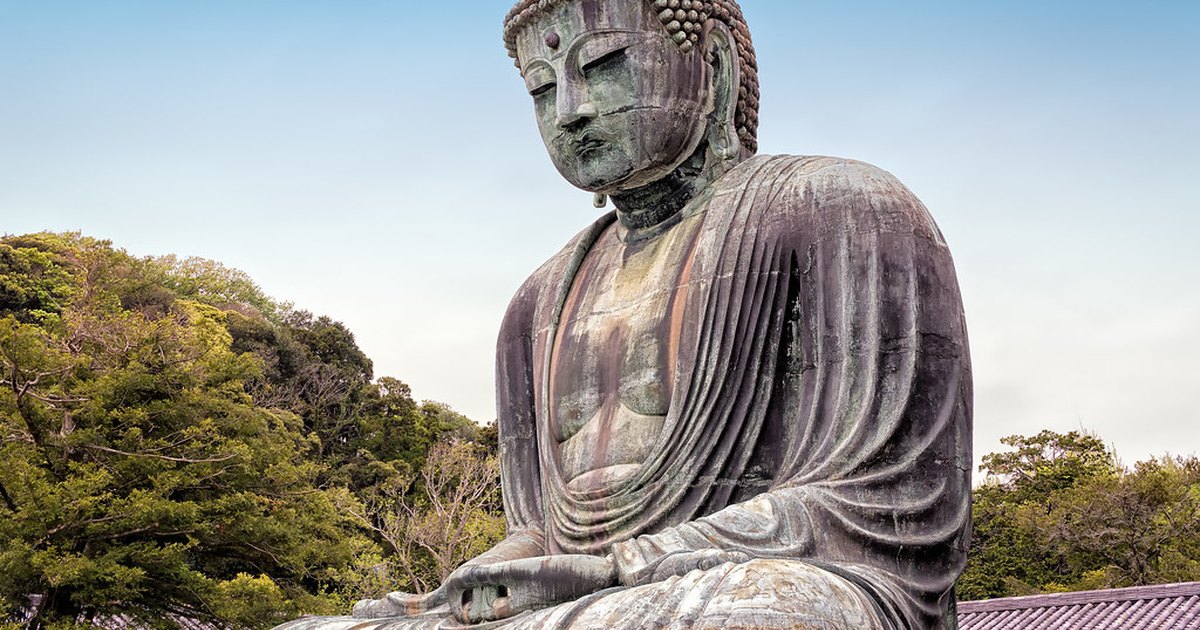
Why does the temple insist on 11.3 meters when guides say 13.35?
Both numbers are real — they measure different things, and the temple is precise about it: the Buddha itself stands about 11.3 meters and roughly 121 tons, while 13.35 meters includes the stone pedestal — a distinction English articles flatten constantly. Casting began in 1252, per the medieval chronicle the temple cites, and the result was designated a National Treasure on February 8, 1958 — per the city's tourism association, the only statue in Kamakura holding the rank. The genius is best appreciated from inside: for ¥50 you enter the hollow bronze and read the lattice of casting joins where 13th-century founders fused the colossus section by section — the national cultural agency singles the technique out as a monument of medieval metallurgy. Summer 2026 note from the temple: on days Kanagawa is under a heatstroke alert, afternoon interior visits are canceled — the bronze becomes an oven — so hot-season visitors should go inside before noon.
The missing hall: what the temple actually says happened
Why does open-air weathering matter to how it looks?
Because the Buddha you photograph is a collaboration between 13th-century founders and 500 years of salt air. Indoor great Buddhas keep gilding and sharp edges; Kamakura's surrendered its gold leaf (traces survive on the cheeks) and took on the sea-green patina and softened contours that make the face read as weathered patience rather than imperial power. The open sky is not a loss the temple mourns — it's the identity.
Storms, an earthquake — and no tsunami?
Every English blog knows the story: a tsunami swept away the Buddha hall and left the statue meditating under the sky. The temple's own account is drier and better sourced — citing the Taiheiki and Kamakura Dainikki, Kotoku-in says the hall was damaged by great storms in 1334 and 1369 and destroyed in the severe earthquake of 1498; the word tsunami appears nowhere in its telling, though some tourism materials add a tidal wave and historians still argue the point. What's certain is the result: five centuries of open-air weathering that gave the face its expression, and a ground designation — National Historic Site "Site of the Great Buddha Hall" — for the foundation stones still lying around the statue. One update for your guidebook's "grounds highlights" section: the Kangetsudo, the 15th-century Korean palace hall moved here in 1924, was dismantled in 2024 and shipped back to Korea in June 2025 for reconstruction there around 2027. What remains: the Niomon gate and its guardian pair, and the wonderful giant waraji — straw sandals 1.8 meters long and 45 kilograms, woven by a children's group in Ibaraki since 1951 and renewed every three years so the Buddha might one day walk the country.
Doing it right: the Hase half-day
When is the best light on the Buddha's face?
Morning, decisively. The statue faces roughly east-southeast, so the first hours after the 8:00 opening put soft frontal light on the face — the downcast eyes read most serene then — while afternoons throw the features into backlit shadow and fill the forecourt with tour groups besides. Photographers' second-best window is the last hour before closing, when the low western sun rims the bronze from behind and the crowds have thinned to silhouettes.
How does the Buddha fit a Kamakura day?
Ride the Enoden — Kamakura's toy-sized coastal tram — to Hase Station and walk 7 signed minutes; there is no parking, which keeps the approach civilized. The classic sequence pairs Kotoku-in with Hasedera (5 minutes from the same station) before lunch, then continues by Enoden toward the coast. Timing notes the crowds miss: the 8:00 opening beats the tour buses by two hours, the handwritten goshuin desk closes at 15:00 — earlier than the temple itself, and a detail almost no English source carries — and re-entry isn't allowed, so finish photos before leaving (personal photography is officially free; drones are banned with a pointed reminder that damaging a National Treasure is a crime). The wider circuit — Hachimangu, the bamboo temple, the beaches — lives in our Kamakura guide and station-by-station map, and the cheapest ways down from Tokyo are in our Tokyo-to-Kamakura transit guide.
FAQ
How much does it cost to see the Great Buddha?
What are the opening hours?
How big is the Buddha, really?
Did a tsunami really destroy the Buddha’s hall?
What’s inside the statue — and is it worth ¥50?
Is the Buddha a National Treasure?
How do I get there — and what pairs with it?
What else is on the grounds?
What are the photography rules?
Bottom line (2026) — Kamakura’s 11.3-meter bronze Buddha costs ¥300 to visit (not the ¥200 quoted in old guides), plus ¥50 to step inside the statue itself. Kotoku-in’s own history credits storms and a 1498 earthquake — not the tsunami of internet legend — for taking down the hall. Note the handwritten goshuin desk closes at 15:00.
Sources
Admission, hours, interior fee and hours, the 2026 heat protocol, dimensions, casting date, the storm-and-earthquake history with its chronicle citations, waraji details, the Kangetsudo relocation notice, goshuin prices and hours, and photography and drone rules: Kotoku-in's official site, Japanese and English. National Treasure designation date and formal name: the Agency for Cultural Affairs' designated cultural properties database. Seated-height and pedestal figures and the "only National Treasure statue in Kamakura" note: Kamakura City Tourism Association's official pages. All read on August 20, 2026. The fee-revision date is not published and is not stated. The embedded video is by its creator.
Some links on this page may be affiliate links, which means we may earn a commission if you book or buy through them — at no extra cost to you. See our affiliate disclosure.
Tokyo to Osaka, Tokyo to Kyushu, Tokyo to Hokkaido — day by day — plus seven places most visitors never reach.
- 12 pages, 80 photographs, every stop linked to its guide
- Every price and opening hour read from the official page
- Re-issued monthly, so it does not go stale in your inbox
Free. One email a month, plus the rare change that matters. Unsubscribe with one click in any email. By subscribing you agree to our privacy policy.